Showing posts with label success. Show all posts

Saturday, March 4, 2017

Three Simple Steps to School Success

       Every parent wants their child to do well in school.  When kids are in elementary school, parental influence and assistance is usually plentiful.  Parents generally understand the content well enough to help their children during homework time.  And elementary children are more likely to do as they're told to do, and to respect the authority of adults in the school.  They generally want to please their parents and their teachers.  When elementary students struggle academically, public schools provide lots of help and assistance in a caring and nurturing way.

       As children move on to middle school and then to high school some of those attributes that helped students to be successful in elementary school tend to lessen.  The school work is more rigorous, children are more concerned with pleasing their friends, and parents who may feel that their children should be more responsible for their school work may take a step back when it comes to reminding them of due dates.  Also, parents may find that they can no longer help their children with homework due to the level of the content.

       Still, all students can do well in school and here are five simple steps that can help:

1.  Do your best


       I know this sounds trite and cliche, but I'm going to define "doing your best" in a way that may sound different from what most would think.  It doesn't mean getting an "A" or even necessarily striving for an "A" all of the time.  In fact, "doing your best" has little to do with the way your child's school assesses students.  Instead, it has everything to do with your child looking into the mirror at the end of the unit or a marking period or the school year and being able to say that he/she did everything they could to be successful.  Sometimes students really, honestly don't have time to everything that are asked to do.  Sometimes they ask for help and stay up late to study and take on the responsibility for their learning and end up with a "C".  That's OK.  But if the child feels that he/she didn't do their best, then this is the time for self-reflection about what can be done differently the next time.  Everyone (including adults) fall short of doing their best sometimes.  Striving to do better is part of what we want students to learn in school.

2.   Adult support outside of school

       Middle and high school students are not too old to need support from a caring adult outside of the school building.  Students today have lots of distractions and when given the choice between school work and social media it can be hard to plan time for both unless someone is there to help.  In 2006 there was a study of high school dropouts.  Many high school dropouts in this study said that they would have tried harder if someone insisted that they try harder.

"Nearly 7 in 10 respondents (69 percent) said they were not motivated or inspired to work hard, 80 percent did one hour or less of homework each day in high school, two-thirds would have worked harder if more was demanded of them (higher academic standards and more studying and homework), ..."

3.  Get involved

       Students that are involved clubs and sports and other school activities discover that "school" is more than a place with teachers and homework.  Involvement in activities helps students to connect with other students who have similar interests and these connections can be positive in and out of the classroom.


       School success should not be all about grades.  We want students to graduate with lots of skills that can be hard to measure with the standard "grade".  These include:  communication skills, computer and technological literary, adaptability, research skills, problem solving skills, strong work ethic, and conflict resolution skills--to name a few.

       Our public schools along with home support help our students to succeed.


Friday, April 8, 2016

Encouraging a Growth Mindset for your Students

       Growth Mindset is an understanding that you can learn and achieve anything if you are willing to work and practice and study and try.  A student's ability to learn is not predetermined from birth.


       This is an important concept for teachers who seem to always have some students who believe that they are not born with the skills necessary to learn.  A common saying among some students is, "I don't have a math brain.", meaning, "I don't have the ability to learn math regardless of the extent of my efforts."  We know now that this is not true.  But teachers are often faced with the prospects of needing to convince some of their students that this is not true.
       This chart is filled with suggestions for helping students to view their perceived obstacles in a different way.  Part of a teacher's job is to motivate their students to do their best everyday.  The more that we can convince students and then demonstrated to students that effort leads to (at least some level of) success, the more we are able to create a learning atmosphere in which students believe that they can learn.

       Growth Mindset is for weak and strong students alike.  We also have students who have been successful in the traditional school setting who don't have a growth mindset.  These students may have been praised for their "smarts" and they may be afraid to try something new for fear of not succeeding.  This limits their ability to grow.  Hence, encouraging a growth mindset is for all students and not just for a few.  Our best teachers have always been encouraging a growth mindset.  We have all had teachers who were able to convince us to try and to work hard in the belief that we would eventually succeed.  We need to see this occurring much more often in our classrooms.


Tuesday, November 3, 2015

Crack the Code of Learning

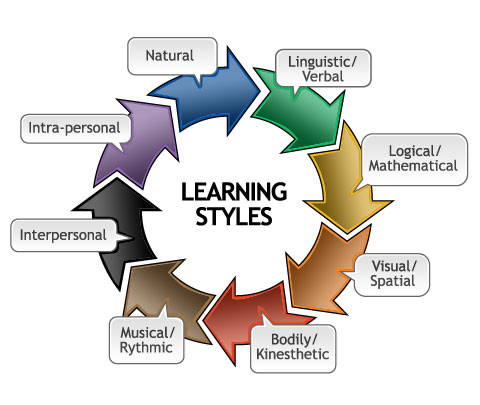
       How does a teacher enable students to learn?  How do students learn?  How do people learn?  Teachers who seek to reach their students struggle with these questions all of the time.  Experience (and research) tell us that students learn differently.  When we teach a lesson to 30 students; some get it right away, some get part of it, some don't get it at all.  How is that possible?  All of the students heard the same lesson; yet not all of the students had the same level of "Learning".

       This can lead to a difficult and awkward situation in which the teacher feels offended that the his or her efforts went to naught; and the student feels embarrassed that he or she wasn't able to learn as well as other students.  Our best teachers understand that all students don't learn in the same way and (so) they try to find different ways to present information.  They present is verbally; they present it visibly on a whiteboard on a screen; they use videos; they have students read some information; they have other students explain their thinking; and so on.  We use these different strategies to keep the class interesting and to increase student engagement.  But we also do this because we know that all students won't learn the same way and we need to find a way to present the content in different ways so that we reach all of our students.

       Einstein has been associated with the quote, "I never teach my pupils, I only provide the conditions in which they can learn."  I don't know if he really said this, but the statement may be correct.  It may be that no teacher can actually MAKE students learn.  It may be that the best we can do is to encourage students to learn.  We do this by getting to know our students very well and using this knowledge to include into our lessons those aspects that our students will find interesting.  If the students are interested than they are more apt to try their best even if the learning is difficult.

       Still, even when we understand about different learning styles and the value of good relationships with students, teachers are still faced with some topics that seem to be difficult for many students.  Once again we struggle to crack this code of learning.  How do teachers help students to understand complex topics?  Indeed, this is the art of teaching.  Some teachers are better at this than other teachers.  In my experience, the teachers who are able to reach the most students are the teachers who learn from their own experiences (including their own failures) and who seek input from other teachers via conversations with colleagues, reading journals and research, and taking courses about learning.

       Learning isn't a complete mystery--but it isn't a completely solved mystery either.  Current research about how the brain works will help to answer some of our questions.  Collaboration with professional teachers helps too.  Teaching is rewarding and (at times) frustrating.  As we learn more about the process of learning we will have more teachers with greater abilities to address the needs of more and more of our students.


Public Schools and Choice

       Is it true that public school kids and their public school parents don't have choices?  I'm sure that I will expose my igno...

Teach100 blog