Showing posts with label assessments. Show all posts

Wednesday, June 15, 2016

Is Your Child Advanced in Mathematics?

       It seems that, more than in other subjects, the placement of students in advanced mathematics is often a contentious issue. Elementary schools have different policies about placing students in classes that teach math at grade levels that are above the student's current grade.  Middle schools often offer high school mathematics classes, but some stop at Algebra 1 and some go beyond Algebra 1.

       The ability of a school or school system to determine a student's math ability (or "advanced" math ability) can be hard to do with great accuracy--especially when we are trying to make this determination with eight and nine year old children.  It's not enough that they are getting good grades in their math work; math is more than mere calculation.  And higher-level math is all about reasoning and thinking and understanding.  The kid that is good at memorizing, isn't always good at (say) the abstraction that comes with manipulating variables and graphing a line.


      Yet, I think that (too often) we get a false impression of a student's math abilities from merely looking at their elementary grades on the report card.  Sometime students are placed in advanced classes and at some point in middle school they start to struggle because they were pushed to learn higher and higher levels of math too fast.  On the other hand, there are certainly students who are highly able in mathematics and they should be encouraged to take more challenging classes that are commensurate with their abilities. So goes the dilemma of trying to identify the truly highly-able students from those that only appear to be highly-able.

       One method that helps is using multiple data points.  When students breeze through their multiplication tables and get "A's" on their report cards, but do poorly on standardize tests or on unit tests, this should be a cause for concern.  Maybe this student is good at memorizing facts and procedures and not good at understanding concepts.  This student is successful at procedural assignments (such as long division with whole numbers), but may struggle with more abstract assignments (such as a math task with multiple answers).

       Of course, we know that it is OK for students to struggle as they learn new concepts (see previous blog post), but many students view this struggle as a sign that they aren't good at math; or a sign that the teacher is doing something wrong.  We don't want students to struggle because they have been inappropriately placed.  Truly able students (and Growth Mindset students) don't mind the struggle because they enjoy the journey toward learning.  Also they understand that it is OK if they don't get it the first time.  Continual effort will eventually pay off.  Students who never tried hard to do well in math and then are placed in an advanced math class and then are upset when they don't get it the first time...these may be the students that we are pushing too quickly.

       Is your child advanced in mathematics?  How do you know?

Friday, November 27, 2015

Tinkering Around the Edges Isn't Sufficient for Significant Improvement in Our Schools

       There's a joke among some educators that says if a child doesn't understand the lesson, then we will just say it again slower and louder.

       It's not a funny joke.  In fact its really sort of a put down to teachers who struggle to help students to learn.  If the teacher presented the lesson in the best way she knows how, then she may not know of another way to present the lesson and (so) when a students doesn't get it, she just repeats the same thing (sometimes slower and louder).  This usually doesn't help the student to learn any better than the first time, but it does lead to frustration for both the student and the teacher.

       These situations are far too common in our nation's classrooms today.  Improving these situations is haphazard at best.  Sometimes some students try harder; sometimes some teachers try different strategies.  But most of the time, instructional change is small (or absent) and academic results remain the same.

       Still, this doesn't happen from a lack of trying.  Plenty of teachers (most teachers) try very hard to learn more and to improve every year.  They read books; they attend conferences; they take classes; they join Professional Learning Communities (PLCs) within their school or school system or online.

       Change is hard, and improving academic results for student groups that have historically struggled in the traditional school system is a complex problem.  It isn't the sort of problem that can be solved by tinkering around the edges; and by not causing some level of discomfort for people who insist that everything is fine the way it is now.

       I believe that we have the knowledge and the research to know what must be done to improve education outcomes for the students that we aren't reaching today.  These strategies and policies are available for everyone to see.  A short list of books from a variety of sources provides the answers we seek.  Here are some of them:

  1.  The Results Fieldbook: Practical Strategies from Dramatically Improved Schools, by Mike Schmoker
  2.  Whatever It Takes: How Professional Learning Communities Respond When Kids Don't Learn, by Richard DuFour
  3.  School Leadership that Works: From Research to Results, by Robert Marzano
  4.  Teacher Leadership that Strengthens Professional Practice, by Charlotte Danielson
  5.  Failure is Not an Option: Six Principles that Guide Student Achievement in High-Performing Schools, by Alan Blankstein

       However, I also believe that the change we need involves the hard work of constant improvement.  It requires schools to dig deep into the standards and objectives that are taught everyday and to ask questions such as, 
  • What is the best way to teach this objective to students?
  • What strategies should we use?
  • What activities are best?
  • How do we reach a classful of students with different learning styles?
  • How do we assess student understanding?
  • How do we assess the success of the decisions we made for this lesson?
       This is complex work and it requires effective collaboration among teachers--no one should have to do this on their own.  If we are successful, it will take a generation to complete this transformation of our schools.  During that time, we will have to contend with a lot of resistance from educators and non-educators alike.  However, this is an effort that is worth the years of hard work.  This is an effort that today's teachers can look back on and be proud to say, "I was there when the hard work was done."

       Tinkering around the edges isn't enough anymore.  It's time to do what we tell our students to do--Work hard and you will see the rewards in your future.

Wednesday, October 28, 2015

PARCC Results are all about Learning

       2010 - Common Core Standards go public
       2010 to 2014 - School systems throughout the country align courses to these updated standards
       2014 - PARCC Field Test takes place in all "PARCC" states
       2015 - First full administration of the PARCC assessments
       Fall 2015 - We get to see the results of the PARCC assessments


       I feel like I'm the only person who is happy to see the results from these new tests.  Once again, the press is constantly talking about bad results, bad tests, bad schools.  To me, these results are all about learning.  They tell us how well our students are learning based on the world-class standards that are being taught in our classrooms.  Isn't this what we really want???

       It doesn't help to compare our students to each other in their school or to the students in the school on the other side of town.  The comparison that matters is the comparison to the standards.  This comparison will help us to know if our children are ready for the academic demands of college level work and for the societal demands of a career.

       School is supposed to be about learning.  The PARCC results give us a measure of this learning.  This is a good thing.  Up until today, we've had far too many students graduating from high school and believing that they were ready for college only to face a harsh reality that their high school did not prepare them as well as they thought.  Too many students begin college and don't finish college.

       Today, thanks to PARCC results (and other data points), our students and their parents will get a true measure of their ability--as early as in third grade.  And there will be time while our children are still in P-12 school for them to get help and for them to raise their abilities.

       PARCC results are a good thing.  Learning is a good thing.

       Don't you want to know if your child's true level of learning?


Saturday, September 5, 2015

The Pros and Cons of Standardized Testing

Warning:  If you are 100% against standardized testing or 100% in favor of standardized testing, you shouldn't read this blog post.  I'm going to some things that you will agree with, but you will be so blinded in anger over the things I say that you disagree with that you will never see the agreement parts.  Besides, you have already determined your thinking on this matter so there is no point for you to hear the opinions of others.

------------------------------------------------------------------------------------------------------------------

       Alright, maybe that warning was a little harsh.  I apologize.  In truth, I'd like to believe that the people who are on the extreme sides of this issue are a very small minority.  Most people have their views regarding standardized testing, and I would guess that most people fall somewhere in the middle of the issue.  I'm one of those people.

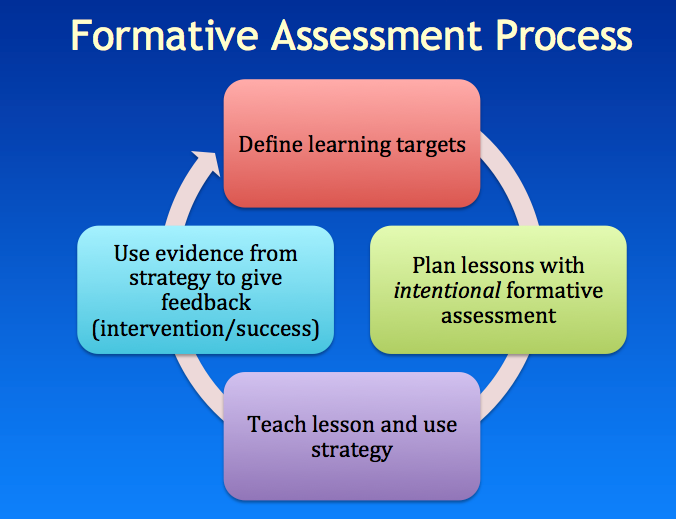
       In an ideal world, the students will come to school and do their best everyday to learn--and testing wouldn't be necessary.  The reason it wouldn't be necessary (in this ideal world) is because teachers would constantly gain an understanding of each student's level of learning through formative assessment practices; and students would ask questions about the things they didn't understand and keep working on these things until they got it.  The motivation would be the attainment of knowledge.

       To be fair, some students and teachers and whole schools work hard to (at least) approach this ideal world of education; but for the rest of us, we are still somewhere on our journey toward this world.  We are striving to emphasize learning over "getting-a-grade"; but we still need effective ways to measure learning--and testing is part of this process; and standardized testing is part of this process.

Some Pros of Standardized Testing

       In my view the "standardized" part of standardized testing is a pro.  Every student takes the same test regardless of the factors that influenced their learning (such as their teacher, the curriculum, the standards, the state they live in, etc.).  Think about the SAT test: colleges know that every student is taking the same test, so SAT scores can be compared to each other regardless of where in the country the test was taken.

       Also, the next generation of standardized tests (think PARCC and Smarter Balanced tests) are written to determine a measure of learning based on understanding content more than based on memorizing formulas and procedures.   This means that it will be harder for students to guess the right answers on these tests.  It also means that results will be based on true learning and understanding rather than on a student's ability to take a test.

Some Cons of Standardized Testing

       It may be a challenge to teach all of the content that is covered in a standardized test prior to the administration of the test.  Standardized tests typically have specific testing windows or a specific testing date on which to give the test.  Since different school districts start and end on different dates during the year and have different days off due to holidays and other reasons, it might be hard to structure a course outline that completely covers all of the material that will be assessed on a standardized test.  This occurs (sometimes) for Advanced Placement tests.  These AP tests usually have a particular May date for their administration and many school districts finish their school years in June.

       Some might argue that a "con" to standardized testing is that it might assess something that we don't teach or don't want to teach in the course.    I believe that there is general agreement of what needs to be taught in each grade and that this is less of an issue than some would have you believe.

       To me the biggest down side to standardize testing is that it gives the message to students (and parents) that the goal of school is getting a good grade on a (standardized) test rather than having the goal of learning.  Sometimes standardized test results are treated with great importance with newspaper articles and school-wide celebrations.  And sometimes these results are given too much importance when making course selection decisions for the next couple of school years.  As I said before, schools should emphasize learning and should de-emphasize "getting a grade".  A standardized test score should be just one piece of data that is used in conjunction with many other data points to make big decisions about a student's ability.


Sunday, August 30, 2015

Formative Assessment Is Not a Buzz Word

       Formative Assessments are the keys to identifying the actual learning that takes place within every student.  I'll admit that "formative assessment" is certainly an educational term that one wouldn't typically hear on a regular basis outside of education circles.  But it isn't a meaningless "buzz term" that we use to confuse people.

       Formative Assessment is something that good teachers do on a daily basis to gain information on how well the students are learning the daily objective or standard that is taught in class everyday.  If teachers didn't use some sort of formative assessment, they would only be delivering information instead of actually teaching.

       I think that people outside of education hear the word "assessment" and immediately think of "a test"; and then they think of a grade; and then they think about its impact on the course grade; and so on and so on--only thinking about grades.  Teachers on the other hand are much more interested in learning than they are in grades.  Formative assessments can be traditional quizzes or tests, but most of the time they are activities, questions, discussions, games, projects, exit tickets, pre-assessments--lots of strategies that teachers use to identify the level of learning that is occurring within each of their students.

       Formative Assessment emphasizes learning and de-emphasizes "the grade".  Formative assessment helps students to see the learning target (the goal) and it helps them to be successful in reaching that goal.

       So don't think of "tests" when you hear the term "Formative Assessment".  Instead think, "I'm glad my child's teacher is concerned about helping my child to learn well."

       Another phrase we use a lot is "Assessment for Learning".  Using Formative Assessments effectively helps students to learn and to learn well.  It isn't a "final exam" that (instead) tests what the student knows after the teaching and learning has already taken place.  Formative Assessment is what happens while the learning is taking place.  It recognizes that students aren't going to understand everything the first time they hear it.  They have to hear it and try it and make mistakes and try again and make more mistakes and learn from these mistakes and try it again...and eventually they get it.

       Mistakes are expected, respected, and inspected.  This is what Formative Assessments do.


Wednesday, July 29, 2015

The Grading Monster

       This is a story of a idea that grew up and got bigger and eventually took over a population.  The idea was to use grades to classify a student's ability.  This idea has grown into the the current Grading Monster that we have today.

       The origins of this idea, attributed to William Farish, seemed innocent enough--find a way for teachers to teach more students.  But what it did, instead, was to separate the important student-teacher relationship that had symbolized teaching for most of the 10,000 years prior.

     It would be fair to say that grades have overtaken the main purpose of schooling--which is to learn.  Of course this is not true for all students, but when students complain about academic performance, their complaint is much more commonly about their grade than about the learning that did or did not take place.

       Parents tell their children to get good grades rather than to learn a lot.  And when grades are low, discussions about how grades are determined and how these grades will affect course placement and/or college acceptance are the paramount concern over and above the concern that students are learning well enough.  More often than then not, the concern over learning is never brought up when grades are low.


       Dr. Justin Tarte talks about grades a lot in his blog Life of an Educator by Dr. Justin Tarte.  He points out many pitfalls that our educational system has fallen into when it comes to grades and grading.  Starr Sackstein is another blogging star of mine who has discussed grades and grading recently.  Clearly the effects of The Grading Monster are well known by educators and maybe, just maybe, we will begin to see this monster lose her strangle hold on our educational system.

       My thoughts on defeating this monster include the more common use of true formative assessments in our classrooms.  My definition of "formative assessments" is assessments and activities that provide to students and parents (and teachers) information on how well the students are learning.  Notice that I included the "activities" in this definition--as formative assessments don't have to be tests and quizzes.  In fact, I would advocate that most of the time formative assessments are not tests or quizzes.

       If we can emphasize the idea of learning and of measuring learning and de-emphasize the idea of getting-good-grades, we can defeat The Grading Monster and win back our schools for their true purpose--learning.


Thursday, July 16, 2015

Make Math Meaningful: Math Tasks

       The days of the boring worksheets in math class and the word problems about the train leaving New York are over.

       Well...actually, they're not over.  But they should be over.

       We already know that most students (and adults) do not learn new things very well just by listening to someone explaining it; after which the teacher often says something like, "Does anyone have any questions?"  This is when the students want to say, "How can we have any questions about this?  You just taught it to us one minute ago.  (And then they get a worksheet.)

       This is passive learning.  This learning promotes adherence to procedures and getting-the-right-answer over true learning and understanding.  Some students do fine and some students do not; and it is simply not acceptable to engage in teaching strategies that don't help all of our students.

       Math classes should be places where students are actively engaged in their learning.  Students are presented with a problem or a task and they work in groups to brainstorm ideas based on the objectives that they have been recently learning.  The final answer can be reached via multiple solution methods and (most importantly) the students are using and learning mathematics simultaneously.  Finally, students are able to explain what they are doing (teaching others) which is a way for students to demonstrate their understanding.

       Math Tasks are written to be activities that students can do in small groups in their math classrooms under the direction and supervision of their math teacher.  Math Tasks are meant to take the place of the old 20-problem-worksheets during class time.  Instead of students working quietly and independently, they are working together with other students: learning from each other and sharing their ideas.

       There are many online resources that have wonderful math tasks.  Some of my favorites are:

  • Illustrative Mathematics
    • Go to Content Standards, then chose a Grade, then chose a Domain, then chose a cluster, then chose a standard and you'll see a list of Math Tasks.
  • Mathematics Assessment Project (MAP)
    • Click on Tasks and see a list of middle school and high school Math Tasks.
  • Inside Mathematics
    • Click on Performance Assessment Tasks and chose a grade or course to see a list of Math Tasks
      Math Tasks model the way math is done in the real world.  That's where you are presented with a problem and you have to decide which resources to use to find a path to the answer.  There is more than one way to get the answer and sometimes there is more than one possible answer.  Math Tasks help our students to understand mathematics.


Saturday, July 4, 2015

Educational Testing Should be Compared to a Health Check-up

       There's a lot of talk about testing in schools these days.

       Should we test students?  Is there too much testing?  What should be on the tests?  Are the tests too easy?  Are the tests too hard?  Do tests measure student ability?  Are high-stakes tests fair?  Standardized tests, the new SAT tests, college-readiness tests, ...and so on and so on.


     On a purely surface level, some students (and parents) do not like the big, end-of-course tests or the big standardized tests because they don't score well on these tests.  And that bad score leads to other negative and uncomfortable issues:
  • students feel bad
  • students feel not smart
  • course grade is negatively affected
  • looks bad on high school transcripts
  • negative affect on grade point average (G.P.A.)
  • negative affect on class rank
This opposition to this sort of testing has nothing to do with learning or the student's (or the parent's) feeling toward the test representing the quality of learning that took place during the course.  This opposition is purely about how the "after-effects" of the test will effect the student's stature, ranking, or reputation in some way.

       On a much different level, some people are concerned about the ability of the "big test" to accurately measure a student's academic ability in a particular subject area.  Alfie Kohn stated his many concerns about standardized testing in his 2000 article titled The case against standardized testing: raising the scores, ruining the schools.  In it, he offers a history of the origins of current-day standardized testing and lays out some of the problems with our current system.  On the other side of the debate, is the book Defending Standardized Testing (2005) edited by Richard Phelps.  This book examines testing via multiple points of view such as: research on standardized testing, misconceptions about large-scale testing, high-stakes nature of some assessments, and the issue of the growing testing industry.

       I view educational testing in the same way I view going to the doctor for a health checkup.  The two extremes are too extreme.  Never seeing a doctor is bad because you might never know if you are developing a serious health issue until its too late.  And seeing a doctor for a full physical checkup everyday is not necessary because your health isn't going to change on a day-to-day basis.  But seeing a doctor (perhaps annually) and following his/her advice is necessary for good health.

       Educational testing is necessary because there has to be some sort of measure of academic ability so that we can fairly compare a student's ability with other students.  If students never take advantage of standardized testing they could go through 12 years of formal schooling believing that all is well only to enter college and to discover that they are unprepared for college-level work.  Educational testing should not be used to rate schools as if they were in some sort of horse race.  They should be used to measure true learning--which is the purpose of schooling in the first place.  They should be used to provide students, parents, and teachers with good information on what students know and understand and what they don't.

       We don't have competitions with other people on who has the lowest cholesterol level or the highest pulse...We shouldn't have competitions on who gets the highest grade on standardized tests.  They should be used for individual results.


Monday, May 11, 2015

How Much Assessment is Too Much Assessment?


       So, here is how education is supposed to work...


  1. The teacher teaches something.
  2. The student learns it.
  3. The teacher verifies that it has been learned.

Step #3 (above) is a very important step.  In the art of teaching, the actual "teaching" part is (indeed) only a part of what we do.  The far more important part is ensuring that learning is taking place.  If students aren't learning anything, then (one might say) we are not really teaching.  (Maybe we are just "presenting".)

       Sometimes we think that learning has taken place when it hasn't taken place.  Students nod their heads and smile and don't seem to have any questions; and it "looks like" they are understanding.  But unless our teachers are also psychics and are able to actually know what their students are thinking; some form of assessment is necessary for teachers and students (and parents) to verify that the "learning" really happened.  (After all, the goal of education isn't to get grades; the goal is to learn.)

       Outside of education, when people think about "assessment", they usually think about tests such as "Chapter Tests" and "Final Exams".  But educators know that there are many, many different ways to assess student understanding.  In fact, our best teachers incorporate some form of assessment into every lesson that they plan everyday.  This makes sense because how can a teacher know how or when to move on to the next topic unless they know how well their students understood the last topic?

       Assessment should be a part of every lesson.  It can take many varied forms.  Here is a list of ways to assess student understanding in the classroom from David Wees:
  • 3 Things
    • List 3 things that a fellow student might misunderstand about the topic
  • Venn Diagram
    • Have students compare and contrast a topic using a Venn diagram
  • Write it down
    • Have students write down an explanation of what they understand.
  • My Favorite No
    • Students complete a math problem and write their solution on an index card.  The teacher selects his/her favorite wrong answer and analyzes it with the class.


  • Doodle It
    • Have students draw what they understand rather then writing it.
  • Chalkboard Splash
    • Numerous students respond to a prompt/question on the chalkboard or whiteboard at the same time
  • and 50 more to found here

       These many and varied forms of assessment could be graded or not graded.  But all of these assessments have the purpose of providing the teacher (and student) information about how well the students are learning.  Instead of assessment "of" learning, these include assessment "for" learning.

       So, How much assessment is too much assessment?  Assessment should take place frequently.  Some sort of assessment should occur with every lesson taught.  And we do this, the traditional, formal, summative assessments (like chapter tests) won't be such a big deal.


Thursday, April 9, 2015

Learning is not Pass/Fail


        Years ago I worked with a colleague in the research office of a major school system.  He always tried to find a way to make research and statistics understandable to the average person.  He once talked about the infamous College Acceptance Letter.  I'm not sure if this is still true today, but years ago you would apply to multiple colleges and then you would wait and wait and wait for a letter from these colleges that would tell you whether or not you have been accepted.  When the letter arrived, you would open it and there would be one or two paragraphs of "welcome" and "thank you" messages.  And, finally, somewhere halfway down the page you would get to the part that you really wanted to know:  Accepted or Not Accepted.

       My colleague suggested that the most important information in such a letter should come in the very beginning and the other stuff can be written farther down in the letter.  Better yet, he suggested, they should just send a letter with a smiley face or a frowny face!  That would be the simplest way to communicate the message and everyone would understand what it meant.

       I wonder if people outside of education often view learning in the same way?  "You get it."  or  "You don't get it."  We sometimes use the phrase "Filling your brain with knowledge."  I wonder if some people imagine learning to be this (sort of) empty skull or glass that is filled by the teacher.  When it is full, then you have learned it and you got it and you will always have it.

       In reality, learning is much more of a process with a somewhat hazy finish line.  While there are certainly facts that students can memorize (5 + 5 = 10; July 4, 1776 is the date of the signing of the Declaration of Independence; Paris is the capital of France), actually learning is much more of a process that develops over time and requires thinking and discussing and trying and failing and trying again--and learning from the mistakes.  Learning is much more like a baby learning to walk than it is like a switch that is off or on.

       We should think of learning as being more of a continuum and less of a Yes/No, Pass/Fail dichotomy.  After all, it isn't so much that we want our children to "pass" in school; what we really want is for our children to "learn" in school.  Employers don't care what grade you got on a test in high school.  They care about what you learned and are able to do.


Saturday, March 28, 2015

Learning vs. The Appearance of Learning


       How do you know if you've learned something?  Think of yourself and your own experiences.  It could be in school or in college or at home or at work or at the beach or anywhere.  Think about something you know and understand very well--how did you learn that?  Think about a time when someone tried to teach you something--like how to wash clothes, or how to fix something, or how to download a file on a computer.  How do you know when you have learned something?  How can you prove that you have learned something?

       Now let's look at our students (and our schools) and the question  becomes, How do we (the educators) know that our students are actually learning?  How can we prove or demonstrate that they have actually learned something?  And does this "proof" really demonstrate learning; or does it merely give the appearance of learning?  

       Do grades accurately measure learning?  Do tests accurately measure learning?  Do performance tasks accurately measure learning?  Can we use multiple such data points to measure true learning?  Maybe we can.  What if schools come up with a system of classwork and homework and written tests and verbal tests and formative tests and performance tasks and standardized tests; and we put all of the information from these multiple sources into a "bowl" and mix all of these multiple results together and then we make a determination of the level of learning attained by each student?  Since students demonstrate true knowledge and understanding in different ways, this method would allow each student to demonstrate what they know and are able to do.

       Of course, I am describing exactly the method that our public schools use to help us to make these determinations of learning.  Often, sadly, the end result of this process is a single letter grade.  So the challenge is, Does this single letter grade accurately describe the student's ability?  When it does, we have succeeded in communicating real learning; when it doesn't we have only communicated the appearance of learning.

       So the next question is: Who cares if the "B" or the "A" represents real learning or the appearance of learning.  If a child receives the same rewards (such as college admittance), then it doesn't matter if the learning was real or perceived.  The difference is, real learning is lasting and real learning can lead to future learning that builds on previous learning.  The mere appearance of learning is fleeting.  Eventually the student will reach a point where he or she will no longer be able to keep up the appearance of learning.

       This occurs in our students' P-12 schooling experience as they move up in the grades.  So often we hear parents say that they child did so well in school in earlier grades and was unable to continue to do well in later grades.  Of course, there are many reasons for this to occur, but one of these reasons is the issue of actual learning vs the appearance of learning.  This is a particular problem for over 50% of students that go to college.  They get accepted to a college and they cannot complete their degree program (sometimes they cannot complete their first full year of college) because their P-12 grades gave them and their parents only the appearance that they were learning.

       As a country, we can argue (and we do) over the purpose and validity of testing and grades and homework and course content and so many other aspects of our P-12 experience.  I believe that such arguments are generally good for the democratic purpose and I hope that such well-meaning arguments lead to better schools.  However, I would contend that such arguments should focus on helping our students to truly learn and attain knowledge.  When we (for instance) argue against a particular test because we fear that it will expose that our students are not as able as we want to think that they are, I would suggest that that is the wrong reason for refusing such a test.  

       As hard as it can be for some of us, we have to be honest with ourselves and with our children.  The goal shouldn't be to "win" at all costs.  The goal should be to learn.  School shouldn't be a competition against each other.  School should be about learning--and only about learning.

Friday, March 6, 2015

Are the new PARCC and Smarter Balanced Tests Too Difficult?

       Public schools across the country are now using the new PARCC and Smarter Balanced assessments in Mathematics and English/Language Arts in grades 3 to high school.  Aside from the political commentary about these tests, some teachers have concerns that they are too difficult for their students.  Along with this concern comes concerns about hurting students' self-esteem, battling parents' perceptions of their children's abilities, and aligning earned course grades with earned PARCC and Smarter Balanced scores.

       I have heard and read comments that say that these tests are good for students who are very strong academically, but that they are inappropriate for students who are average or below average.  Sometimes parents have commented on sample problems and have stated that they are too hard for the students.

       The standards that these tests are written to are aligned to world-class education standards.  I realize that "world-class" is a buzz word, but I agree that these standards (and associated tests) represent an uptick with regard to rigor compared to those that they are replacing.  We know that too many of our students get good grades in elementary and middle school and then struggle with subjects in high school.  Or, they do fine (in terms of course grades) even through high school, but then they do poorly on the SAT or ACT.  We also know that many students graduate from high school, go to college, and do not graduate from college. (see college graduation rates)

       Hence, public schools are faced with this problem of students who appear to be learning and doing well in school, but then struggle with learning later.  We addressed this problem by incorporating tougher standards and putting in place assessments to see if the students are attaining these tougher standards.  In my opinion, this needs to happen; this must happen.  Nobody wants to see their own child struggling.    But we have to realize that this is already happening:


  • poor SAT/ACT scores
  • low AP scores
  • high percentages of students taking remedial math and english courses in college
  • students dropping out of college before earning a degree
       Until now, we have always been able to say "my kid gets good grades in school, so none of these other things matter to me".  But we have been fooling ourselves.  

       If we want students to be successful, we have to raise the standards (as we've done) and we have to insist on continually high standards throughout P-12 education.  This must happen.  Better education leads to better lives for our future adults--which leads to a better society for all of us.

       The tests are not too difficult.  We must, must, must insist on high standards, and we must do everything we can to help our students to achieve these higher standards.  I believe that our public schools will do exactly this in the years to come.  We will meet this challenge and we will raise student achievement and we will help to produce a society of educated people who are not afraid to face challenges, find solution, and succeed.


Tuesday, December 23, 2014

Everything

       What's so good about public education in America?  Everything!


       I guess this is my post of platitudes.  

       Years ago I taught in a middle school that was located in an area where people were struggling to make ends meet.  I met with a lot of parents during my time at this school; and spoke with a lot of parents on the telephone if they weren't able to come to the school.  At the time, I was not a parent.  And, so, I did not have the perspective of a parent.

       We know that schools are challenged to raise the achievement of children from poor families.  We had a lot of these children at this school.  I would hear teachers say that the parents don't care about education and that is why the children did so poorly.  But when I met with the parents, I would hear a very different message.

       The parents told me that they wanted their children to do better then they did.  They wanted their children to get a good education and a good job.  One parent told me that she would tell her children to look out of the window at the house (and neighborhood) across the street and she would say, "Is this where you want to live when you are an adult?"  She told her children that she made mistakes in her life and she didn't take her education seriously and that is why they were forced to live in a neighborhood that was not so nice.

       Education is everything.  Education provides opportunity and options for all that take full advantage of it.  Learning and the ability to learn and to solve problems is a skill that enables people to make decisions, to create, to explore, and to live.


Sunday, October 26, 2014

Common Standards

     Well, I've held out this long.  I've tried to stay away from politics in this blog.  But I've talked about grades and grading; I've talked about national testing; and I've actually talked about Common Core before.  However, this time I want to share my thoughts about Common Core and address some of the counter-arguments that (in my opinion) are not sufficient to justify a school district or a state to refuse to use them.


      I support the use of the Common Core standards for English/Language Arts and for Mathematics.  I also support the common standards for Science that are coming to our public schools.  I support these standards because they were created by experts; they were vetted by experts; and they give all 50 million U.S. students a fair and equitable education.  We all know that education throughout the U.S. is not uniform because individual state standards vary widely.  Common Core sets a level playing field for all.  Additionally, these common standards are consistent with those from countries that produce students with the highest academic abilities.  We all love competition and we all love to win; so I would think that we would all want our students to be able to fairly compete with anyone in the world for 21st century jobs.  Common standards allow us to do this.

     So here are some bad reasons for turning away from common educational standards:

1) I'm a Republican and Common Core is a Democrat thing--so I'm against it.

     We live in a partisan country.  Some people are strongly Republican and some are strongly Democrat.  If a cause aligns to a particular political party, then the loyal will support it no matter the cause and no matter the details.  But Common Core is not a Democrat thing and it is not a Republican thing.  It came from the National Governors Association and Council of Chief State School Officers.  Just as No Child Left Behind was not a Republican thing (Edward Kennedy co-wrote NCLB), Common Core is not a Democrat thing.

2) Common Core is too hard.

     Compared to the academic standards in some states, Common Core will appear to be more rigorous, less rigorous, or about the same.  Since different states had different standards in the past, this comparison will look different to people in different parts of the country.  But the goal of school is to teach and prepare students for the world that they will inherit.  The goal is not for students to get good grades.  We want our students to be successful, but too many of our students have been very successful in high school only to fail in college.  That is a national shame on our nation.  Common Core is trying to prepare students for both higher education and for the word of work.  If it is hard, then students are being well prepared for their future.  Isn't that something we all want?

3) It was implemented too fast.

     States were given four years between state adoption of the Common Core standards and the actual implementation of the Common Core standards.  I think that a lot of people feel that the Common Core came all of sudden--one year we didn't have it, and the next year we did.  There was a lot of planning behind the scenes that the general public may not have seen.  This is why it seems to be so sudden to some.  If there were ten years between adoption and implementation, some people would feel the same way.  Why should we wait to give our students a world-class education?  And why give up on it just because it was fast?

     Also, public education is often accused of moving too slow.  Fifty million students and three million teachers comprise a very large group; and it is often slow for this group to change.  If we drag out the change and take our time, it might never happen.  We have to "rip off the band-aid".  Now is the time

4) (This bad reason hasn't occurred yet, but it will towards the end of this school year.)  See, everyone did poorly on the test.


     This year, for the first time, the PARCC and Smarter Balanced tests will be administered to students in grades 3 to high school.  In all likelihood, overall student scores will be low
compared to their class grades in math and English/Language Arts; or compared to past standardized test grades.  And there will be all sorts of renewed calls to cancel Common Core.

     In fact, whenever a new standardized test is administered, scores are often low at first and then increase over time.  Remember, the content of the courses are more difficult, so naturally the tests will be more difficult and some students won't be able to rise to that challenge as well as other students.  Once again, the goal of school is to teach and help students to be prepared for their future.  We are not helping students by giving them easy tests and then telling their parents that they are smart and then having these same students struggle after high school.  Colleges will recognize these new tests that same way they recognize the SAT and ACT tests.  They have to be the sort of tests that really prepare our students for college.

     We have a real chance to improve the education of millions.  And it could happen to this current generation of students.  We can say that we were there when U.S. public schools took a bold new step toward becoming the new standard in world-class education.  This is education's "moon shot".  Let's make a real difference; let's give our kids the best!


Sunday, October 12, 2014

Improved and Improving Students Abilities in Mathematics

     Over the past generation (or two), the mathematics abilities of students in the United States has improved.

     Take a minute and let that opening sentence sink in a little bit.  We are constantly hearing about how poor our nation's students do in mathematics compared to other nations; sometimes we hear the same comments compared to previous generations in the United States.  But the truth is, we are improving when in comes to mathematics abilities of our students.


        The graph (above) depicts the average NAEP mathematics scores for 4th and 8th grade students since 1990.  NAEP stands for the National Assessment of Educational Progress.  It is sometimes referred to as the Nations Report Card.  Among many other subject areas, NAEP periodically tests the math abilities of 4th, 8th, and 12th grade students throughout the United States.  This test is given to a representative sample of students in every state.  It is a "low-stakes" test and only aggregate results are determined.  (That is, there are no individual student results reported for NAEP tests.)

     We can see the overall increases over this time period on this graph.  While this is good news, it is also fair to say that students in the United States need to do much better than they are currently doing in mathematics achievement if we ever hope to rival our counterparts in other some other nations.  The ability of American students to reason and problem solve in mathematics is lacking.  Even students who appear to do well in math classes--as indicated by their grades--sometimes struggle in higher level math classes that require reasoning and understanding.

     So while we are improving in overall math ability over the past couple of generations, we need to continue to improve (and quicken the pace of improvement) if we want our students to be successful in world that they will inherit.

     This requires a change in the way mathematics is taught in United States.  We need to de-emphasize "grading" and re-emphasize "learning".  Students (and parents) who are only concerned about grades sometimes overlook the main purpose of schooling--which is learning.

     So let's keep the positive trend in rising math ability going.  We must.

Wednesday, May 14, 2014

Summertime (and school)


     Once we get into the month of May, students and teachers start to think about summertime.  Warm weather, schools out, vacation, camp.  Everyone says, "I can't believe the school year has gone by so fast."  Seniors graduate, elementary students "graduate" to middle school--a very big deal--, final exams, sign my yearbook, tears, and joy.

     For teachers, summertime can be a time of relaxation, gardening, swimming, sleeping late, and forgetting what day of the week it is.  However, for teachers, summertime is also the time for doing many professional activities that help them to improve and to advance in their field.


     Teachers take classes to increase their knowledge of teaching strategies and to learn more about the teaching of their subject.  Teachers also take classes to work toward future degrees and certifications.  Teachers may take part in curriculum work during the summer with their school district.  This may include writing assessments, creating activities, aligning new resources to the current curriculum, and moving electronic resources to district websites for teachers to access.

     Aside from these formal, professional activities, teachers also use summertime to think about and to plan for the next school year.  They look at new resources; they may plan the first one or two units of study.  They read blogs and books and journals to gain ideas for the next year.

     Teachers are busy during the summer.  They relax, but they are always thinking about their students and thinking about making their lessons interesting.

Public Schools and Choice

       Is it true that public school kids and their public school parents don't have choices?  I'm sure that I will expose my igno...

Teach100 blog