Showing posts with label parental involvement. Show all posts

Sunday, March 5, 2017

How much Parental Involvement is 'Just Right'?

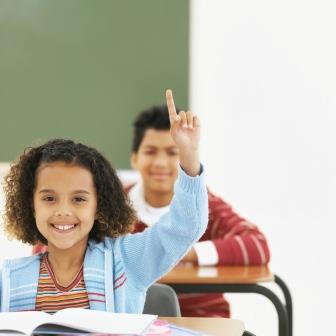
       Parents are an important part of the educational process.  But some parental involvement is too little and some is too much.  What is the "sweet spot" of parental involvement; What would you consider to be (as Goldilocks would say) "just right" when it comes to parental involvement?

       No one would dispute the value of a strong connection between the home and the school when it comes to better outcomes for education.  We (educators) want parents to be involved.  We want parents to celebrate with us the academic successes of their children, and we want parents to support and to assist us when struggles and obstacles occur along the way.  As teachers, what do you consider to the right amount of parental support?  Is it possible to have too much involvement from the home? What do you consider to be too little support?  As a parent, how do you approach your involvement in your child's education?  Do you leave it all to the schools and the teachers?  Do you check on homework and that's it?  Are you comfortable talking to your child's teacher?

       How much parental involvement falls into the "Just Right" category?  This question may have a different answer for elementary teachers than for high school teachers.  Parents with more education may feel different than parents with less education.  Parents of younger children may answer this question differently than parents of older children.

       As a high school teacher, whenever we had parent-teacher conferences, the parents of students with high grades often came and the parents of students with low grades usually didn't come.  I also saw many parents who (themselves) had a college education and few parents who never went to college.  As a school we would often discuss the issue of finding ways to involve parents and finding ways to invite parents to different school events.  Whenever I reached out to a parent (due to both positive and negative events that occurred with their child in my classroom), I always found a parent who was willing to help and who was appreciative of the contact.

       On the other hand, I've also experienced parents who wanted weekly updates (phone calls or emails); parents who would constantly contact me and other teachers about the smallest issues that occurred in the school relative to their child.  Sometimes these folks were very anti-public-school and they were anxious to share their alternate opinion about what was happening and what (instead) should be the job of the schools.  But most of the time these parents were supportive of the school and certainly supportive of their child--but I worried that the child (in high school) was not given the opportunity to make even the smallest decision on his own about his education.  Still, I felt that more parental involvement was better than no parental involvement and it wasn't my place as a teacher to tell a parent how to help their child.


       What does your school do to encourage more parental involvement?  What can a school do to encourage overly involved parents to allow their children to take more ownership of their education? How much parental involvement is 'just right'?  Is too much involvement a nice problem to have?  

Monday, July 20, 2015

Building the Academic Strength of Our Weakest Students

       School is about learning.  And most students do fine when it comes to learning what they need to learn in school.  For most students, its not a matter of passing or failing; its more a matter of learning very well or not learning so well.  But for some of our students, keeping up-to-speed in their reading, writing, and mathematics skills as they go through their middle and high school years is difficult.  As a public school system, a lot of effort is focused on helping these students to improve their skills.  This is an important mandate in every public school.

       We know from research that students who are below grade level in reading by the end of third grade often struggle with their reading skills throughout the rest of their P-12 schooling experience.  (link to study)  They are also more likely to leave school without a high school diploma.  Difficulties in learning mathematics have been similarly well documented.  Students with weak math skills also struggle in high school mathematics and are less likely to graduate from college (see here; go to chapter 3 on page 45).  It is because of these known consequences that schools make every effort to raise the skills, abilities, and understandings of students who are weak in reading, writing, and mathematics.

       At the heart of this effort is the struggle of understanding how these students think and how they learn.  Clearly, the "usual way" of teaching and learning is not working; and so schools look to other resources and teaching strategies to reach these students.  Understanding the best ways to motivate students to do their best in school (especially when they have experienced only failure in the past) is an important task for schools and teachers.  One excellent resource is the book Mindsets by Carol Dweck.  In it Dr. Dweck explains the psychology of how people perceive their abilities to learn.

       There is no shortage of intervention programs that are available to schools (at a cost) for the purpose of helping students to regain "grade-level" status.  Schools invest in these programs and train their teachers.  Some students show excellent improvement while others do not.  It is a constant challenge to find the best way to help our weakest students.  But it is a challenge that our public schools eagerly accept every day.

       Learning is for everyone and everyone can learn.  Building the skills of our weakest students is an important responsibility of our public schools--one that we take very seriously.

Wednesday, April 15, 2015

The Challenge of Educating Poor Students - Part 1

       American Public Schools face many and varied challenges.  Funding, equity, and public support to name a few.  On the top of this list of challenges, I would include: The Achievement of Poor Students.

       It is easy to understand the underpinnings of this problem, and yet it is extremely complex to succeed in overcoming this problem.  The problem stems from two indisputable facts:

  1. Poor students consistently demonstrate lower achievement than their non-poor peers.
  2. The proportion of poor students in our nation's public schools is over 50% and is growing.


       I will examine this challenge from three perspectives:

  1. Poor students who have succeeded in our schools
  2. Understanding the special and different needs of poor students 
  3. Expert advice on successfully educating poor students
--------------------------------------------------------------------------------------------------

The Challenge of Educating Poor Students - Part 1

Poor students who have succeeded in our schools

       Every public school can point to a student who comes from a poor family and (yet) defies the odds and does well in school academically.   Or...Can they?  Unless you know the student's background, it might be hard to find these students in your school.

       The outward signs of poverty are relatively easy to see:  dirty clothes or the same clothes day after day; same, single pair of shoes everyday; no extra school supplies.  And then there is the attitude--opposition behavior, attention disorders, excessive absenteeism.  Taken alone, these are not necessarily signs of students from poor homes, but taken together there can be assumptions of the student's home lives based on these visible factors.

       Unfortunately, it is so common for poor students to have low academic achievement that when we have a poor student who succeeds in the academics of school we (often) don't see that child as being from a poor background.  So what is it that propels a poor student to achieve where his/her peers don't?  And what can we learn from poor students that succeed that can help us to raise the achievement of other poor students?

Vocabulary Acquisition


       According to a study from 1995, from the age of 7 months to the age of 3 years, 90% of the words used by children were words used by the children's parent (or primary caregivers).  Parents with higher educations used more words than parents with less education AND higher educated parents talked to their babies and toddlers more than less educated parents.  This creates an "Achievement Gap" among very young children before they even begin Pre-kindergarten.

       But poor students who succeed in school often come to school with a good vocabulary because they were blessed with parents and/or caregivers that shared with them the (totally free) gift of words when they were very young.  Babies and toddlers can learn words from parents reading books to them; but they also learn from simple talking and singing.  So families that cannot provide a lot of children's books to their children can still provide the precious gift of words by simply talking to their children every day.

Grit

       The story of Karvel Anderson is the best definition of grit that you will ever find.  Karvel's story is one of a child who grew up with many challenges but never anything that made him give up on life.  He says that adversity was good for him because he always wanted to prove that he can do anything.

       Most students from poor backgrounds succumb to the narrative that they will never succeed because it seems like the world is against them.  Every where they turn, some one is taking away an opportunity or refusing them something.  Grit is a personality trait in which a person strives to achieve goals regardless of the obstacles that may stand in the way.

A Supportive Adult

       Poor student who succeed usually have an adult in their life that is there to encourage them when times are tough.  It might be a parent, but it also might be a teacher, a grandmother, a school counselor, or a coach.  While some students seems to have the ability to overcome just about any situation, most poor students need someone to guide and help them through the toughest times.


       As schools and teachers look to increase the achievement of poor students, I believe that we have to understand that the world they live in can seem very different than our world.  We need to understand how their lack of resources and supports is a great hindrance to their academic success.  And we have to find a way to fill in the supports that they are lacking so that we can help them to value education and to be successful in school.


Monday, November 10, 2014

We Must Do Better - Part 1

       This post starts a three-part series titled We Must Do Better.  I love public schools; and there is a lot to cheer about when it comes to the ability of public schools to prepare students for their futures.  But there are three major areas in which public schools must improve if we want to see ourselves as providing a world-class education to our nation's children.

       1) We must raise the achievement of poor children.

       2) We must increase graduation rates.

       3) We must provide continuous, high-quality professional development to our teachers.

       It isn't that there aren't other areas that can and should improve in our public schools.  But improvement in these three areas are absolutely critical if we truly want our school system to be exceptional and of the highest quality for all of our students.

--------------------------------------------------------------------------------------------------------------------------

We Must Do Better

Part 1 - Achievement of Poor Children

       It's easy to find data and information on the topic of Low Achievement Among Poor Students.  (see JensenHoneydosomething.org)  Few professional educators and very few education researchers disagree about the effects of poverty on a child's education.  And children living in poverty in the U.S. will soon become the majority of our public school students.

       The list of obstacles for children living in poverty is long and difficult to overcome.  (Which is why school system continue to struggle to solve this problem.)  Here's the short list:
  • higher absenteeism
    • when poor kids get sick, they tend not to go to the doctor; then they get sicker and it takes longer for them to get well
  • higher dropout rates
    • poor kids need to work to make money for the family
    • poor kids see school as "not for them"
  • academically behind from the start
    • poor kids tend to have parents that didn't go to college or didn't finish high school
    • poor kids have less books in their home and parents read to them less than their non-poor peers
    • poor kids also tend to actually hear less words prior to entering school which adds to their academic shortcomings
  • less than 30% of students in the bottom quarter of incomes enroll in college and less than 50% of them graduate.
(source for all of these bullet points is here)

       In the past decade, public schools have shone a light on the academic achievement of poor students--which is a good start.  We cannot address a problem unless we recognize it as a problem.  But the next step--improving the achievement of poor students--is still a struggle for most schools and school systems.

       The Educational Testing Service (ETS) Center for Research on Human Capital and Education put out a report in July 2013 that laid out seven strategies that education policymakers can address that would have an effect on the problem of increasing achievement among poor children.  There strategies are:

  1. Increasing awareness of the incidence of poverty and its consequences 
  2. Equitably and adequately funding our schools
  3. Broadening access to high-quality preschool education
  4. Reducing segregation and isolation
  5. Adopting effective school practices
  6. Recognizing the importance of a high-quality teacher workforce
  7. Improving the measurement of poverty

       These strategies require a national response. This is something that can happen in America.  I know this because it has happened before.  Civil Rights for African Americans; Women's Right to Vote; Reduction of the Prevalence of Smokers; wearing seat belts.  All of these things were (at one time in America) considered impossible dreams.  Yet a national effort that lasted decades led to each of them becoming a reality.

       We can do the same thing with the education of children living in poverty.  We can and we must.  We have a moral responsibility to help our most vulnerable citizens.  We must do better than we are doing now.  For us as a country; and for every individual citizen.  We can begin to see the reduction of this problem in our lifetime; and the elimination of this problem in our children's lifetimes.  

       This is a huge problem that can be fixed.

       We must do better.


Tuesday, July 1, 2014

Everyone is an Expert

     Sometimes it seems as though everyone is an expert at education.  And it makes sense because everyone went to school at some point in their lives (or they are currently in school).  Education is often in the news.  Politicians debate about education and comedians joke about education and business leaders laud the value of education.  So it makes sense that there is a lot of knowledge about education out there.

     It would be fair to say that (from time to time) the diverse knowledge about education in a community can sometimes lead to disagreements.  But on the whole, I believe that hearing different points of view leads to better decisions for our schools and for our students.

     Parents often cite their own experiences in school.  Some are positive and some are negative.  Often we want to keep the things that we felt worked well and change the things that we felt didn't work very well.

     I've always felt that it is incumbent on public schools to explain their decisions to the public.  In doing so, it helps to educate the public about the issues that our public schools face today.

     And every public school wants to have a good relationship with their students' parents.  Parent involvement leads to better academic results for children and it strengthens our schools.

     I think that the hard part is to hear from as many parents as possible.  Often, it is the parents that are the most happy or the most angry that tend to speak up and be heard.  Schools want to gain the expertise of all of our parents.

     So don't be afraid to speak with your child's teacher or principal.  There want to hear from you.

Public Schools and Choice

       Is it true that public school kids and their public school parents don't have choices?  I'm sure that I will expose my igno...

Teach100 blog