Showing posts with label college graduation. Show all posts
Thursday, February 9, 2017
High School Should Not be a GPA Competition
You may need good grades to get accepted to college. But what you really need is good learning (and a good ability to learn) to graduate from college. Lots of people go to college, but not a lot of people graduate from college. A study completed in 2015 found that only 52.9% of students who began college in 2009 had earned a college degree by 2015. This means that even if we allow students an additional two years to complete a 4-year degree, we are still have only barely half of the students graduating from college. (Imagine the outcry if the high school graduation rate was 50%!)
Another study has found that one reason for this dismal college graduation rate is a lack of preparation in secondary schools. As a educator with 30 years of secondary school experience, I would suggest that it isn't so much that we don't prepare students well, but instead (perhaps) we struggle in our communication with students (and with their parents) when we talk about their actual academic ability.
First of all, our grading system probably doesn't tell the whole story. Grades are often the primary communication tool that a school has with its students (and their parents) about how well they are doing. High grades imply high ability and low grades imply low ability. But is this always true? And what to medium grades imply? We don't have a uniform method for determining grades from school district to school district, so does a "B" mean the same thing in every high school in America?
Secondly, we have high school graduation requirements that are developed in each state in the United States. Different states have different requirements; although there may be similarities. But the bigger issue (to me) is: Is "Graduating from high school" the same as "Being prepared for college"? Should we have one set of criteria that says "This is sufficient for high school graduation." and another set of (higher level) criteria that says "This is sufficient for good preparation for college." I think a lot of people feel that if they graduate from high school, then they are prepared for college-level work. But this isn't always true.
Hence, high school should not be a place where we only care about getting good grades and getting a high Grade Point Average (GPA). That might be good enough to get you recognized in high school; and good enough to get accepted to college. But students who only know how to get good grades without an accompanying ability to learn, will struggle in college.
Everything in life isn't a competition. Your education is one of these things. It doesn't matter if you come in first place. What matters is that you learn well.
Tuesday, August 16, 2016
Do You Want to "Go" to College, or to "Graduate" from College?
Lots of people "go" to college. But not a lot of people "graduate" from college.
According to the National Center for Educational Statistics, 36% of 25 - 29 year old people in the United States had a bachelor's degree in 2015. This number represents approximately half of the people in this age group who began college at some point after their high school graduation. Why are so many people able to graduate from high school and not able to graduate from college?
A report from Complete College America provides some answers. Part-time students rarely graduate. While full-time students graduate at a (dismal) rate of 60.6% completing their 4-year program within 8 years; the equivalent statistic for part-time students is only 24.3%. Another problem is students taking more credits that they need due to poor advice or odd policies that steer them to unnecessary and extra (unneeded) credits. A bachelor degree should require just 120 credits, but the average student earning a bachelor degree completes 136.5 credits and the average time to earn all of those credits is more than four years.
So here is my list of ideas to help students to graduate from college. (Spoiler Alert: These are pretty basic ideas. But like everything else in life, students have to learn them at some point. If no one every teaches these things to our college students and they don't develop these skills on their own, then we can't expect them to have these skills.)
According to the National Center for Educational Statistics, 36% of 25 - 29 year old people in the United States had a bachelor's degree in 2015. This number represents approximately half of the people in this age group who began college at some point after their high school graduation. Why are so many people able to graduate from high school and not able to graduate from college?
A report from Complete College America provides some answers. Part-time students rarely graduate. While full-time students graduate at a (dismal) rate of 60.6% completing their 4-year program within 8 years; the equivalent statistic for part-time students is only 24.3%. Another problem is students taking more credits that they need due to poor advice or odd policies that steer them to unnecessary and extra (unneeded) credits. A bachelor degree should require just 120 credits, but the average student earning a bachelor degree completes 136.5 credits and the average time to earn all of those credits is more than four years.
- You are responsible for your college success.
It's not the professor's fault; it's not your parent's fault; it's not "the colleges" fault. You, the student, have to take on the responsibility for your college success. You have to get the correct information about courses you need to graduate. You have to know the deadlines for signing up for courses, for completing course work and projects. You have to ask for help if you need help in a course. You can blame others if you want to, but in the end it is you that does or does not get the diploma.
Number of credits needed per semester. Courses needed; pre-requisites needed. Materials needed. How much time do I need to study? What is a good, quiet place for me to study? Do I have time for sleeping and eating and hanging out with friends. You can't always to everything you want to do when you're working on your bachelor's degree. But be sure to allow some down time along with your school work time. But Make A Plan. It won't magically fall into place; you need to plan accordingly.
3. Don't give up when it gets difficult.
It's OK to struggle a little bit when you are learning new things. And it is certainly OK to get a "B" or a "C" once in a while. But don't convince yourself that you can't do something just because you don't get it the first time. You are a student; you're learning. It's OK to work hard toward your goal of graduating from college--everyone does.
I don't mean to suggest that college students are lazy and that's why they don't graduate. There are lots of reasons why college students don't graduate. I just think that a lot of students aren't prepared for the varied responsibilities of college and it hurts them in the long run. I also believe that most high school graduates can complete college with the necessary supports along the way.
Saturday, June 18, 2016
Preparing Our Students for College and/or Careers
"College and Career" has become the new buzzword in American high schools. We want to prepare students to be ready for the social and academic demands of college; and--for students who go to college and don't go to college--we want to prepare our students for the demands of being in a working environment. This has become a rallying cry for our P-12 school system because of so many surveys, studies (also see this study) and articles that have touted how unsuccessful our schools have been at accomplishing this goal.
Certainly many recent high school graduates (and their parents) can speak from personal experience. They completed high school and received their diploma, but they couldn't do the same in college. Among students that began college in 2007, less than 40% completed their Bachelor's degree by 2011. Even if you give them another two years the college graduation rate is still very low--59.4% (source). Employment rates for high school graduates may (certainly) be affected by general conditions of employment in society, however employers often have serious concerns about the readiness that recent high school (and college) graduates have for the workplace. So what should be done to better prepare students for college and careers?
First let's define the problem that is faced by our public schools. In a (very) broad sense, we need to be everything for everyone. We need to prepare the rich kids and the poor kids, the learning disabled and the academic superstars, the sports kids and the theatre kids and the band kids. And we need to prepare them for community college, for 4-year colleges, for selective and ivy-league colleges, as well as for certification in cosmetology and welding and mechanics. Additionally, we want them to be able to express themselves in writing, verbally, and online. We want them to know that it is important to be on-time, to be polite, to be a learner (for jobs and for college), to be wise with money and credit, to make good decisions.
Hence, our public schools are tasks to develop rules and policies and requirements for everyone even though everyone isn't following the same path after high school. So we have to find a balance between what's necessary for most or all students with what's probably really, really helpful for some of the students. For instance, mathematics is important, but should we require all students to take and pass (and know) Algebra 2? Financial Literacy is important, but do middle school students need to learn about home mortgages? Finding the right balance can be tough.
The other issue is that too many students (and parents) view high school as just a list of requirements to complete. The idea of "learning" is too far removed from the idea of "getting-a-grade". How do we help students to see the value of what they are learning in the midst of a system that constantly "rates" students with grades? Too many people feel that school is merely another one of life's competitions in which there are few winners. How does this prepare students for their life after high school. Therefore, our P-12 schools are also tasked with helping students to appreciate the learning and to increase their understanding of their abilities to learn.
Some of this can be done with requirements from school districts and from state education agencies. But, it seems to me, that some of this requires a societal view of school as preparing students for after school. We need parents to support this view; we need television to support this view; we need law-makers to support this view. College and career readiness is a big job and it requires a big response from all of us.
Wednesday, October 28, 2015
PARCC Results are all about Learning
2010 - Common Core Standards go public
2010 to 2014 - School systems throughout the country align courses to these updated standards
2014 - PARCC Field Test takes place in all "PARCC" states
2015 - First full administration of the PARCC assessments
Fall 2015 - We get to see the results of the PARCC assessments
I feel like I'm the only person who is happy to see the results from these new tests. Once again, the press is constantly talking about bad results, bad tests, bad schools. To me, these results are all about learning. They tell us how well our students are learning based on the world-class standards that are being taught in our classrooms. Isn't this what we really want???
It doesn't help to compare our students to each other in their school or to the students in the school on the other side of town. The comparison that matters is the comparison to the standards. This comparison will help us to know if our children are ready for the academic demands of college level work and for the societal demands of a career.
School is supposed to be about learning. The PARCC results give us a measure of this learning. This is a good thing. Up until today, we've had far too many students graduating from high school and believing that they were ready for college only to face a harsh reality that their high school did not prepare them as well as they thought. Too many students begin college and don't finish college.
Today, thanks to PARCC results (and other data points), our students and their parents will get a true measure of their ability--as early as in third grade. And there will be time while our children are still in P-12 school for them to get help and for them to raise their abilities.
PARCC results are a good thing. Learning is a good thing.
Don't you want to know if your child's true level of learning?
2010 to 2014 - School systems throughout the country align courses to these updated standards
2014 - PARCC Field Test takes place in all "PARCC" states
2015 - First full administration of the PARCC assessments
Fall 2015 - We get to see the results of the PARCC assessments
I feel like I'm the only person who is happy to see the results from these new tests. Once again, the press is constantly talking about bad results, bad tests, bad schools. To me, these results are all about learning. They tell us how well our students are learning based on the world-class standards that are being taught in our classrooms. Isn't this what we really want???
It doesn't help to compare our students to each other in their school or to the students in the school on the other side of town. The comparison that matters is the comparison to the standards. This comparison will help us to know if our children are ready for the academic demands of college level work and for the societal demands of a career.
School is supposed to be about learning. The PARCC results give us a measure of this learning. This is a good thing. Up until today, we've had far too many students graduating from high school and believing that they were ready for college only to face a harsh reality that their high school did not prepare them as well as they thought. Too many students begin college and don't finish college.
Today, thanks to PARCC results (and other data points), our students and their parents will get a true measure of their ability--as early as in third grade. And there will be time while our children are still in P-12 school for them to get help and for them to raise their abilities.
PARCC results are a good thing. Learning is a good thing.
Don't you want to know if your child's true level of learning?
Monday, July 20, 2015
Building the Academic Strength of Our Weakest Students
School is about learning. And most students do fine when it comes to learning what they need to learn in school. For most students, its not a matter of passing or failing; its more a matter of learning very well or not learning so well. But for some of our students, keeping up-to-speed in their reading, writing, and mathematics skills as they go through their middle and high school years is difficult. As a public school system, a lot of effort is focused on helping these students to improve their skills. This is an important mandate in every public school.
We know from research that students who are below grade level in reading by the end of third grade often struggle with their reading skills throughout the rest of their P-12 schooling experience. (link to study) They are also more likely to leave school without a high school diploma. Difficulties in learning mathematics have been similarly well documented. Students with weak math skills also struggle in high school mathematics and are less likely to graduate from college (see here; go to chapter 3 on page 45). It is because of these known consequences that schools make every effort to raise the skills, abilities, and understandings of students who are weak in reading, writing, and mathematics.

At the heart of this effort is the struggle of understanding how these students think and how they learn. Clearly, the "usual way" of teaching and learning is not working; and so schools look to other resources and teaching strategies to reach these students. Understanding the best ways to motivate students to do their best in school (especially when they have experienced only failure in the past) is an important task for schools and teachers. One excellent resource is the book Mindsets by Carol Dweck. In it Dr. Dweck explains the psychology of how people perceive their abilities to learn.
There is no shortage of intervention programs that are available to schools (at a cost) for the purpose of helping students to regain "grade-level" status. Schools invest in these programs and train their teachers. Some students show excellent improvement while others do not. It is a constant challenge to find the best way to help our weakest students. But it is a challenge that our public schools eagerly accept every day.
Learning is for everyone and everyone can learn. Building the skills of our weakest students is an important responsibility of our public schools--one that we take very seriously.
We know from research that students who are below grade level in reading by the end of third grade often struggle with their reading skills throughout the rest of their P-12 schooling experience. (link to study) They are also more likely to leave school without a high school diploma. Difficulties in learning mathematics have been similarly well documented. Students with weak math skills also struggle in high school mathematics and are less likely to graduate from college (see here; go to chapter 3 on page 45). It is because of these known consequences that schools make every effort to raise the skills, abilities, and understandings of students who are weak in reading, writing, and mathematics.
At the heart of this effort is the struggle of understanding how these students think and how they learn. Clearly, the "usual way" of teaching and learning is not working; and so schools look to other resources and teaching strategies to reach these students. Understanding the best ways to motivate students to do their best in school (especially when they have experienced only failure in the past) is an important task for schools and teachers. One excellent resource is the book Mindsets by Carol Dweck. In it Dr. Dweck explains the psychology of how people perceive their abilities to learn.
There is no shortage of intervention programs that are available to schools (at a cost) for the purpose of helping students to regain "grade-level" status. Schools invest in these programs and train their teachers. Some students show excellent improvement while others do not. It is a constant challenge to find the best way to help our weakest students. But it is a challenge that our public schools eagerly accept every day.
Learning is for everyone and everyone can learn. Building the skills of our weakest students is an important responsibility of our public schools--one that we take very seriously.
Wednesday, June 17, 2015
How Do You Define "Winning"?
Expectations play a large part in our perceptions of just about everything. If you go shopping and expect to pay $75. for good pair of running shoes and find out that they only cost $50. you're happy because it was less than you expected. If, instead, they cost $125. you're not happy because it was more than you expected. But what if your expectations were not reasonable? What if the average cost of good running shoes is $135.? Compared to this average, it seems like a pretty good deal to get a good pair of running shoes for $125.
How do you define "winning" when it comes to the education of your child? What are your expectations? To what do you compare your child's progress? Some people look at the comparison of their child's test scores with other students in the class. In high school, some people look at their child's class rank (which is a comparison of your child with other students in his/her grade). Other people might look strictly at letter grades. Are these legitimate measures of comparison? What if your child always earns the top score in his/her class, but the class is below average when compared to the achieve of all students in the school? Is your child really "winning" if everyone that he/she is surpassing is below average?
This competitive nature of ours is misplaced if the goal is to win (or to appear to win) without any concern towards actual learning. This is why education has standards. Standards tell us--grade-by-grade--how we are doing compared to where we should be (academically speaking). When these standards lead to a college-ready status, they tell us that our children are on the path towards being ready for the rigors of college-level work when they are still in middle and high school.
This comparison is important because too many of our students are graduating from high school being told that they are "winners" because of some lesser standard that they've achieved only to find out that they are not prepared for college. Less than 50% of students who enter college ever earn a college degree. If our high school graduation rate was this low, there would be a national outcry from every corner of the country. But, for some reason, at the college level, this figure is considered acceptable. Why?
Our high schools have to be willing to give our students (and their parents) the hard truth about their academic ability. We should help them as much as we can and we should be compasionate when we give them this news. But we have to make it clear exactly where they stand when compared to the standards.
High standards are not an insurmountable barrier. Most students rise to the challenge when they are pushed to think harder and do more. If "winning" is important to us, then let's win for real. Let's push our students to reach their potentials. They can do it with our help.
How do you define "winning" when it comes to the education of your child? What are your expectations? To what do you compare your child's progress? Some people look at the comparison of their child's test scores with other students in the class. In high school, some people look at their child's class rank (which is a comparison of your child with other students in his/her grade). Other people might look strictly at letter grades. Are these legitimate measures of comparison? What if your child always earns the top score in his/her class, but the class is below average when compared to the achieve of all students in the school? Is your child really "winning" if everyone that he/she is surpassing is below average?
This competitive nature of ours is misplaced if the goal is to win (or to appear to win) without any concern towards actual learning. This is why education has standards. Standards tell us--grade-by-grade--how we are doing compared to where we should be (academically speaking). When these standards lead to a college-ready status, they tell us that our children are on the path towards being ready for the rigors of college-level work when they are still in middle and high school.
This comparison is important because too many of our students are graduating from high school being told that they are "winners" because of some lesser standard that they've achieved only to find out that they are not prepared for college. Less than 50% of students who enter college ever earn a college degree. If our high school graduation rate was this low, there would be a national outcry from every corner of the country. But, for some reason, at the college level, this figure is considered acceptable. Why?
Our high schools have to be willing to give our students (and their parents) the hard truth about their academic ability. We should help them as much as we can and we should be compasionate when we give them this news. But we have to make it clear exactly where they stand when compared to the standards.
High standards are not an insurmountable barrier. Most students rise to the challenge when they are pushed to think harder and do more. If "winning" is important to us, then let's win for real. Let's push our students to reach their potentials. They can do it with our help.
Wednesday, May 20, 2015
Graduation and Austin Cincotta
A recent report from America's Promise Alliance on high school graduation rates reports that the United States High School Graduation Rate rose to 81.4% in 2013. This represents a steady increase over the two prior years--a promising trend toward the (albeit, lofty) goal of a 90% high school graduation rate by 2020. Ninety percent?? Maybe. By 2020?? Not likely.
About 3.3 million students are expected to graduate from high school this year according to the National Center for Educational Statistics. When we talk about millions of high school graduates and their collective prospects in the working world and the college world, it's easy to look at broad trends and predict likely outcomes. But when we look at individuals, we move to the realm of real people with real concerns, real emotions, and real dreams for the their future.
One of this year's high school graduates is my son, Austin Cincotta. He was born in the waning years of the 20th century and grew up in the early years of the digital age. He never used a rotary phone and he never changed a TV channel by turning a dial on the television. He's loves his family, is a good friend, has been a boy scout since first grade, plays multiple instruments, and is interested in robotics and motion pictures. He is excited about graduating from high school and moving on to the next phase of life.
As for me, I am very excited for him and for the types of experiences that he will have over the next few years. He will experience the freedoms and responsibilities of college while he thinks about his future endeavors. He will be frustrated by meeting requirements that don't seem to have a direct link to his interests, and he will thrive in the areas that do. He will have support from family and friends and (hopefully) from his school and his teachers.
Our P-12 system along with family and community has done its best to prepare my son for his life after high school. There will be ups and downs. Ultimately his ability to make decisions, to meet goals, and achieve are up to him. Still, I have the following hopes:
As for me, I am very excited for him and for the types of experiences that he will have over the next few years. He will experience the freedoms and responsibilities of college while he thinks about his future endeavors. He will be frustrated by meeting requirements that don't seem to have a direct link to his interests, and he will thrive in the areas that do. He will have support from family and friends and (hopefully) from his school and his teachers.Our P-12 system along with family and community has done its best to prepare my son for his life after high school. There will be ups and downs. Ultimately his ability to make decisions, to meet goals, and achieve are up to him. Still, I have the following hopes:
- I hope he is willing to ask questions when he doesn't understand something and he needs to understand it
- I hope he chooses right over wrong, even when right isn't comfortable
- I hope he understands the value of hard work and sees (or "imagines" if he can't see it) the benefits on the other side of hard work
- I hope he takes some chances that may be based on good criteria, but who's endpoint cannot always be known at the beginning.
- I hope he loves what he does
When he was little, people always told me that I couldn't protect him from all of life's dangers. I still can't. I can try, but I can't do it all of the time. It is his time to face the joys and dangers of life.
Ladies and gentleman of the world, I present my son, Austin Cincotta--quite possibly the most precious and special high school graduate this year!
Be nice to him. He's still learning.
Saturday, April 18, 2015
The Challenge of Educating Poor Students - Part 2
American Public Schools face many and varied challenges. Funding, equity, and public support to name a few. On the top of this list of challenges, I would include: The Achievement of Poor Students.
It is easy to understand the underpinnings of this problem, and yet it is extremely complex to succeed in overcoming this problem. The problem stems from two indisputable facts:
I will examine this challenge from three perspectives:
Understanding the Special and Different Needs of Poor Students
It is easy to understand the underpinnings of this problem, and yet it is extremely complex to succeed in overcoming this problem. The problem stems from two indisputable facts:
- Poor students consistently demonstrate lower achievement than their non-poor peers.
- The proportion of poor students in our nation's public schools is over 50% and is growing.
I will examine this challenge from three perspectives:
- Poor students who have succeeded in our schools
- Understanding the special and different needs of poor students
- Expert advice on successfully educating poor students
--------------------------------------------------------------------------------------------------
The Challenge of Educating Poor Students - Part 2
People who grow up in a middle class (or higher) home environment may take for granted simple life experiences that poor students and their families never experience. Well-meaning teachers may have never experienced living in a poor environment and working with poor people until their first year in the classroom. Particularly since school teachers must have a college degree and it is rare for poor people to earn a college degree, teachers are generally from a middle class (or higher) background.
Here is a short list of challenges for most poor students:
1) Regular, quality medical care
Middle class families generally have a regular doctor for their children. When children are sick, they go to the doctor and they get better in a couple of days. When poor students get sick, they don't have access to a doctor or to medicine; this makes them sicker. When they are too sick to come to school, they generally miss more school days because it takes them longer to get better. And if they come to school when they are sick, it is harder for them to concentrate on their school work.
A lack of medical care leads to other issues that are more prevalent among the poor such as untreated ear infections and hearing loss issues, greater exposure to lead, and a higher incidence of asthma (source). All of these health issue contribute to higher absenteeism and lower engagement with class lessons at school.
2) Small vocabulary when they start school
Students from poor households hear and use considerably less words than students from middle class households. This puts poor students at an academic disadvantage from their first day of kindergarten. Students who are less able to use words to express their feelings and to explain their thinking because frustrated and soon shy away from activities that involve reading because they don't want to appear less able than their peers.
Opportunities to increase each students' personal vocabulary must be of primary importance for poor students. We know from multiple studies that students who are not reading on grade level (or above) by third grade have a reduced chance of graduating from high school. (source) This is a significant risk factor for poor students. In 2013, the overall national high school graduation rate was 81.4% but the rate for poor students was only 73.3%.
3) Fixed vs. Growth Mindset
Stanford psychologist, Carol Dweck, and her book Mindset has taken the education world by storm over the past few years. And so it should. She has proved that students who believe that they are not smart will refuse to try to succeed. This is the belief of the "Fixed" mindset; the one that says, "I have a fixed capacity for learning and no matter how hard I try I won't get any smarter." In fact, nobody has a brain that isn't capable of learning more.
But poor students are more likely to believe in the Fixed Mindset because they are less likely to see the many opportunities that will be offered to them in the future beyond high school and college graduation. Poor students need to be praised for their effort and teachers need to point out when their thinking has led to a great solution to a problem. Students with Fixed Mindsets believe that they just got lucky whenever they get a good test grade. They need to understand that it is their effort and their learning that led to that good test grade.
Teachers at every level (elementary, middle, and high school) can help poor students to succeed. But we have to understand the deficiencies that they bring to school and we cannot label every lack of effort as "laziness". Some poor students do succeed; they are the lucky ones. They probably had great teachers and caring parents or caring authority figures at home. Overcoming these deficiencies is a very difficult job for our public schools; but understanding the problem is certainly the first step.
All teachers should receive some training in the education of poor students.
Monday, April 13, 2015
I Shouldn't Be Here - Again
In preparation for my three-part series on the urgent need to improve the achievement of poor students in America's public schools, I am re-printing a blog post that I wrote in January 2014.
You see, I grew up in a lower-middle income family--which is an overtly nice and formal way to put it. I have a brother and two sisters. I was among the first generation to benefit from the Free and Reduced Meals program; a benefit I received from elementary to high school.
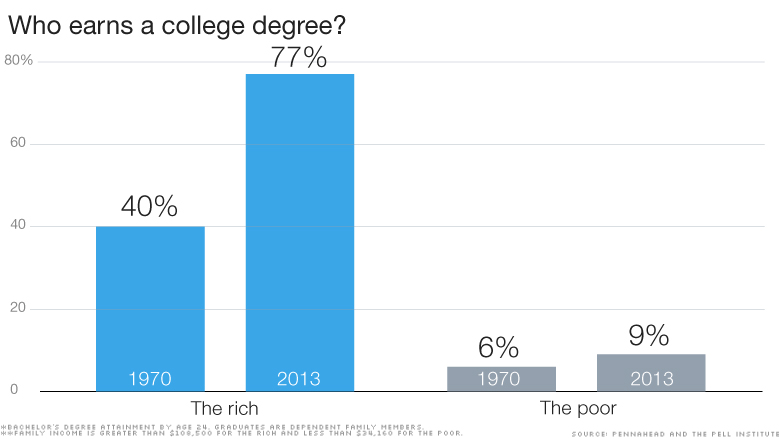
When I was in 10th grade in 1980 the National Center for Educational Statistics (NCES) did a national survey of students from my class. They followed up with us ten years later and this is what they found: Only about 5% of the students in my economic family situation graduated from college. (Good news: NCES did the same study with the 10th graders from 2002 and found that 14.5% of the low-income students from that class ended up with a college degree by 2012. That's better than 5%, but still much too low.)
So, had I followed the path that most of my peers did, I should have never went to college; and I certainly should have never graduated from college. Which means, no teaching job, no promotions, and certainly no Master's degree later on. Hence, I shouldn't be here.
---------------------------------------------------------------------------
I Shouldn't Be Here
I am enjoying my 26th year working in education this year. In that time I've been a middle and high school mathematics teacher, a high school mathematics chairperson and a district teacher specialist. I've worked in the research and accountability office and I am now a supervisor of secondary mathematics--overseeing the mathematics program for 20,000+ students in my school district. Still, had things worked out the way they were "supposed" to, I should have never done any of this.
You see, I grew up in a lower-middle income family--which is an overtly nice and formal way to put it. I have a brother and two sisters. I was among the first generation to benefit from the Free and Reduced Meals program; a benefit I received from elementary to high school.When I was in 10th grade in 1980 the National Center for Educational Statistics (NCES) did a national survey of students from my class. They followed up with us ten years later and this is what they found: Only about 5% of the students in my economic family situation graduated from college. (Good news: NCES did the same study with the 10th graders from 2002 and found that 14.5% of the low-income students from that class ended up with a college degree by 2012. That's better than 5%, but still much too low.)
The reasons I AM here are many. One of the biggest is simply public education. My K-12 teachers never told me I couldn't go to college; they never told me I couldn't do whatever I wanted to do.
I also had the good fortune of two wonderful parents who struggled to raise four children and to make ends meet while generally keeping a positive attitude. I often say that "If we were poor, I never knew it." Still, the ability of my parents to pay a greatly reduced price for lunch for four children was an incredible benefit to my family. Who knows how much less my parents would have been forced to provide for us had this not been an option?
And so, with help from my teachers in our (free) public school, and encouragement from home, I was able to attend college, graduate from college, and enjoy the occupational benefits of a college education--as is the case of my three siblings as well.
I also had the good fortune of two wonderful parents who struggled to raise four children and to make ends meet while generally keeping a positive attitude. I often say that "If we were poor, I never knew it." Still, the ability of my parents to pay a greatly reduced price for lunch for four children was an incredible benefit to my family. Who knows how much less my parents would have been forced to provide for us had this not been an option?
And so, with help from my teachers in our (free) public school, and encouragement from home, I was able to attend college, graduate from college, and enjoy the occupational benefits of a college education--as is the case of my three siblings as well.
Still, I always felt like I was one of the (extremely few) lucky ones.
Wednesday, April 8, 2015
Poverty Should Not be a Barrier to Education
The Statue of Liberty quote (written by Emma Lazarus) says it well:
Give me your tired, your poor,
Your huddled masses yearning to breathe free,
The wretched refuse of your teeming shore.
Send these, the homeless, tempest-tossed, to me:
I lift my lamp beside the golden door.
At the turn of the 20th century, the golden door was the gateway to America for many people from Europe and other far-off lands. Today, (I contend) this golden door is our nation's public schools. We accept all students and we teach all students. But when we look at the achievement of our students, we see two distinct groups: poor students (who now make up a majority of our public school students) and non-poor students.
I just read a great article in the April 2015 issue of District Administration (by Tim Goral) that talks about confronting the crisis of educating low-income students in our public schools. I'm calling it a "crisis" because of the following two facts:
- Low-income students make up half of the population of public school students in the United States.
- Low-income students struggle to maintain acceptable academic results.
These two facts are largely undisputed among educators and education researchers. Taken together they express the most major issue facing our public schools today and (perhaps) our society in the future. While our students from middle and upper-income families tend to show good achievement throughout their P-12 schooling experience, the growing numbers of students from poor families continue to demonstrate bleak achievement results. This is evident on the NAEP results as well as just about any state-level results (and local results).
I believe that this is the "Sputnik" event of our time. However, I fear that while this is a well-known problem among educators, it is not a well-know problem for people outside of education--particularly middle and upper-income people outside of education. We need change on a national level; a national effort. We need advocates throughout the country to make the general public aware of this problem.
I believe that our nation's schools have the people and the tools to turn around this "rising tide of mediocrity that threatens our very future as a nation and a people." (quoted from A Nation at Risk) This is a difficult and complicated problem that we must solve.
And I am certain that we will solve this problem.
Saturday, April 4, 2015
We Want Students To FINISH College
We have won the battle of convincing students of the value of going to college. But our goal isn't really for more students to "go" to college; our goal should really be for more students to "graduate" from college. On that metric we are still far from claiming victory.
Rates vary depending on the source of the information, but overall it is fair to say that merely getting accepted to college is absolutely not a guarantee of graduating from college. In fact, many colleges have such a terrible graduation rate among students that have been attending for four years that they prefer to publicize their SIX YEAR graduation rate rather than their four year graduation rate. According to the Chronicle of Higher Education, the six-year graduation rate means the percentage of students who are able to complete a four-year program within six years [!] . Even this extra time only raises the overall college graduation rate to around 50%.
Can you imagine the outcry from the public, from our government, and from our students if the high school graduation rate was only 50%??? Yet, this fact is not widely known by the public. Little more than half of our students that begin college actually finish college. And if you look at the data by race, the news is even worse.
Of course there are many reasons for why students drop out of college. A Harvard Study cites the following reasons:
- not being prepared for the rigors of academic work
- inability to cope with the competing demands of study, family, and work
- cost
Our public schools are in a constant battle with students (and sometimes with parents) over the dueling pressures of Learning versus Getting Good Grades. Some students care little about actual learning and only want to do what is necessary to earn a good grade. While their teachers are pushing them to learn, to understand, and to use the learning they've acquired to learn more. I believe that a major reason for the low college graduation rate is students who do enough in high school to get accepted to college, but don't enough (in high school) to gain the knowledge and the discipline they need to succeed in college.
We must do better on this front. We must continue to stress the importance of true learning and true understanding of P-12 content. We have to lessen the importance of grades and increase the importance of real learning. In the end, it's not that we want students to attend college; what we really want is for students to graduate from college.
Wednesday, April 1, 2015
Learning, Smoking, and The Long Arc of Change
When I think about the huge job of improving education outcomes among our students (especially our poor students) in America, I think about the amazing turn-around in behavior about smoking over my lifetime.
It is nothing short of a modern-day miracle that smoking has declined so dramatically in the United States over the past 50 years. In 1965, 42.4% of U.S. adults were smokers. By 2003, that number was cut in half and in 2013 we were down to 17.8%. And, of course, our population has risen quite a bit over this timeframe from 194 million people in 1965 to over 320 million people today.
No one in the United States in 1965 would have ever believed that Americans would give up their love for smoking so dramatically. Even with today's relatively low rates of smoking, nearly 70% of current smokers want to stop smoking. It is nothing short of amazing the way this addictive behavior has changed in the United States in just a couple of generations.
I believe that our public schools can look at this incredible event, this long arc of changed behavior, and that we can use it as a lesson for tackling the equally difficult task of improving the educational outcomes of our students. We can examine the efforts that took place (and continue to take place) that convinced people that smoking is bad for you; and (perhaps) we can undertake similar efforts in our public schools.
First of all, there was a national effort to inform the public of the dangers of smoking. This began with the first surgeon general's report that provided proof that smoking was bad for your health. Of course, there were lots of people of that didn't believe the contents of this report. I'm sure there were people who pointed to relatives and friends who lived well into old age and smoked their whole life--and, therefore, refused to believe that smoking was bad for your health. But more and more information came out from public and private sources about the dangerous health risks of smoking and eventually it became very hard for people to believe that smoking wouldn't harm their health. As smokers died from lung cancer and other diseases, people began to link these deaths to their habit of smoking. This gave people a personal connection to the ill effects of smoking and it convinced them to never smoke or to quit smoking. As they grew up and had children of their own, this knowledge of the evils of smoking was passed on to the next generation. And so, what started as a national effort from government sources, slowly became a combined effort of government and private resources that worked together to bring down the rates of smoking in America.

I believe that a similar combined effort is underway in our public schools today. We have a government that believes in the value of education and is dedicated in improving the education of our citizens. We also have many private efforts underway that are striving to do the same. We also have segments of our population that don't believe that education is important. As with the smoking example, they point to friends and relatives that quit school in eighth grade and grew up perfectly fine. But (as with the smoking example), we also have generations of parents that have regrets of not doing better and trying harder when they were in high school. They look at their peers who went on to college or some sort of vocational training and now have higher-paying jobs.
I believe that we can change the behavior of Americans toward the value of education--and all of the hard work that this entails--over the next generation. I believe that we can see a country with higher high school graduation rates and higher college graduation rates. And when this happens, we will reap the benefits of a more educated society. We will see less crime, less people on welfare, less obesity, and a strong economy. And I believe that this will happen within the lifetimes of our current high school students.
We can do it. We have done it in other areas of our society and we can do in education too. We must do better and we will.
It is nothing short of a modern-day miracle that smoking has declined so dramatically in the United States over the past 50 years. In 1965, 42.4% of U.S. adults were smokers. By 2003, that number was cut in half and in 2013 we were down to 17.8%. And, of course, our population has risen quite a bit over this timeframe from 194 million people in 1965 to over 320 million people today.
No one in the United States in 1965 would have ever believed that Americans would give up their love for smoking so dramatically. Even with today's relatively low rates of smoking, nearly 70% of current smokers want to stop smoking. It is nothing short of amazing the way this addictive behavior has changed in the United States in just a couple of generations.
I believe that our public schools can look at this incredible event, this long arc of changed behavior, and that we can use it as a lesson for tackling the equally difficult task of improving the educational outcomes of our students. We can examine the efforts that took place (and continue to take place) that convinced people that smoking is bad for you; and (perhaps) we can undertake similar efforts in our public schools.

I believe that a similar combined effort is underway in our public schools today. We have a government that believes in the value of education and is dedicated in improving the education of our citizens. We also have many private efforts underway that are striving to do the same. We also have segments of our population that don't believe that education is important. As with the smoking example, they point to friends and relatives that quit school in eighth grade and grew up perfectly fine. But (as with the smoking example), we also have generations of parents that have regrets of not doing better and trying harder when they were in high school. They look at their peers who went on to college or some sort of vocational training and now have higher-paying jobs.
I believe that we can change the behavior of Americans toward the value of education--and all of the hard work that this entails--over the next generation. I believe that we can see a country with higher high school graduation rates and higher college graduation rates. And when this happens, we will reap the benefits of a more educated society. We will see less crime, less people on welfare, less obesity, and a strong economy. And I believe that this will happen within the lifetimes of our current high school students.
We can do it. We have done it in other areas of our society and we can do in education too. We must do better and we will.
Friday, March 6, 2015
Are the new PARCC and Smarter Balanced Tests Too Difficult?
Public schools across the country are now using the new PARCC and Smarter Balanced assessments in Mathematics and English/Language Arts in grades 3 to high school. Aside from the political commentary about these tests, some teachers have concerns that they are too difficult for their students. Along with this concern comes concerns about hurting students' self-esteem, battling parents' perceptions of their children's abilities, and aligning earned course grades with earned PARCC and Smarter Balanced scores.
I have heard and read comments that say that these tests are good for students who are very strong academically, but that they are inappropriate for students who are average or below average. Sometimes parents have commented on sample problems and have stated that they are too hard for the students.
The standards that these tests are written to are aligned to world-class education standards. I realize that "world-class" is a buzz word, but I agree that these standards (and associated tests) represent an uptick with regard to rigor compared to those that they are replacing. We know that too many of our students get good grades in elementary and middle school and then struggle with subjects in high school. Or, they do fine (in terms of course grades) even through high school, but then they do poorly on the SAT or ACT. We also know that many students graduate from high school, go to college, and do not graduate from college. (see college graduation rates)
Hence, public schools are faced with this problem of students who appear to be learning and doing well in school, but then struggle with learning later. We addressed this problem by incorporating tougher standards and putting in place assessments to see if the students are attaining these tougher standards. In my opinion, this needs to happen; this must happen. Nobody wants to see their own child struggling. But we have to realize that this is already happening:
I have heard and read comments that say that these tests are good for students who are very strong academically, but that they are inappropriate for students who are average or below average. Sometimes parents have commented on sample problems and have stated that they are too hard for the students.
The standards that these tests are written to are aligned to world-class education standards. I realize that "world-class" is a buzz word, but I agree that these standards (and associated tests) represent an uptick with regard to rigor compared to those that they are replacing. We know that too many of our students get good grades in elementary and middle school and then struggle with subjects in high school. Or, they do fine (in terms of course grades) even through high school, but then they do poorly on the SAT or ACT. We also know that many students graduate from high school, go to college, and do not graduate from college. (see college graduation rates)
- poor SAT/ACT scores
- low AP scores
- high percentages of students taking remedial math and english courses in college
- students dropping out of college before earning a degree
Until now, we have always been able to say "my kid gets good grades in school, so none of these other things matter to me". But we have been fooling ourselves.
If we want students to be successful, we have to raise the standards (as we've done) and we have to insist on continually high standards throughout P-12 education. This must happen. Better education leads to better lives for our future adults--which leads to a better society for all of us.
The tests are not too difficult. We must, must, must insist on high standards, and we must do everything we can to help our students to achieve these higher standards. I believe that our public schools will do exactly this in the years to come. We will meet this challenge and we will raise student achievement and we will help to produce a society of educated people who are not afraid to face challenges, find solution, and succeed.
Saturday, October 4, 2014
Lower Dropout Rates
According to a recent article from the Pew Research Center (see article here), the U.S. high school dropout rate dropped to 7% last year. It has been going down since 2000 when the national dropout rate was 12%. Educators know that earning a high school diploma may not be a ticket to live-long success. But without one, you are pretty much guaranteed to experience many struggles in your life--not the least of which would be trying to build a middle-class life for you and your family.
Hispanic and Black dropout rates have significantly declined since 1993. Hispanic student (today) comprise 25% of our nation's public school students. In 1993 their dropout rate was 33%. Today it is down to 14%--and it has been steadily declining since 1998 despite a 50% rise in the population of young Hispanics in our country. The dropout rate for Blacks has declined from 16% in 1993 to 8% today. Black youth represent 16% of our public school students.
Public schools do everything they can to keep students in school and to encourage completion of their high school diploma. We encourage students to become involved in school teams and school clubs. Students who are involved in school are less likely to dropout. (I have to be honest, I can't find data on that last statement. But I've heard it from many sources over the years and it makes sense--to me--to be true.)
We also know that when students can connect with an adult in the school, they are more likely to stay in school and to finish high school. Once again, relationships is the key.
This is a major win for our public schools and even more of a win for our students--and for our country. An educated society leads to less people in jail; less people on welfare; more people working; more taxes being paid; and so on, and so on, and so on. It all begins with education. Lowering the dropout rate is very, very good news.
The next hurdle to clear is raising the college graduation rate--which is well below 50%. But that's a topic for another post.
Hispanic and Black dropout rates have significantly declined since 1993. Hispanic student (today) comprise 25% of our nation's public school students. In 1993 their dropout rate was 33%. Today it is down to 14%--and it has been steadily declining since 1998 despite a 50% rise in the population of young Hispanics in our country. The dropout rate for Blacks has declined from 16% in 1993 to 8% today. Black youth represent 16% of our public school students.
Public schools do everything they can to keep students in school and to encourage completion of their high school diploma. We encourage students to become involved in school teams and school clubs. Students who are involved in school are less likely to dropout. (I have to be honest, I can't find data on that last statement. But I've heard it from many sources over the years and it makes sense--to me--to be true.)
We also know that when students can connect with an adult in the school, they are more likely to stay in school and to finish high school. Once again, relationships is the key.
This is a major win for our public schools and even more of a win for our students--and for our country. An educated society leads to less people in jail; less people on welfare; more people working; more taxes being paid; and so on, and so on, and so on. It all begins with education. Lowering the dropout rate is very, very good news.
The next hurdle to clear is raising the college graduation rate--which is well below 50%. But that's a topic for another post.
Tuesday, September 30, 2014
Change What You Do (or else improvement will never happen)
It seems we are constantly hearing and reading statistics that say American students are not achieving very well. We rank low in reading and mathematics compared to other industrialized countries. A quarter of our children never graduate from high school and the graduation numbers are even worse in college. Our poor children and learning disabled children and minority children have lower rates of achievement than our white and economically advantaged children.
All of this is true. And we don't like it; and we want it to change. We want all students to be successful; we want all students to graduate from high school; we want all students to be grow to be capable, responsible adults. But this is a difficult problem--as is evidenced from the years and years of data with very little improvement on these fronts.
If I knew the solution(s) to this problem, I would tell you. The best I can do is offer my ideas:
(1) We need to instruct students in a way that they respond to; we need to know what they "get" and what they don't get--so we can help them.
(2) We need to use more technology in a more effective way.
(3) We need to be more concerned about learning and less concerned about grades.
(4) We need to use valuable classtime for addressing student questions and much, much less classtime forcing students to complete worksheets. (If they already know how to do the work, why force them to show us again and again and again. If they don't know how to do the work, why force them to do ten problems that they can't do.)
(5) We need to increase student engagement every minute of every class. There should be less teacher-talk and more student-talk.
What are your five best ideas for changing teaching? If you could do anything in your classroom to help students to learn better, what would you do? We have to do something different if we want different (and better) results.
Sunday, August 24, 2014
Three Wishes for Education
As I begin my 27th year in education, I would like to look ahead and think about the three biggest things that I would like to see in education in the United States. These things may happen before I retire (still a long way off), they may happen before I die (hopefully a longer way off [!] ); but I hope they happen. So rub the lamp; here are my three wishes.
#1) Poor students learn just as much and just as well as rich students
We are constantly bombarded with data that shows poor students having lower achievement than their richer peers. We (in education) know why this happens. It's not just that they lack money for adequate, nourishing food. Students from poor families come to school in kindergarten already behind their richer peers. They have less books in their home. They have a higher percentage of parents who didn't finish high school and/or never went to college. They live in more dangerous neighborhoods compared to rich kids. They don't always have a space at home to study or to do homework. They don't always have an adult in the home who can help with homework. When they get sick, they don't go to the doctor as much or as quickly as richer kids; so they get sicker and they miss more school.
The list goes on and on. And it's all true. Poor students have many, many disadvantages when it comes to schooling and learning. Add to this list that all of their teachers went to college, graduated from college, and probably (most of their teachers) were never poor--since the percentage of poor students going to and completing college (still) remainings embarrassingly low for Americans. So many of their teachers have little or no experience at what it's like to be grow up in a poor household.
And so, for all of these reasons (and more) poor students in America have lower achievement than rich students. I feel that America's public schools have a moral responsibility to these children to see to it that they get a great education and that they succeed in education. It is our responsibility to prepare these students for the world that they will inherit. It is our responsibility to see to it that each and every poor student does not continue the cycle of poverty but ends poverty for themselves and for their children.
It is my number one wish that our public schools do a better job with our most vulnerable students. In fact, we must do better.
#2 Learning is more important than getting grades
It probably isn't fair to say this, but a lot of the time I feel that so many of our students are more concerned about getting grades than they are about learning. I hope that isn't true for the majority of our students, but it certainly seems to be true for many of our students. We created a monster when it comes to grading and it is out of control.
Students stay up late and worry endlessly not about whether or not they will learn something, but instead, whether or not they will get this or that grade. It has led us to a system where many students are great at (what I call) "playing school". They do what they're told, they read the book, they turn in their homework, they take the test, they get the grade. And one week later they couldn't tell you anything they learned from that unit of study.
This is a major reason why so many students begin college and so few finish college. Heck, this is a major reason why so many students do great in (say) Algebra 1 and do lousy in Algebra 2.
We have to do a better job and emphasizing the learning and de-emphasizing the grading. Students need to be rewarded for actually learning. When they do, they will feel a great sense of accomplishment and will celebrate the learning--and care less about the grading.
We don't give grades when children learn to ride a bike or play the piano or do a magic trick or hit a baseball. Yet children find great enjoyment in doing these things--all without grades. My second wish is for students to find enjoyment in learning--in conquering a difficult subject or a difficult learning task--and succeeding.
#3 All students graduate from high school
The high school graduation rate in the United States is around 75%. (Note: In our colleges, the graduation rate is even lower.) This is a serious problem for our nation and is certainly a serious problem for the people who don't have a high school diploma. The statistics for people without a high school diploma are awful. Higher rates of unemployment; lower wages; higher percentages on welfare; poorer health; and (worst of all) a much higher chance that their children will not graduate from high school.
There have been studies that tell us that many high school dropouts leave school for non-academic reasons. They don't feel a connection to the school or they don't feel as if any of the adults care about whether they stay in school or leave.
We have to take a hard look at what we can do in our schools to keep students in school and to help them to graduate. I know that this is being done in a lot of places--this isn't (unfortunately) a new problem. But our economy in the United States is not kind to people who don't have a high school diploma. This is a problem that can be solved and it will improve the lives of millions of young adults as well as improving the communities all over our country.
These are my three wishes for education in the United States. What are your three wishes? Let me know. Leave a comment or use the Twitter hashtag #ThreeWishesForEducation.
#1) Poor students learn just as much and just as well as rich students
We are constantly bombarded with data that shows poor students having lower achievement than their richer peers. We (in education) know why this happens. It's not just that they lack money for adequate, nourishing food. Students from poor families come to school in kindergarten already behind their richer peers. They have less books in their home. They have a higher percentage of parents who didn't finish high school and/or never went to college. They live in more dangerous neighborhoods compared to rich kids. They don't always have a space at home to study or to do homework. They don't always have an adult in the home who can help with homework. When they get sick, they don't go to the doctor as much or as quickly as richer kids; so they get sicker and they miss more school.
The list goes on and on. And it's all true. Poor students have many, many disadvantages when it comes to schooling and learning. Add to this list that all of their teachers went to college, graduated from college, and probably (most of their teachers) were never poor--since the percentage of poor students going to and completing college (still) remainings embarrassingly low for Americans. So many of their teachers have little or no experience at what it's like to be grow up in a poor household.
And so, for all of these reasons (and more) poor students in America have lower achievement than rich students. I feel that America's public schools have a moral responsibility to these children to see to it that they get a great education and that they succeed in education. It is our responsibility to prepare these students for the world that they will inherit. It is our responsibility to see to it that each and every poor student does not continue the cycle of poverty but ends poverty for themselves and for their children.
It is my number one wish that our public schools do a better job with our most vulnerable students. In fact, we must do better.
#2 Learning is more important than getting grades
It probably isn't fair to say this, but a lot of the time I feel that so many of our students are more concerned about getting grades than they are about learning. I hope that isn't true for the majority of our students, but it certainly seems to be true for many of our students. We created a monster when it comes to grading and it is out of control.
Students stay up late and worry endlessly not about whether or not they will learn something, but instead, whether or not they will get this or that grade. It has led us to a system where many students are great at (what I call) "playing school". They do what they're told, they read the book, they turn in their homework, they take the test, they get the grade. And one week later they couldn't tell you anything they learned from that unit of study.
This is a major reason why so many students begin college and so few finish college. Heck, this is a major reason why so many students do great in (say) Algebra 1 and do lousy in Algebra 2.
We have to do a better job and emphasizing the learning and de-emphasizing the grading. Students need to be rewarded for actually learning. When they do, they will feel a great sense of accomplishment and will celebrate the learning--and care less about the grading.
We don't give grades when children learn to ride a bike or play the piano or do a magic trick or hit a baseball. Yet children find great enjoyment in doing these things--all without grades. My second wish is for students to find enjoyment in learning--in conquering a difficult subject or a difficult learning task--and succeeding.
#3 All students graduate from high school
The high school graduation rate in the United States is around 75%. (Note: In our colleges, the graduation rate is even lower.) This is a serious problem for our nation and is certainly a serious problem for the people who don't have a high school diploma. The statistics for people without a high school diploma are awful. Higher rates of unemployment; lower wages; higher percentages on welfare; poorer health; and (worst of all) a much higher chance that their children will not graduate from high school.
We have to take a hard look at what we can do in our schools to keep students in school and to help them to graduate. I know that this is being done in a lot of places--this isn't (unfortunately) a new problem. But our economy in the United States is not kind to people who don't have a high school diploma. This is a problem that can be solved and it will improve the lives of millions of young adults as well as improving the communities all over our country.
These are my three wishes for education in the United States. What are your three wishes? Let me know. Leave a comment or use the Twitter hashtag #ThreeWishesForEducation.
Friday, June 6, 2014
College and Career: (Or, Should It Be...College and/or Career???)
Public Schools (at least in my state) are engaging in a big push called College and Career. "We are preparing students for College and Career." "We want students to be College and Career Ready." It is a good slogan; and, let's face it, it makes sense. It should be our job, as a public school system, to prepare students for the next phase in their life; whether it be College or Career.
We do a lot to prepare students for college. We offer Advanced Placement courses, we prepare students to take the SAT and the ACT. We provide information about scholarships. We hold College Fairs. We allow students to take college courses while in high school--and earn (both) high school and college credit; we call this "duel-credit".
We also do a lot to prepare students for careers. We invite speakers to come to schools to talk about their work. We have a Career Technology Center that prepares students for many different careers from Cosmetology to Carpentry to Engineering (and lots more). We help to set up students in internships during the summer and (sometimes) during the school year.
We do our best to honor our commitment to both college-bound students and career-bound students.
The struggle comes as we try to make one set of rules for both of these populations. Particularly academic rules. Here is a recent article that questions if college is appropriate for everyone. And here are some statistics about jobs with the potential for growth in the next ten years--and the amount of education needed for them.
The real issue of concern is for the population of students that are weak academically, but very strong artistically--or they have a talent that doesn't require high levels of knowledge in math and science such as Culinary Arts or HVAC or writing fiction. How should the public school system account for these students in our policies regarding high school graduation requirements? That's a tough question.
And so we are left with this difficult balancing act. We want everyone to graduate from high school and we want everyone to be ready for college--if they choose to go to college. Public schools serve everyone; and sometimes "serving everyone" leads to difficult decisions. We know that education is the gateway to a better life for everyone and we take that responsibility very seriously. Some students go directly to college and some go directly to careers, but all students need to be College and Career ready.
We also do a lot to prepare students for careers. We invite speakers to come to schools to talk about their work. We have a Career Technology Center that prepares students for many different careers from Cosmetology to Carpentry to Engineering (and lots more). We help to set up students in internships during the summer and (sometimes) during the school year.
We do our best to honor our commitment to both college-bound students and career-bound students.
The struggle comes as we try to make one set of rules for both of these populations. Particularly academic rules. Here is a recent article that questions if college is appropriate for everyone. And here are some statistics about jobs with the potential for growth in the next ten years--and the amount of education needed for them.
The real issue of concern is for the population of students that are weak academically, but very strong artistically--or they have a talent that doesn't require high levels of knowledge in math and science such as Culinary Arts or HVAC or writing fiction. How should the public school system account for these students in our policies regarding high school graduation requirements? That's a tough question.

We know that earning a high school diploma affords our young people many advantages that are not available to people without a high school diploma. Therefore, we take great strides to ensure that the opportunity to earn a high school diploma is available to all students. But over the years, our efforts to increase the high school graduation rate in the United States have led to too many students who graduate from high school who are not ready for college (as seen in this graphic about college graduation rates in the fifty states of the United States). So, in response to this concern, we have raised the standards so that high school graduates are better prepared for college.
Saturday, April 26, 2014
A Better Plan for Remedial Math in College
Students who graduate from high school but are not ready to do college-level work are required to take remedial courses. These are courses (that students must pay for) that do not earn them college credit. For mathematics, some students must take two or three remedial math courses before they can take their first credit-baring mathematics course. (See Beyond the Rhetoric, news article, another news article) The idea is that these courses will help students to gain the mathematical knowledge that they need to be successful in the "real" college math courses. The assumption is that these students would not be able to pass a credit-baring math class unless they first proved that they had these particular math skills.
It makes sense; it sounds logical; it seems like a good plan. But it hardly ever works. (See Bridge to Nowhere) State Senator from Florida, Joe Negron has said “Remediation in Florida was not an entrance ramp to success, it was an exit ramp to failure.” Students struggle in these courses and drop out of college. Instead of helping students to be successful in college, the remedial math course system is lessening the likelihood that students will complete college.
There has to be a better way to help students. I work in a secondary school environment (middle and high schools). When we have students coming into middle school who are below grade level in mathematics, we don't teach them elementary school math, we teach them middle school math and provide support along the way. Similarly, when students enter high school with weak math skills, we don't reteach middle school math, we teach them high school math provide support along the way.
Why can't colleges do this? Why can't colleges put students in college-level, credit-baring math classes, and provide help along the way for students who struggle. Some colleges (and states) are looking into this idea. (See article, California, Florida)
High school mathematics teachers will tell you that they often have students in their high school math classes with weak skills, but these students usually pass the class. They may not get "A's", but they will pass and earn the credit. And we all know how they do it:
There has to be a better way to help students. I work in a secondary school environment (middle and high schools). When we have students coming into middle school who are below grade level in mathematics, we don't teach them elementary school math, we teach them middle school math and provide support along the way. Similarly, when students enter high school with weak math skills, we don't reteach middle school math, we teach them high school math provide support along the way.
Why can't colleges do this? Why can't colleges put students in college-level, credit-baring math classes, and provide help along the way for students who struggle. Some colleges (and states) are looking into this idea. (See article, California, Florida)
High school mathematics teachers will tell you that they often have students in their high school math classes with weak skills, but these students usually pass the class. They may not get "A's", but they will pass and earn the credit. And we all know how they do it:
- They study
- They do their homework
- They ask their teacher for help
- They ask their parents, friends, relatives for help
- They struggle to learn (or memorize) what they need to do well on tests
Most of the people reading this blog have been in a high school or college class that they found difficult and most of us have found a way to pass; or to get a "C"; or to do whatever it was we were motivated to do to successfully finish that class. Clearly there are going to be students who are completely unprepared for some classes and no amount of assistance will bring them to the point where they can pass. But I would say that that is not the case with most students.
We need a better plan. Remedial math classes in college that don't remediate students is not the way to go. There has to be a better way to help students to achieve their dreams and to graduate from college.
Subscribe to:
Posts (Atom)
Public Schools and Choice
Is it true that public school kids and their public school parents don't have choices? I'm sure that I will expose my igno...
Teach100 blog
-
The Case Against Worksheets The "worksheet" has been a staple of the P-12 educational experience for students for the pa...
-
The data is overwhelming: 10.7 million school-aged children living in poverty ( source ) Over 50% of school-aged children are eli...
-
I'm going to start by saying that I went to college, my wife went to college, my siblings went to college, I want my children to ...