Showing posts with label Growth Mindset. Show all posts

Friday, December 2, 2016

Changing Math Attitudes

       I'm borrowing the title of a Facebook group to use as the title for this post.  The group called Changing Math Attitudes is composed of math teachers and other educators and (I suppose) other folks that seek to share experiences and expertise in the effort of helping students (and adults) to see mathematics as something beautiful, sensible, and doable by everyone.

       The first step in improving abilities in anything is to believe that you can do it.  We want students to understand that mathematics is not a secret code to which only a privileged few have access.  There is no "math brain".  Everyone can understand mathematics and it will take a group effort by many people in many circumstances to effectively change the view of mathematics that so many people hold.  This is the view that says "I'm not good at math."  (And so many people freely say this out loud when they would never say that they can't read or that they are bad at Science or History.

       I especially enjoy reading the posts from this group because they are generally politically agnostic.  It isn't a group that is pushing a political agenda one way or the other.  And this makes sense too because the "I'm bad at math." attitude is not coming from one group of people who members of any single political persuasion.  All sorts of people hold this view and so we are talking to all people when we say that we want to change attitudes about mathematics.

       Any math teacher will tell you that most of the students in their classes that struggle to understand the math would do so much better if they held the view that effort would lead to success; if they believed that getting the wrong answer doesn't mean that you are "dumb" but instead means that you've had a learning experience that can lead to better understanding.  If students can escape the Fixed Mindset that says "No amount of effort will lead to success.", then we know that we can help them to get to a point of better understanding.

       Attitude is everything.  Attitude determines the effort that students will put forth.  Attitude allows for a second try and a third try and a fourth try; or attitude gives permission to not try at all.  Attitude is the force that is stronger than caring adults.  Attitude shapes our views and ultimately shapes our destiny.  When our attitude tells us to give it a try, we are on our way to a world of opportunities.


Saturday, September 24, 2016

I Don't Have a Reading Brain

       I don't have a reading brain.  


       I'm 52 years old and I've never been good at reading.  In fact, I'm constantly telling my children that I was never a good reader so that they don't feel so bad about being bad at reading themselves.  They are always saying, "Why do we have to learn to read anyway?" and even though I basically agree with them, I try to think of times when reading is important such as when they get a text from their friends.

       I really don't feel too bad about being a bad reader because just about everyone I know is bad at reading.  In fact, we are always joking about being bad at reading.  My sister-in-law is a middle school English teacher and every time we go to a restaurant we always make her read the menu to us.  We just tell the waitress to hand the menus over to her and most of the time the waitress sort of laughs in agreement and says something like, "I get it.  I'm a terrible reader too."  And we all have a big laugh.

       People who can read must be really smart.  Everyone knows this.  In school, we always knew who the smartest kids were because they were able to read.  When teachers told me to read, I just tried to memorize the facts that I needed to know to answer the questions at the end of the chapter.  That's what I tell my own children to do because I really can't help them with their reading and they know that I can't really read very well anyway.

       High school reading was the worst.  Seriously, how are normal people supposed to memorize all of those words AND their meanings.  It really isn't humanly possible, except for people that have reading brains--I guess.  

----------------------------------------------------------------

       Does this sound familiar to you?  Are you constantly telling your kids and your friends that you're terrible at reading?  Do you get tense when have to read something?  Do you have reading anxiety?


Who would brag about not being able to read?  Who would ever suggest to their very own children that reading isn't important?  It's absurd.  No adult or parent would openly laugh about not being able to read.

       But, sadly, adults and parents often say these things about mathematics.  Some people actually believe that there is such a thing as a "math brain".  Many people view people who are good at math as being "smart".  And I have often been in a restaurant when my friends and relatives have passed the check to me to figure out the tip--all the while laughing and being very open about their inability to do math.

       What sort of message are we sending to our children when so many adults joke about not being able to do math?  Too many children feel that they are given a "pass" from the adults in their lives to be poor at math.  This leads to a lack of effort in the classroom which leads to a lack of understanding.  Every math teacher has (at some point in their career) said to a parent, "Your child could do so much better in mathematics if he/she put in the effort."

       This is something that we can fix.  This is something that every parent can do to help their child to do better in math.  Stop saying that you were never good at math.  Make sure that your children understand that they can do anything and they can learn anything; but they have to try.  Learning isn't always easy.  No one expects you to "get it" the first time.  It takes effort and mistakes and try, try again.

       Learning reading and mathematics isn't all that different.  The difference is our attitudes toward them.

Sunday, August 14, 2016

Parent's Role in Improving Student Achievement

       If you have a child in elementary, middle, or high school, then your main concern is helping your child to do well in school.  You have a person or persons in your household that is a member of the most important cliental in the educational community--the students.  And as a parent, you have influence over your children.  Your attitudes and actions toward school matter.

       We need your help!

       So here is my short list of the three top things that parents can do to help their children to do well in school.


  1. Healthy relationships all around.  
Help your child to make friends with classmates and to get to know the teacher or teachers.  You (the parent) should try to get to know your child's teacher(s) too.  Communication is the key to all healthy relationships.  So try to discover the best way to contact the teacher.  Make sure that your child knows that you have a relationship with the teacher and a way to make contact on an as-needed basis.  This shows that you care about your child's education.  

   2.  Emphasize "learning" over "getting-a-good-grade".

The point of school is learning, not getting a good grade.  There are lots of ways to get good grades without learning much.  We want students to learn how to learn; to read; to study; to try and fail and try again; and ask for help.  Your child's grade should reflect his or her ability; but sometimes it just reflects his or her ability to do what they're told.  Remember that the goal of school is learning.  It's the "Do you best." philosophy (that your parents probably said to you).

    3. Don't help your children too much.

Let's face it...nobody likes to see their children struggling.  But if everything is easy and can be obtained without effort then you have to ask, "Is my child really learning anything?"  Real learning comes from a little struggle from time to time.  Just because your child doesn't "get it" the first time doesn't mean they will never get it.  They just haven't gotten it yet.  If you tell them the answer or do the work for them, they will get the right answer, but they haven't learned anything.  Remember, the goal of school is learning.  Instead of telling them the answer, ask questions.  "What do you know?"  "What don't you know?"  "What do you need to know?"  "What questions should you ask the teacher?"  We want students to learn how to deal with struggle; we want them to problem solve when the problem is difficult.

       School means a lot of things to a lot of people.  Clubs, sports, friends, activities, requirements, homework, pens, paper, teachers,....  It can be hard to remember that it is all about learning.  As the parent, you can help your child to focus on the important parts of school.

       Have a great school year!

Tuesday, July 26, 2016

Motivation and Student Engagement

       We always say that there is no "silver bullet" to getting kids to learn and be successful in school.  There's no secret or magic that helps all students.  Teaching is an art and some people have a way of reaching students better than other people.

       But the truth is that there really is a secret.  Every student can learn and good teachers can get to every student: the quiet student, the reluctant student, the distracted student, the poor student, the sad student, and even the emotionally-challenged student.  There is a way to help all students to learn how to learn.  This secret isn't always taught in teacher preparation classes.  Some teachers know about the secret but refuse to employ it; or struggle to use it every day.  Other teachers seem to use this secret with relative ease; masking the hours of effort and preparation they have put into it prior to class time.  The secret is motivation and student engagement.

       For most students who struggle in school, it isn't that they lack the ability to learn.  More often it is that they lack the desire to learn.  They haven't been given a good reason to learn.  They receive very uninspirational messages such as:  "You have to go to school."  "It's your job to go to school."  "I know it's hard, but you have to do it."  "Math is dull and boring, but that's just the way it is."  "It's the law that you have to go to school."  "Just do it and get it over with."  (And so on.)  These messages might be OK for very little children who are more accustomed to doing what they are told to do from their parents and other adults, but by the time kids get to middle school and certainly by the time they get to high school, children need a much better reason to do things other than "Because I say so.".

       Have you noticed that when students like their teachers, they tend to do better in those classes?  Have you ever been surprised that your child is doing great in Social Studies or Foreign Language when they never liked these subjects in the past?  Most of the time it isn't the subject, it's the teacher that made the difference.  And when you ask the child why they are doing so much better, they say that the teachers makes the subject interesting and fun.  An important part of teaching is motivating students to do their best.  Some teachers understand this very well and work hard to find ways to motivate their students.

       This "secret" really isn't a secret to our best educators; but it seems to continue to be a secret to some of our teachers.  Fortunately there are a lot of books and groups and people that can help teachers to learn about student engagement and motivation.  A great place to start is the book Teach Like a Champion by Doug Lemov.  This book is filled with simple ideas that motivate students.  Another excelled source of information is Robert Marzano's book The Highly Engaged Classroom.  This book explains why it is important to employ student engagement strategies into every classroom and how it helps students to do better in school.  Another popular book on this subject is Teach Like a Pirate by Dave Burgess.  There is also a very popular Twitter chat under the hashtag #TLAP in which teachers talk about their experiences and ideas about student motivation.  Finally, I have to include the book Growth Mindset by Carol Dweck--which is becoming (practically) required reading among teachers that seek to help their students to reach their true potential.

       Of course, teachers who are best at motivating their students have put in many, many hours of reading and classes and training to be good at this.  Every student is different and every school year presents different challenges.  Some teachers are so overwhelmed by the demands of teaching, it can be difficult for them to take the time to learn about student motivation.  However, some teachers believe that the old messages of "you just have to do this" should be good enough motivation for students and they are unwilling to learn about new methods for helping their students to do their best everyday.

       Every student can learn and every teacher can reach every student.  The "secret" is learning about student motivation and student engagement.  It works every time!  If we want to encourage our students to be the best that they can be and help them to reach their potential, we can do this.  Indeed, we must do this.


Thursday, July 21, 2016

Everyone Can "Do" Math


       I've got great news...Everyone can do math!

       The bad news is that everyone doesn't believe this.  In fact, lots of people don't believe this.  How many times have you or someone you know said, "I'm not good at math." or "I'm not a 'math person'." or "I don't have a math brain."?  You never hear people say this about Science or Social Studies; it's only about math.  And the reason people say this is (probably) because of the way they learned math in school.

       Math has always been taught as a bunch of rules to follow, a lot to senseless things to memorize, and a whole lot of procedures to do.  Nobody ever taught you why these procedures make sense or why these rules are in place.  They just said something like "You have to know it."  (This is akin to the parent who says to his or her child, "Because I say so.")  Not a very good reason and certainly not a compelling reason for learning and understanding.

       And to make matters worse, we now have generations of people (parents and grandparents) who believe that this is the way math is supposed to be taught.  We have parents saying to their children, "I know it's hard and I know it doesn't make sense, but this is just the way it is and you have to do it."  This is a terrible message for students to receive.  It says to students that even their parents think that math is weird and confusing and doesn't make sense.  It reinforces the message that says "You will probably not understand this."  So a lot of students accept this message and basically say, "Fine.  I'm never going to 'get it', so I'm not going to try anymore."

       It doesn't have to be this way.  Our mathematics classrooms can be filled with positive messages that tell students that math is about creativity and making connections.  Messages that tell students that it is OK to make mistakes in math class because that is how you learn.  And messages that explain that you don't have to be first to get the correct answer.  In fact the best math students are slow in thinking and reasoning and understanding.

       Everything in this post comes from Dr. Jo Boaler and from the website that she created called YouCubed.  She has spent her professional career trying to understand how students learn and how teachers teach.  Her ideas and suggestions can lead to a new world of mathematics teaching and mathematics learning.  All of this is based on research and not from one person's point of view or experience.


       Understanding math is important and we need public school teachers to teach for understanding; we need parents to encourage understanding in math class; and we need students to believe that they can learn mathematics as easily as any other subject.


Thursday, July 14, 2016

Learning About Learning

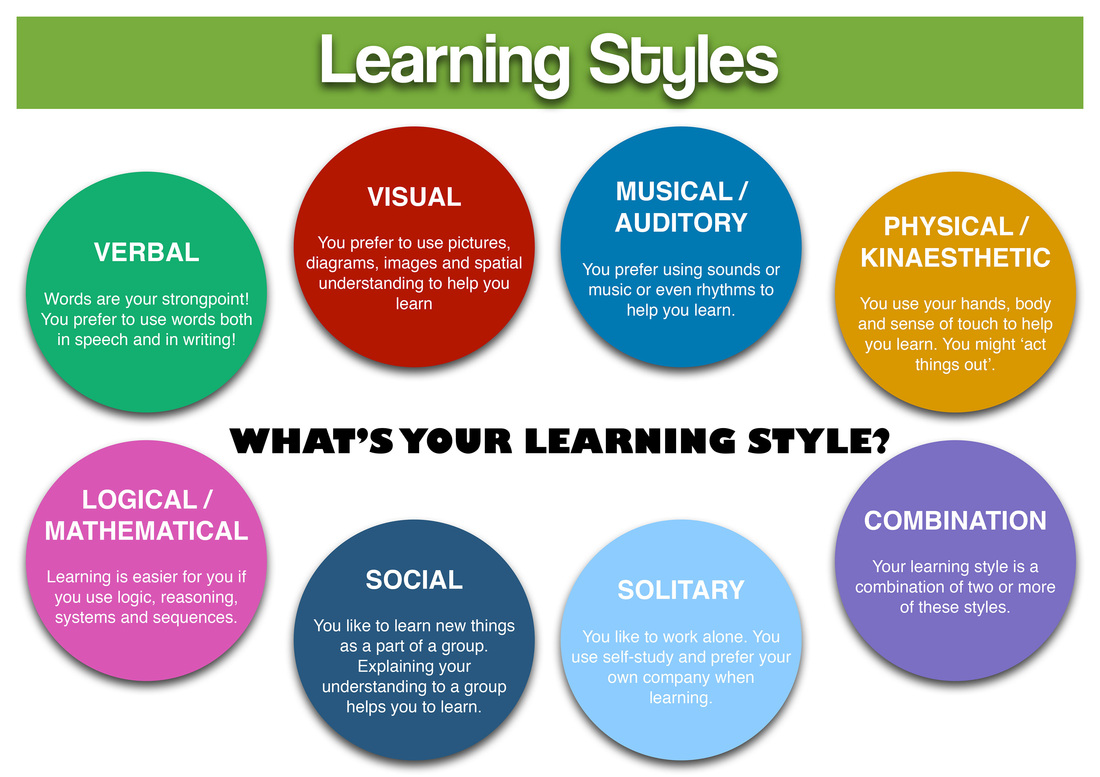
       The goal of school is learning.  The challenge for our schools is to help all students to learn when students are so different.  Some prefer to work by themselves.  Others need to bounce ideas off of their peers.  Some need only to hear the information while others need to actively "do" something to help them to learn.

       The mystery of how students learn has baffled educators for a long time.  The puzzle of "some-kids-get-it" and "some-kids-don't-get-it" has been difficult to understand.  I think that--for a long time--teachers referred to their own ability to learn (and perhaps that of their peers) and felt that all students probably learned the same way they did.  In fact, I wonder sometimes if some present day teachers use the same technique.  And while there are still many unknowns in the field of learning, it is fair to say that we know more today about how students learn than at any time in our history.

       For starters, brain research has provided a wealth of information about how we learn.  Here's a short list of things to know about how the brain learns:

  1. We receive information better when it's visual.
  2. We remember the big picture better than the details.
  3. Sleep affects learning and memory.
  4. Less sleep reduces your ability to learn new information.
  5. We learn best by teaching others.
       Next, we have a lot of help in the field of learning from experts and practitioners.  After a while, we begin to see common themes in the area of helping students to learn:
  • Engagement - Students who actively participate in their learning find it enjoyable and are better able to retain the information.
  • Movement - Learning can certainly take place while sitting, but less so if you're forced to stay seated for a long time.  (see The Power of Movement in Teaching and Learning)
  • Challenge - We learn best when we are forced to think and try and fail and try again.  Also, when we are forced to recall past learning and use that information to understand the current learning.
  • Growth Mindset - If we believe that effort yields results then we are more likely to do our best to preserve in the face of any struggles that may occur as we learn new material.

       Still, teaching is certainly a combination of Art and Science.  Teaching requires building positive relationships so that we can understand our students and construct our lessons in a way that meets their learning needs.  Teaching requires the ability to motivate students and to spark their interest in learning.  Teachers need to challenge students enough to keep it interesting, but not too much so that it becomes too overwhelming.

       The challenge of teaching is the challenge of learning how students learn.  We're getting better at this, but we still have a lot to learn [!].


Saturday, July 9, 2016

Creating a Better High School - Part 3

       This is the third in a three-part series that will look at the structures in place in our current high schools that don't make sense or are not needed anymore.  I want to think about the best way that students learn and create a high school that will serve these learners.  I also want to think about the true purpose of high schools in our time.  My goal isn't to imagine a "High School of the Future", but instead to consider what can realistically be done today.  As always, I encourage my readers to add their thoughts and ideas.  Together we can create the high school that our students want and need today.

Create a Better High School

Part 1 - Current school structures that aren't necessary anymore.
Part 2 - How students learn and how schools can react to these learners.
Part 3 - The purpose of high school

-----------------------------------------------------------------------------------------------------------------

The Purpose of High School

       This could be a short post because all I really want to say is that the purpose of high school is "Learning".  That's it.

       Indeed, the purpose of schooling in general is learning.  However sometimes it seems that the purpose of high schools is "getting-a-good-grade".  This can be stated in many ways:
  • Getting a grade
  • Doing what your told
  • Compliance
  • Grade Point Average (GPA)
  • Test scores
But this is not the intention of high school.  The purpose of high school is learning.  We want students to learn.  In fact its more than that...We want students to learn how to learn.  Our current system is all about doing stuff to get a good grade.  Learning might take place; and we (as educators) certainly want learning to take place.  But many students are stuck in the rut that says, "I just have to do what I'm told to get the grade; to get the credit."  For many students, "Learning" comes in second or third place (if rated at all) in their list of priorities.

       So how do we create a better high school that emphasizes "Learning" over "getting-a-good-grade"?  We know that when students are interested and excited about what they are doing, they are more likely to try their best and more likely explore, to ask questions, and engage in the effort to complete the task.  Therefore, we need high school to include more project-based tasks.  We also need students to engage in tasks in small groups so that they have the chance to debate ideas with fellow students and allow their peers to evaluate their ideas and suggestions.

       I believe that we (also) need high school to include instructional techniques that encourage a growth mindset in our high school students.  Part of the reason that students sometimes show such a small amount of motivation is because they believe that no amount of effort will enable them to learn.  We want students to understand the value of effort.  Growth mindset teaching helps students to understand this.  But growth mindset is not well understood by our current teachers.
       Our better high school will evaluate learning in different ways.  Rubrics, peer evaluation, presentations, portfolios.  We already use a lot of these methods.  This is not futuristic; this is today.

       We have to separate the "Learning" of high school from the "Grading" of high school.


Wednesday, June 15, 2016

Is Your Child Advanced in Mathematics?

       It seems that, more than in other subjects, the placement of students in advanced mathematics is often a contentious issue. Elementary schools have different policies about placing students in classes that teach math at grade levels that are above the student's current grade.  Middle schools often offer high school mathematics classes, but some stop at Algebra 1 and some go beyond Algebra 1.

       The ability of a school or school system to determine a student's math ability (or "advanced" math ability) can be hard to do with great accuracy--especially when we are trying to make this determination with eight and nine year old children.  It's not enough that they are getting good grades in their math work; math is more than mere calculation.  And higher-level math is all about reasoning and thinking and understanding.  The kid that is good at memorizing, isn't always good at (say) the abstraction that comes with manipulating variables and graphing a line.


      Yet, I think that (too often) we get a false impression of a student's math abilities from merely looking at their elementary grades on the report card.  Sometime students are placed in advanced classes and at some point in middle school they start to struggle because they were pushed to learn higher and higher levels of math too fast.  On the other hand, there are certainly students who are highly able in mathematics and they should be encouraged to take more challenging classes that are commensurate with their abilities. So goes the dilemma of trying to identify the truly highly-able students from those that only appear to be highly-able.

       One method that helps is using multiple data points.  When students breeze through their multiplication tables and get "A's" on their report cards, but do poorly on standardize tests or on unit tests, this should be a cause for concern.  Maybe this student is good at memorizing facts and procedures and not good at understanding concepts.  This student is successful at procedural assignments (such as long division with whole numbers), but may struggle with more abstract assignments (such as a math task with multiple answers).

       Of course, we know that it is OK for students to struggle as they learn new concepts (see previous blog post), but many students view this struggle as a sign that they aren't good at math; or a sign that the teacher is doing something wrong.  We don't want students to struggle because they have been inappropriately placed.  Truly able students (and Growth Mindset students) don't mind the struggle because they enjoy the journey toward learning.  Also they understand that it is OK if they don't get it the first time.  Continual effort will eventually pay off.  Students who never tried hard to do well in math and then are placed in an advanced math class and then are upset when they don't get it the first time...these may be the students that we are pushing too quickly.

       Is your child advanced in mathematics?  How do you know?

Saturday, June 11, 2016

Reflecting on the School Year


       Did I do all I could to help my students to learn?
       Did I improve as an educator this year?
       Did I encourage my quietest students to participate?
       Did I emphasize "learning" over "getting-a-good-grade"?
       Did I communicate my expectations clearly?
       Did I establish good relationships with my students?
       Did I call on every students everyday?
       Did I help my reluctant learners to do their best?
       Did I work with parents to help my struggling learners?
       Did I push my highly-able students to do better?
       Did I model a growth mindset for my students?
       Did I provide appropriate and timely feedback?
       Did I demand the best from all of my students?
       Did I engage my students in their learning?
       Did I collaborate with my colleagues?
       Did I try something new in the classroom this year?
       Did I share my knowledge with other teachers?


       Teaching is an imperfect profession.  We get better every year; but we always have room to improve.  We connect with our students, but there are always some students that we can't reach.  We learn new strategies to address different learners, but we struggle to succeed with everyone.  Since we work with people (students) and not robots, every year is different--every day is different.  What worked last year doesn't work this year.  The lesson we spent two hours preparing usually leads to good student understanding, but not always and not with every student.

       The need to reflect on our practice and to improve every year is necessary.  Students change, principals change, resources change, the world changes.  We can't do the same thing for ten or twenty years.  We have to change too.  And when our results are less than we desire, we can't expect better results unless we change.  I often hear people say that there is no manual for being a good parent; the same is true for teachers.  But there are lots of books and courses and journals and EdCamps and conferences and colleagues for teachers to turn to get ideas and suggestions.  Experience helps; and our best teachers are those people who consistently seek to improve--those that reflect on their successes and failures of the past and yearn to improve.


Thursday, May 5, 2016

The Science of Learning

       This is an exciting time to be a teacher.  The field of education, like medicine and energy and information technology, is growing in the knowledge domain.  We are constantly learning more about how children learn and the best ways to help them to learn.  Brain research and its connections to learning have been able to provide to our teachers simple strategies to help students to learn.  For instance, we now know that our student's brains grow and thrive when they are able to have good social connections with other students.  Therefore, we need to provide time for student-to-student discourse in the learning environments of our classrooms.  We know that the brain and the body are interwoven and are built to help each other.  That's why it is important for students to get up and out of their seats regularly during class time; and recess is an important part of learning and brain development.  Also, we know that fear and stress prevent students from doing their best in school because our brains are designed to err on the side of caution.  Fear shuts down our student's ability to explore and to try new things because their brains are more concerned with staying safe.


       In the past, teachers and relied on their own experiences as students themselves and later on their own teaching experience to help them to reach their students.  But this is never going to be good enough because we are all limited in our experiences to a particular school or a particular town or a particular age group of students.  The research findings and subsequent professional development about these findings help our teachers to learn about learning beyond what they see in their classrooms.  Initiatives such as Blended Learning, Universal Design for Learning, and Flipped Classrooms all stem from relatively recent research on how children learn best and how to incorporate these research findings into the classroom.

       Of course all of these exciting frontiers in education require (at least) some level of changing from the "known" image of the classroom to something different--and that can be scary for some people.  Present-day parents who sat in neat rows in every classroom and rarely spoke in class and worked on (the now-dreaded) worksheets all day long may be against anything different from what they experienced simply because "It worked for me."  That's why the research is so important.  It isn't some guy with and idea, it is actual science that is informing us of the most effective classroom strategies to help students to learn.  This is a good change for our students and a necessary change.

       This is an exciting time to be a teacher!


Monday, May 2, 2016

It's OK To Struggle When You're Learning Something New

       Years ago I knew of a little boy whom I never heard speak a word until he was nearly ten years old.  It wasn't that he couldn't talk; his disability was more serious than that...he was born with two older siblings and a mother who wanted the world to view her son as "Always Correct".  To ensure this perception, whenever anyone asked him a question, she would answer the question.  The older siblings did the same thing--but not for the same reason.  They just thought of him as a child that didn't talk much.  Clearly my nephew got the message (at a very early age) that other people would do things for him--even speak for him.  There was no reason to speak or even to think very much.  Of course, his mother loved him and she wanted the best for her son.  She didn't like to see him struggle to learn how to do things and didn't like to see him cry, so she did just about everything for him.

       Sometimes teachers are like this mother.  We want the best for our students and we want them to succeed.  So, sometimes we give them hints to nudge them toward the right answer; we compliment them for minor things (like repeating what we say); and we never want to suggest that they might be wrong about something.  Teachers are caring people and it makes sense that we want the best for our students.  But allowing students to have a false sense of achievement is not a caring thing to do.  And if this sort of (false) encouragement continues for a whole school year, and then the next year, and then the next year, we end up teaching students that learning is just memorizing stuff and repeating what the teacher says, and following directions.  That's not learning.

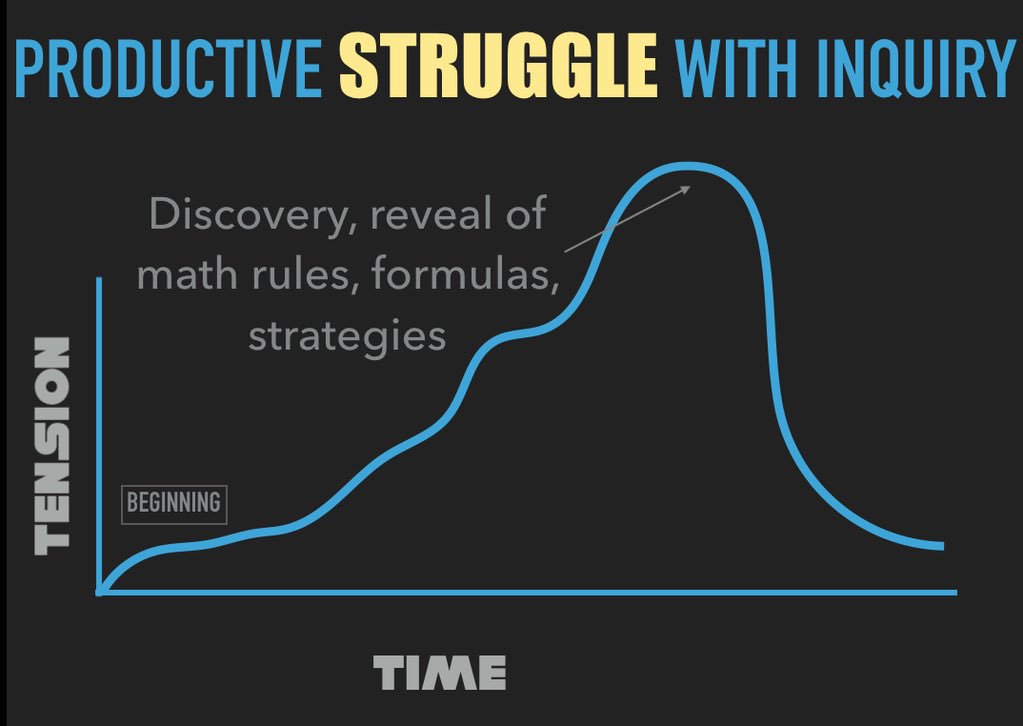
       Learning anything that is worth learning requires a certain amount of struggle.  No one expects you to learn something complex the first time you hear it.  You have to think about it, and practice with it, and make some mistakes, and learn from the mistakes, and make more mistakes, and then (maybe) you can claim success at learning.  It's OK to struggle and it's OK to allow your children to struggle.  We want students to know that learning is full of challenges and effort is required to overcome these challenges.  We want students to believe that they can do anything if they have the will to work at it until it is done.

       This is a difficult message for most parents to hear.  A lot of people have a fixed mindset about their children's abilities.  This means that they believe that their children are capable of doing some things and incapable of doing other things--and no amount of effort will change that.  This mindset leads to statements such as, "It's OK if you're not good at math because I was never good at math and some people just can't do math."  (Feel free to substitute other words in place of the word "math".)  This is a terrible message for students.  Instead, the message should be that hard work pays off and struggle leads to learning.


Saturday, April 23, 2016

When You're Learning And You Know It

When you're learning and you know it shout "Hooray".
When you're learning and you know it, then your face will really show it.
When you're learning and you know it shout "Hooray".

       It's a good feeling to learn something.  A good teacher will help students to recognize when they learn something and will praise them for their efforts in the learning process.  But a good teacher won't artificially praise students for little, minor steps or for mindless efforts to complete an assignment.  This sort of artificial recognition, though intended to benefit and encourage children, is not as good as when a teacher helps a child to know that effort and hard work--no matter the outcome--is praiseworthy.

       Sometimes students have a fixed mindset and they don't believe that they are able to learn.  These students need teachers to help them to realize that they are able to learn anything and that their effort will lead to achievement.  Even student with high achievement could have a fixed mindset and these students are less likely to take risks and try new things for fear of losing the title of "smart".  And when they stop trying, they stop learning and they stop growing intellectually.


       So when your students learn something, tell them to shout "Hooray".  Their brains are growing and their future is bright.


Saturday, April 9, 2016

We Don't Want Teachers - We Want Effective Teachers


       The United States has over three million teachers.

       Public, private, elementary, secondary...approximate 1% of the population of the United States are teachers.  With fifty million students, we need a lot of teachers.

       And considering the importance of education, we (particularly) need good, effective teachers.  We need teachers who do their best to understand how their students think and how they learn.  We need teachers who understand the content that they teach, but mostly we need teachers who want to work with children; we need teachers who like to work with children.

       Over my career, I've noticed a subtle difference between wanting to be a teacher and wanting to be an effective teacher.  Our best teachers are also good learners.  They study their craft; they learn from other teachers; they seek information about adolescents and how the brain works.  No one is born with this knowledge; it takes time and effort to gain this level of expertise.  And most people never know the hard work that went into making these teachers so effective.

       In the book Linking Teacher Evaluation and Student Learning, authors Pamela Tucker and James Stronge give the following list of attributes of effective teachers:

  • Have formal teacher preparation training.
  • Hold certification of some kind (standard, alternative, or provisional) and are certified within their fields.
  • Have taught for at least three years.
  • Are caring, fair, and respectful.
  • Hold high expectations for themselves and their students.
  • Dedicate extra time to instructional preparation and reflection.
  • Maximize instructional time via effective classroom management and organization.
  • Enhance instruction by varying instructional strategies, activities, and assignments.
  • Present content to students in a meaningful way that fosters understanding.
  • Monitor students' learning by utilizing pre- and postassessments, providing timely and informative feedback, and reteaching material to students who did not achieve mastery.
  • Demonstrate effectiveness with the full range of student abilities in their classrooms, regardless of the academic diversity of the students.
  •        Everyone wants their children to have effective, caring teachers.  Class time is valuable learning time and effective teachers make the best use of this time.

           Is your child's teacher effective?


    Friday, April 8, 2016

    Encouraging a Growth Mindset for your Students

           Growth Mindset is an understanding that you can learn and achieve anything if you are willing to work and practice and study and try.  A student's ability to learn is not predetermined from birth.


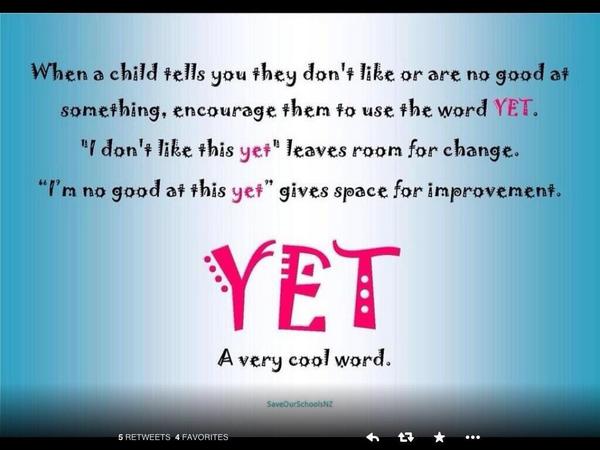
           This is an important concept for teachers who seem to always have some students who believe that they are not born with the skills necessary to learn.  A common saying among some students is, "I don't have a math brain.", meaning, "I don't have the ability to learn math regardless of the extent of my efforts."  We know now that this is not true.  But teachers are often faced with the prospects of needing to convince some of their students that this is not true.
           This chart is filled with suggestions for helping students to view their perceived obstacles in a different way.  Part of a teacher's job is to motivate their students to do their best everyday.  The more that we can convince students and then demonstrated to students that effort leads to (at least some level of) success, the more we are able to create a learning atmosphere in which students believe that they can learn.

           Growth Mindset is for weak and strong students alike.  We also have students who have been successful in the traditional school setting who don't have a growth mindset.  These students may have been praised for their "smarts" and they may be afraid to try something new for fear of not succeeding.  This limits their ability to grow.  Hence, encouraging a growth mindset is for all students and not just for a few.  Our best teachers have always been encouraging a growth mindset.  We have all had teachers who were able to convince us to try and to work hard in the belief that we would eventually succeed.  We need to see this occurring much more often in our classrooms.


    Sunday, October 25, 2015

    Teachers that Promote a Growth Mindset

           Every teacher has had "the phone call" with parents in which the teacher says,  Your child has the ability, she just needs to apply herself.  And then the teacher and parent (typically) talk about school rules involving turing work in on time and not talking in class.  Essentially, we are saying to the child, We're the adults.  These are the rules.  If you don't follow the rules, then you will get a bad grade.  (Of course, if the student was concerned about her grade, we wouldn't have this discussion in the first place.)

           There are a lot of "old school" problems with that phone conversation.

    1. The conversation emphasizes following rules and getting grades, and there is very little talk about actual learning.
    2. The first part of the famous teacher line is, Your child has the ability....  If the child already has the ability to do the work, then the solution to the problem should concentrate on why the child isn't doing what she is already capable of doing.
           We know that (as adults) there are lots of things that we have the ability to do and yet we don't do them--or we delay doing them for as long as possible.  Mowing the grass, doing the dishes, admitting we're wrong about something.  We have the ability to do all of these things, but we need some sort of motivation to actually take the time to do them.  Students are the same way.  The old adult (or teacher) response of "I'm the adult and I say so." may force children to do something, but it certainly doesn't motivate them to do their best.

           Growth Mindset theory tells us that when students believe that effort will lead to result, they are more likely to try new things and are less worried about making mistakes because they believe that these setbacks are just part of the process of learning new things.  I've recently been introduced to the website Mindset Kit.  This site is dedicated to helping teachers, parents, and students to understand what Growth Mindset is and how to help students to develop good, healthy Growth Mindsets.

           One simple strategy that every teacher can do is called Praise the Process.  When a student is doing some classwork, or offers an answer or an idea in class, the teacher response by praising the thinking that went into the student's effort rather responding to the correctness or the incorrectness of the student's work or response.  This simple strategy helps the student to know that their effort is important towards that eventual goal of learning the skill or concept.
      
           Mindset Kit has excellent resources for parents.  Teachers can refer parents to this site for parents who ask, "How can I help my child to do her best?"  There is a brief quiz on different statements of praise that parents can say to their children that will promote a Growth Mindset.  And there are other typical daily activities in which a parent's reaction will help their children to understand (for instance) that making mistakes is great for helping your brain to learn.

           Our best teachers already know how to encourage their students to do their best everyday--even when they don't want to.  It's the same as when a parent tries to distract their child away from something that is bothering him and towards something that he would like.  Growth Mindset strategies help teachers to do this while also helping their students to see the value in effort.

           Here's another quote I hear from parents all of the time, "I can't believe my child is doing so well in (insert course subject here) class in school.  He has never done well in that class before."  You can bet that this child has a teacher that knows how to motivate students.  Her class is interesting and students are engaged in the adventure of learning.  

           After all, they already have the ability.


    Sunday, September 13, 2015

    Growth Mindset Parents

           I'm not sure if the idea of mindsets has broken out of the field of education and into the general public.  I hope it has.  Imagine if the parents of all of your students had a Growth Mindset and imagine if they helped their children (your students) to have a growth mindset.  That would be truly excellent scenario for any teacher!

           If you are not currently living this this ideal world, what can a teacher do to help her students' parents to understand the value of Growth Mindsets?

           Parents often ask teachers what they can do at home to help their children.  In the middle and high school years, sometimes the parents feel that they are not capable of helping their children because the content is beyond their ability.  This is an opportunity to talk about Growth Mindset with parents.  Here are some Growth Mindset suggestions that any parent can do:


    1. Help your child to understand that effort yields results.  Read, study, practice, quiz yourself.  
    2. Tell your child that true learning takes time.  You might not "get it" the first time.
    3. Make sure your child understands that it is OK to make mistakes.  We all learn from our mistakes.
    4. Praise your child for effort; don't praise your child for "being smart".  This seems counterproductive, but kids who are rewarded for "being smart" tend to take less chances for fear of losing the "smart" label.
    5. Never, never, never, never tell your child that you were bad at math or science or anything else.  This gives children an excuse for not doing well, and it makes them believe that they have some sort of genetic deformity that predestines them to be bad at these subjects.
           So much of these suggestions go against the idea of "playing school"--looking smart, pretending to learn, memorizing stuff for the test, only caring about grades, and not caring about learning.  We want students to understand the value of hard work.  Learning faster isn't learning better.  It's OK to make mistakes.  When students hear this from their teachers and then hear it again at home, they will believe it.

           Learning isn't a competition.  Students with a fixed mindset toward any particular subject can change to a growth mindset if they have supportive teachers and parents that encourage a growth mindset.

           Learning real does take a village--a Growth Mindset village would be a pretty good place to live!


    Friday, September 11, 2015

    Growth Mindset Teachers

           Have you heard about Mindsets?  In my school district, I am hard-pressed to meet a supervisor or a principal or a teacher who hasn't heard about it.  Here's a quick video that defines Growth and Fixed mindsets:


           Teachers who understand the Growth Mindset are able to help their students to understand that effort yields results and mistakes are the building blocks of true learning.  These teachers don't encourage their students to get good grades, they encourage questioning and curiousity.

           Students with a growth mindset believe that their is nothing that they can't do.  They don't mind making mistakes because they don't view them as mistakes.  Instead they view mistakes as an important part of the journey toward learning and true understanding.

           Teachers can help students to develop a growth mindset by praising their thinking and their effort, rather than praising that they simply got the right answer.  In fact, if students are constantly told that they are smart, research tells us that they tend to avoid making mistakes and they will hide the things that they can't do because they fear that they will lose the label of "being smart".

           This is (yet) another reason why we have to end this school culture of over-valuing grades.  School is supposed to be about learning and we want our students to understand that learning requires effort.  Effort requires trying new things and taking chances and not getting it right the first time.  This is not only "OK", it is necessary for true learning to take place.

           We love our growth mindset teachers that produce our growth mindset students.  Learning can be hard work.  We want our students to value this hard work and to recognize that there is always a prize waiting to reward them for this hard work.

    Friday, August 21, 2015

    11 Serious Questions for Teachers


           Yesterday I welcomed our 200+ secondary mathematics teachers to the 2015 - 2016 school year.  We do this every school year and it is always an exciting day.  We get to see people we haven't seen since last June; middle school teachers get to network with their high school colleagues.  The first day of school is getting closer and closer.

           This year I welcomed them with 11 serious questions about teaching.  Since this week is filled with the details of preparing those first lessons, decorating the classroom, preparing class resources, and learning about any new school policies and procedures, teachers don't usually get the chance to sit down for 30 minutes and reflect on why they do what they do.

           Here are the questions I asked them.  Read each one and take 30 seconds to reflect on your answer to the question.

    1. Why do you teach?
    2. What is your goal this year?
    3. Will you make a difference?
    4. What will you do differently this year?
    5. How do you view challenges?
    6. Where is the line between impossible and very difficult?
    7. Do your students have a Growth or Fixed Mindset?
    8. How do you know when they "get it"?
    9. Do student's term grades reflect their ability?
    10. How do you move your students from procedural to conceptual understanding?
    11. Why do you teach?
           Teachers have a job to do.  It is a difficult, complex job.  And the need to grow and to improve in the job is necessary because it isn't the sort of job in which a person knows everything they need to know when they graduate from college.  Teachers face new challenges every year and their ability to find solutions to those challenges is generally what separates good teachers from great teachers.

           Here is a movie clip I shared with the teachers in which FDR struggles to stand up straight and then boldly says, "Don't tell me, 'It can't be done.'"

           Why do you teach?


    Public Schools and Choice

           Is it true that public school kids and their public school parents don't have choices?  I'm sure that I will expose my igno...

    Teach100 blog