Showing posts with label relationships. Show all posts

Wednesday, September 21, 2016

My Favorite Teacher

       My favorite teacher wasn't supposed to be my favorite teacher.

       I heard he was tough.  I heard he makes you write a lot.  I heard there was a lot of reading in his class.  One person said he was mean.

       He was my 7th grade English teacher.  I was 12 years old.  When I got my class schedule for the year, I started to ask friends if they knew any of my teachers.  The comments about this teacher (it seemed) were all bad.  Of course, at 12 years old, when I said things such as, "Everyone says he's a mean teacher.", what I really meant was, "The extremely small number of 13 year old boys (3) that I spoke with about this said he was mean."

       But they were my friends and I believed them, so when the first day of school came I was worried about this teacher and this class.  His class was third period and up to that point in the day, everything had gone pretty well.  I entered his class with a more than a little concern.

       He let us sit anywhere we wanted to sit.  He gave each of us a number and then told us to sit at the desk that had that number.  So all of us got up out of our seats (after just two minutes in the class) and moved to a different seat.  After that, he had each of us "meet" the two people who were sitting next to us.  Then we went around the room and each student said something about one of the students sitting next to us.  Then he told us about himself.  But instead of saying how many years he was a teacher and how much he loved English (which is the sort of introduction that most teachers give) he told us that he had three sisters, he weighed 265 pounds, and he liked to go bow hunting for deer.

       I actually remember more about that first class, but the point is his class was all about relationships.  He wanted to get to know us and he wanted us to get to know each other.  Everyday as students walked into his class he would ask us specific questions about things we were interested in and some students would ask him about things that he was interested in.  Our class involved a lot of discussions and he always linked these discussions to something the someone (or many of us) were interested in.  He never made a big deal about grades.  He never put anyone down for getting a bad grade or even for failing to complete an assignment on time.  If students earned a "D" or an "F" (and some did) he didn't get mad at them.  In fact, one student in particular who failed his class seemed to have a great relationship with him.

       We did do a lot of writing and we did do a lot of reading.  It was an ENGLISH class [!].  That's what you do in an English class.  My friends' opinions of what determined "a lot" probably meant that they didn't want to do any writing and reading.  Another thing that he often did was to not accept the first answer or idea that a student put forth.  He wanted many ideas; or he wanted us to be able to expand on our ideas.  The goal in his class was learning.  It wasn't "answering questions".  We didn't earn "points" for cleaning the chalkboard or for not using all of our bathroom passes.  We only earned grades for good writing and good thinking (participation).  This was probably the part my friends referred to as "being mean", since they were generally pretty good at "earning" good grades while learning very little.  Those techniques probably didn't work in his class.

       I didn't refer to this person as "My favorite teacher" until years later--after high school.  And the reason he was my favorite was because he didn't belittle us.  He pushed us to do our best.  Some were more ready for that "push" than others, but all of us knew that we couldn't just slide by and earn a high grade in his class without producing something of quality.

       My favorite teacher wasn't a popular teacher; he wasn't a coach of a sports team; he made us laugh from time to time, but he wasn't known as a "fun" teacher.  He probably didn't care about being liked.  He was firm and fair.  He spoke to his students in pretty much the same way he spoke to our parents.  He knew what he was doing and he had a reason for everything he asked us to do.

Thursday, August 11, 2016

What Is Your Hope?

       I saw a great 3-minute video today from +Parkway Schools called What Is Your Hope.

       They place a chalkboard outside as the students walked into school on the first day of school.  The chalkboard had the question, "What is your hope?" written on it.  And the students wrote whatever came to their mind.  Here is the Facebook link:

https://www.facebook.com/parkwayschooldistrict/videos/10154530600468578/

       Their answers were simple and sweet and might make you cry.  They were human answers:

- that people will like me
- that I will make new friends
- that my teachers are nice
- that school will feel like home
- to be included
- to do well


       It's all about relationships.  Students want to feel valued and important.  They want their teachers to care about them as people.  They want to connect with other's in their classes.


       What do you hope?

Thursday, July 14, 2016

Learning About Learning

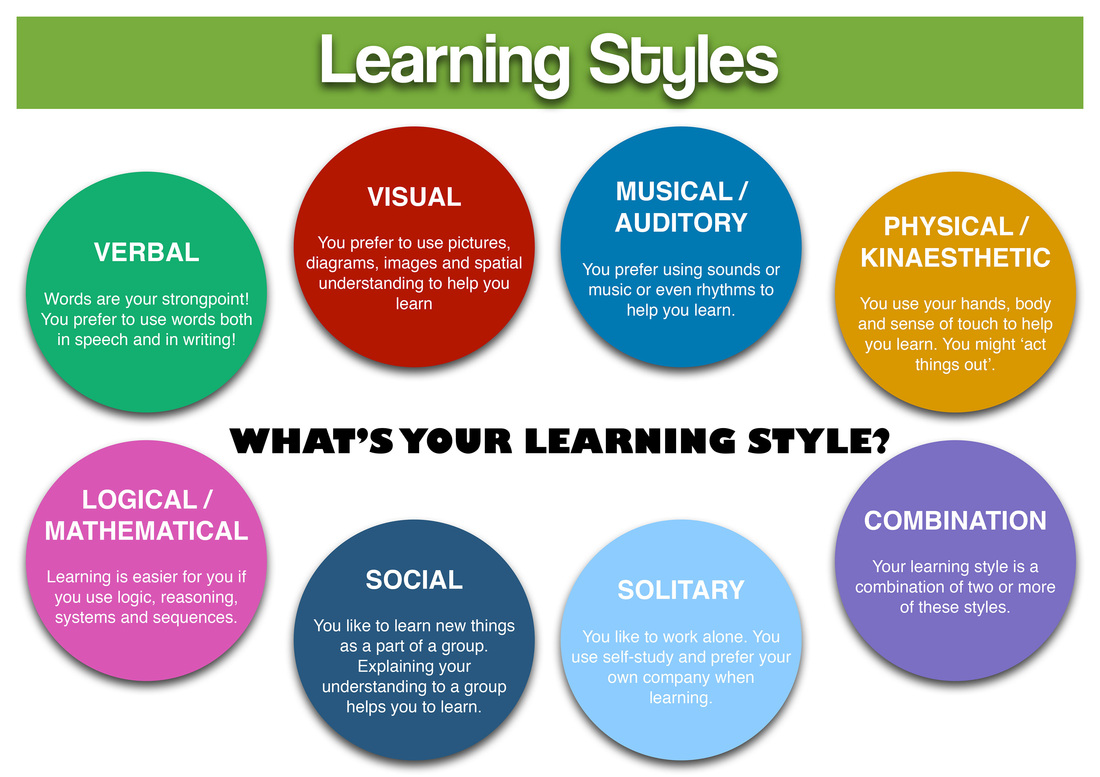
       The goal of school is learning.  The challenge for our schools is to help all students to learn when students are so different.  Some prefer to work by themselves.  Others need to bounce ideas off of their peers.  Some need only to hear the information while others need to actively "do" something to help them to learn.

       The mystery of how students learn has baffled educators for a long time.  The puzzle of "some-kids-get-it" and "some-kids-don't-get-it" has been difficult to understand.  I think that--for a long time--teachers referred to their own ability to learn (and perhaps that of their peers) and felt that all students probably learned the same way they did.  In fact, I wonder sometimes if some present day teachers use the same technique.  And while there are still many unknowns in the field of learning, it is fair to say that we know more today about how students learn than at any time in our history.

       For starters, brain research has provided a wealth of information about how we learn.  Here's a short list of things to know about how the brain learns:

  1. We receive information better when it's visual.
  2. We remember the big picture better than the details.
  3. Sleep affects learning and memory.
  4. Less sleep reduces your ability to learn new information.
  5. We learn best by teaching others.
       Next, we have a lot of help in the field of learning from experts and practitioners.  After a while, we begin to see common themes in the area of helping students to learn:
  • Engagement - Students who actively participate in their learning find it enjoyable and are better able to retain the information.
  • Movement - Learning can certainly take place while sitting, but less so if you're forced to stay seated for a long time.  (see The Power of Movement in Teaching and Learning)
  • Challenge - We learn best when we are forced to think and try and fail and try again.  Also, when we are forced to recall past learning and use that information to understand the current learning.
  • Growth Mindset - If we believe that effort yields results then we are more likely to do our best to preserve in the face of any struggles that may occur as we learn new material.

       Still, teaching is certainly a combination of Art and Science.  Teaching requires building positive relationships so that we can understand our students and construct our lessons in a way that meets their learning needs.  Teaching requires the ability to motivate students and to spark their interest in learning.  Teachers need to challenge students enough to keep it interesting, but not too much so that it becomes too overwhelming.

       The challenge of teaching is the challenge of learning how students learn.  We're getting better at this, but we still have a lot to learn [!].


Wednesday, April 20, 2016

Kids are Great

       As an educator that works with adolescents all of the time, I never like it when I hear other people saying negative things about teenagers--as if every single teenager is a drunk and a drug user and out all night causing havoc (with the possible exception of the children of the people who make these statements).  Well I'm here to tell you that it's not true.  Kids are great.


       And I'm not the only person who thinks so; just look at the stats:

  • In 2015, 90.7% of high schools students didn't smoke (source)
    • In 2011 this number was 84.2%
    • In 1996 this number was 78% (source)
  • In 2013, 65% of high schools students never drank alcohol
    • 79% of high schools students didn't binge drink alcohol (source)
  • In 2014 among 12th graders:
    • 96.4% didn't use Ecstacy
    • 96.7% didn't use OxyContin
    • 97.4% didn't use Cocaine
    • 98.1% didn't use Inhalants (source)
  • In 2014, 97% of teenagers were not arrested for any crime (source)
       These are the stats you never hear about on the TV news and you never read in the newspaper.  Most teenagers are good kids.  They follow the rules, they don't get into trouble, they make us proud. And its not like they don't have stress in their lives...school, relationships, chores, family life.  Kids are great.  And they can really party!  (just kidding)  

       We've got great kids.  And we should say so every once in while.


Monday, July 20, 2015

Building the Academic Strength of Our Weakest Students

       School is about learning.  And most students do fine when it comes to learning what they need to learn in school.  For most students, its not a matter of passing or failing; its more a matter of learning very well or not learning so well.  But for some of our students, keeping up-to-speed in their reading, writing, and mathematics skills as they go through their middle and high school years is difficult.  As a public school system, a lot of effort is focused on helping these students to improve their skills.  This is an important mandate in every public school.

       We know from research that students who are below grade level in reading by the end of third grade often struggle with their reading skills throughout the rest of their P-12 schooling experience.  (link to study)  They are also more likely to leave school without a high school diploma.  Difficulties in learning mathematics have been similarly well documented.  Students with weak math skills also struggle in high school mathematics and are less likely to graduate from college (see here; go to chapter 3 on page 45).  It is because of these known consequences that schools make every effort to raise the skills, abilities, and understandings of students who are weak in reading, writing, and mathematics.

       At the heart of this effort is the struggle of understanding how these students think and how they learn.  Clearly, the "usual way" of teaching and learning is not working; and so schools look to other resources and teaching strategies to reach these students.  Understanding the best ways to motivate students to do their best in school (especially when they have experienced only failure in the past) is an important task for schools and teachers.  One excellent resource is the book Mindsets by Carol Dweck.  In it Dr. Dweck explains the psychology of how people perceive their abilities to learn.

       There is no shortage of intervention programs that are available to schools (at a cost) for the purpose of helping students to regain "grade-level" status.  Schools invest in these programs and train their teachers.  Some students show excellent improvement while others do not.  It is a constant challenge to find the best way to help our weakest students.  But it is a challenge that our public schools eagerly accept every day.

       Learning is for everyone and everyone can learn.  Building the skills of our weakest students is an important responsibility of our public schools--one that we take very seriously.

Wednesday, April 15, 2015

The Challenge of Educating Poor Students - Part 1

       American Public Schools face many and varied challenges.  Funding, equity, and public support to name a few.  On the top of this list of challenges, I would include: The Achievement of Poor Students.

       It is easy to understand the underpinnings of this problem, and yet it is extremely complex to succeed in overcoming this problem.  The problem stems from two indisputable facts:

  1. Poor students consistently demonstrate lower achievement than their non-poor peers.
  2. The proportion of poor students in our nation's public schools is over 50% and is growing.


       I will examine this challenge from three perspectives:

  1. Poor students who have succeeded in our schools
  2. Understanding the special and different needs of poor students 
  3. Expert advice on successfully educating poor students
--------------------------------------------------------------------------------------------------

The Challenge of Educating Poor Students - Part 1

Poor students who have succeeded in our schools

       Every public school can point to a student who comes from a poor family and (yet) defies the odds and does well in school academically.   Or...Can they?  Unless you know the student's background, it might be hard to find these students in your school.

       The outward signs of poverty are relatively easy to see:  dirty clothes or the same clothes day after day; same, single pair of shoes everyday; no extra school supplies.  And then there is the attitude--opposition behavior, attention disorders, excessive absenteeism.  Taken alone, these are not necessarily signs of students from poor homes, but taken together there can be assumptions of the student's home lives based on these visible factors.

       Unfortunately, it is so common for poor students to have low academic achievement that when we have a poor student who succeeds in the academics of school we (often) don't see that child as being from a poor background.  So what is it that propels a poor student to achieve where his/her peers don't?  And what can we learn from poor students that succeed that can help us to raise the achievement of other poor students?

Vocabulary Acquisition


       According to a study from 1995, from the age of 7 months to the age of 3 years, 90% of the words used by children were words used by the children's parent (or primary caregivers).  Parents with higher educations used more words than parents with less education AND higher educated parents talked to their babies and toddlers more than less educated parents.  This creates an "Achievement Gap" among very young children before they even begin Pre-kindergarten.

       But poor students who succeed in school often come to school with a good vocabulary because they were blessed with parents and/or caregivers that shared with them the (totally free) gift of words when they were very young.  Babies and toddlers can learn words from parents reading books to them; but they also learn from simple talking and singing.  So families that cannot provide a lot of children's books to their children can still provide the precious gift of words by simply talking to their children every day.

Grit

       The story of Karvel Anderson is the best definition of grit that you will ever find.  Karvel's story is one of a child who grew up with many challenges but never anything that made him give up on life.  He says that adversity was good for him because he always wanted to prove that he can do anything.

       Most students from poor backgrounds succumb to the narrative that they will never succeed because it seems like the world is against them.  Every where they turn, some one is taking away an opportunity or refusing them something.  Grit is a personality trait in which a person strives to achieve goals regardless of the obstacles that may stand in the way.

A Supportive Adult

       Poor student who succeed usually have an adult in their life that is there to encourage them when times are tough.  It might be a parent, but it also might be a teacher, a grandmother, a school counselor, or a coach.  While some students seems to have the ability to overcome just about any situation, most poor students need someone to guide and help them through the toughest times.


       As schools and teachers look to increase the achievement of poor students, I believe that we have to understand that the world they live in can seem very different than our world.  We need to understand how their lack of resources and supports is a great hindrance to their academic success.  And we have to find a way to fill in the supports that they are lacking so that we can help them to value education and to be successful in school.


Wednesday, December 17, 2014

Good Teaching is Still More Important Than Technology

     Lately, we've been spending a lot of time thinking about bringing more technology into our schools.  We say, "This is how students think."  "This is how we teach in the 21st century."  "Our students will be at a disadvantage if they don't use technology in the classroom."

       All of this may be true, but let's not fool ourselves into thinking that newer and better technology is going to make our students smarter or better able to learn.  The single most effective tool that schools have to raise student achievement is the ability of teacher.  Good instruction trumps good technology every time.  The more we learn about educational technology; the more we come to understand that the technology is just a tool for learning--no different from the tools we've had in the past.

     Yesterday we had a meeting with mathematics supervisors in my state and during the meeting we had a Google Hangout discussion panel with three Educational Technology experts from around the country.  We asked them questions about different digital tools and what might be best for learning.  All of these Ed Tech experts told us that the tech is just a tool.  The classroom is still all about learning and the ability of the teacher is the most important tool for student learning.


     I think that this is a message that I should remind myself of from time to time.  It can be easy to get caught up in the quest for "stuff" and forget our core mission--to educate.  Technology should be used as we use a car--to get us from Point A to Point B.  We can have a fancy car or an old clunker; if it gets us to our goal, then it is serving our purpose.


Thursday, October 9, 2014

Caring Adults in Every School

     I always hear about the value of relationships in education.  When a teacher builds a strong relationship with her students, her students tend to have better achievement.  I've also (often) been reminded that some students do not have the positive influence of a responsible adult in their home life (or their outside-of-school-life) and YOU may be that only such person in that student's life.

     I think that teachers who take these point to heart are able to make a difference in the lives of their students.  I also think that they help to create a learning environment in which students are comfortable and more able to do their best all of the time.  And it makes sense...Wouldn't you rather have a teacher who cares about you as a person than having a teacher that barely knows your name?
     I am a mathematics supervisor.  So often I see students who have always struggled in math class and they begin each school year thinking that they won't do well.  Some teachers view this attitude as "The students don't like me." when the real issue is "The students don't like math."  (Actually, I think the real issue is, "The students don't like being in an environment where they are pretty sure that they are going to fail and/or not understand on a regular basis.)  Teachers who are able to establish a good relationship with these students enable them to try and work hard and do their best everyday.  They may not get the "A" every time, but they change their attitude toward the subject (and maybe their attitude toward their own abilities) and things improve.

     Just like in life, a little caring goes a long way.  Fortunately, most teachers get into the profession of teaching because they already are very caring people.  They want to work with students and they want their students to be successful and they do everything they can to make that happen.  Think about your favorite teacher...Why is he or she your favorite?  Chances are, it has something to do with the way they treated you and chances are, they were probably very nice to you and made you feel that you were capable of doing anything.

Saturday, October 4, 2014

Lower Dropout Rates

     According to a recent article from the Pew Research Center (see article here), the U.S. high school dropout rate dropped to 7% last year.  It has been going down since 2000 when the national dropout rate was 12%.  Educators know that earning a high school diploma may not be a ticket to live-long success.  But without one, you are pretty much guaranteed to experience many struggles in your life--not the least of which would be trying to build a middle-class life for you and your family.


     Hispanic and Black dropout rates have significantly declined since 1993.  Hispanic student (today) comprise 25% of our nation's public school students.  In 1993 their dropout rate was 33%.  Today it is down to 14%--and it has been steadily declining since 1998 despite a 50% rise in the population of young Hispanics in our country.  The dropout rate for Blacks has declined from 16% in 1993 to 8% today.  Black youth represent 16% of our public school students.

     Public schools do everything they can to keep students in school and to encourage completion of their high school diploma.  We encourage students to become involved in school teams and school clubs.  Students who are involved in school are less likely to dropout.  (I have to be honest, I can't find data on that last statement.  But I've heard it from many sources over the years and it makes sense--to me--to be true.)

     We also know that when students can connect with an adult in the school, they are more likely to stay in school and to finish high school.  Once again, relationships is the key.

     This is a major win for our public schools and even more of a win for our students--and for our country.  An educated society leads to less people in jail; less people on welfare; more people working; more taxes being paid; and so on, and so on, and so on.  It all begins with education.  Lowering the dropout rate is very, very good news.

     The next hurdle to clear is raising the college graduation rate--which is well below 50%.  But that's a topic for another post.


Tuesday, April 29, 2014

Good Teachers make Good Students

     Good teachers make good students.

     You can search the web for lists of "What makes a teacher a good teacher."  Different lists, different points of view.  But there will be some similarities.

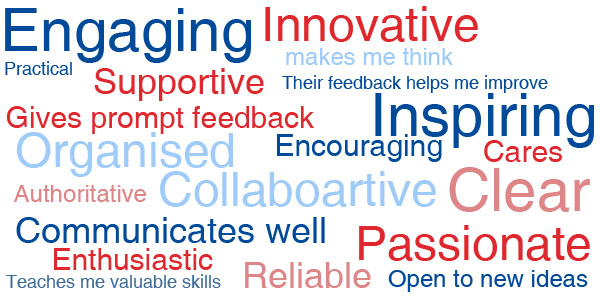
     If you ask people to talk about their favorite teacher (again) you will hear some common themes.  Chances are, your favorite teacher is someone you liked and someone who liked you.  Your favorite teacher was probably very helpful; perhaps very kind.  You may have done very well in his/her class, or maybe you didn't.  (Interesting how your "grade" in your favorite teacher's class doesn't seem to matter much.)


     Good teachers understand the importance of good relationships with their students.  When students feel comfortable to ask questions (and they are not embarrassed to be "wrong"), they tend to do much better in class--even if it is a subject that they don't particularly like.  

     So if you want to have good students, be a good teacher.

Tuesday, March 25, 2014

Teachers and Parents Working Together

     They say, "It's takes a village to raise a child."  And it is certainly true that we want our children to have many experiences with many different people as they grow and learn about the world.  Teachers will tell you that when parents are involved in their child's education, the child tends to do better in school.  I would go a step further and say that it is very necessary for parents to be invested in their child's Pre-K to Grade 12 education if we want the child to be very successful.

     Teachers spend 7 or 8 hours a day with the child and the parent spends the rest (or most of the rest) of the waking hours with the child.  It is beneficial for teachers and parents to work together to help children to learn and to grow with confidence.  Public schools understand this very well and the best public schools actively seek ways to get parents involved.

     When I taught middle school children, some parents would tell me that they planned to "back off" and allow their child some freedom to complete assignments and to study on their own.  I would gently tell them that their child needs them in middle school every bit as much as they needed them in elementary school.  The same is true for high school students.  Children need their parents for encouragement and assistance throughout their school career.  And teachers need parents who are involved in their child's schooling.

     Teachers in public schools do all they can to help students to be successful.  It is a difficult job. Often it is the students who don't have support at home that have the most difficultly in school.  When parents aren't available to their children, it is hard for students to do well in school.  And it doesn't have to be that the parents are "teaching" them at home.  It is enough to provide a safe place at home to do homework and to have rules about study time vs. play time.

     Public schools always want parents to be involved.  When teachers and parents work together, students succeed.  It's that simple.

Thursday, January 30, 2014

Relationships Matter in Education

     Our best teachers love what they do and they love working with students.  The relationships that teachers have with their students help to foster better student achievement.  And it is no surprise that this is the case.  Students want to make their teachers proud of the work that they can do in the same way that students want to make their parents proud.  When teachers show the students that they really care about them and their progress, students respond with better progress.

     The same is true with teacher relationships with parents and schools relationships with parents--and the community.  Relationships matter.  Researchers agree that teachers have the largest influence on student achievement.  Good teachers tend to produce good students.

     People who love to work with children are primed to be good teachers.  Learning can be difficult at times, but it is always less difficult when you have a caring, dedicated teacher ready to help you.

Thursday, October 3, 2013

The Art of Education

       The challenge of education is the art of education.  Namely, it is the art of finding the best way to reach every single student.  Learning styles and teaching styles have to "mesh".  Someone said that teaching really IS rocket science.  I've also heard that teachers make hundreds of decisions everyday--often on the fly while the class is going on.

       We know that our best teachers connect with their students.  They get to know them.  They talk with them in the hallways and in the stands during football games.  They care about their students.  And their students want to make their teachers proud of them.

       This blog is constantly on the lookout for positive stories about public education in America.  Let me know your stories.  Maybe I'll have some guest contributors.  And I want to post pictures and videos of the good and great things that are taking place across the nation in our K-12 classrooms.

       When I taught high school and middle school mathematics, I always enjoyed making Positive Phone Calls home to parents.  It's amazing to me, but nearly every parent told me that they never received a positive phone call from a teacher.  It made me feel good and the parents loved it.  Word got out to my students that I did this and students actually WANTED me to call their parents.  It was great.

       Teachers are always looking for ways to connect with their students.  I see it every time I visit a classroom.  And I read about it on Twitter and in journals often.  I am anxious to share these great ideas with others.

       Congratulations to all the teachers who have mastered the Art of Teaching.

       Keep it up!

Public Schools and Choice

       Is it true that public school kids and their public school parents don't have choices?  I'm sure that I will expose my igno...

Teach100 blog