Showing posts with label mathematics. Show all posts

Wednesday, January 25, 2017

Why Is Teaching Mathematics So Different Than Teaching Other Subjects?

       My entire professional career has been in Secondary Mathematics.  As a middle school teacher, high school teachers, department chair, and supervisor; I have been immersed in the field of teaching and learning mathematics.  Whenever conversations arise about the instruction for very weak students or for very advanced students, there seems to always be special considerations for students when it comes to mathematics.  Principals, school counselors, and special educator alike all agree that the teaching and learning of mathematics seem to require very different skills compared to the teaching and learning of reading and history and (perhaps) other subjects.

       Keith Devlin has a relatively simple answer to this question which he explains in his paper written for the Mathematical Association of America titled, In Math You Have to Remember, In Other Subjects You Can Think About It.  Devlin explains that mathematics is often taught as a series of rules that you just have to memorize.  Whereas other subjects such as history and science are taught within a context that help the learner to make sense of the content.  Mathematics could be taught within a context (and, I would say SHOULD be taught within a context), but it usually isn't.  This makes mathematics seem like a secret language with tricks and complicated rules that sometimes work in some situations and don't work in other situations.  When mathematics is taught as merely a bunch of skills without any understanding of how and when to use these skills, many students struggle to be successful.


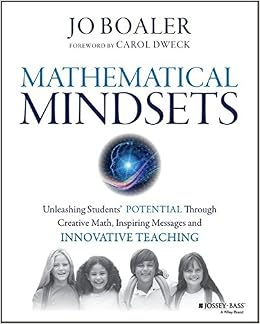
       In her book Mathematical Mindsets, Stanford professor Jo Boaler explains that all students can learn mathematics if teachers are equipped to help students to build understanding.  While it is relatively easy for trained secondary mathematics teachers to learn these techniques, most teachers have not received this training when they were in college.  Furthermore, most adults today (parents, school principals, school counselors, etc) grew up learning mathematics through a strictly procedural approach.  Because of this experience, most adults believe that mathematics should be taught as a bunch of skills.


       Fortunately, more and more teachers are mixing more and more conceptual understanding in their mathematics classrooms along with learning the skills.  There are places in which math is taught somewhat differently than it was taught in past generations, and this is a good thing in my opinion even if it makes some parents feel uncomfortable.  Math should not be taught as 100% skills without any connection to the real world.  For most students, this sort of instruction is just too abstract for them to understand.


       Mathematics is also a subject that builds on itself from school year to school year.  Students need to have a good understanding of the concepts so that they can build on previously learned content to understand the new content.  This idea of building from year to year is more prevalent in mathematics than it is in other subject areas.


Wednesday, January 4, 2017

Three Cheers for Middle School!


       When I interview future mathematics teachers, some embarrassingly say to me, "I actually prefer to teach at the middle school level."  Then they go on to say that their parents and friends think that they are crazy to be a middle school teacher.  This is because so many people have this image of middle-school-aged children as being wild and out of control all of the time.  I hear this so often; sometimes in silly way and sometimes in a very serious way.  As a longtime educator I can tell you that this image is untrue and unfair to young teenagers.

       Middle school is great!  The excitement and energy of the students is part of the reason that middle schools are so great.  Our best middle school teachers understand how to use that energy to engage students and to foster learning.  When middle school students are respected and appropriately challenged academically, they rise to the occasion and show their best everyday.  Middle schools are the places where you have classes with tall girls and short boys; shy kids and talkative kids.  Middle school students are fun and interesting to get to know.  They are excited to leave their elementary school and they are anxious to go to high school.

       We want and we need teachers who understand the middle school child; understand how they think and how they learn.  Teachers who are excited to teach everyday and to help their students to discover their ability to solve problems and to ask difficult questions.  We need teachers to encourage our middle school students to read and to understand more difficult text; including non-fiction text.  Middle school is often the place in which students first encounter difficulty with their academics, so we need teachers who are excited to help these students to preserve through these difficult times and to find ways to succeed.

       I know many middle school teachers who love their job.  These teachers understand the "line" between allowing students to express themselves while keeping the class of students in control.  Middle school students understand the need for structure and appreciate teachers who insist on this structure.  Middle school can be the best years of a student's school career when they have great teachers and leaders who care about them.

       Middle school is a great place to be.  Everyone should appreciate the excitement and energy of our nation's middle schools.


Tuesday, December 27, 2016

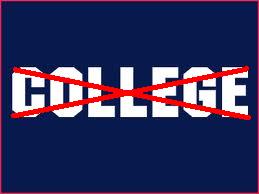
College Not For All

       I'm going to start by saying that I went to college, my wife went to college, my siblings went to college, I want my children to go to college, and everyone I work with went to college.  I'm a big fan of "going to college".  College provides specialized knowledge in a specific field of study; often by people who are experts in that field.  There is a benefit to going to college, but since this post is about "not going to college", I'll just say that the benefits of college are well documented.


       So why am I (a lifelong educator) writing about not going to college?  Because public school desire to teach ALL students.  All students are welcome in our public schools.  We take all students.  We don't have some sort of litmus test that permits some students to enter our public schools and denies others t enter; we take everyone.  And in doing so, we have an obligation to teach all students.  This means that we teach the students who are college-bound as well as those that are not.  This leads to the dilemma of all public schools: Are we preparing students for college?  Are we preparing them for the world of work?  Or, Are we doing both?  (And if the answer is the latter, then How do we do that?)

       We know that all students won't go to college.  (source)  We also know that some will go to college and won't finish college. (sourceHere is a slideshow of 25 jobs that don't require a college degree--although nearly all (or actually all) of these jobs require some sort of education and/or training beyond high school.  So the question remains, How do prepare the college-bound students and the non-college-bound students at the same time?

       The simple answer is that this is a complex problem.  It is a problem that (in my opinion) requires multiple options and pathways for high school students.  It is a problem that does not lend itself to one-size-fits-all solutions.

       It is fair to say that all public schools recognize this need to prepare students for their lives beyond high school--whatever they may be.  But it is also fair to say that some requirements are aimed (more) at the college-bound students than at the non-college-bound students.

       My solution views these two subgroups of students as much more alike then different in terms of the skills and knowledge that they need for both college and work.  Clearly, reading and basic mathematics understanding is needed.  By "reading", I include understanding the context of what is being read; and I include reading and understanding non-fiction and technical manuals.  Our civilized world requires reading.  Medical reports, insurance papers, legal documents such as wills and mortgages all require a level of reading in which people can read and understand.  By "basic mathematics", I include understanding and calculating things such as sales tax and interest income.  People should be able to gain information from a chart, graph, or table of numbers.  People need to know what a percent means and what fractions mean.  Calculators can do the calculations, but people need to do the "understanding".  Beyond reading and mathematics, I believe that a good understanding of other typical high school subjects is needed to help people gain an understanding of the world and the people around them.  These include science, history, art, some computer skills, health, and knowing a foreign language--which is extremely common outside of the United States.

       Beyond these academics, I believe that the rules and regulations that take place in a high school and in the classroom should instill in our students a sense of right and wrong as well as a sense of how to exist as an adult in society.  When my daughter was in kindergarten, her teacher told us that everything they do has a purpose.  What may look like "fun" or "downtime" to the non-kindergarten-teacher observer, has a purpose.  Similarly, everything in high school should have a purpose.  Whether you are going to college or work, you need to be on time, you need to be polite, you need to listen.  You need to learn from others and you need to be able to work with others.  You need to know that sometimes you'll get some help to do things and sometimes you have to do things on your own.  You need to be responsible and you need to take on responsibilities.

       It seems to me that when employers complain about young people in the workplace, it isn't so much that they lack reading and mathematics skills--although I hear this as well.  It is more that they lack the ability to accept responsibilities, to understand written and verbal directions, and to follow through on important tasks.  These skills are needed for the college students also.

       College isn't for everyone.  But public schools and their graduation requirements and daily rules and regulations are for everyone.  Learning is a lifelong skill.  It doesn't stop on graduation day.  We want all students to succeed regardless of the path they take after college.


Friday, December 2, 2016

Changing Math Attitudes

       I'm borrowing the title of a Facebook group to use as the title for this post.  The group called Changing Math Attitudes is composed of math teachers and other educators and (I suppose) other folks that seek to share experiences and expertise in the effort of helping students (and adults) to see mathematics as something beautiful, sensible, and doable by everyone.

       The first step in improving abilities in anything is to believe that you can do it.  We want students to understand that mathematics is not a secret code to which only a privileged few have access.  There is no "math brain".  Everyone can understand mathematics and it will take a group effort by many people in many circumstances to effectively change the view of mathematics that so many people hold.  This is the view that says "I'm not good at math."  (And so many people freely say this out loud when they would never say that they can't read or that they are bad at Science or History.

       I especially enjoy reading the posts from this group because they are generally politically agnostic.  It isn't a group that is pushing a political agenda one way or the other.  And this makes sense too because the "I'm bad at math." attitude is not coming from one group of people who members of any single political persuasion.  All sorts of people hold this view and so we are talking to all people when we say that we want to change attitudes about mathematics.

       Any math teacher will tell you that most of the students in their classes that struggle to understand the math would do so much better if they held the view that effort would lead to success; if they believed that getting the wrong answer doesn't mean that you are "dumb" but instead means that you've had a learning experience that can lead to better understanding.  If students can escape the Fixed Mindset that says "No amount of effort will lead to success.", then we know that we can help them to get to a point of better understanding.

       Attitude is everything.  Attitude determines the effort that students will put forth.  Attitude allows for a second try and a third try and a fourth try; or attitude gives permission to not try at all.  Attitude is the force that is stronger than caring adults.  Attitude shapes our views and ultimately shapes our destiny.  When our attitude tells us to give it a try, we are on our way to a world of opportunities.


Sunday, October 30, 2016

When Students are Thinking, Students are Learning


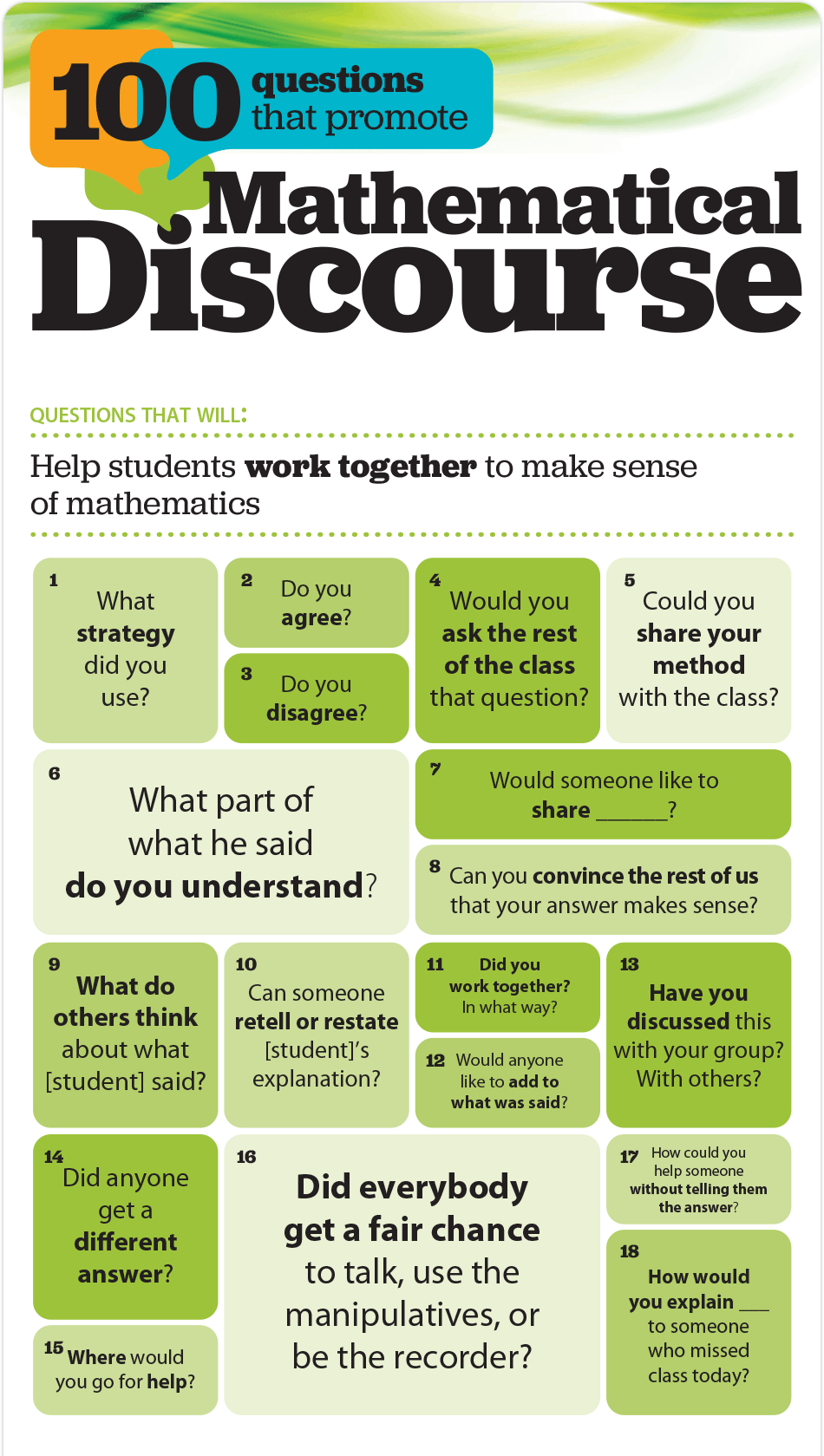
       I was recently introduced to a fantastic list of 100 questions that teachers can ask in mathematics class that will encourage students to think and reason and share their thoughts with each other.  A portion of these 100 questions are in the graphics in this post.  The rest can be found here.

       The questions are separated into categories that help students to:
  1. Work together to make sense of mathematics.
  2. Rely more on themselves to determine if something is mathematically correct.
  3. To reason mathematically.
  4. Evaluate their own processes and engage in productive peer interaction.
  5. Gain a better understanding with problem comprehension.
  6. Learn to conjecture, invent, and solve problems.
  7. Learn to connect mathematics, its ideas, and its applications.
  8. Persevere.
  9. Focus on the mathematics from activities.
       Every parent that has ever received the unimaginative response of "Fine." to the question, "How was school today." understands the frustration of trying encourage a dialogue with young people who are either unable or unwilling to do so.  Teachers face this dilemma every day.  Except, for teachers, their are tasked with making sure that the students are actually learning the content that they are teaching.  Teachers don't have the luxury of dismissing an uninformed, mono-syllabic response.  Hence teachers do their best to use strategies that will encourage students to share their thinking.  These questions help teachers to achieve this goal.

       Here is a sampling of some of these great, discourse-encouraging questions:

How would you explain _________ to someone who missed class today?

How did you reach that conclusion?

Can you think of a case where that wouldn't work?

Could you reword that in simpler terms?

How is your solution method the same as or different from (student)'s method?

How does this relate to ____________ ?


       These questions help students to understand that mathematics is not just a bunch of rules that lead to a single number answer.  We want students who are able to understand the reasoning behind the rules.  We want students to think and reason and discuss and struggle and fail and try again.  We want students to have strategies for finding solutions beyond just asking the teacher.  We want students to learn from each other, to recall past lessons, and to know how to check their own work.

       These questions are a great resource to our teachers.  When students are thinking, students are learning.


Saturday, September 24, 2016

I Don't Have a Reading Brain

       I don't have a reading brain.  


       I'm 52 years old and I've never been good at reading.  In fact, I'm constantly telling my children that I was never a good reader so that they don't feel so bad about being bad at reading themselves.  They are always saying, "Why do we have to learn to read anyway?" and even though I basically agree with them, I try to think of times when reading is important such as when they get a text from their friends.

       I really don't feel too bad about being a bad reader because just about everyone I know is bad at reading.  In fact, we are always joking about being bad at reading.  My sister-in-law is a middle school English teacher and every time we go to a restaurant we always make her read the menu to us.  We just tell the waitress to hand the menus over to her and most of the time the waitress sort of laughs in agreement and says something like, "I get it.  I'm a terrible reader too."  And we all have a big laugh.

       People who can read must be really smart.  Everyone knows this.  In school, we always knew who the smartest kids were because they were able to read.  When teachers told me to read, I just tried to memorize the facts that I needed to know to answer the questions at the end of the chapter.  That's what I tell my own children to do because I really can't help them with their reading and they know that I can't really read very well anyway.

       High school reading was the worst.  Seriously, how are normal people supposed to memorize all of those words AND their meanings.  It really isn't humanly possible, except for people that have reading brains--I guess.  

----------------------------------------------------------------

       Does this sound familiar to you?  Are you constantly telling your kids and your friends that you're terrible at reading?  Do you get tense when have to read something?  Do you have reading anxiety?


Who would brag about not being able to read?  Who would ever suggest to their very own children that reading isn't important?  It's absurd.  No adult or parent would openly laugh about not being able to read.

       But, sadly, adults and parents often say these things about mathematics.  Some people actually believe that there is such a thing as a "math brain".  Many people view people who are good at math as being "smart".  And I have often been in a restaurant when my friends and relatives have passed the check to me to figure out the tip--all the while laughing and being very open about their inability to do math.

       What sort of message are we sending to our children when so many adults joke about not being able to do math?  Too many children feel that they are given a "pass" from the adults in their lives to be poor at math.  This leads to a lack of effort in the classroom which leads to a lack of understanding.  Every math teacher has (at some point in their career) said to a parent, "Your child could do so much better in mathematics if he/she put in the effort."

       This is something that we can fix.  This is something that every parent can do to help their child to do better in math.  Stop saying that you were never good at math.  Make sure that your children understand that they can do anything and they can learn anything; but they have to try.  Learning isn't always easy.  No one expects you to "get it" the first time.  It takes effort and mistakes and try, try again.

       Learning reading and mathematics isn't all that different.  The difference is our attitudes toward them.

Thursday, July 21, 2016

Everyone Can "Do" Math


       I've got great news...Everyone can do math!

       The bad news is that everyone doesn't believe this.  In fact, lots of people don't believe this.  How many times have you or someone you know said, "I'm not good at math." or "I'm not a 'math person'." or "I don't have a math brain."?  You never hear people say this about Science or Social Studies; it's only about math.  And the reason people say this is (probably) because of the way they learned math in school.

       Math has always been taught as a bunch of rules to follow, a lot to senseless things to memorize, and a whole lot of procedures to do.  Nobody ever taught you why these procedures make sense or why these rules are in place.  They just said something like "You have to know it."  (This is akin to the parent who says to his or her child, "Because I say so.")  Not a very good reason and certainly not a compelling reason for learning and understanding.

       And to make matters worse, we now have generations of people (parents and grandparents) who believe that this is the way math is supposed to be taught.  We have parents saying to their children, "I know it's hard and I know it doesn't make sense, but this is just the way it is and you have to do it."  This is a terrible message for students to receive.  It says to students that even their parents think that math is weird and confusing and doesn't make sense.  It reinforces the message that says "You will probably not understand this."  So a lot of students accept this message and basically say, "Fine.  I'm never going to 'get it', so I'm not going to try anymore."

       It doesn't have to be this way.  Our mathematics classrooms can be filled with positive messages that tell students that math is about creativity and making connections.  Messages that tell students that it is OK to make mistakes in math class because that is how you learn.  And messages that explain that you don't have to be first to get the correct answer.  In fact the best math students are slow in thinking and reasoning and understanding.

       Everything in this post comes from Dr. Jo Boaler and from the website that she created called YouCubed.  She has spent her professional career trying to understand how students learn and how teachers teach.  Her ideas and suggestions can lead to a new world of mathematics teaching and mathematics learning.  All of this is based on research and not from one person's point of view or experience.


       Understanding math is important and we need public school teachers to teach for understanding; we need parents to encourage understanding in math class; and we need students to believe that they can learn mathematics as easily as any other subject.


Saturday, June 18, 2016

Preparing Our Students for College and/or Careers


       "College and Career" has become the new buzzword in American high schools.  We want to prepare students to be ready for the social and academic demands of college; and--for students who go to college and don't go to college--we want to prepare our students for the demands of being in a working environment.  This has become a rallying cry for our P-12 school system because of so many surveysstudies (also see this study) and articles that have touted how unsuccessful our schools have been at accomplishing this goal.

       Certainly many recent high school graduates (and their parents) can speak from personal experience.  They completed high school and received their diploma, but they couldn't do the same in college.  Among students that began college in 2007, less than 40% completed their Bachelor's degree by 2011.  Even if you give them another two years the college graduation rate is still very low--59.4% (source).  Employment rates for high school graduates may (certainly) be affected by general conditions of employment in society, however employers often have serious concerns about the readiness that recent high school (and college) graduates have for the workplace.  So what should be done to better prepare students for college and careers?

       First let's define the problem that is faced by our public schools.  In a (very) broad sense, we need to be everything for everyone.  We need to prepare the rich kids and the poor kids, the learning disabled and the academic superstars, the sports kids and the theatre kids and the band kids.  And we need to prepare them for community college, for 4-year colleges, for selective and ivy-league colleges, as well as for certification in cosmetology and welding and mechanics.  Additionally, we want them to be able to express themselves in writing, verbally, and online.  We want them to know that it is important to be on-time, to be polite, to be a learner (for jobs and for college), to be wise with money and credit, to make good decisions.

       Hence, our public schools are tasks to develop rules and policies and requirements for everyone even though everyone isn't following the same path after high school.  So we have to find a balance between what's necessary for most or all students with what's probably really, really helpful for some of the students.  For instance, mathematics is important, but should we require all students to take and pass (and know) Algebra 2?  Financial Literacy is important, but do middle school students need to learn about home mortgages?  Finding the right balance can be tough.


       The other issue is that too many students (and parents) view high school as just a list of requirements to complete.  The idea of "learning" is too far removed from the idea of "getting-a-grade".  How do we help students to see the value of what they are learning in the midst of a system that constantly "rates" students with grades?  Too many people feel that school is merely another one of life's competitions in which there are few winners.  How does this prepare students for their life after high school.  Therefore, our P-12 schools are also tasked with helping students to appreciate the learning and to increase their understanding of their abilities to learn.

       Some of this can be done with requirements from school districts and from state education agencies.  But, it seems to me, that some of this requires a societal view of school as preparing students for after school.  We need parents to support this view; we need television to support this view; we need law-makers to support this view.  College and career readiness is a big job and it requires a big response from all of us.

Wednesday, May 25, 2016

Amazing Things Await Those that Can Learn

       Our school system has an event we call Future Link.  Seventh grade students come to the local community college and participate in conversations with scientists and botanists and engineers; and they think about what they want to do as an adult.  Every speaker has the same message: People and companies are doing amazing things and you can be part of this world of discovery if you work hard in school and learn as much as you can.
       I listened to a talk about the building of the James Webb Space Telescope and was amazed by the scope of the project.  Over 1000 people from 17 countries have been working on the design and building of this telescope.  Eighteen specially designed mirrors will be used.  The telescope is so big that it can't fit in the spaceship, so it had to be designed to fold in sections and then to unfold once it got into space.  Huge problems had to be solved, designed, and built.


       I was particularly impressed with the list of engineering fields that were employed by the team that build this telescope.  All sorts of specialties and specialists were needed to work together to build this amazing product.  Some of the seventh grade students in today's classrooms will one day work with the James Webb Space Telescope on its 5 to 10 year mission to identify stars and galaxies and planets and black holes that we (today) don't even know exist.

       It's amazing and it all starts in school.  Math, Science, Technology, Coding, English, Foreign Languages; everything that are students learn today will one day be used to do amazing things.  I can't wait to see their future.


Monday, April 18, 2016

Why Do You Remember Your SAT Score?

       What's your social security number?  What is your phone number?  How tall are you?  When were you born?  What did you get on your SATs?  Huh??  Why is your SAT score is a number that you memorize every bit as much as your phone number?  I can't find any survey data that says the percentage of adults who recall their SAT score (from among adults who have taken the SAT), but my own anecdotal evidence suggests that it is very high.  I dare say that a far majority--maybe more than 75%--of adults who have taken the SAT more than 20 years ago can still recall their score today.

       Why?

        Why is this number, this score--which has no power whatsoever in lives of people in their 30s and 40s--so ingrained in our memories?  It's just a number that (years ago) described our ability to do high school mathematics and our knowledge of grammar, vocabulary, and reading comprehension.  It won't get us a raise or a promotion twenty-plus years later.  There's no college admission counselor to impress when you're in your late 30s.   We're certainly not going to get any reward or trophy or recognition of any kind.

       So why is your SAT score so important to you that you remember it for your whole life?  Why?  I have a theory....  At the time we took the SAT, everyone around us made a big deal about it.  It was billed as the most important test we will ever take.  They said, "Your life depends on it."  (Or something to that effect.)  It was like training for the Olympics.  The test date was on our mind for weeks before.  We thought and thought and thought about it.  We worried about it.  It was a sort of a milestone in our young lives; like getting our driver's license.  We might have taken it more than once because someone said that that was a good idea.  It was an accomplishment akin to graduating from high school or running a mile in six minutes or going out on your first date.

       I think that taking the SATs was billed as such a huge event in our lives, that most of us figured it was important enough to remember our scores.  But, I fear, that it also produced a generation of people that valued test scores over actual learning.  Today in education, we are trying to change this thinking.

       Today educators value frequent formative assessment over the results of unit tests and final exams.  We value multiple data points over the "one big test".  We value a combination of conceptual understanding and procedural knowledge over the mere regurgitation of facts.  Learning and the measurement of learning has come a long way.  Some colleges don't even use the SAT as a consideration for admission.  Others use it as one of many factors for making the admission decision.

       Aside from the college admission process, your SAT score really isn't very important in your life.  Americans are competitive people.  We like to win.  We don't want people to pass us on the highway; we don't want to lose a promotion to someone else; we don't want our lawn to look worse than our neighbor's lawn.  We have to stop competing for everything.  Your SAT score does not define who you are.  You won't "win" or "lose" anything because of your SAT score; especially twenty-plus years after you take the SAT.

       There are lots of experiences that most adults would gladly like to forget about their high school experiences.  Your SAT score should be one of them.


Thursday, April 14, 2016

Education that REALLY Prepares Our Students

 
       This week I've had the great fortune of attending the National Council of Teachers of Mathematics (NCTM) Annual Meeting.  Many subject areas hold these types of large, national conferences to help teachers and supervisors and school board members and principals to grow professionally and help students to achieve.

       I attended one particular session that discussed the need for our schools to examine the needs of the world that we live in and to make appropriate changes to the education that we provide to our students--the adults and workforce of the next generation.  The speaker was Diane Briars; President of NCTM.  She referenced the book Education for Life and Work (2012) that discussed the sort of competencies that will increase in the near future.  These include:


  • non-routine analytic skills
  • non-routine interactive skills
  • thinking
  • reasoning
  • expressing information to others
  • interpreting information and responding appropriately

       Math teachers know that we teach reasoning and problem solving and analytic thinking.  But we currently teach these skills under the guise of Algebra and Geometry courses.  Is there a better way?  Would it be better to teach these skills within a context rather than strictly in the abstract?  And what about the actual teaching strategies that are employed when presenting such content to students?  Ms. Briars cited a study from 2014 that stated students learn better in active learning classrooms than they do in the traditional lecture-type classrooms.  Active-learning classrooms would use strategies such as: (i) Occasional group problem solving, (ii) Tutorials completed during class, (iii) Use of personal response systems, and (iv) Increased emphasis on student discourse including student-to-student discourse and teacher-to-student discourse.

       Finally, in the report titled, A Common Vision , the Mathematical Association of America (MAA) states that the status quo of teaching mathematics to our undergraduate students is no longer acceptable given that so many students struggle to complete the first one or two mathematics classes offered to them.  We need to see cooperation between the P-12 system and the collegiate system to create courses and course pathways that help students to learn the skills they need to learn to be successful in the world they will inherit.  One possible solution is to offer math courses that are not based on Algebra or Calculus--considering that the content learned in these classes is not necessary for the majors that some of our students seek.  For instance, Journalism may not need to know Calculus, but they will need to know statistics and how to interpret data.  

       From time to time, great institutions need to examine their work in light of the goals that they seek to achieve.  Education is one of those great institutions.  Such change should not be rare but (indeed) should be ongoing.  We no longer live in the 1920s or the 1960s or even in the 2000s.  We have an obligation to prepare our students for their world.  


Monday, April 11, 2016

"I Can Barely Read"

       "I can barely read."  

       You never hear anyone ever say this with pride.

--------------------------------------------------------------------------------------------------------

       Last week I attended a Professional Learning session about Blended Learning.  Three English teachers were presenting.  One of them said, "...and we're all English teachers, so when we put grades into the grade book, we are all bad at math so we look for shortcuts."

       I am a mathematics supervisor and everyone in the room knows who I am.  When the teacher made this statement about being bad at math, another teacher looked at me and sort of made a face that said, "I think you just insulted the math supervisor who is sitting over there."  The speaker saw this face and looked at me; and then other people in the room began to realize what was going on.  Slowly people started to laugh at the slightly embarrassing situation that this teacher put herself in.


       I didn't want this presenter to feel bad so--with everyone looking at me and wondering how I was going to react--I said, "It's OK."  And then I said (with great pride), "I can barely read."  And the whole room broke out in a loud laugh.

       Why is it perfectly acceptable in our society for grown, educated people to say (out loud and in front of other grown, educated people), "I can't do math."?  But it is completely unacceptable and cause for embarrassment to say (in front of other people; and with great pride), "I can't read."  Why aren't people embarrassed that they can't do math in the same way they would be embarrassed to not being able to read?

       Teachers, parents, coaches, and all leaders need to speak up when they hear children (and adults) proudly saying that they can't do math.  It reinforces to students that it is OK to be bad at math.  This leads to students who refuse to put in the effort to learn mathematics.  Students begin to believe that they really can't do math AND they believe that this is perfectly OK and it's not OK.

       Math is important.  Math is reasoning.  Math is thinking.  Math is problem solving.  Math is perseverance in the presence of difficult situations.  And everyone can do math.

       What you say is important.  People are listening.  If you would never say, "I can't read.", then don't ever say, "I can't do math."


Tuesday, October 6, 2015

Teaching Mathematics For Understanding

       There has been a lot of debate in the U.S. about our student's ability in mathematics for the past decades--certainly for my entire career (which started in the 1980's). How do we compare with students in other countries? (see PISA results - 36th out of 70 for mathematics in 2012)  How do we compare with each other state-by-state?  (see NAEP results from 2013)

       What are the causes for these discrepancies?  What do other countries do differently compared to what we do in the U.S.?

       Ask a hundred people and (it seems) you would get a hundred answers.  Everything from "nothing's wrong" to "the system is broken".  Everyone has their point of view; there are experts on both sides of the every argument.

       Recently, I've read two sources on this issue that make a lot of sense to me.  The first is from Phil Daro.  He makes the point that many mathematics teachers in America have the goal of teaching students how to get the right answer.  In other countries the mathematics teachers have the goal of teaching students how to understand particular mathematical concepts.

       This makes sense to me because I've been that mathematics teacher and I've seen that mathematics teacher among my colleagues.  While I believe that our teachers want their students to understand and to gain a conceptual understanding, they are often fighting a battle against an accountability system that seems to reward "correct answers" more than awarding "correct understanding".  (Although the new PARCC and Smarter Balance assessments may have found a balance between these two competing forces.)  We are also fighting a culture of students who avoid the struggles needed understand these concepts and (instead) seek shortcuts for getting the right answer.

       The second source is an article by the education writer Amanda Ripley.  She took the PISA math test in an effort to understand the sort of thinking that it requires of students.  She also interviewed exchange students who spent time in schools in other countries.  From these interviews, she repeatedly heard these students remark about the following three differences between schools in the United States and schools in higher achieving countries.  These are:

  1. School is harder. There's less homework but the material is more rigorous. People take education more seriously, from selecting the content to selecting the teachers.
  2. Sports are just a hobby. In the U.S., sports are a huge distraction from the business of school, but that's not the case in other countries.
  3. Kids believe there's something in it for them. The students in other countries deeply believe that what they are doing in school affects how interesting their lives were going to be. Even if they don't like a class, they see their education as a stepping stone to their future.

       I believe that we have to take a honest look at ourselves here in the U.S. and be open to these differences if we are ever to see a significant rise in the achievement of our students.  Our current climate of new standards and new assessments provide to us an opportunity to make this huge adjustment in our teaching and in our understanding of the true purpose of our mathematics class rooms.

       We can do this.  We must do this.  We must do better.


Sunday, September 20, 2015

We Are a Community of Learners

       Teaching students is not like like building a model airplane.  We don't have distinct steps to follow that will lead to a completed project in the end.  Students learn differently; they come to school with different experiences and different abilities.  Good teaching requires an understanding of the learners in each classroom and daily lesson plans that are designed to help those learners.

       Good teachers understand the difficulty of reaching each individual student and they seek out the best strategies from experts in the field of education and from the teacher across the hall.  We (educators) are a community of learners.  We have to be.  We can't learn everything from experience and we can't figure out everything on our know.  We can't be experts in child psychology and special education and mathematics and English Language Learners and student engagement and formative assessment and ....  We need each other to be the best teachers we can be for our students.

       After more than 25 years in education, I am still learning and improving by listening and reading and following other educators just like me who have something great to share.  Here is my short list of excellent sources of information for educators who strive to make a difference with their students and who seek to improve their abilities every year:
  1. Annie Murphy Paul - The Brilliant Blog
    1. Her recent writings on how to using testing as a learning tool (aka - formative assessments) are informative and eye-opening to those who only see testing as an end-of-unit assessment.  She has also recently released an e-course that will show parents, teachers, and school leaders how to implement testing strategies as opportunities for student learning and growth.
  2. Robert Marzano - Marzano Research
    1. Great professional development information for teachers and for whole schools on topics ranging from Student Engagement to Assessment and Grading to Instructional Strategies to Teacher Effectiveness.  Don't let the "research" part scare you; Marzano provides effective tools and ideas that are simple to understand and to implement.
  3. Doug Lemov - Teach Like a Champion
    1. Excellent tips that any teacher can use to improve student learning and student motivation.
  4. Starr Sackstein - Changing the World, One Mind at a Time
    1. Great ideas and thoughts from a National Board Certified Teacher
    2. Lots of great recent blog posts about emphasizing learning and de-emphasizing grading

       And teachers don't have to go online to find excellent educators to collaborate with; look to your administrators, and district and state-level leaders.  Find ways to collaborate with teachers in other school buildings in your school district.  There is great value in learning from other professions.  I would say that it is a necessary element for teachers who strive to improve year after year.

     We are a community of learners.

Thursday, July 16, 2015

Make Math Meaningful: Math Tasks

       The days of the boring worksheets in math class and the word problems about the train leaving New York are over.

       Well...actually, they're not over.  But they should be over.

       We already know that most students (and adults) do not learn new things very well just by listening to someone explaining it; after which the teacher often says something like, "Does anyone have any questions?"  This is when the students want to say, "How can we have any questions about this?  You just taught it to us one minute ago.  (And then they get a worksheet.)

       This is passive learning.  This learning promotes adherence to procedures and getting-the-right-answer over true learning and understanding.  Some students do fine and some students do not; and it is simply not acceptable to engage in teaching strategies that don't help all of our students.

       Math classes should be places where students are actively engaged in their learning.  Students are presented with a problem or a task and they work in groups to brainstorm ideas based on the objectives that they have been recently learning.  The final answer can be reached via multiple solution methods and (most importantly) the students are using and learning mathematics simultaneously.  Finally, students are able to explain what they are doing (teaching others) which is a way for students to demonstrate their understanding.

       Math Tasks are written to be activities that students can do in small groups in their math classrooms under the direction and supervision of their math teacher.  Math Tasks are meant to take the place of the old 20-problem-worksheets during class time.  Instead of students working quietly and independently, they are working together with other students: learning from each other and sharing their ideas.

       There are many online resources that have wonderful math tasks.  Some of my favorites are:

  • Illustrative Mathematics
    • Go to Content Standards, then chose a Grade, then chose a Domain, then chose a cluster, then chose a standard and you'll see a list of Math Tasks.
  • Mathematics Assessment Project (MAP)
    • Click on Tasks and see a list of middle school and high school Math Tasks.
  • Inside Mathematics
    • Click on Performance Assessment Tasks and chose a grade or course to see a list of Math Tasks
      Math Tasks model the way math is done in the real world.  That's where you are presented with a problem and you have to decide which resources to use to find a path to the answer.  There is more than one way to get the answer and sometimes there is more than one possible answer.  Math Tasks help our students to understand mathematics.


Tuesday, June 23, 2015

Why Do You Teach?

       The school year ended four days ago and I am thinking about welcoming my teachers to the next school year.  (Wow.  That was a short summer vacation.)

       Every year in our school district the teachers return to school one week before the students return.  On one of the days of that first-week-back, all of the secondary teachers in the district meet in their subject areas for a full day of professional development before the school year begins.  This is a time to learn about new resources, to network with other teachers in other schools, and to energize teachers to get excited about the new school year.

       We know that an effective teaching strategy for student understanding is to ask a lot of questions that encourage students to think about what they are learning.  If students can explain what they are doing and why they are doing it, they must understand it pretty well.  It also reinforces the idea that we want students to understand underlining concepts and not just to get-the-right-answer.

       In that vein, I am going to ask our teachers some questions in an effort to encourage them to think about what they do and why they do it.  These question will challenge the teachers to consider different possibilities.  They will be questions that defy simple answers.

       I'm in the beginning stages of preparing this presentation and I am certainly open to suggestions.  Feel free share (in the comment section below) other questions that you feel would be good questions for teachers in the beginning of the school year.

Questions:
(1) Why do you teach?
(2) What are your goals this year?
(3) What will you do differently this year?
(4) How will you make a difference?
(5) What do you want to learn this year?
(6) Why is mathematics difficult for some of your students?
(7) How will you help students who don't ask questions?
(8) How will you engage your students in their learning this year?
(9) How do you help your students to value "learning" over "getting-grades"?
(10) Why do you teach?

       We ask (or should be asking) our students difficult questions every day.  As such, we need to ask ourselves difficult questions.  Teaching students who are willing and able and ready to learn is easy.  But trying to reach the unwilling, the struggling, and the distracted student takes time and effort and expertise.

       Why do you teach?


Friday, May 29, 2015

We Should Value Good Thinking More Than We Value Good Memorizing

       Stanford professor, Dr. Jo Boaler, recently published an article titled, "Memorizers are the lowest achievers...".  In it she makes the point that some students are really good at memorizing math facts and memorizing math procedures, but (sometimes) these same students are very poor at understanding the concepts connected to these math procedures.  To those who believe that "mathematics" is nothing more than adding and multiplying, it may seem odd that we (educators) view this issue of memorizing as a bad thing.  It may also seem untrue that these memorizers are low achievers.

       Dr. Boaler goes on say that here in the United States, we (often times) reward students for being good at memorizing math facts, but offer very few compliments and rewards for being good thinkers and reasoners.  She says that, "We need students who can ask good questions, map out pathways, reason about complex solutions, set up models, and communicate in different forms."  These are the skills that help students to be good and successful learners, as well as helping them to understand the abstract, higher-math skills taught in upper Algebra classes and Calculus.

       The same thinking that favors memorization (often) also believes that students who are able to come up with answers quickly must be smarter than those who are slower to answer questions.  This, too, is not true but (sadly) is often the message that is given to students in school.  Former NCTM (National Council of Teachers of Mathematics) President, Cathy Seeley, wrote a great book titled, Faster Is Not Smarter.  In this book, Ms. Seeley stresses the importance of teaching mathematics for understanding and not just for "getting the right answer".

       High school mathematics teachers will tell you that it is a common situation to have students in (say) an Algebra 2 class or a Pre-Calculus class that were consider great "math students" in elementary and (maybe) in middle school, but then suddenly began to struggle in mathematics in high school because they never really "learned" and understood the mathematics; instead, they just did their best to memorize facts and procedures.  This sort of "learning" is not permanent.  The basic skills of (say) operations with fractions and integers (positive and negative numbers) are quickly forgotten because they were never really learned in the first place.

       But this situation can be changed.  For some it is a huge change from the way we were taught and from the trainers we received as teachers.  For others, it is a very welcome change to the way mathematics teaching needs to be.

       It isn't about grades.  It's about learning.  We need to have a good balance between procedural knowledge and conceptual knowledge.  If we intend to truly prepare our students the best we can for their futures, we need to equip them with the tools to success.  It isn't fair to give students (and their parents) the false impression that they are highly-able just because they are good at memorizing or getting the answers fast.


Friday, April 3, 2015

No More Worksheets!

       Here is a very simple test to determine the effectiveness of your child's mathematics teacher...

Question 1: Does you your child's mathematics teacher assign a lot of worksheets for homework and classwork?

If the answer is YES - Not a very effective teacher.
If the answer is NO - Likely to be a more effective teachers.


       This idea is a major shift in thinking for a lot of people--both for teachers and for non-teacher-parents alike.  Some would say, "How can you say worksheets are bad?"  Or, "I used worksheets when I was in school and I turned out fine."  And the internet is certainly full of sites with pre-made worksheets that are frequently downloaded and used by teachers.  So (I guess) the next argument is, "If so many teachers are still using worksheets, then why are they so bad?"  Here's why:

#1: We want students to understand the mathematics that they are learning.  Worksheets tend to encourage students to blindly follow procedures without knowing why they are doing what they are doing.  Students might get the answers correct, but if the problems were changed slightly they wouldn't know what to do because they never learned the "Why" of the procedures that they were using.

#2: If students know how to do something, then why do they have to do it 20 times?  It seems to me that if they can do it two or three times, that would be a sufficient amount of proof that they have learned the skill.  If a students does not know how to do something, then why are we forcing them to do something 20 times that they cannot do?  Have you ever completed a worksheet only to find that you made the same mistake on all 20 problems--and got everything wrong?

#3:  Worksheets are not engaging.  In Robert Marzano's book The Highly Engaged Classroom, we learn that students are more able to learn new concepts when they are engaged in the lesson.  He offers many strategies for increasing student engagement.  Worksheets tend to be boring and repetitive and very discouraging in terms of engaging students.

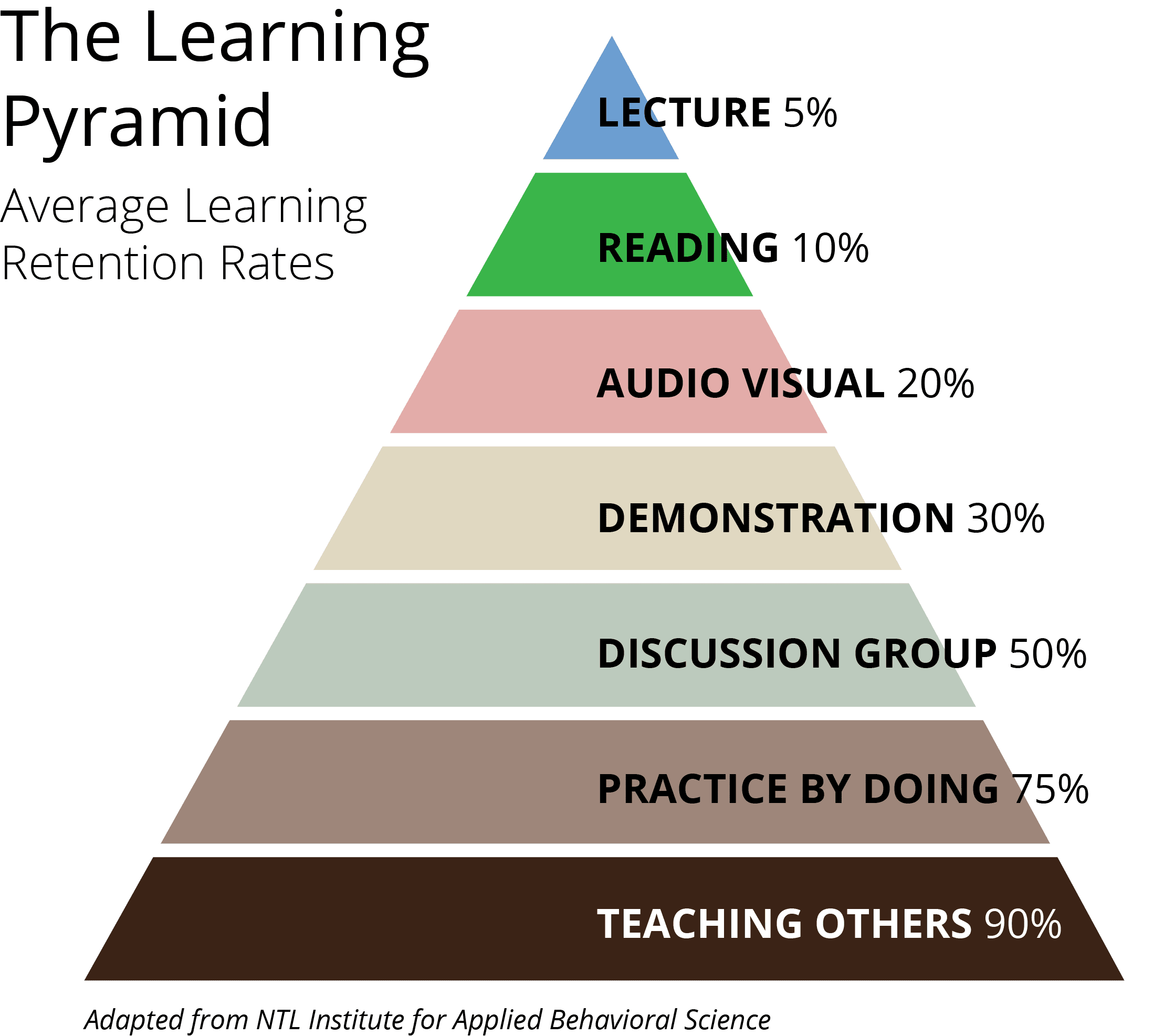
#4: We want students to communicate and collaborate with their peers during the learning process.  As students struggle with a new topic, it is valuable for them to know to ask questions and to try different approaches to solving a problem.  We call this Productive Struggle (also see here and here and here).  When students do worksheets, they are often working in isolation.  They are discouraged from talking at all with other students.  This creates a classroom in which students are expected to listen to the teacher lecturing and only to the teacher and then to learn the new content based on what they heard.  We know that this is not an effective method for learning (see The Learning Pyramid graphic).

       One reason that teachers like worksheets is that they are used to help control student discipline in the classroom.  Some teachers are not comfortable with students talking to each other and asking each other questions because they are concerned about losing control of their classes.  But we know that when students are engaged in an activity, they are focused on the activity and not distracted by anything else.  There is a benefit to allowing students to talk with each other.  And there are many strategies that can be used to do this in a productive and organized manner in the classroom.

     
       One of these strategies is the use of Math Tasks.  Math Tasks encourage critical thinking, student discussion, and questioning from students that lead to better understanding of mathematics concepts.  Many sources offer great Math Tasks for teachers to use.  Here are just a couple of them: Inside Mathematics and Mathematics Assessment Project.

       The goal of our public schools is learning.  We must use the best thinking we have to encourage thinking and learning among our students.  We don't want students to merely "complete" courses, we want them to learn, to understand, to retain knowledge, and to build upon their learned knowledge.


Friday, March 13, 2015

The Most Epic Pi Day Ever!


Not since March 14, 1915 has Pi Day been this epic!


       Oh yeah.  You know it.  Pi Day this year is going to be a big one.  3.14.15  The stars are aligned; the digits are aligned.  It is going to be bigger the Super Bowl of Mathematics--a national holiday for mathematics teachers everywhere!

       In my school district, we are celebrating with a major celebration.  We are running the Pi-K race with 400 participants.

       There will be a pie eating contest.  We are looking forward to the Einstein look-alike contest (Albert Einstein was born on March 14th.)  And we will have activities for children of all ages.


       So let's hear it for the one, the only, the irrational, the never ending, the number Pi

       3.1415926535897932384626433832795028841971693993751058209749445923078164062862089986280348253421170679821480865132823066470938446095505822317253594081284811174502841027019385211055596446229489549303819644288109756659334461284756482337867831652712019091456485669234603486104543266482133936072602491412737245870066063155881748815209209628292540917153643678925903600113305305488204665213841469519415116094330572703657595919530921861173819326117931051185480744623799627495673518857527248912279381830119491298336733624406566430860213949463952247371907021798609437027705392171762931767523846748184676694051320005681271452635608277857713427577896091736371787214684409012249534301465495853710507922796892589235420199561121290219608640344181598136297747713099605187072113499999983729780499510597317328160963185950244594553469083026425223082533446850352619311881710100031378387528865875332083814206171776691473035982534904287554687311595628638823537875937519577818577805321712268066130019278766111959092164201989380952572010654858632788659361533818279682303019520353018529689957736225994138912497217752834791315155748572424541506959508295331168617278558890750983817546374649393192550604009277016711390098488240128583616035637076601047101819429555961989467678374494482553797747268471040475346462080466842590694912933136770289891521047521620569660240580381501935112533824300355876402474964732639141992726042699227967823547816360093417216412199245863150302861829745557067498385054945885869269956909272107975093029553211653449872027559602364806654991198818347977535663698074265425278625518184175746728909777727938000816470600161452491921732172147723501414419735685481613611573525521334757418494684385233239073941433345477624168625189835694855620992192221842725502542568876717904946016534668049886272327917860857843838279679766814541009538837863609506800642251252051173929848960841284886269456042419652850222106611863067442786220391949450471237137869609563643719172874677646575739624138908658326459958133904780275900994657640789512694683983525957098258226205224894077267194782684826014769909026401363944374553050682034962524517493996514314298091906592509372216964615157098583874105978859597729754989301617539284681382686838689427741559918559252459539594310499725246...

Friday, March 6, 2015

Are the new PARCC and Smarter Balanced Tests Too Difficult?

       Public schools across the country are now using the new PARCC and Smarter Balanced assessments in Mathematics and English/Language Arts in grades 3 to high school.  Aside from the political commentary about these tests, some teachers have concerns that they are too difficult for their students.  Along with this concern comes concerns about hurting students' self-esteem, battling parents' perceptions of their children's abilities, and aligning earned course grades with earned PARCC and Smarter Balanced scores.

       I have heard and read comments that say that these tests are good for students who are very strong academically, but that they are inappropriate for students who are average or below average.  Sometimes parents have commented on sample problems and have stated that they are too hard for the students.

       The standards that these tests are written to are aligned to world-class education standards.  I realize that "world-class" is a buzz word, but I agree that these standards (and associated tests) represent an uptick with regard to rigor compared to those that they are replacing.  We know that too many of our students get good grades in elementary and middle school and then struggle with subjects in high school.  Or, they do fine (in terms of course grades) even through high school, but then they do poorly on the SAT or ACT.  We also know that many students graduate from high school, go to college, and do not graduate from college. (see college graduation rates)

       Hence, public schools are faced with this problem of students who appear to be learning and doing well in school, but then struggle with learning later.  We addressed this problem by incorporating tougher standards and putting in place assessments to see if the students are attaining these tougher standards.  In my opinion, this needs to happen; this must happen.  Nobody wants to see their own child struggling.    But we have to realize that this is already happening:


  • poor SAT/ACT scores
  • low AP scores
  • high percentages of students taking remedial math and english courses in college
  • students dropping out of college before earning a degree
       Until now, we have always been able to say "my kid gets good grades in school, so none of these other things matter to me".  But we have been fooling ourselves.  

       If we want students to be successful, we have to raise the standards (as we've done) and we have to insist on continually high standards throughout P-12 education.  This must happen.  Better education leads to better lives for our future adults--which leads to a better society for all of us.

       The tests are not too difficult.  We must, must, must insist on high standards, and we must do everything we can to help our students to achieve these higher standards.  I believe that our public schools will do exactly this in the years to come.  We will meet this challenge and we will raise student achievement and we will help to produce a society of educated people who are not afraid to face challenges, find solution, and succeed.


Public Schools and Choice

       Is it true that public school kids and their public school parents don't have choices?  I'm sure that I will expose my igno...

Teach100 blog