Showing posts with label challenges. Show all posts

Thursday, July 14, 2016

Learning About Learning

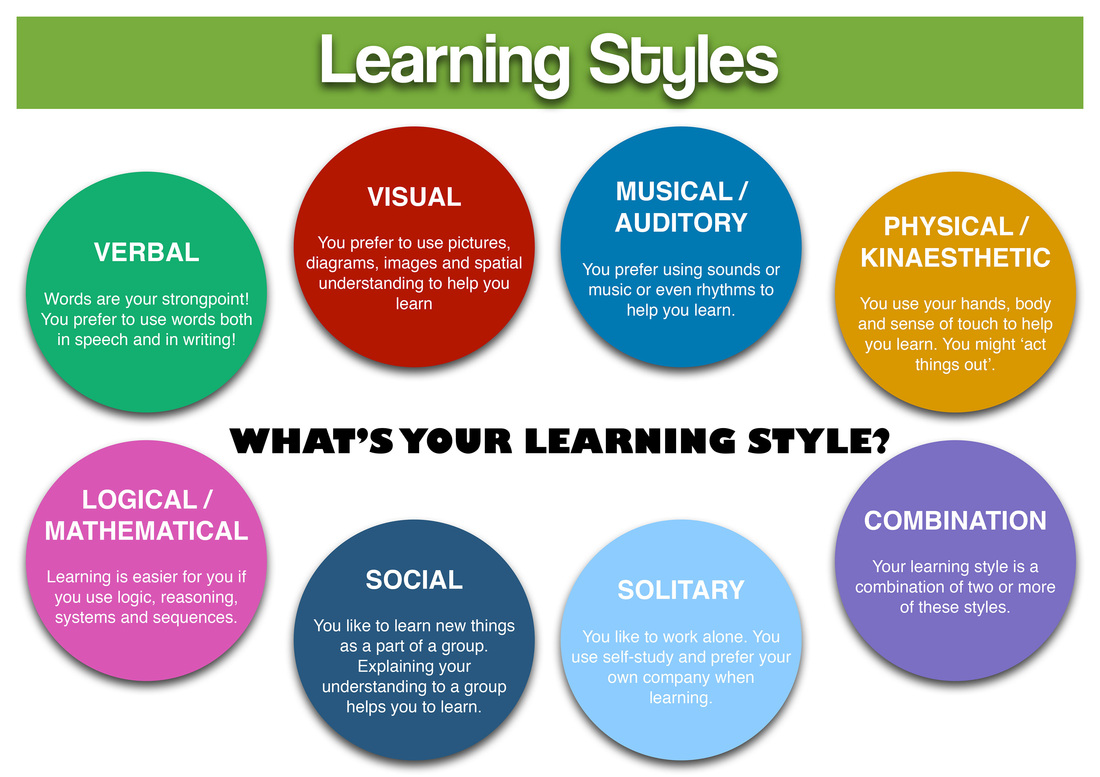
       The goal of school is learning.  The challenge for our schools is to help all students to learn when students are so different.  Some prefer to work by themselves.  Others need to bounce ideas off of their peers.  Some need only to hear the information while others need to actively "do" something to help them to learn.

       The mystery of how students learn has baffled educators for a long time.  The puzzle of "some-kids-get-it" and "some-kids-don't-get-it" has been difficult to understand.  I think that--for a long time--teachers referred to their own ability to learn (and perhaps that of their peers) and felt that all students probably learned the same way they did.  In fact, I wonder sometimes if some present day teachers use the same technique.  And while there are still many unknowns in the field of learning, it is fair to say that we know more today about how students learn than at any time in our history.

       For starters, brain research has provided a wealth of information about how we learn.  Here's a short list of things to know about how the brain learns:

  1. We receive information better when it's visual.
  2. We remember the big picture better than the details.
  3. Sleep affects learning and memory.
  4. Less sleep reduces your ability to learn new information.
  5. We learn best by teaching others.
       Next, we have a lot of help in the field of learning from experts and practitioners.  After a while, we begin to see common themes in the area of helping students to learn:

  • Engagement - Students who actively participate in their learning find it enjoyable and are better able to retain the information.
  • Movement - Learning can certainly take place while sitting, but less so if you're forced to stay seated for a long time.  (see The Power of Movement in Teaching and Learning)
  • Challenge - We learn best when we are forced to think and try and fail and try again.  Also, when we are forced to recall past learning and use that information to understand the current learning.
  • Growth Mindset - If we believe that effort yields results then we are more likely to do our best to preserve in the face of any struggles that may occur as we learn new material.

       Still, teaching is certainly a combination of Art and Science.  Teaching requires building positive relationships so that we can understand our students and construct our lessons in a way that meets their learning needs.  Teaching requires the ability to motivate students and to spark their interest in learning.  Teachers need to challenge students enough to keep it interesting, but not too much so that it becomes too overwhelming.

       The challenge of teaching is the challenge of learning how students learn.  We're getting better at this, but we still have a lot to learn [!].


Wednesday, June 15, 2016

Is Your Child Advanced in Mathematics?

       It seems that, more than in other subjects, the placement of students in advanced mathematics is often a contentious issue. Elementary schools have different policies about placing students in classes that teach math at grade levels that are above the student's current grade.  Middle schools often offer high school mathematics classes, but some stop at Algebra 1 and some go beyond Algebra 1.

       The ability of a school or school system to determine a student's math ability (or "advanced" math ability) can be hard to do with great accuracy--especially when we are trying to make this determination with eight and nine year old children.  It's not enough that they are getting good grades in their math work; math is more than mere calculation.  And higher-level math is all about reasoning and thinking and understanding.  The kid that is good at memorizing, isn't always good at (say) the abstraction that comes with manipulating variables and graphing a line.


      Yet, I think that (too often) we get a false impression of a student's math abilities from merely looking at their elementary grades on the report card.  Sometime students are placed in advanced classes and at some point in middle school they start to struggle because they were pushed to learn higher and higher levels of math too fast.  On the other hand, there are certainly students who are highly able in mathematics and they should be encouraged to take more challenging classes that are commensurate with their abilities. So goes the dilemma of trying to identify the truly highly-able students from those that only appear to be highly-able.

       One method that helps is using multiple data points.  When students breeze through their multiplication tables and get "A's" on their report cards, but do poorly on standardize tests or on unit tests, this should be a cause for concern.  Maybe this student is good at memorizing facts and procedures and not good at understanding concepts.  This student is successful at procedural assignments (such as long division with whole numbers), but may struggle with more abstract assignments (such as a math task with multiple answers).

       Of course, we know that it is OK for students to struggle as they learn new concepts (see previous blog post), but many students view this struggle as a sign that they aren't good at math; or a sign that the teacher is doing something wrong.  We don't want students to struggle because they have been inappropriately placed.  Truly able students (and Growth Mindset students) don't mind the struggle because they enjoy the journey toward learning.  Also they understand that it is OK if they don't get it the first time.  Continual effort will eventually pay off.  Students who never tried hard to do well in math and then are placed in an advanced math class and then are upset when they don't get it the first time...these may be the students that we are pushing too quickly.

       Is your child advanced in mathematics?  How do you know?

Wednesday, April 6, 2016

Teachers Learning from Colleagues


       The National Council of Supervisors of Mathematics have just released a new feature on their website called It Worked!.  Stories and videos of Math Coaches talk about situations that have occurred in our public schools in which professionals learn from other professionals and (together) they gain more experiences and expand their abilities to help students to learn.

       The opportunity to hear from colleagues is a valuable professional learning opportunity.  Teachers and Teacher Specialists grow in their profession in many ways:  coursework, membership in professional communities, reading journals and articles.  But to hear from a colleague is particularly nice because we can see ourselves in their stories and in their situations.  We can think about similar situations that we have encountered and how we might handle those situations.

       The It Worked! feature is filled with Elementary and Secondary examples of how mathematics coaches faced challenges and found productive ways to address them.  NCSM is to be commended for building this community of professionals that has the capacity to assist other professionals in a profound way.  It is important for our leaders--at all levels--to share their knowledge and their experiences.  You never know who will hear your story and will use it for their own professional growth.


Saturday, September 5, 2015

The Pros and Cons of Standardized Testing

Warning:  If you are 100% against standardized testing or 100% in favor of standardized testing, you shouldn't read this blog post.  I'm going to some things that you will agree with, but you will be so blinded in anger over the things I say that you disagree with that you will never see the agreement parts.  Besides, you have already determined your thinking on this matter so there is no point for you to hear the opinions of others.

------------------------------------------------------------------------------------------------------------------

       Alright, maybe that warning was a little harsh.  I apologize.  In truth, I'd like to believe that the people who are on the extreme sides of this issue are a very small minority.  Most people have their views regarding standardized testing, and I would guess that most people fall somewhere in the middle of the issue.  I'm one of those people.

       In an ideal world, the students will come to school and do their best everyday to learn--and testing wouldn't be necessary.  The reason it wouldn't be necessary (in this ideal world) is because teachers would constantly gain an understanding of each student's level of learning through formative assessment practices; and students would ask questions about the things they didn't understand and keep working on these things until they got it.  The motivation would be the attainment of knowledge.

       To be fair, some students and teachers and whole schools work hard to (at least) approach this ideal world of education; but for the rest of us, we are still somewhere on our journey toward this world.  We are striving to emphasize learning over "getting-a-grade"; but we still need effective ways to measure learning--and testing is part of this process; and standardized testing is part of this process.

Some Pros of Standardized Testing

       In my view the "standardized" part of standardized testing is a pro.  Every student takes the same test regardless of the factors that influenced their learning (such as their teacher, the curriculum, the standards, the state they live in, etc.).  Think about the SAT test: colleges know that every student is taking the same test, so SAT scores can be compared to each other regardless of where in the country the test was taken.

       Also, the next generation of standardized tests (think PARCC and Smarter Balanced tests) are written to determine a measure of learning based on understanding content more than based on memorizing formulas and procedures.   This means that it will be harder for students to guess the right answers on these tests.  It also means that results will be based on true learning and understanding rather than on a student's ability to take a test.

Some Cons of Standardized Testing

       It may be a challenge to teach all of the content that is covered in a standardized test prior to the administration of the test.  Standardized tests typically have specific testing windows or a specific testing date on which to give the test.  Since different school districts start and end on different dates during the year and have different days off due to holidays and other reasons, it might be hard to structure a course outline that completely covers all of the material that will be assessed on a standardized test.  This occurs (sometimes) for Advanced Placement tests.  These AP tests usually have a particular May date for their administration and many school districts finish their school years in June.

       Some might argue that a "con" to standardized testing is that it might assess something that we don't teach or don't want to teach in the course.    I believe that there is general agreement of what needs to be taught in each grade and that this is less of an issue than some would have you believe.

       To me the biggest down side to standardize testing is that it gives the message to students (and parents) that the goal of school is getting a good grade on a (standardized) test rather than having the goal of learning.  Sometimes standardized test results are treated with great importance with newspaper articles and school-wide celebrations.  And sometimes these results are given too much importance when making course selection decisions for the next couple of school years.  As I said before, schools should emphasize learning and should de-emphasize "getting a grade".  A standardized test score should be just one piece of data that is used in conjunction with many other data points to make big decisions about a student's ability.


Friday, August 21, 2015

11 Serious Questions for Teachers


       Yesterday I welcomed our 200+ secondary mathematics teachers to the 2015 - 2016 school year.  We do this every school year and it is always an exciting day.  We get to see people we haven't seen since last June; middle school teachers get to network with their high school colleagues.  The first day of school is getting closer and closer.

       This year I welcomed them with 11 serious questions about teaching.  Since this week is filled with the details of preparing those first lessons, decorating the classroom, preparing class resources, and learning about any new school policies and procedures, teachers don't usually get the chance to sit down for 30 minutes and reflect on why they do what they do.

       Here are the questions I asked them.  Read each one and take 30 seconds to reflect on your answer to the question.

  1. Why do you teach?
  2. What is your goal this year?
  3. Will you make a difference?
  4. What will you do differently this year?
  5. How do you view challenges?
  6. Where is the line between impossible and very difficult?
  7. Do your students have a Growth or Fixed Mindset?
  8. How do you know when they "get it"?
  9. Do student's term grades reflect their ability?
  10. How do you move your students from procedural to conceptual understanding?
  11. Why do you teach?
       Teachers have a job to do.  It is a difficult, complex job.  And the need to grow and to improve in the job is necessary because it isn't the sort of job in which a person knows everything they need to know when they graduate from college.  Teachers face new challenges every year and their ability to find solutions to those challenges is generally what separates good teachers from great teachers.

       Here is a movie clip I shared with the teachers in which FDR struggles to stand up straight and then boldly says, "Don't tell me, 'It can't be done.'"

       Why do you teach?


Public Schools and Choice

       Is it true that public school kids and their public school parents don't have choices?  I'm sure that I will expose my igno...

Teach100 blog