Showing posts with label student. Show all posts

Wednesday, August 17, 2016

The First Day of School


       The first day of school is filled with excitement for students and teachers.  New clothes (maybe), sharp pencils, backpack, re-connecting with friends, searching for the new classroom, new teacher, making new friends, first day in the new grade.  Clean slate, new school year, ice-breaker/get-to-know-you activities, setting goals.  Of course, there's also the tentative side of the first day of school.  "Will I make friends?"  "Will the teacher be nice?"  "Can I do the work?"

       The first day of school is a whole lot of "new" all at once.  It's exciting, but it can be scary too.  In fact, the first day of school is like many "firsts" that students experience.  The first day in a new Social Studies chapter after a test.  The first day of the new marking period.  The first day after Christmas vacation.  The first day of the soccer season.  Students experience a lot of firsts and (just like many life events) the more you practice, the better you get.  So it's OK if your child is experiencing a little excitement mixed with a little nervousness.  This is good practice for all of the firsts that will come later.

       All the best for a great first day of school!  It will a wonderful, emotional day--but mostly wonderful.


Monday, April 18, 2016

Why Do You Remember Your SAT Score?

       What's your social security number?  What is your phone number?  How tall are you?  When were you born?  What did you get on your SATs?  Huh??  Why is your SAT score is a number that you memorize every bit as much as your phone number?  I can't find any survey data that says the percentage of adults who recall their SAT score (from among adults who have taken the SAT), but my own anecdotal evidence suggests that it is very high.  I dare say that a far majority--maybe more than 75%--of adults who have taken the SAT more than 20 years ago can still recall their score today.

       Why?

        Why is this number, this score--which has no power whatsoever in lives of people in their 30s and 40s--so ingrained in our memories?  It's just a number that (years ago) described our ability to do high school mathematics and our knowledge of grammar, vocabulary, and reading comprehension.  It won't get us a raise or a promotion twenty-plus years later.  There's no college admission counselor to impress when you're in your late 30s.   We're certainly not going to get any reward or trophy or recognition of any kind.

       So why is your SAT score so important to you that you remember it for your whole life?  Why?  I have a theory....  At the time we took the SAT, everyone around us made a big deal about it.  It was billed as the most important test we will ever take.  They said, "Your life depends on it."  (Or something to that effect.)  It was like training for the Olympics.  The test date was on our mind for weeks before.  We thought and thought and thought about it.  We worried about it.  It was a sort of a milestone in our young lives; like getting our driver's license.  We might have taken it more than once because someone said that that was a good idea.  It was an accomplishment akin to graduating from high school or running a mile in six minutes or going out on your first date.

       I think that taking the SATs was billed as such a huge event in our lives, that most of us figured it was important enough to remember our scores.  But, I fear, that it also produced a generation of people that valued test scores over actual learning.  Today in education, we are trying to change this thinking.

       Today educators value frequent formative assessment over the results of unit tests and final exams.  We value multiple data points over the "one big test".  We value a combination of conceptual understanding and procedural knowledge over the mere regurgitation of facts.  Learning and the measurement of learning has come a long way.  Some colleges don't even use the SAT as a consideration for admission.  Others use it as one of many factors for making the admission decision.

       Aside from the college admission process, your SAT score really isn't very important in your life.  Americans are competitive people.  We like to win.  We don't want people to pass us on the highway; we don't want to lose a promotion to someone else; we don't want our lawn to look worse than our neighbor's lawn.  We have to stop competing for everything.  Your SAT score does not define who you are.  You won't "win" or "lose" anything because of your SAT score; especially twenty-plus years after you take the SAT.

       There are lots of experiences that most adults would gladly like to forget about their high school experiences.  Your SAT score should be one of them.


Saturday, April 4, 2015

We Want Students To FINISH College

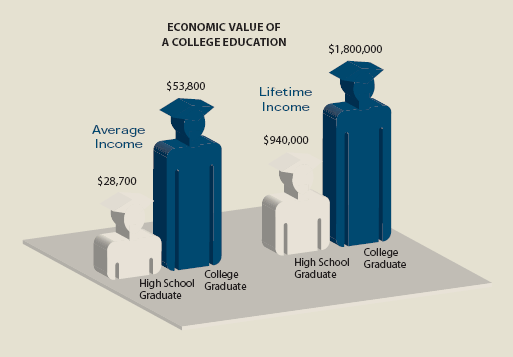
       The importance of a college education is well established.  People understand that a college education will increase the likelihood of entering into a satisfying profession and earning a higher income.  Indeed, college enrollment has risen significantly over the past 15 years.  In 2011, 21 million people attended U.S. colleges compared to only 15.9 million in 2001.

       We have won the battle of convincing students of the value of going to college.  But our goal isn't really for more students to "go" to college; our goal should really be for more students to "graduate" from college.  On that metric we are still far from claiming victory.


       Rates vary depending on the source of the information, but overall it is fair to say that merely getting accepted to college is absolutely not a guarantee of graduating from college.  In fact, many colleges have such a terrible graduation rate among students that have been attending for four years that they prefer to publicize their SIX YEAR graduation rate rather than their four year graduation rate.  According to the Chronicle of Higher Education, the six-year graduation rate means the percentage of students who are able to complete a four-year program within six years [!] .  Even this extra time only raises the overall college graduation rate to around 50%.


       Can you imagine the outcry from the public, from our government, and from our students if the high school graduation rate was only 50%???  Yet, this fact is not widely known by the public.  Little more than half of our students that begin college actually finish college.  And if you look at the data by race, the news is even worse.

       Of course there are many reasons for why students drop out of college.  A Harvard Study cites the following reasons:
- not being prepared for the rigors of academic work
- inability to cope with the competing demands of study, family, and work
- cost


       Our public schools are in a constant battle with students (and sometimes with parents) over the dueling pressures of Learning versus Getting Good Grades.  Some students care little about actual learning and only want to do what is necessary to earn a good grade.  While their teachers are pushing them to learn, to understand, and to use the learning they've acquired to learn more.  I believe that a major reason for the low college graduation rate is students who do enough in high school to get accepted to college, but don't enough (in high school) to gain the knowledge and the discipline they need to succeed in college.

       We must do better on this front.  We must continue to stress the importance of true learning and true understanding of P-12 content.  We have to lessen the importance of grades and increase the importance of real learning.  In the end, it's not that we want students to attend college; what we really want is for students to graduate from college.


Friday, April 3, 2015

No More Worksheets!

       Here is a very simple test to determine the effectiveness of your child's mathematics teacher...

Question 1: Does you your child's mathematics teacher assign a lot of worksheets for homework and classwork?

If the answer is YES - Not a very effective teacher.
If the answer is NO - Likely to be a more effective teachers.
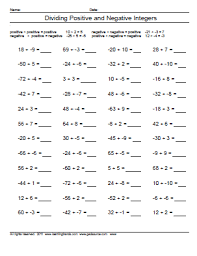


       This idea is a major shift in thinking for a lot of people--both for teachers and for non-teacher-parents alike.  Some would say, "How can you say worksheets are bad?"  Or, "I used worksheets when I was in school and I turned out fine."  And the internet is certainly full of sites with pre-made worksheets that are frequently downloaded and used by teachers.  So (I guess) the next argument is, "If so many teachers are still using worksheets, then why are they so bad?"  Here's why:

#1: We want students to understand the mathematics that they are learning.  Worksheets tend to encourage students to blindly follow procedures without knowing why they are doing what they are doing.  Students might get the answers correct, but if the problems were changed slightly they wouldn't know what to do because they never learned the "Why" of the procedures that they were using.

#2: If students know how to do something, then why do they have to do it 20 times?  It seems to me that if they can do it two or three times, that would be a sufficient amount of proof that they have learned the skill.  If a students does not know how to do something, then why are we forcing them to do something 20 times that they cannot do?  Have you ever completed a worksheet only to find that you made the same mistake on all 20 problems--and got everything wrong?

#3:  Worksheets are not engaging.  In Robert Marzano's book The Highly Engaged Classroom, we learn that students are more able to learn new concepts when they are engaged in the lesson.  He offers many strategies for increasing student engagement.  Worksheets tend to be boring and repetitive and very discouraging in terms of engaging students.

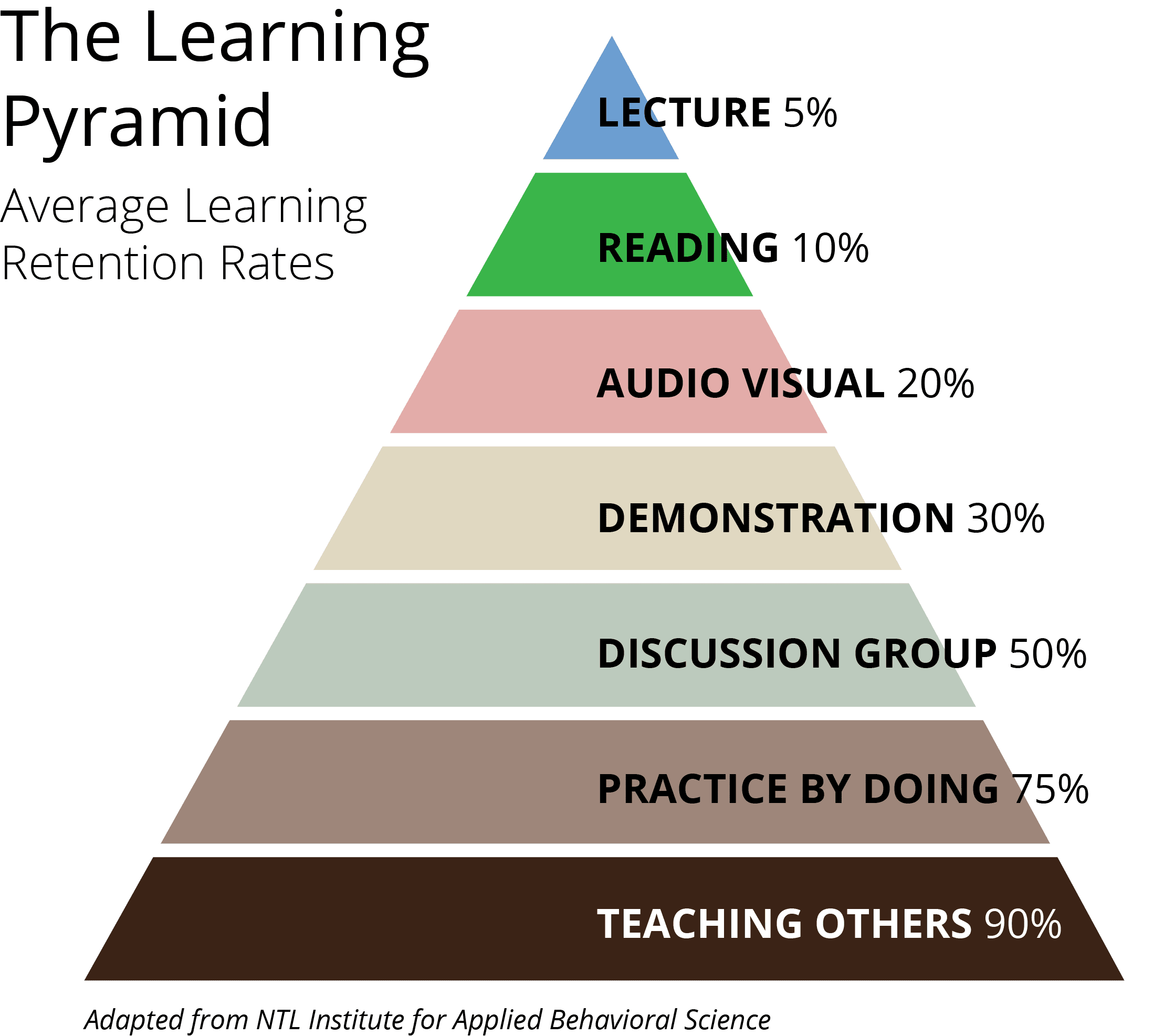
#4: We want students to communicate and collaborate with their peers during the learning process.  As students struggle with a new topic, it is valuable for them to know to ask questions and to try different approaches to solving a problem.  We call this Productive Struggle (also see here and here and here).  When students do worksheets, they are often working in isolation.  They are discouraged from talking at all with other students.  This creates a classroom in which students are expected to listen to the teacher lecturing and only to the teacher and then to learn the new content based on what they heard.  We know that this is not an effective method for learning (see The Learning Pyramid graphic).

       One reason that teachers like worksheets is that they are used to help control student discipline in the classroom.  Some teachers are not comfortable with students talking to each other and asking each other questions because they are concerned about losing control of their classes.  But we know that when students are engaged in an activity, they are focused on the activity and not distracted by anything else.  There is a benefit to allowing students to talk with each other.  And there are many strategies that can be used to do this in a productive and organized manner in the classroom.

     
       One of these strategies is the use of Math Tasks.  Math Tasks encourage critical thinking, student discussion, and questioning from students that lead to better understanding of mathematics concepts.  Many sources offer great Math Tasks for teachers to use.  Here are just a couple of them: Inside Mathematics and Mathematics Assessment Project.

       The goal of our public schools is learning.  We must use the best thinking we have to encourage thinking and learning among our students.  We don't want students to merely "complete" courses, we want them to learn, to understand, to retain knowledge, and to build upon their learned knowledge.


Wednesday, April 1, 2015

Learning, Smoking, and The Long Arc of Change

       When I think about the huge job of improving education outcomes among our students (especially our poor students) in America, I think about the amazing turn-around in behavior about smoking over my lifetime.

       It is nothing short of a modern-day miracle that smoking has declined so dramatically in the United States over the past 50 years.  In 1965, 42.4% of U.S. adults were smokers.  By 2003, that number was cut in half and in 2013 we were down to 17.8%.  And, of course, our population has risen quite a bit over this timeframe from 194 million people in 1965 to over 320 million people today.

       No one in the United States in 1965 would have ever believed that Americans would give up their love for smoking so dramatically.  Even with today's relatively low rates of smoking, nearly 70% of current smokers want to stop smoking.  It is nothing short of amazing the way this addictive behavior has changed in the United States in just a couple of generations.

       I believe that our public schools can look at this incredible event, this long arc of changed behavior, and that we can use it as a lesson for tackling the equally difficult task of improving the educational outcomes of our students.  We can examine the efforts that took place (and continue to take place) that convinced people that smoking is bad for you; and (perhaps) we can undertake similar efforts in our public schools.

       First of all, there was a national effort to inform the public of the dangers of smoking.  This began with the first surgeon general's report that provided proof that smoking was bad for your health.  Of course, there were lots of people of that didn't believe the contents of this report.  I'm sure there were people who pointed to relatives and friends who lived well into old age and smoked their whole life--and, therefore, refused to believe that smoking was bad for your health.  But more and more information came out from public and private sources about the dangerous health risks of smoking and eventually it became very hard for people to believe that smoking wouldn't harm their health.  As smokers died from lung cancer and other diseases, people began to link these deaths to their habit of smoking.  This gave people a personal connection to the ill effects of smoking and it convinced them to never smoke or to quit smoking.  As they grew up and had children of their own, this knowledge of the evils of smoking was passed on to the next generation.  And so, what started as a national effort from government sources, slowly became a combined effort of government and private resources that worked together to bring down the rates of smoking in America.


       I believe that a similar combined effort is underway in our public schools today.  We have a government that believes in the value of education and is dedicated in improving the education of our citizens.  We also have many private efforts underway that are striving to do the same.  We also have segments of our population that don't believe that education is important.  As with the smoking example, they point to friends and relatives that quit school in eighth grade and grew up perfectly fine.  But (as with the smoking example), we also have generations of parents that have regrets of not doing better and trying harder when they were in high school.  They look at their peers who went on to college or some sort of vocational training and now have higher-paying jobs.

       I believe that we can change the behavior of Americans toward the value of education--and all of the hard work that this entails--over the next generation.  I believe that we can see a country with higher high school graduation rates and higher college graduation rates.  And when this happens, we will reap the benefits of a more educated society.  We will see less crime, less people on welfareless obesity, and a strong economy.  And I believe that this will happen within the lifetimes of our current high school students.

       We can do it.  We have done it in other areas of our society and we can do in education too.  We must do better and we will.


Saturday, March 7, 2015

Blood Donors and Students: Doing the Right Thing

       I've been a blood donor since I was 18 years old.

       Over the years, I've grown more and more impressed with the blood donation system in the United States and Canada via the America's Blood Centers and the American Red Cross.  They have a difficult and (yet) very important job.

       Here is the difficult part:

       Imagine if you had the job of trying to convince people to volentarily have a needle stuck in their arm?  They would also have to answer a lot of personal questions about their past travels--especially if it included travel to certain countries--and questions about their possible drug use and even their sex lives and sex partners.  As compensation for going through this ordeal, donors would receive a hearty "Thank You", a bottle of water, a snack, and occasionally a free T-shirt.  No money; no raise; no notoriety.  In fact, friends and neighbors would probably question your reasons for doing such a thing if you were a blood donor.  And if all of this wasn't tough enough, only 38% of the U.S. population is eligible to give blood (source) because of various health and risk factors.

       Here is the important part:

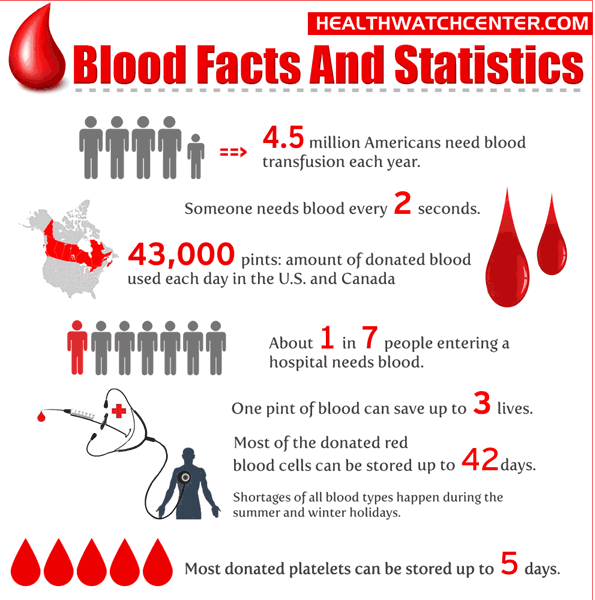
       Blood can not be manufactured.  The only way hospitals and medical centers can get blood is from people donating blood.  Blood is needed everyday for accident victims, people with Sickle cell disease, and people with cancer (source).  Over 15 million blood units are needed in the U.S. and Canada every year.  To make matters even more dire, blood can only be stored for up to 42 days (see chart).

       Hence, maintaining an adequate blood supply is difficult to do, and very important to be done.  It is so important that is worth the effort of many people throughout the country to continually seek to find more and better methods of encouraging people to donate blood and to improve the blood donation process.

       When I look at our public schools and their mission, I see many parallels to the efforts for encouraging more blood donors.  Our public schools (also) have a difficult and important job to do.  We accept students into our schools with many and varied backgrounds.  Some are poor and ill-equipped to find success in the academics of traditional schooling; some are new to our country and are trying to learn English while also trying to learn math, science, and social studies.  Some schools have few needed supplies and some classrooms have large numbers of students.  Some teachers are very well prepared to educate their students and some are not as well prepared to do this job.


       Yet, few would argue that the need for an educated public is important.  It is important for the individual and it is important for the society at large.  Hence, it is worth the struggle and the effort to continually search for ways to successfully educate all of our students.

       This belief in the importance of education is certainly shared by educators; but we often find it difficult to convince some students and their parents.  Like blood donors, we don't offer our students money or prizes for obtaining a good education.  Instead, we offer them hope for a better future.  We do our best to help our students to see the value in learning.


       Education is (indeed) the art of selling students (and parents and communities) the future value of learning.  It isn't the grades or the GPA or the credits earned.  It isn't "doing what you're told because, 'I say so'".  Learning is it's own reward.  Learning is the right thing to do because it helps you and everyone around you to be an educated person.

Tuesday, February 24, 2015

Good Teachers are Great Learners

       I think everyone has had the experience of teaching something to someone.

       Parents teach their children to walk or to ride a bike or to drive.  Friends teach their friends about cool stuff they find online or cool stuff they read about.  Colleagues teach their co-workers trade skills on the job.

       Sometimes, as a teacher, we are very attentive to the way our learner is "catching on" to what we are trying to show them.  Sometimes, as a teacher, we just go through the steps and explanations with no regard whatsoever as to whether or not the learner is following us.  And sometimes, as the teacher, we get very upset when the learner does "learn" what we just taught them.

       "I just said that."  "Weren't you listening?"  How is possible for them to not understand when I did such a good job of explaining it?

       Teacher know that "teaching" is only half of their job--maybe even less than half.  Their main job is to ensure that students are learning.  Lots of people are very knowledgeable about something; but that doesn't mean that they are good teachers.

       Teachers excel at understanding their students and (to the best of their ability) at understanding how their students are thinking and what it is that is keeping their students from fully understanding the objectives of the lesson.  Good teachers are great learners.  They discover common errors that their students make and use that understanding to help their students to understand.

       Good teachers learn about their students through questioning, discussions in class, notes on classwork, email messages or other electronic resources, meetings with parents, and sometimes facial expressions.  Teachers who care about student learning do whatever they need to do to help their students to learn.

       This is one reason why experienced teachers tend to have more success with student achievement than less experienced teachers.  This sort of learning and understanding of students comes almost exclusively from experience.  It is hard to gain this professional ability strictly from a teacher preparatory program.  Teachers that continually strive to get to know their students and to learn how they think build an ability to anticipate problems in learning and to act on these anticipated problems as part of their lesson planning.

       Teaching is a difficult job.  Students are different and student backgrounds are different; and student abilities are different.  Good teachers strive to understand these differences and to find ways to overcome these differences to help all of their students to learn.

Thursday, January 22, 2015

Problems Seen and Problems Solved

          American public schools can be described in some very large numbers:

100,000 schools

3,700,000 teachers

55,000,000 students

700,000,000,000 dollars


       Yipes!  Those are certainly huge numbers.  Of course, the United States is a big county of over 300 million people.  When we talk about any "system" in the United States, we are going to use some very big numbers.  And sometimes big numbers can make it seem as if the problems with our educational system are too big for us to solve.  But there is no such thing as a problem that is too big to solve.

       At one time in America it seemed ridiculous that women would ever get the right to vote.  At one time it seemed impossible that man would ever walk on the moon.  Separating our garbage into plastic and paper items in one spot and everything else in another spot was unheard of.  Smoking cigarettes used to be common in restaurants and offices.  And in our schools, it used to be practically impossible for students receiving Special Education services to sit in regular "mainstream" classrooms.

       All of these problems weren't even viewed as problems by most of our society at one point.  But then we recognized the problems and we changed public opinion about the problems and we took steps to address the problems.

       Our public schools take steps to improve the lives of all of our students everyday.  We all play a large part in our large system by finding ways to solve problems one student at a time; one problem at a time; one school at a time.

       Nothing is impossible.  Every problem has a solution.  Strong, dedicated professionals in our schools are problem solvers--everyday.

       Be a problem solver!


Tuesday, December 23, 2014

Everything

       What's so good about public education in America?  Everything!


       I guess this is my post of platitudes.  

       Years ago I taught in a middle school that was located in an area where people were struggling to make ends meet.  I met with a lot of parents during my time at this school; and spoke with a lot of parents on the telephone if they weren't able to come to the school.  At the time, I was not a parent.  And, so, I did not have the perspective of a parent.

       We know that schools are challenged to raise the achievement of children from poor families.  We had a lot of these children at this school.  I would hear teachers say that the parents don't care about education and that is why the children did so poorly.  But when I met with the parents, I would hear a very different message.

       The parents told me that they wanted their children to do better then they did.  They wanted their children to get a good education and a good job.  One parent told me that she would tell her children to look out of the window at the house (and neighborhood) across the street and she would say, "Is this where you want to live when you are an adult?"  She told her children that she made mistakes in her life and she didn't take her education seriously and that is why they were forced to live in a neighborhood that was not so nice.

       Education is everything.  Education provides opportunity and options for all that take full advantage of it.  Learning and the ability to learn and to solve problems is a skill that enables people to make decisions, to create, to explore, and to live.


Friday, November 21, 2014

This is our finest hour

    Do you remember the scene in the movie Apollo 13 when guy said "It would be the worst disaster NASA's ever experienced." and the Ed Harris character said, "With all due respect sir, I believe this is going to be our finest hour."?

       After all of the problems that had taken place over the past few days, he believed in his team at NASA and he believed that the astronauts would return safely to earth.  He knew that it would be the hearts and minds of the dedicated professionals at NASA that would ensure this outcome.

       Have you ever looked at your school or school district and said "This is our time to shine.", "We could be the best school district in the country.", "This is our finest hour."?

       Dedicated professional educators working together can do amazing things in the most difficult of situations.  We live in a world with answers to the most difficult educational questions.  Where we don't have clear answers, we have years of experience and mountains of desire to help all of our students to succeed within our staffs.  The daily decisions and the year-long goals of every teacher have the potential to achieve world-class results with every student body in every school in our country.

       Teachers live in a world that sometimes makes it easy to see the obstacles and hard to triumphs.  In the same way that students who are motivated to do well can overcome limitations in ability; so too can schools and school systems achieve great things when they believe that great things can happen.

       Of course it takes hard work and lots of collaboration.  Nothing in life worth doing comes easy.  But it can certainly happen.  Do you believe it?

       Is this your finest hour?


Thursday, November 13, 2014

We Must Do Better - Part 2

       This post is part two of a three-part series titled We Must Do Better.

       I love public schools; and there is a lot to cheer about when it comes to the ability of public schools to prepare students for their futures.  But there are three major areas in which public schools must improve if we want to see ourselves as providing a world-class education to our nation's children.

       1) We must raise the achievement of poor children.

       2) We must increase graduation rates.

       3) We must provide continuous, high-quality professional development to our teachers.

       It isn't that there aren't other areas that can and should improve in our public schools.  But improvement in these three areas are absolutely critical if we truly want our school system to be exceptional and of the highest quality for all of our students.

----------------------------------------------------------------------------------------------------------------

We Must Do Better

Part 2 - Increasing Graduation Rates

       Part 1 of this series was about the need to increase achievement among poor students.  I am going to begin this part by looking at the differences in high school graduation rates between poor students and non-poor students.  Take a look at this graphic from the organization America's Promise Alliance:


       This graphic shows that (in 2012) low-income students had a graduation rate below 80 percent in 41 states while non-low income students had a graduation rate below 80 percent in only 7 states.  As a nation, our graduation rate in 2012 was 81 percent.  (source: National Center for Education Statistics - The Condition of Education)  

       Our national graduation rate has been rising since the 1995 - 1996 school year when it was 71%. We are moving in the right direction as a nation, but we still have a long way to go.  Allowing 1 of every 5 students to leave school without a diploma has real and serious consequences.  These include:
  • Higher unemployment rates
  • Lower pay compared to people with high school diplomas
  • Greater need for public assistance
  • Greater chance of incarceration
  • Less effective parenting skills
(sources: here and here and here)

       Public schools clearly have many responsibilities.  We must do everything we possibly can to get more students to graduate from high school--especially poor students.  In decades past, completing high school was arguably less important than it is today.  However, in today's world and in the world that our students will inherit, people without a high school diploma have a greatly enhanced risk of lifelong struggles to avoid poverty and to experience a middle-class lifestyle.

     As a graduate student, I questioned the difference between students who dropout of high school and students who graduate in the bottom 10% of their class.  I hypothesized that such students who barely graduate were no better off than students who didn't graduate.  Using data from the National Center for Education Statistics, I discovered that weak high school graduates were still better off than high school dropouts.  That's right; even students who struggle to pass all of their courses in high school and eventually graduate are better off than people who never earn a high school diploma.  Why?  I think it is because there is something within these weak students that says, "This (schoolwork) is hard, and everyday I come to school I know that I am going to struggle.  But I am going to continue to come and to work and to finish high school."  I believe that students who (perhaps) hate school and always struggle academically AND still graduate have had a life experience that they carry with them in their futures struggles.

       This message of the importance of graduating from high school is logical and sensible to everyone working in education and probably to just about everyone outside of education.  But despite our best efforts, this message is not getting through to 19% of our youth.  And it is hitting particular groups of students worse than others.  Once again, according to the National Center for Education Statistics (see top of page 13):

Group                  Graduation Rate (2012)
Amer. Indian/
Alaskan Native                68%

Hispanic                           76%

Black                                68%

Poor students              well below the national average (see America's Promise)

     These focus areas will help to improve graduation rates among our most vulnerable groups of students:

  1. Adress chronic absenteeism
  2. Improve middle schools
  3. Re-engage youth who have left school
  4. Provide more and better adult and peer supports
       We must do better at raising the high school graduation rates of our students.  It is important to our nation; it is important to every young man and woman in our high schools.


Friday, November 7, 2014

Should we abolish Grades in our schools?

       Why do schools assign grades?

       Grades and grading are such natural parts of our educational system, it seems almost silly to ask this question.  It's like asking, Why do people walk?, or Why do have eyes?  Still, if we think about the meaning and purpose of grades, I would say that most people have an answer to this question.

       Grades provide a measure of success in a student's learning.

       Grades tell us our ability in a particular academic area.

       Well...maybe that is what grades are supposed to do, but (in reality) do grades serve other purposes?  If you are a teacher, have you ever given a student a bad grade because the assignment was handed in late?  Have you ever taken points off of a test because a student was talking during the test?  In these instances, the grade was determined (at least partially) based on a student's behavior and not on the student's ability.

       As a student, have you ever received a good grade and learned nothing about the thing you were graded on?  Have you ever received an "A" on a test based on what you were able to memorize?  In these instances, the grade didn't represent ability; it represented compliance.  You did what you were told to do.

       As a parent, do you ever question the good grades that you children earn?  Do you encourage your children to get good grades, or do you encourage your children to learn?  Do you view grades as a sort of competition...Your kid vs. the other kids...Who is going to win?

     I think about grades and grading a lot.  A quick Google search found other people who think about grades and grading in our schools.  One of my favorite people on Twitter Starr Sackstein. Also Alfie KohnJen Rubino, and Education Stormfront.  I worry that grading is taking over our education system.  I worry that learning--the joy of learning; the desire to learn--has fallen into a (far) second place.

       There is so much pressure on students to get good grades.  Do grades mean what they used to mean?  Do grades reflect a student's ability?  Does anyone care if grades reflect a student's ability?  Grades don't have to be the enemy; but (I think) the desire to seek good grades over the desire to learn is dangerous.  We give students a false sense accomplishment when we say that they have "earned" grades and they didn't.  We give parents a false sense of their child's ability too.  How many students get great grades in high school and then cannot make it to their sophomore year in college?  Surely, this isn't our goal.

       Why do schools assign grades?  Why (should) schools assign grades?  And, can we lessen the importance of grades and increase the importance of learning?

       I hope we can.


Monday, April 7, 2014

Teacher Doing What They Love Best

       Public schools are filled with great teachers who love to teach.  Third grade teachers who, "Love the 3rd Grade." and high school teachers who, "Love to teach Biology." and (yes) lots of middle school teachers who, "Love Middle School."  I've put these sentences in quotes because very often I hear teachers make these statements.

       Sometimes people who don't work in education can't believe it when they hear teachers talk about how much they love working with students.  Maybe this is because they have a negative attitude toward children or teenagers.  Maybe this is because television and movies have portrayed school classrooms as disorganized and chaotic.  But the truth is that many teachers love what they do and they love to help students to learn.

       Parents are much more comfortable with school when they know that their children have excellent and caring teachers.  Students do much better academically when they have knowledge teachers that love what they do.  As a country, we succeed when we have a well education population and that begins with teachers.

       Everyone remembers their favorite teacher.  Who was your favorite teacher?  It was probably a person who was very nice; who loved teaching; who loved being with students; and who made an effort to really get to know you.  Great teachers have a great influence on people and (by extension) on our society.  Teachers make a difference everyday.

       I am thankful for the great teachers in our public schools who love what they do everyday.

Public Schools and Choice

       Is it true that public school kids and their public school parents don't have choices?  I'm sure that I will expose my igno...

Teach100 blog