---------------------------------------------------------------
Kids Think
It seems crazy to suggest that classrooms in the 21st century should emphasize more student thinking and to imply that this wasn't always the case. But if you think about the traditional classroom--the sort of classroom that many adults sat in when they were in school--you see a teacher standing in the front of the room and asking a lot of low-level, "recall" -type questions.
"It's not positive, it's........?"
"The capital of the United States is........?"
" The largest planet is........?"
A student could walk into the classroom after the lesson was taught and still be able to answer these questions. These are simple, one answer, "just the facts" questions. They don't require students to think. Sometimes they don't even require students to memorize anything because the answer to these sorts of questions may be in the book or paper that is lying on the student's desk at the time the question is asked. I've been in classrooms (today) when a teacher would ask a question and then point to the answer on the screen or the whiteboard and all the student had to do is read the word that the teacher pointed to. This doesn't require thinking. Even worse, low-level questions don't promote learning.
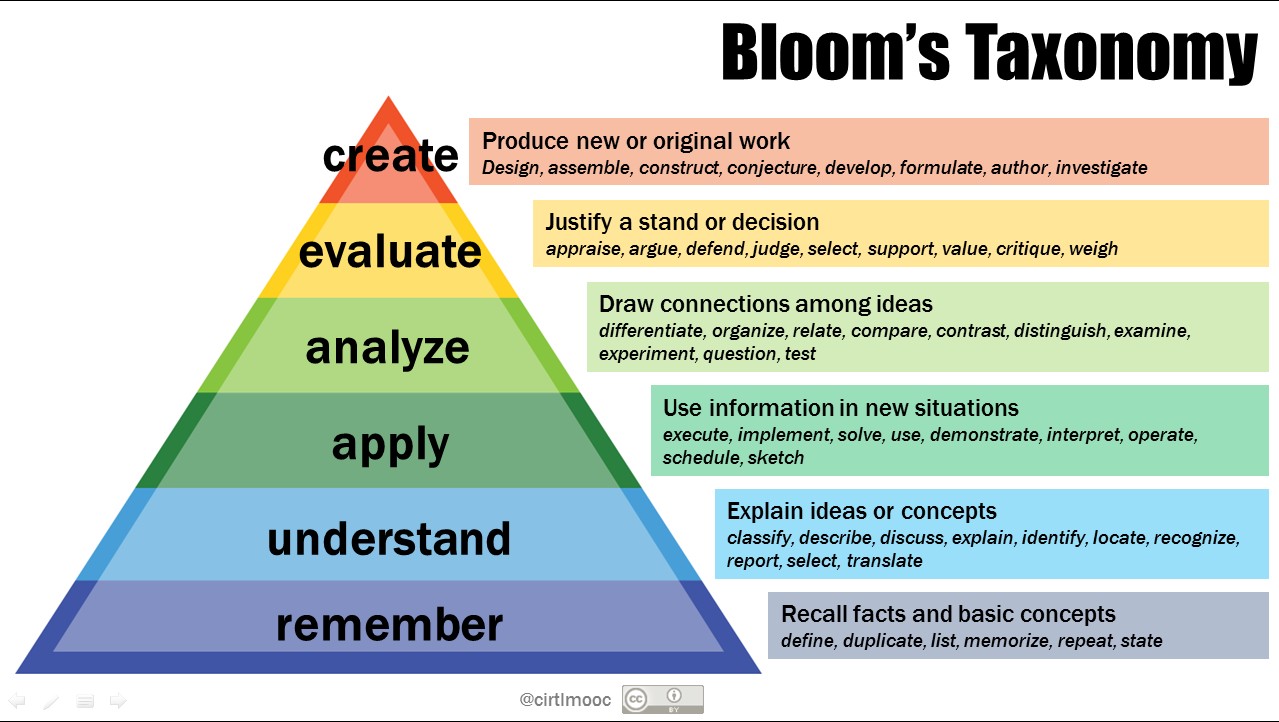
 In today's world, we need students who can analyze, evaluate, and create. These skills are on the highest level of the revision of Bloom's Taxonomy. These are the thinking skills. These are the skills that enable students to compare and contrast pieces of information and to draw conclusions. They help students to learn how to devise solutions to problems and how to come up with ideas and suggestions. These are the skills that teach students how to learn.
And thinking isn't supposed to be easy. Academic thinking takes practice; it takes time; and it helps to have a supportive teacher. The students with the first answer (the "fastest" answer) may not have the only answer. Thinking also grows the brain by creating more connection among synapses. Thinking adds content to students' long-term memory--which is good because more information in our long-term memory allows for more thinking--or more "space" in our short-term memory. This is the place where we hold on to new information.
 A classroom that allows for a lot of student thinking must also allow for ideas and suggestions to flow without an immediate response from the teacher. We want students to share their thoughts and ideas and to hear those of their peers without worry about being right or wrong all of the time. Thinking is hard work; and school is the perfect place to cultivate this life skill.
"It's not positive, it's........?"
"The capital of the United States is........?"
" The largest planet is........?"
A student could walk into the classroom after the lesson was taught and still be able to answer these questions. These are simple, one answer, "just the facts" questions. They don't require students to think. Sometimes they don't even require students to memorize anything because the answer to these sorts of questions may be in the book or paper that is lying on the student's desk at the time the question is asked. I've been in classrooms (today) when a teacher would ask a question and then point to the answer on the screen or the whiteboard and all the student had to do is read the word that the teacher pointed to. This doesn't require thinking. Even worse, low-level questions don't promote learning.
And thinking isn't supposed to be easy. Academic thinking takes practice; it takes time; and it helps to have a supportive teacher. The students with the first answer (the "fastest" answer) may not have the only answer. Thinking also grows the brain by creating more connection among synapses. Thinking adds content to students' long-term memory--which is good because more information in our long-term memory allows for more thinking--or more "space" in our short-term memory. This is the place where we hold on to new information.