Showing posts with label Blended Learning. Show all posts

Tuesday, March 7, 2017

What is Blended Learning?

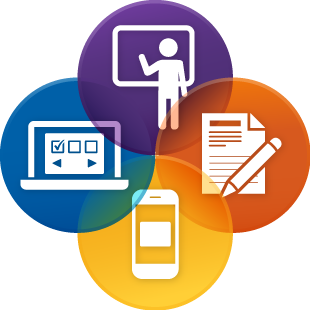
              Blended learning is an education program (formal or informal) that combines online digital media with traditional classroom methods. It requires the physical presence of both teacher and student, with some element of student control over time, place, path, or pace.

       My school district has begun the journey into Blended Learning over the past couple of years.  As an educator approaching his 30th year in the business, I view Blended Learning as an effort to bridge all of the positive and effective teaching and learning strategies that the educational and research communities have learned over the past few decades.

       Like any new initiative, Blended Learning will take some time for teachers and students and parents to learn and understand.  We will have to discover new and better ways to implement it in a way that is most beneficial to our students.  This effort will be well worth it.  Blended Learning--as I see it--addresses the following educational beliefs:


  1. Learning at your own pace.  In a traditional classroom, 30 students learn the same thing at the same time.  If you pick up on the topic quickly, you have to wait for your classmates to catch up.  If you struggle to understand the topic, you have to move to something else before you fully understand.  Blended Learning allows students to move at their pace.  Everyone is learning the same topic, but fast learners are given more challenging work and struggling learners are given more assistance.
  2. Multiple ways to show what you know.  In the traditional class, students can only demonstrate their understanding through classwork and homework and tests.  While this isn't a terrible method for measuring student knowledge, we certainly know that this method can lead to the appearance of learning when (in reality) little learning occurred.  Classwork can be graded on completion instead of quality.  Homework completion can come from lots of parental help for some and no parental help for others.  And tests can earn high grades due to cramming and memorizing rather than due to actual learning.  In the Blended classroom, students work with each other and help each other; teachers can spend more time one-on-one with their students (or in small groups).  Students can demonstrate their understanding through informal assessments and assignments in addition to more formal and traditional testing.
  3. Multiple attempts to learn.  We know that learning is a process.  Few students can sit in six or seven classes a day and learn six or seven different things strictly from listening and taking notes.  Learning requires listening and thinking and doing and sometimes failing the first couple of attempts.  Blended Learning recognizes the learning process and students understand that it is OK if they don't get it right away.  Blended Learning also provides different modalities for student learning.  These include: small group work, individual work, using online resources, using paper and pencil resources, and allowing students to verbalize their understanding.
       Blended Learning recognizes that students learn in different ways and at different rates--and this is not only OK, it is expected that all students learn in different ways.  The goal is learning.  Blended Learning permits students to be students and to learn in a way that works for them.  Learning isn't a competition.  Learning faster isn't better than learning slower.  Everyone that reaches the finish line is a winner.  Blended Learning helps students to see the value of learning.

Friday, February 3, 2017

Learning and Thinking - (getting the right answer isn't good enough anymore)


       Learning and thinking have always been closely linked.  But sometimes, in our schools, we only achieve the appearance of learning--often accompanied by very little thinking.  This problem has been recognized by educators for a long time.  In recent years, however, we have been addressing this issue on various fronts.

       Let me begin by explaining what I mean by the term Appearance of Learning.  This is when students get good grades, but their actual learning is very low.  The grade to the students and to their parents makes it appear as if they have learned a lot, but the attainment of those grades may have been based partly on non-academic measures such as good behavior or mere compliance with rules such as turning in homework on time.  This is a problem because when students move on to more complicated coursework that requires previous knowledge, they struggle due to never actually learning the earlier content in the first place.

     Over the past few years, there has been a stronger attempt to balance the need for teaching skills (such as solving an equation) with the need for teaching conceptual understanding (such as using an equation to solve a problem).  This sort of "teaching" is different from when our students' parents were in school--a time in which just-getting-the-answer might have seemed good enough.  Today we know that this isn't good enough.  Students going to college and students going to work need skills and knowledge beyond merely doing what they are told to do.  Today's world demands more from our citizens.


       Our schools recognize this need and we are trying to make changes to address this challenge.  It's hard to change a system of 100,000 schools, 50,000,000 students, and 3,000,000 teachers.  But (indeed) this change is already happening.  What we used to call a "computer room" is now just about any classroom in the building.  Classrooms with students sitting in nice, neat, straight rows that discouraged collaboration among students have been replaced with classrooms with tables or desks arranged in groups to encourage students to work together and ask questions of each other and learn together.  Grades for non-academic behaviors (mentioned above) are strongly discouraged so that a student's grade can more accurately reflect his/her ability in the content.  Finally, student engagement strategies and growth mindset strategies are constantly being discussed and implemented.  These reflect our knowledge of the best way that students learn.  No longer do we expect everyone to learn strictly by listening to the teacher and taking notes.

       Indeed, the change to an educational system that requires more from our high school graduates is well underway.  The past is in the past and we're not going back.  Those that choose not to change risk creating a generation that is ill prepared for the challenges that they will face.  Learning, thinking, reasoning, and problem solving will be more and more integrated into our schools.

       You're welcome.


Thursday, May 5, 2016

The Science of Learning

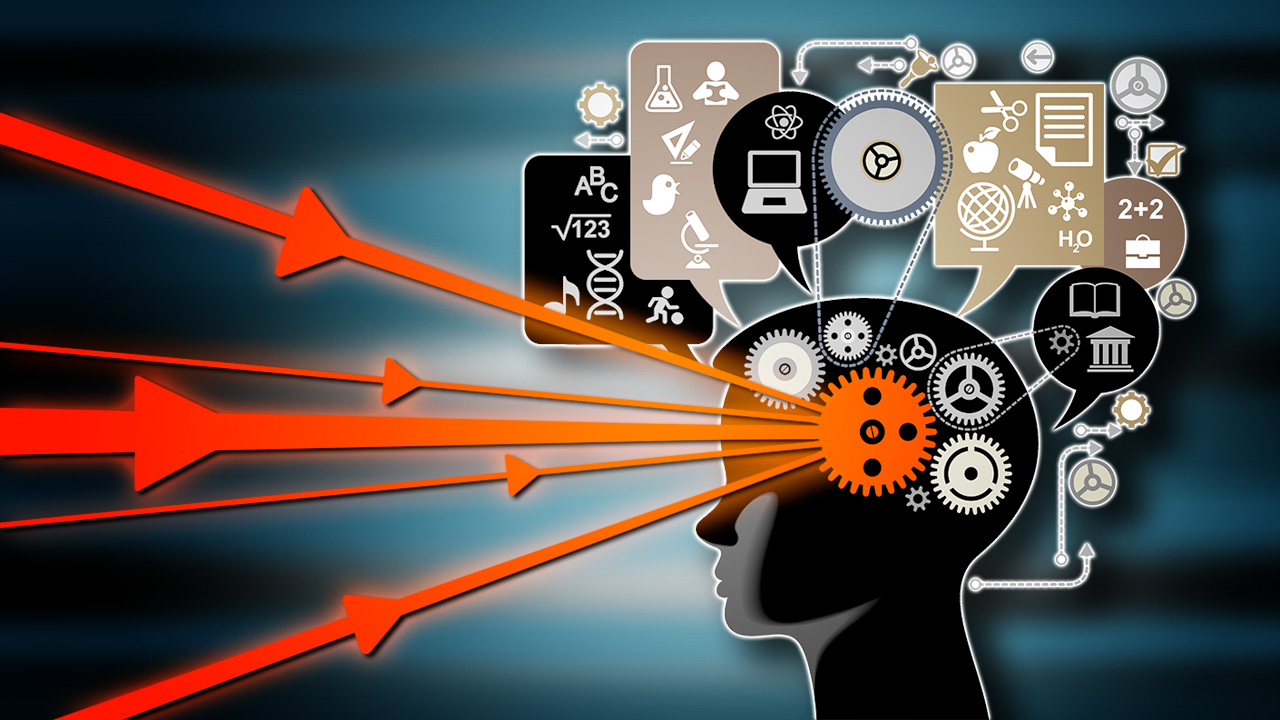
       This is an exciting time to be a teacher.  The field of education, like medicine and energy and information technology, is growing in the knowledge domain.  We are constantly learning more about how children learn and the best ways to help them to learn.  Brain research and its connections to learning have been able to provide to our teachers simple strategies to help students to learn.  For instance, we now know that our student's brains grow and thrive when they are able to have good social connections with other students.  Therefore, we need to provide time for student-to-student discourse in the learning environments of our classrooms.  We know that the brain and the body are interwoven and are built to help each other.  That's why it is important for students to get up and out of their seats regularly during class time; and recess is an important part of learning and brain development.  Also, we know that fear and stress prevent students from doing their best in school because our brains are designed to err on the side of caution.  Fear shuts down our student's ability to explore and to try new things because their brains are more concerned with staying safe.


       In the past, teachers and relied on their own experiences as students themselves and later on their own teaching experience to help them to reach their students.  But this is never going to be good enough because we are all limited in our experiences to a particular school or a particular town or a particular age group of students.  The research findings and subsequent professional development about these findings help our teachers to learn about learning beyond what they see in their classrooms.  Initiatives such as Blended Learning, Universal Design for Learning, and Flipped Classrooms all stem from relatively recent research on how children learn best and how to incorporate these research findings into the classroom.

       Of course all of these exciting frontiers in education require (at least) some level of changing from the "known" image of the classroom to something different--and that can be scary for some people.  Present-day parents who sat in neat rows in every classroom and rarely spoke in class and worked on (the now-dreaded) worksheets all day long may be against anything different from what they experienced simply because "It worked for me."  That's why the research is so important.  It isn't some guy with and idea, it is actual science that is informing us of the most effective classroom strategies to help students to learn.  This is a good change for our students and a necessary change.

       This is an exciting time to be a teacher!


Monday, April 11, 2016

"I Can Barely Read"

       "I can barely read."  

       You never hear anyone ever say this with pride.

--------------------------------------------------------------------------------------------------------

       Last week I attended a Professional Learning session about Blended Learning.  Three English teachers were presenting.  One of them said, "...and we're all English teachers, so when we put grades into the grade book, we are all bad at math so we look for shortcuts."

       I am a mathematics supervisor and everyone in the room knows who I am.  When the teacher made this statement about being bad at math, another teacher looked at me and sort of made a face that said, "I think you just insulted the math supervisor who is sitting over there."  The speaker saw this face and looked at me; and then other people in the room began to realize what was going on.  Slowly people started to laugh at the slightly embarrassing situation that this teacher put herself in.


       I didn't want this presenter to feel bad so--with everyone looking at me and wondering how I was going to react--I said, "It's OK."  And then I said (with great pride), "I can barely read."  And the whole room broke out in a loud laugh.

       Why is it perfectly acceptable in our society for grown, educated people to say (out loud and in front of other grown, educated people), "I can't do math."?  But it is completely unacceptable and cause for embarrassment to say (in front of other people; and with great pride), "I can't read."  Why aren't people embarrassed that they can't do math in the same way they would be embarrassed to not being able to read?

       Teachers, parents, coaches, and all leaders need to speak up when they hear children (and adults) proudly saying that they can't do math.  It reinforces to students that it is OK to be bad at math.  This leads to students who refuse to put in the effort to learn mathematics.  Students begin to believe that they really can't do math AND they believe that this is perfectly OK and it's not OK.

       Math is important.  Math is reasoning.  Math is thinking.  Math is problem solving.  Math is perseverance in the presence of difficult situations.  And everyone can do math.

       What you say is important.  People are listening.  If you would never say, "I can't read.", then don't ever say, "I can't do math."


Tuesday, April 5, 2016

Blended Learning - 21st Century Schools


       For the past two decades we (in education) have been talking about 21st century schools.  I've read books about it; I've attended lectures; I've read articles; I've had numerous conversations.  The crucial need to end our 19th century, factory-model schools and begin to give our students the school experience that will (best) prepare them for the world that they will inherit has been upon us for a long time.

       When I look at the trend toward Blended Learning, I see the 21st century school that I've always imagined.

  • Students are learning at their own pace.
  • Teachers can give better individual feedback.
  • Students have choices of how they learn best.
  • More student-to-student discussion
  • More emphasis on learning and less emphasis on grading
  • More student engagement
  • Less discipline issues because less students being bored in class
  • Better preparation for college and career
    • Research skills
    • Personal responsibility for learning
    • Working in teams and working individually
       Change is always hard.  But change that helps students to be better learners is change that is necessary.  Blended Learning should become the norm in our public schools.  The traditional classroom of sitting in rows and listening to lectures is not the best way to learn anymore.

       Take some time and learn about Blended Learning.  It is the right thing for our students for today and for tomorrow.


Public Schools and Choice

       Is it true that public school kids and their public school parents don't have choices?  I'm sure that I will expose my igno...

Teach100 blog