The Case Against Worksheets

The "worksheet" has been a staple of the P-12 educational experience for students for the past 30 to 40 years--maybe longer. The advent of the mimeograph machine and then the photocopier made the duplicating of massive amount of worksheets easy, cheap, and increasing common. Today there are multiple websites with pre-made worksheets for
math,
reading,
geography,
science, and just about any other school subject. Some teachers love using worksheets. Some use a worksheet everyday or nearly everyday. In middle and high school math classes, students sitting in rows in the classroom and independently completing 20 or more math problems on a worksheet is an iconic image that many parents remember as a child and still expect to happen to their children today.
The problem with the massive use of worksheets in today's classrooms is that they represent the opposite of everything we now know about how students learn best and what we hope to accomplish in our schools. Math worksheets in particular go against many of the tenets of good learning and good teaching. Here is my short list of why worksheets are a poor choice for today's classrooms:
- Worksheets are boring.
- Worksheets discourage students from working and learning together.
- Worksheets are often very low on the rigor scale.
Boring

I often say to my teachers that it isn't our job to entertain students, but it is part of our responsibility to motivate students to do their best. The old days of the teachers who basically use the "Because I say so" theory of teaching is over. Students may do what they are told, but they won't like it. So the next question is, "Why do we care if the students 'like it' or not." And the answer is
student engagement. The
Glossary of Education Reform says the following about students engagement:
...the concept of "students engagement" is predicated on the belief that learning improves when students are inquisitive, interested, or inspired, and that learning tends to suffer when students are bored, dispassionate, disaffected, or otherwise "disengaged."
Simply put, there is no educational reason for a student to complete 20 (basically) identical math problems. If they know how to do solve the problem, then completing about three should provide sufficient evidence that they can do it. If they don't know how to solve the problem, then they won't be able to solve 20 problems. Or, they will make the same mistake 20 times and be very upset to discover this mistake the next day when the class goes over the answers.
Students Working Together
When there are 30 students sitting in class and learning something new, most won't fully understand everything there is to know about the new learning right away. Some will try to link the new learning to past learning; some will try to memorize the steps or the procedures; some will just take notes and not really understand anything right away. When the teacher assigns classwork that is meant to be done independently, students have a lot of questions. Some will ask their questions, but most won't because they don't want the teacher to think that they don't get it; or they don't want their classroom peers to think that they are stupid. Some students won't even know what questions to ask.

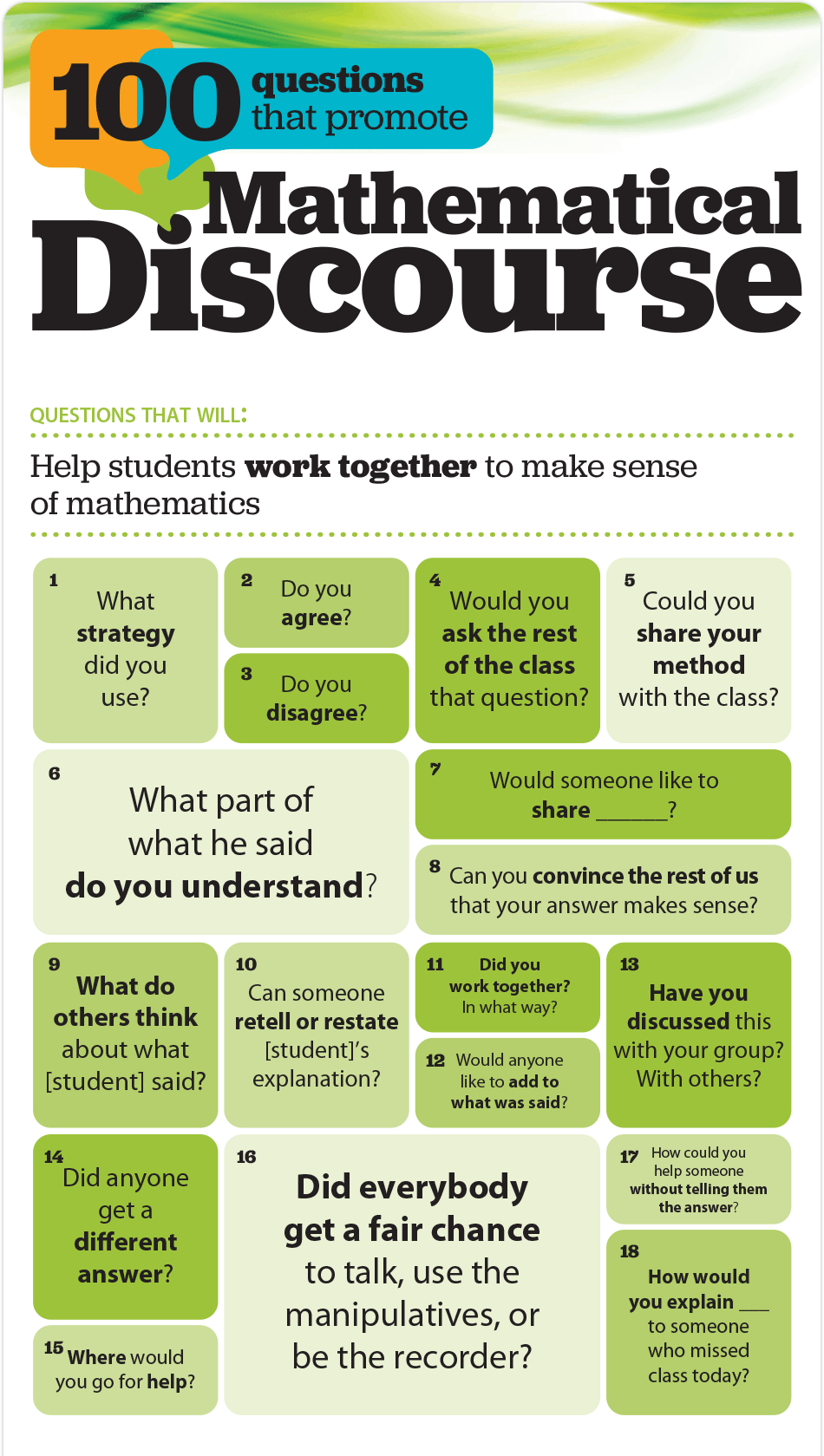
However, when students are encouraged to work in groups of (say) two to four students AND when they are encouraged to ask each other questions, they are much more likely to ask their question(s) and to help each other. Each person in the group may understand a different piece of the new learning and together they can help each other. Additionally, we know that when students can explain what they are doing, they understand the concepts much better than when they merely answer questions or solve problems independently.
Rigor
Although not always the case, worksheets tend to emphasize low-level, procedural skills such as following steps to solve a problem, or defining a word, or finding a fact from a reading passage. While we want students to have these skills, I question the need to constantly repeat this (worksheet) activity for the purpose of helping students to gain these skills. In today's classrooms, we want to emphasize thinking and reasoning and problem solving. We want students to recognize particular situations that require particular skills or procedures.
- What formula do I need for this problem?
- What further information do I need to determine before I move forward?
- I'm not sure what to do, but I'll try this first and see what happens and progress based on this "first try" experience.

In the math world, we now use activities called Math Tasks. (For some great examples, see
youcubed,
nrich, (also
here), and
MARS.) Math tasks cover the same content as worksheets, but they require more than merely asking students to repeat what they heard a few minutes ago when the initial lesson was taught. Good math tasks begin with some basic information and slowly increase the level of rigor as the tasks goes on. Students spend the same amount of time in class on a math task as they would on a worksheet, but instead of doing the same thing over and over (20 or more times), they are pushed to think about the new learning in new ways.
This sort of rigor is better suited for students to work in groups than to work individually. Group work is more amenable to higher-level problem solving
that requires input and ideas from multiple people. The group members
can discuss and debate the different solution methods and (hence) they
can gain a stronger understanding of concept or standard being
discussed.
I could go on...
Worksheets, at their worst, are used to keep students busy during precious class time. In fact, many students refer to worksheets as "busy work". Even the students know that (sometimes) teachers are just using worksheets to fill time in the class. And this is time that could be better spent with student-to-student discourse or whole-class discourse at much higher levels than the simple worksheet could ever achieve. Worksheets do not promote learning beyond simple recall and following procedures.
Worksheets are "old school". Worksheets do not prepare our students for their future. Worksheets should be (very) infrequently used in today's classrooms if we truly intend to prepare our students for life after high school.