Growth Mindset is an understanding that you can learn and achieve anything if you are willing to work and practice and study and try. A student's ability to learn is not predetermined from birth.
This is an important concept for teachers who seem to always have some students who believe that they are not born with the skills necessary to learn. A common saying among some students is, "I don't have a math brain.", meaning, "I don't have the ability to learn math regardless of the extent of my efforts." We know now that this is not true. But teachers are often faced with the prospects of needing to convince some of their students that this is not true.
This chart is filled with suggestions for helping students to view their perceived obstacles in a different way. Part of a teacher's job is to motivate their students to do their best everyday. The more that we can convince students and then demonstrated to students that effort leads to (at least some level of) success, the more we are able to create a learning atmosphere in which students believe that they can learn.
Growth Mindset is for weak and strong students alike. We also have students who have been successful in the traditional school setting who don't have a growth mindset. These students may have been praised for their "smarts" and they may be afraid to try something new for fear of not succeeding. This limits their ability to grow. Hence, encouraging a growth mindset is for all students and not just for a few. Our best teachers have always been encouraging a growth mindset. We have all had teachers who were able to convince us to try and to work hard in the belief that we would eventually succeed. We need to see this occurring much more often in our classrooms.
There's a joke among some educators that says if a child doesn't understand the lesson, then we will just say it again slower and louder.
It's not a funny joke. In fact its really sort of a put down to teachers who struggle to help students to learn. If the teacher presented the lesson in the best way she knows how, then she may not know of another way to present the lesson and (so) when a students doesn't get it, she just repeats the same thing (sometimes slower and louder). This usually doesn't help the student to learn any better than the first time, but it does lead to frustration for both the student and the teacher.
These situations are far too common in our nation's classrooms today. Improving these situations is haphazard at best. Sometimes some students try harder; sometimes some teachers try different strategies. But most of the time, instructional change is small (or absent) and academic results remain the same.
Still, this doesn't happen from a lack of trying. Plenty of teachers (most teachers) try very hard to learn more and to improve every year. They read books; they attend conferences; they take classes; they join Professional Learning Communities (PLCs) within their school or school system or online.
Change is hard, and improving academic results for student groups that have historically struggled in the traditional school system is a complex problem. It isn't the sort of problem that can be solved by tinkering around the edges; and by not causing some level of discomfort for people who insist that everything is fine the way it is now.
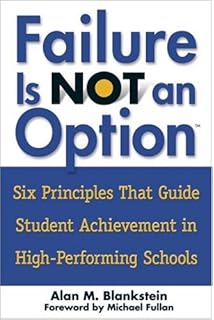
I believe that we have the knowledge and the research to know what must be done to improve education outcomes for the students that we aren't reaching today. These strategies and policies are available for everyone to see. A short list of books from a variety of sources provides the answers we seek. Here are some of them:
However, I also believe that the change we need involves the hard work of constant improvement. It requires schools to dig deep into the standards and objectives that are taught everyday and to ask questions such as,
What is the best way to teach this objective to students?
What strategies should we use?
What activities are best?
How do we reach a classful of students with different learning styles?
How do we assess student understanding?
How do we assess the success of the decisions we made for this lesson?
This is complex work and it requires effective collaboration among teachers--no one should have to do this on their own. If we are successful, it will take a generation to complete this transformation of our schools. During that time, we will have to contend with a lot of resistance from educators and non-educators alike. However, this is an effort that is worth the years of hard work. This is an effort that today's teachers can look back on and be proud to say, "I was there when the hard work was done."
Tinkering around the edges isn't enough anymore. It's time to do what we tell our students to do--Work hard and you will see the rewards in your future.
This is the third of a three-part series of open letters to the three most important stakeholders in our educational system: students, teachers, and parents. All three of these groups play a vital role in the education of our children.
Dear Parents,
The school year is about to begin. This is an exciting time for your children; but I know that it is an exciting time for you too. And well it should. As parents, you are an important part of the educational process of your children. You encourage your children to do their best and you help them as much as you can. Your children need you as they navigate their way through the P-12 system. Thank you for supporting your children. I'd like to offer a few suggestions on this topic that you might not have ever heard before. I say this because these suggestions tend to go against popular thought on the best way for parents to help their children. Here goes: 1) It's OK to let your children struggle a little bit while they are learning new things. It's OK if they don't "get it" the first time. It doesn't mean that they are slow or below average or any other negative buzz word you might want to call a person who doesn't learn new things quickly. True learning takes time; it takes a little trial and error. Be sure to let your children know this. 2) Education is not a competition. I know that this sounds like a funny thing to say--especially to people who believe that everything in life is a competition. But education should not be a race for your children to win. Who cares if your child is a better speller than other kids in the class? Who cares if your child gets a better grade than other kids on the geography test. Teach your children to do the best they can all of the time. If they feel that they have to surpass everyone all of the time in everything that they do, then the first time this doesn't happen (and it will; often) they will feel like a failure. 3) Instead of saying "Get good grades!", you should say "Learn well today!" School is about learning; it's not about getting good grades. Especially in elementary and middle school; grades should absolutely be secondary to learning. Students who strive for high grades tend to learn how to "play school". They do what their told and they turn things in on time. But they only do things because of "the grade". They don't care about learning; they only care about following the rules to get a good grade. Don't be impressed by your children's good grade. Stress the importance of learning. What is the point of getting through school with good grades if you haven't learned anything more than following rules and doing what your told? 4) Lastly, make sure your children understand that hard work and studying and practice lead to success in everything that they do. Making mistakes is OK; in fact, making mistakes and learning from mistakes helps children to learn. Let your children know that it always OK to make mistakes.
Learning is a pursuit for perfection, it is a lifelong journey of wonder.
School is about learning. And most students do fine when it comes to learning what they need to learn in school. For most students, its not a matter of passing or failing; its more a matter of learning very well or not learning so well. But for some of our students, keeping up-to-speed in their reading, writing, and mathematics skills as they go through their middle and high school years is difficult. As a public school system, a lot of effort is focused on helping these students to improve their skills. This is an important mandate in every public school.
We know from research that students who are below grade level in reading by the end of third grade often struggle with their reading skills throughout the rest of their P-12 schooling experience. (link to study) They are also more likely to leave school without a high school diploma. Difficulties in learning mathematics have been similarly well documented. Students with weak math skills also struggle in high school mathematics and are less likely to graduate from college (see here; go to chapter 3 on page 45). It is because of these known consequences that schools make every effort to raise the skills, abilities, and understandings of students who are weak in reading, writing, and mathematics.
At the heart of this effort is the struggle of understanding how these students think and how they learn. Clearly, the "usual way" of teaching and learning is not working; and so schools look to other resources and teaching strategies to reach these students. Understanding the best ways to motivate students to do their best in school (especially when they have experienced only failure in the past) is an important task for schools and teachers. One excellent resource is the book Mindsets by Carol Dweck. In it Dr. Dweck explains the psychology of how people perceive their abilities to learn.
There is no shortage of intervention programs that are available to schools (at a cost) for the purpose of helping students to regain "grade-level" status. Schools invest in these programs and train their teachers. Some students show excellent improvement while others do not. It is a constant challenge to find the best way to help our weakest students. But it is a challenge that our public schools eagerly accept every day.
Learning is for everyone and everyone can learn. Building the skills of our weakest students is an important responsibility of our public schools--one that we take very seriously.
Nobody likes to hear bad news. And nobody wants to be the person to give the bad news.
In our public schools, we (sometimes) have the following problem...a student is not achieving at an acceptable level. He tries to do well; he does some things well; but overall his achievement is too low for his grade or age level. Public schools have lots of ways of helping students to raise their level of achievement and (indeed) it is our job and moral responsibility to do so.
The problem is that someone has to tell the student and his parents that he is achieving below grade level. That is a hard conversation to have. No teacher wants to tell their students' parents this news. No parent wants to hear this news. But someone has to do it because we don't want to allow students to go through school thinking that they are doing fine (academically) when, in fact, they are below grade level.
Sometimes we try to give this news through grades on report cards or via standardized testing grades, but the message doesn't always get through. Sometimes students get a few good grades on minor assignments and parents "hang on" to those grades and seem to ignore the poor grades on the more major assignments.
And so, sometimes students go through elementary and middle school thinking that they are doing fine and then they get to high school and struggle with their academic course work. Even worse, sometimes these struggling students even go through high school with no one in authority ever telling them that they are below grade level. These are the students that go on to college and (only) then are finally told that they do not have the ability that they thought they had--no one ever told them.
Our job is to help students to learn. Part of that job is telling students how well they are learning. We don't help our students by letting them think that all is fine when it isn't. Someone will tell them at some point, so it might as well be sooner rather than later. It doesn't have to be an argumentative conversation. Teachers and schools will help students to do better--that's our job.
One way to communicate this message is to have a grading policy that rewards high academic achievement and discourages mere compliance with school and classroom rules. While we certainly want students to behave in school, what we really want is for students to learn in school. Teachers who have high expectations for their students and are very clear about those expectations tend to have students who reach those expectations.
It's OK to tell students that they have not achieved the goal yet. It doesn't mean that they will never get there, but it does tell them that where they are (academically) is not acceptable and they have to do more, try more, and achieve more.
Somebody has to tell them. Be brave and be the one who cares the most about your students. Be clear about your expectations and tell students when they have and haven't met these expectations.
Expectations play a large part in our perceptions of just about everything. If you go shopping and expect to pay $75. for good pair of running shoes and find out that they only cost $50. you're happy because it was less than you expected. If, instead, they cost $125. you're not happy because it was more than you expected. But what if your expectations were not reasonable? What if the average cost of good running shoes is $135.? Compared to this average, it seems like a pretty good deal to get a good pair of running shoes for $125.
How do you define "winning" when it comes to the education of your child? What are your expectations? To what do you compare your child's progress? Some people look at the comparison of their child's test scores with other students in the class. In high school, some people look at their child's class rank (which is a comparison of your child with other students in his/her grade). Other people might look strictly at letter grades. Are these legitimate measures of comparison? What if your child always earns the top score in his/her class, but the class is below average when compared to the achieve of all students in the school? Is your child really "winning" if everyone that he/she is surpassing is below average?
This competitive nature of ours is misplaced if the goal is to win (or to appear to win) without any concern towards actual learning. This is why education has standards. Standards tell us--grade-by-grade--how we are doing compared to where we should be (academically speaking). When these standards lead to a college-ready status, they tell us that our children are on the path towards being ready for the rigors of college-level work when they are still in middle and high school.
This comparison is important because too many of our students are graduating from high school being told that they are "winners" because of some lesser standard that they've achieved only to find out that they are not prepared for college. Less than 50% of students who enter college ever earn a college degree. If our high school graduation rate was this low, there would be a national outcry from every corner of the country. But, for some reason, at the college level, this figure is considered acceptable. Why?
Our high schools have to be willing to give our students (and their parents) the hard truth about their academic ability. We should help them as much as we can and we should be compasionate when we give them this news. But we have to make it clear exactly where they stand when compared to the standards.
High standards are not an insurmountable barrier. Most students rise to the challenge when they are pushed to think harder and do more. If "winning" is important to us, then let's win for real. Let's push our students to reach their potentials. They can do it with our help.
Congratulations on the completion of your first year of teaching. You did it!
After making the decision to be a teacher
and finishing your degree
and navigating the job market
and landing a teaching job
you have reached the point in the school year where you can look back and say, "I did it. I've completed my first year of teaching."
You probably learned some things that you didn't expect to learn--and that's a good thing. (Learning is always a good thing.) For instance, you might have learned that some students didn't retain the learning they had previous years. This might have caused you to consider different teaching strategies to reach these students and to help them to learn this year's content. Secondly, you might have learned that you understand your content so much better now that you have taught it--compared to when you just had to learn it as a student yourself. This might have caused you to consider that your students (too) may learn well be "doing" or by "teaching" (or explaining) what they know with other students. Lasting, you might have learned that great lessons may take a lot of time to prepare and not-so-great lessons can be prepared quickly--and you have to find a balance between the physical time you have and the your desire to keep your students motivated to do their best.
Mostly, I hope you've learned that teaching isn't the sort of profession in which people start out knowing it all. Teaching is the sort of profession in which people get better at it the longer they do it. I hope you asked your colleagues a lot of questions this year. That shows that you are interested in growing and improving as a teacher. (You may have noticed that the teacher across the hall from you--who has been teaching for ten years--also asks a lot of questions because she wants to continue to improve every year.) Using different resources, using electronic resources, using different teaching strategies...it's a lot to learn in a signal year. Every year you will hear about new and cool stuff that you can use in your classroom. So find the thing that's right for you, and do that extra one or two new things next year. But don't worry about not doing it all; or not doing what that great teacher down the hall is doing.
Learning about teaching is a big part of teaching. There is no "one way" to be a great teacher. (That's why no one has given you the Book of Directions of Teaching.) This is what makes teaching hard--that non-educators don't realize. But it is also what makes teaching a true profession in which professionals such as yourself need to get together to make the best decisions for your students.
Enjoy your time off this summer. But also spend some time reflecting on this past year. What was great that you want to repeat next year? What didn't work that you want to improve upon next year? What is the cool digital tool that you heard about and never had time to learn about and that you may want to use next year? Look for webinars to attend; find people and chats on Twitter that will broaden your horizons; read a book about teaching or teaching strategies that may be specific to your area of teaching.
The best teachers are always learning and always improving.
Be a better teacher, and the next year, and the next year. And (again) congratulations on the completion of your first year of teaching. You did it! See you next year!
Parents and teachers want school-age children to be responsible--at least, "responsible" given their age. But what is the right amount of responsibility for a high school student--or for a new college student? How much "help" do 16 year olds (or 18 year olds, or 20 year olds) need to navigate the rigors of high school courses, college courses, and college life?
Some high school students seem to breeze through high school with very little guidance from adults while others struggle--same for college. These students make some teachers say, "See! They can do it, so anyone of you can do it." But is this just a "sink or swim" mentality? Does this viewpoint help students learn responsibility, or does it prevent them from succeeding.
On the other end of the spectrum, some say that we help student too much in high school and (so) they aren't prepared for the independence of college courses. (Is it true that college teachers don't help their students? I hope not.) High schools help students to remember deadlines and they offer after-school help. Is that "too much" help? What is the proper balance of teaching responsibility and helping students to successfully navigate courses and school programs?
I believe that their is value in allowing students to make mistakes and to learn from those mistakes. I also believe that we should not be so extreme in our "caring" at the high school level that we (as teachers) do too much for students to the point that they only doing-what-they-are-told and are not learning anything. But should we allow them to fail a course if they know the content but struggle to meet deadlines?
Should we really expect 14 year old 9th graders to hear a long, long, long list of directions and rules on the first day of school and then penalize them for not following rule # 56 on the 23rd day of school? Should we have to remind 11th graders of the term paper deadline everyday for three weeks? How much help is the right amount of help?
I think my main concern is for students who capable of learning what they need to learn at a satisfactory level (or higher), but they struggle with skills such as organization, planning ahead, learning school procedures (such as college course sequences), and meeting deadlines. I know that these skills are important and (certainly) we want these future employees to have these skills. But is high school and college the right place for penalizing teenagers and young adults who are still developing these skills? I am particularly concerned about students who drop out of high school or college due to a lack of organization and not due to a lack of academic ability.
As public schools, we should do everything we can to help our students to succeed. But how much "help" is too much help, and how much "help" is too little help?