Showing posts with label brain research. Show all posts

Friday, August 26, 2016

A Tale of Two Classrooms -- Mistakes = Learning

 This is the third in a ten-part series based on the poster: A Tale of Two Classrooms.


---------------------------------------------------------------

Mistakes = Learning

       So here's a situation that happens everyday.  A teacher is teaching something new.  He or she asks a question and nobody responds.  Or maybe you're an adult and you go to a meeting of some sort and the presenter asks a question and nobody responds.  Why does this happen?  Why is this so common?

       Just like adults, students don't want to give the wrong the answer.  They don't want to offer a suggestion or an idea or a possible answer for fear that they may be wrong.  Wrong answers are viewed in a very negative way.  Wrong answers are bad.  Wrong answers are frowned upon.  So rather than risk embarrassment and possibly a scolding of some sort from the teacher, students (and adults) prefer to stay silent.

       Now imagine being in a class in which mistakes are viewed as great opportunities for learning.  When a students asks a question or offers a solution or an idea, it doesn't matter if he/she is right or wrong.  Instead, the comment is considered part of the classroom discourse.  It enables others students to hear different ideas and they can respond to these ideas.  In fact, we now know that mistakes help our brains to grow and help all of us to learn (no matter our age).

       When you are learning something new, you're not expected to know it right away.  Most new learning takes time and effort and mistakes and correcting mistakes and then more mistakes before you really understand it well--perhaps especially when learning math and science concepts.  It's not only "OK" to make mistakes, it should be expected (and respected) to make mistakes when you are learning something new.

       We want our students to be in classes in which mistakes are viewed as a nature part of the learning process.

Thursday, July 14, 2016

Learning About Learning

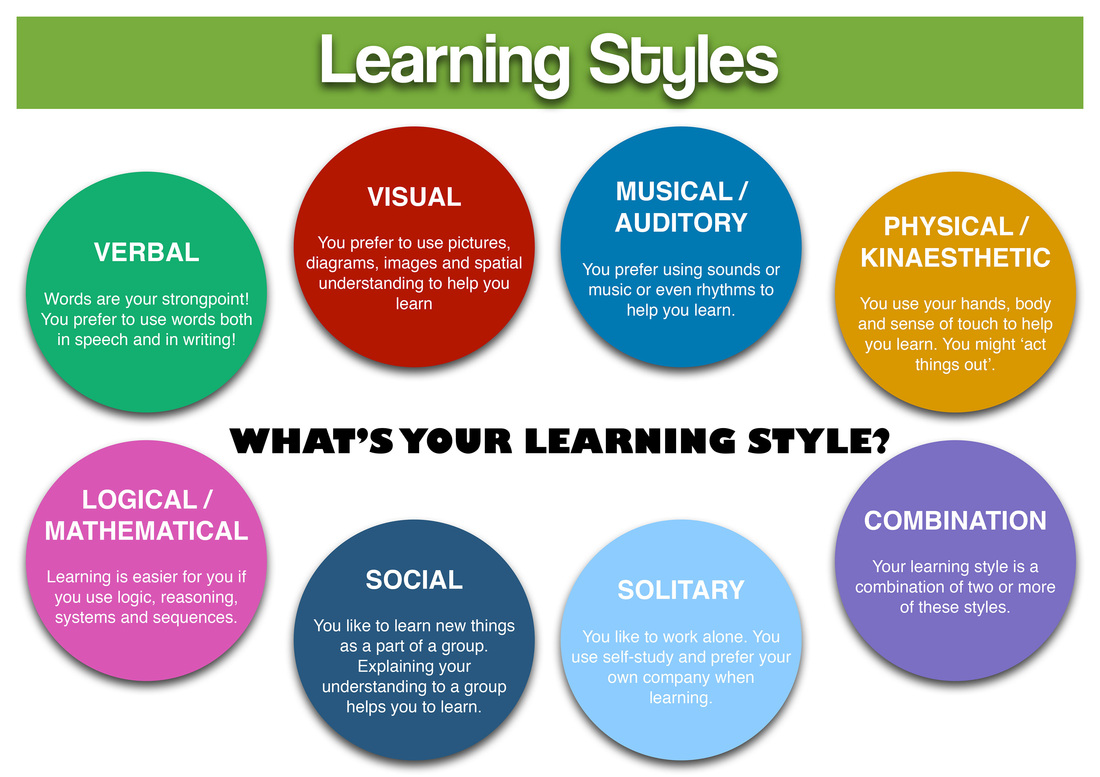
       The goal of school is learning.  The challenge for our schools is to help all students to learn when students are so different.  Some prefer to work by themselves.  Others need to bounce ideas off of their peers.  Some need only to hear the information while others need to actively "do" something to help them to learn.

       The mystery of how students learn has baffled educators for a long time.  The puzzle of "some-kids-get-it" and "some-kids-don't-get-it" has been difficult to understand.  I think that--for a long time--teachers referred to their own ability to learn (and perhaps that of their peers) and felt that all students probably learned the same way they did.  In fact, I wonder sometimes if some present day teachers use the same technique.  And while there are still many unknowns in the field of learning, it is fair to say that we know more today about how students learn than at any time in our history.

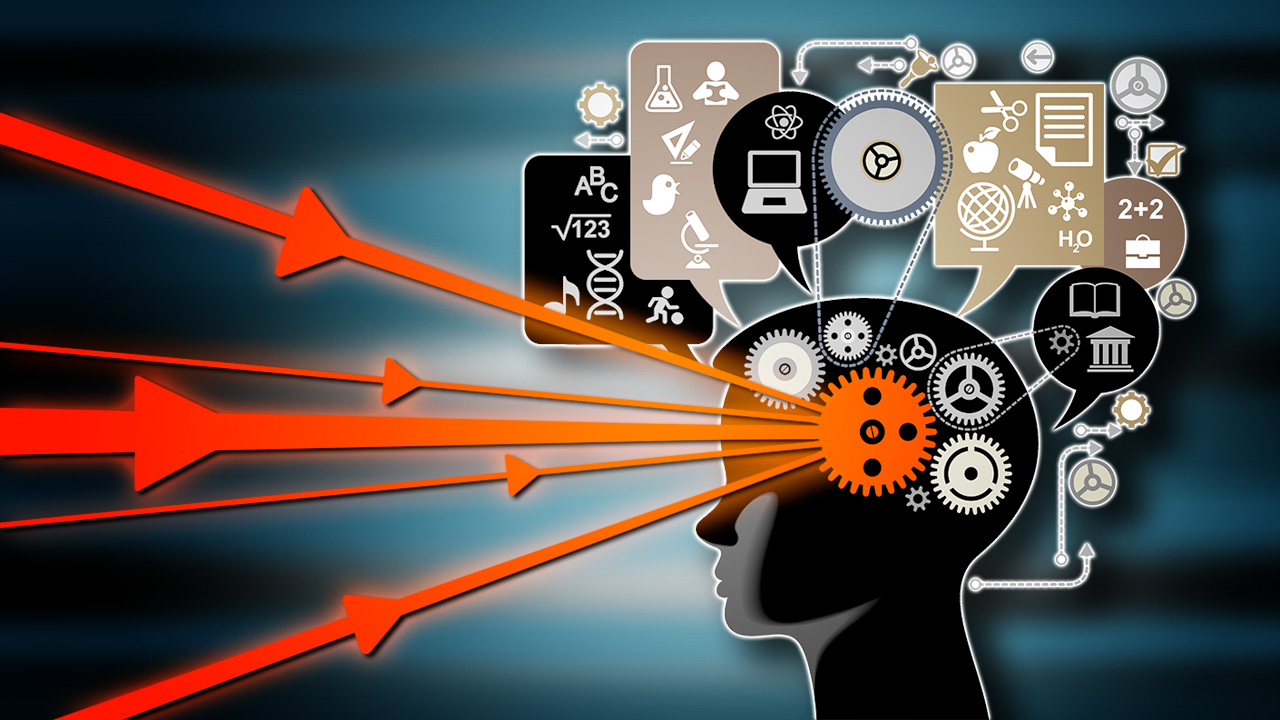
       For starters, brain research has provided a wealth of information about how we learn.  Here's a short list of things to know about how the brain learns:

  1. We receive information better when it's visual.
  2. We remember the big picture better than the details.
  3. Sleep affects learning and memory.
  4. Less sleep reduces your ability to learn new information.
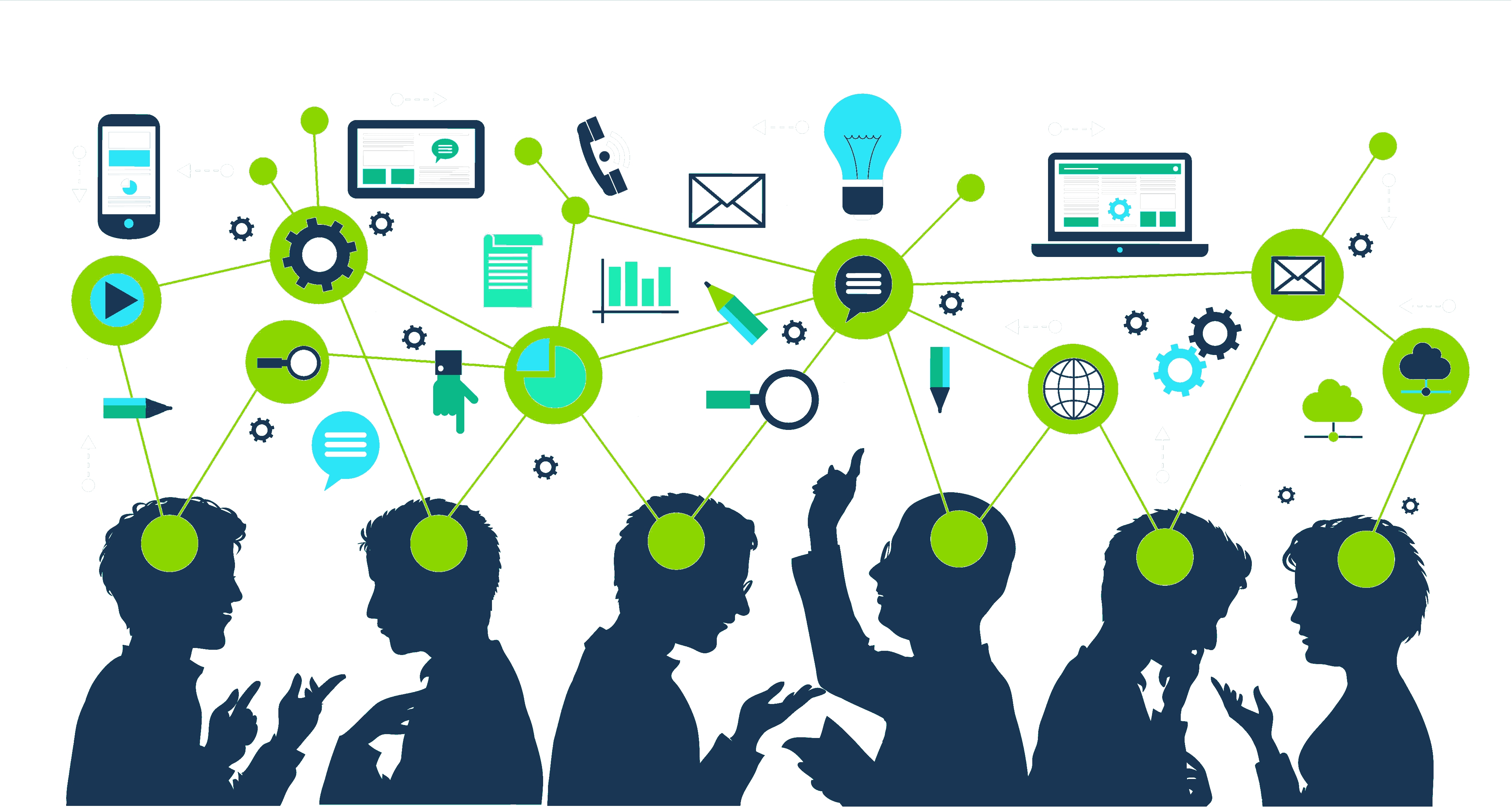
  5. We learn best by teaching others.
       Next, we have a lot of help in the field of learning from experts and practitioners.  After a while, we begin to see common themes in the area of helping students to learn:
  • Engagement - Students who actively participate in their learning find it enjoyable and are better able to retain the information.
  • Movement - Learning can certainly take place while sitting, but less so if you're forced to stay seated for a long time.  (see The Power of Movement in Teaching and Learning)
  • Challenge - We learn best when we are forced to think and try and fail and try again.  Also, when we are forced to recall past learning and use that information to understand the current learning.
  • Growth Mindset - If we believe that effort yields results then we are more likely to do our best to preserve in the face of any struggles that may occur as we learn new material.

       Still, teaching is certainly a combination of Art and Science.  Teaching requires building positive relationships so that we can understand our students and construct our lessons in a way that meets their learning needs.  Teaching requires the ability to motivate students and to spark their interest in learning.  Teachers need to challenge students enough to keep it interesting, but not too much so that it becomes too overwhelming.

       The challenge of teaching is the challenge of learning how students learn.  We're getting better at this, but we still have a lot to learn [!].


Thursday, May 5, 2016

The Science of Learning

       This is an exciting time to be a teacher.  The field of education, like medicine and energy and information technology, is growing in the knowledge domain.  We are constantly learning more about how children learn and the best ways to help them to learn.  Brain research and its connections to learning have been able to provide to our teachers simple strategies to help students to learn.  For instance, we now know that our student's brains grow and thrive when they are able to have good social connections with other students.  Therefore, we need to provide time for student-to-student discourse in the learning environments of our classrooms.  We know that the brain and the body are interwoven and are built to help each other.  That's why it is important for students to get up and out of their seats regularly during class time; and recess is an important part of learning and brain development.  Also, we know that fear and stress prevent students from doing their best in school because our brains are designed to err on the side of caution.  Fear shuts down our student's ability to explore and to try new things because their brains are more concerned with staying safe.


       In the past, teachers and relied on their own experiences as students themselves and later on their own teaching experience to help them to reach their students.  But this is never going to be good enough because we are all limited in our experiences to a particular school or a particular town or a particular age group of students.  The research findings and subsequent professional development about these findings help our teachers to learn about learning beyond what they see in their classrooms.  Initiatives such as Blended Learning, Universal Design for Learning, and Flipped Classrooms all stem from relatively recent research on how children learn best and how to incorporate these research findings into the classroom.

       Of course all of these exciting frontiers in education require (at least) some level of changing from the "known" image of the classroom to something different--and that can be scary for some people.  Present-day parents who sat in neat rows in every classroom and rarely spoke in class and worked on (the now-dreaded) worksheets all day long may be against anything different from what they experienced simply because "It worked for me."  That's why the research is so important.  It isn't some guy with and idea, it is actual science that is informing us of the most effective classroom strategies to help students to learn.  This is a good change for our students and a necessary change.

       This is an exciting time to be a teacher!


Tuesday, November 17, 2015

It's Time for Our Schools to Leave the 20th Century

       You know the old joke about Rip Van Winkle and schools?  He falls asleep for a hundred years and upon waking up he sees everything he used to know has changed dramatically.  The houses look so different.  The clothes that people wear are very different.  And the cars...wow.  Then he finds a school and walks inside.  He goes into a classroom and he is comforted to see that schools and classrooms haven't changed a bit.

       We educators don't think this is very funny.

       In fact, it is embarrassing for us carry out the important work of education today in the same way that we did this work 50 or 30 or even 20 years ago.  Doing so ignores the research about learning that has been done over the past few decades.  It ignores the research about how the brain reacts to the stimuli that occurs in classrooms.

       For instance, we know that most students can't learn to the best of their ability strictly by sitting in class for a whole class period and listening to the teacher talking (and taking notes).  We know that students are more engaged when they have the opportunity to participate verbally and when they have a chance to get up out of their seat and participate physically in some way.  We have technology that we didn't have (even 20) years ago that can be tapped to help our students to prepare for the information world that they will enter after high school.

        We are not preparing our students by merely teaching them to read, write, and do arithmetic.  These things are important, but they are not enough.  Memorizing facts long enough to get a good test grade will not prepare our children for the world that they will inherit.  Our schools have the responsibility to mirror the society that our students will experience.

       Twentieth Century schooling is not what our students need.  Most of them have never even lived in the 20th century.  I believe that our current education leaders understand this need for our schools to change.  Part of the responsibility of our public schools is to explain this need for change to our parents and to our communities.  Staying the same is easy; change is hard.  Schools often face opposition from communities who tend to say that "The old way was good enough for me and it's good enough for our kids."  We need to make the case against this sort of thinking.

       Someone needs to speak for our students and for their futures.


Sunday, November 8, 2015

Improving Education is Harder than Going to the Moon

       I often hear people say, "We have been able to send men to the moon.  Why can't we improve education?"  The implication, of course, is that the effort to send people to the moon is certainly more difficult than educating children.  So if we could do that, why can't we accomplish this--much easier--task?

       I would contend that improving education for all students is much more difficult than--the extremely complex of task of--sending people to the moon because (even today) educators are dealing with many more "unknowns" than NASA had in 1969.

       I doubt that anyone at Mission Control watched the Apollo capsule heading toward the moon thinking, "I'd say that we have a 20% chance of missing the moon by a hundred thousand miles."  They knew how far away the moon was; they knew the amount of force needed to break out of the earth's atmosphere; they knew how much food the astronauts needed.  It was certainly a complex task.  Mistakes were surely made and some things certainly went wrong.  But the Apollo 11 team that dealt with the physics of sending people to the moon were dealing with plenty of known quantities.

       In contrast, improving education involves our--still evolving--knowledge of how students learn.  Brain research is currently taking place and reporting new findings every year.  We have to contend with understanding the best way to motivate students and the best way to teach students.  And, of course, students aren't robots with the same abilities and the same limitations.  We have students from rich and poor families with different views of the benefits of education.  We have students from different home-life situations in which some are very supportive and some lack any sort of structure.

       It would make more sense to compare the effort to improve learning with the effort to cure cancer.  Over the years and decades, both of these fields have experienced progressed, but neither of these fields have been able to claim a complete victory.  Our understanding of cancer cells has certainly improved from 100 and 50 and even ten years ago, but we don't know enough to know how to stop their growth throughout the body.  Similarly, our understanding of how students learn has improved, but we are yet to find a school model--or even an education model--that best addresses the needs of all of our students.

       Improving education is a complex problem.  We see small improvements from time to time; and we see isolated pockets of (what appear to be) great success from time to time.  But we still have more to learn before this problem can be solved.  We have to continue to build on the successes of the past (and present) to reach the day when all students will receive the full education that they deserve and all students will reach their full potential.


Public Schools and Choice

       Is it true that public school kids and their public school parents don't have choices?  I'm sure that I will expose my igno...

Teach100 blog