Learning is a social activity.
A quick search of respected sources such as
General Psychology, Psychology Today (article by
Dr. Matthew J. Edlund, and one of my favorite education writers
Annie Murphy Paul will help all of us to understand that the best learning requires active participation by the learner. (View an excellent talk by Dr. Paul
here.) The old days of "sit and get", don't-talk-in-class, teacher-in-the-front-of-the-room-doing-all-of-the-talking have been shown to be effective for an incredibly small percentage of our students.
The problem is that most of our current teachers grew up in a school setting in which less student talk was the norm. The teacher was the sole source of knowledge in the classroom and the students were discouraged from sharing their thoughts and ideas with each other. Hence, many current classrooms engage in this same classroom structure that existed 20 and 40 and 60 years ago. "It was good enough for me, and so it will be good enough for my students" as the thinking goes.
This is a problem because the old model of presenting information to students and basically asking them to memorize it isn't enough for the workforce of today--and it isn't completely necessary in the age of the internet. We are able to obtain facts very easily now. The challenge to our teachers is to help our students to use that information to make connections to other information; to build things; to create things; and to solve problems.
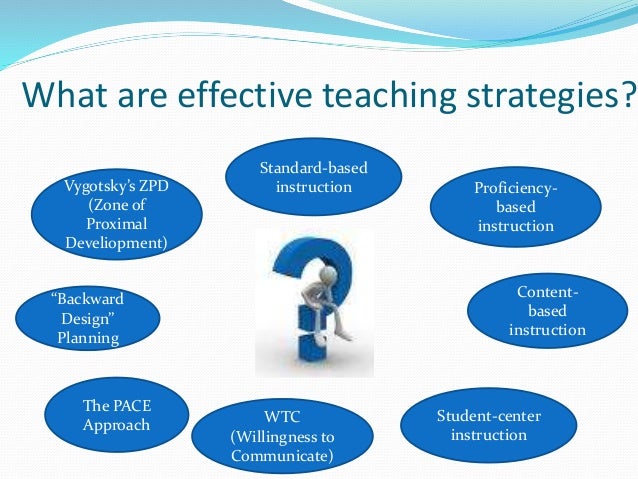
This requires our teachers to have a knowledge of how students learn and to use that knowledge to create lessons that incorporate the strategies that are most effective in helping our students to learn.

This also requires teachers to be comfortable with students talking to each other in class; students getting out of their seats to share information and ideas with other students; and students making mistakes (and learning from these mistakes) during class time. Some teachers struggle with this "active learning" approach because of the fear that such a classroom atmosphere would be difficult to manage. Such an environment in the classroom requires planning and structure and good communication between the teacher and the students. Students need to understand the objectives of the activities and they need to be accountable for doing their part. Yet, this is the classroom that most students will tell you that they want. And they want it because they struggle with learning through a strict sit-and-listen-and-take-notes sort of classroom.
Learning is a social activity no matter where the learning takes place. Adults who learn via asking questions and reading information and watching others and making mistakes and asking more questions, etc.; should not expect students to learn any differently.
And if students aren't learning, then what's the point of school?
 Of course, I don't mind if people disagree with decisions made about their child's school or school district. But mere negative comments don't usually help to make our schools better. If everyone who disagreed with a school-level decision, instead, were to offer a possible solution, or make an effort to understand the reasons behind the decision, or step up to make things better we could accomplish a lot. We can help to improve attitudes about public schools AND we can help to improve our schools.