Showing posts with label teaching strategies. Show all posts

Monday, March 20, 2017

New Teachers Don't Have to Know Everything

       Starting a new job is exciting...and scary.  And when that new job involves a classroom full of students who are depending on you; and they all have parents who are depending on you; and you're expected to use technology that you've never used before; and some student don't try to do their best every day; and ... and ... and ....  Well, you get the idea.  New teachers and veteran teachers have pretty much the same job and the same responsibilities.  But I've got good news for new teachers:  You don't have to know everything.

       Today's teachers are better trained and better prepared for that first day on the job than ever before.  Policies and laws and general "good practice" have prepared our college graduates well.  Student teaching requirements and excellent mentors during teacher training programs help our future teachers to understand curriculum, experiment with teaching strategies, and learn to interact with students.  But teaching is not the sort of job that can be fully learned in a college classroom.  Teaching requires practice and a fair amount of trial and error.  Every student is different and every group of students are different.  You can't be fully prepared for every situation when you begin teaching.

       For this reason, I tell new teachers that they are not expected to know everything when they begin their career.  I encourage them to ask a lot of questions and to seek advice from fellow teachers and from their principal and assistant principal.  It isn't that new teachers aren't prepared to accept the responsibilities of the job--they certainly are.  But teaching is much more of an art than some sort of mechanical process.  Anyone can explain some idea or concept to a bunch of students.  But a teacher wants every student to understand the idea so well that they can discuss it with other students, ask questions about it, and even build on this new knowledge and find connections to other ideas and knowledge that they already have.

       New teachers who strive to improve and to learn from others are usually viewed in a good light, even if they make a few mistakes along the way.  Furthermore, I feel that it is the responsibility of the school and the school district to continually provide supports that will help new teachers to become better teachers.  We know that our best teachers are the ones who continually look for new and better ways to reach their students.  The world changes and we need teachers who are willing to change as well.  This is true for experienced teachers as well as for new teachers.

       We understand that it is stressful to accept a new job with new surroundings, new people, and new responsibilities.  We want new teachers to be comfortable and confident.  With adequate supports, new teachers can approach everyday knowing that nobody is perfect and mistakes are part of the learning process.  This is what we tell our students and it applies to the teachers too.  Teaching is an awesome responsibility, and understanding that teaching is a learning process helps new teachers to get through that first year eager to begin their second year.


Friday, November 27, 2015

Tinkering Around the Edges Isn't Sufficient for Significant Improvement in Our Schools

       There's a joke among some educators that says if a child doesn't understand the lesson, then we will just say it again slower and louder.

       It's not a funny joke.  In fact its really sort of a put down to teachers who struggle to help students to learn.  If the teacher presented the lesson in the best way she knows how, then she may not know of another way to present the lesson and (so) when a students doesn't get it, she just repeats the same thing (sometimes slower and louder).  This usually doesn't help the student to learn any better than the first time, but it does lead to frustration for both the student and the teacher.

       These situations are far too common in our nation's classrooms today.  Improving these situations is haphazard at best.  Sometimes some students try harder; sometimes some teachers try different strategies.  But most of the time, instructional change is small (or absent) and academic results remain the same.

       Still, this doesn't happen from a lack of trying.  Plenty of teachers (most teachers) try very hard to learn more and to improve every year.  They read books; they attend conferences; they take classes; they join Professional Learning Communities (PLCs) within their school or school system or online.

       Change is hard, and improving academic results for student groups that have historically struggled in the traditional school system is a complex problem.  It isn't the sort of problem that can be solved by tinkering around the edges; and by not causing some level of discomfort for people who insist that everything is fine the way it is now.

       I believe that we have the knowledge and the research to know what must be done to improve education outcomes for the students that we aren't reaching today.  These strategies and policies are available for everyone to see.  A short list of books from a variety of sources provides the answers we seek.  Here are some of them:

  1.  The Results Fieldbook: Practical Strategies from Dramatically Improved Schools, by Mike Schmoker
  2.  Whatever It Takes: How Professional Learning Communities Respond When Kids Don't Learn, by Richard DuFour
  3.  School Leadership that Works: From Research to Results, by Robert Marzano
  4.  Teacher Leadership that Strengthens Professional Practice, by Charlotte Danielson
  5.  Failure is Not an Option: Six Principles that Guide Student Achievement in High-Performing Schools, by Alan Blankstein

       However, I also believe that the change we need involves the hard work of constant improvement.  It requires schools to dig deep into the standards and objectives that are taught everyday and to ask questions such as, 
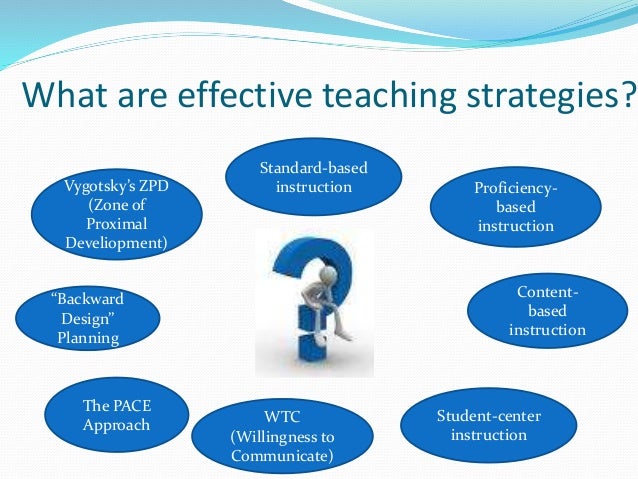
  • What is the best way to teach this objective to students?
  • What strategies should we use?
  • What activities are best?
  • How do we reach a classful of students with different learning styles?
  • How do we assess student understanding?
  • How do we assess the success of the decisions we made for this lesson?
       This is complex work and it requires effective collaboration among teachers--no one should have to do this on their own.  If we are successful, it will take a generation to complete this transformation of our schools.  During that time, we will have to contend with a lot of resistance from educators and non-educators alike.  However, this is an effort that is worth the years of hard work.  This is an effort that today's teachers can look back on and be proud to say, "I was there when the hard work was done."

       Tinkering around the edges isn't enough anymore.  It's time to do what we tell our students to do--Work hard and you will see the rewards in your future.

Saturday, November 7, 2015

Group work is a Necessity for Students

       Our school district recently had an essay contest in which students were asked to describe their Ideal Math Class.  Submissions came in from students in grades 4 to 12.  Nearly every student said that they wanted to work in groups for at least a portion of the class time.  Students want to have the opportunity to ask each other questions and to share their ideas with a small group of peers.


       In fact, the benefits of group work in the classroom are well known.  The Center for Innovation in the Research and Teaching has compiled the following list of benefits of group work:


  • Students able to take ownership of the subject matter.
  • Students develop communication and teamwork skills.
  • Content is reinforced as students work together and "teach" each other.  This improves understanding through additional discussion and explanation.
  • Content may be broken down into parts.  This allows students to tackle larger and more complex problems and assignments than they would be able to do individually.
  • Students can work together to pool their expertise, knowledge and skills.
  • Students hold one another responsible and accountable.
  • Teaches students to plan more effectively and manage their time.
  • Instructors benefit by seeing students approach problems in novel and unique ways. This can improve the instructor's perspective and make their future teaching more effective.

  • Instructors are able to have the content reinforced by giving the students ways to apply what they have learned in a collaborative setting.


       As teachers, we want students to have different learning experiences.  We know that all students do not learn best by merely listening to the teacher and taking notes.  We want students to learn how to learn and one way to do that is to give them these opportunities in the controlled atmosphere of the classroom.

       "Group work" is a general term that can be implemented in many ways in the classroom.  The Cornell University Center for Teaching Excellence has suggested many ways for teachers to incorporate group work into their lessons.  Marzano lists cooperative learning as one of his Nine High Yield Instructional Strategies.  

       Group work breaks the mold of the traditional teaching model that keeps the teacher in the front of the room all the time and the students in neat rows of desks and (usually) not talking very much.  Group work requires planning and preparation on the teacher's part.  It also requires teachers to allow some productive, learning noise to be part of their typical class on a regular basis.

       As we prepare our students for the world of work, we need to give them opportunities to work and to learn with their peers as this will (very likely) be a part of their own professional experiences as adults.


Sunday, October 25, 2015

Teachers that Promote a Growth Mindset

       Every teacher has had "the phone call" with parents in which the teacher says,  Your child has the ability, she just needs to apply herself.  And then the teacher and parent (typically) talk about school rules involving turing work in on time and not talking in class.  Essentially, we are saying to the child, We're the adults.  These are the rules.  If you don't follow the rules, then you will get a bad grade.  (Of course, if the student was concerned about her grade, we wouldn't have this discussion in the first place.)

       There are a lot of "old school" problems with that phone conversation.

  1. The conversation emphasizes following rules and getting grades, and there is very little talk about actual learning.
  2. The first part of the famous teacher line is, Your child has the ability....  If the child already has the ability to do the work, then the solution to the problem should concentrate on why the child isn't doing what she is already capable of doing.
       We know that (as adults) there are lots of things that we have the ability to do and yet we don't do them--or we delay doing them for as long as possible.  Mowing the grass, doing the dishes, admitting we're wrong about something.  We have the ability to do all of these things, but we need some sort of motivation to actually take the time to do them.  Students are the same way.  The old adult (or teacher) response of "I'm the adult and I say so." may force children to do something, but it certainly doesn't motivate them to do their best.

       Growth Mindset theory tells us that when students believe that effort will lead to result, they are more likely to try new things and are less worried about making mistakes because they believe that these setbacks are just part of the process of learning new things.  I've recently been introduced to the website Mindset Kit.  This site is dedicated to helping teachers, parents, and students to understand what Growth Mindset is and how to help students to develop good, healthy Growth Mindsets.

       One simple strategy that every teacher can do is called Praise the Process.  When a student is doing some classwork, or offers an answer or an idea in class, the teacher response by praising the thinking that went into the student's effort rather responding to the correctness or the incorrectness of the student's work or response.  This simple strategy helps the student to know that their effort is important towards that eventual goal of learning the skill or concept.
  
       Mindset Kit has excellent resources for parents.  Teachers can refer parents to this site for parents who ask, "How can I help my child to do her best?"  There is a brief quiz on different statements of praise that parents can say to their children that will promote a Growth Mindset.  And there are other typical daily activities in which a parent's reaction will help their children to understand (for instance) that making mistakes is great for helping your brain to learn.

       Our best teachers already know how to encourage their students to do their best everyday--even when they don't want to.  It's the same as when a parent tries to distract their child away from something that is bothering him and towards something that he would like.  Growth Mindset strategies help teachers to do this while also helping their students to see the value in effort.

       Here's another quote I hear from parents all of the time, "I can't believe my child is doing so well in (insert course subject here) class in school.  He has never done well in that class before."  You can bet that this child has a teacher that knows how to motivate students.  Her class is interesting and students are engaged in the adventure of learning.  

       After all, they already have the ability.


Saturday, October 17, 2015

Learning is a Social Activity

       Learning is a social activity.

       A quick search of respected sources such as General Psychology, Psychology Today (article by Dr. Matthew J. Edlund, and one of my favorite education writers Annie Murphy Paul will help all of us to understand that the best learning requires active participation by the learner.  (View an excellent talk by Dr. Paul here.) The old days of "sit and get", don't-talk-in-class, teacher-in-the-front-of-the-room-doing-all-of-the-talking have been shown to be effective for an incredibly small percentage of our students.


     The problem is that most of our current teachers grew up in a school setting in which less student talk was the norm.  The teacher was the sole source of knowledge in the classroom and the students were discouraged from sharing their thoughts and ideas with each other.  Hence, many current classrooms engage in this same classroom structure that existed 20 and 40 and 60 years ago.  "It was good enough for me, and so it will be good enough for my students" as the thinking goes.

       This is a problem because the old model of presenting information to students and basically asking them to memorize it isn't enough for the workforce of today--and it isn't completely necessary in the age of the internet.  We are able to obtain facts very easily now.  The challenge to our teachers is to help our students to use that information to make connections to other information; to build things; to create things; and to solve problems.

       This requires our teachers to have a knowledge of how students learn and to use that knowledge to create lessons that incorporate the strategies that are most effective in helping our students to learn.
       This also requires teachers to be comfortable with students talking to each other in class; students getting out of their seats to share information and ideas with other students; and students making mistakes (and learning from these mistakes) during class time.  Some teachers struggle with this "active learning" approach because of the fear that such a classroom atmosphere would be difficult to manage.  Such an environment in the classroom requires planning and structure and good communication between the teacher and the students.  Students need to understand the objectives of the activities and they need to be accountable for doing their part.  Yet, this is the classroom that most students will tell you that they want.  And they want it because they struggle with learning through a strict sit-and-listen-and-take-notes sort of classroom.

       Learning is a social activity no matter where the learning takes place.  Adults who learn via asking questions and reading information and watching others and making mistakes and asking more questions, etc.; should not expect students to learn any differently.

       And if students aren't learning, then what's the point of school?


Friday, October 9, 2015

Five Steps to Effective Schools


       I should have titled this post, Five Humongous Mountains to Traverse that Lead to Effective Schools.  But anyone who has ever worked within our public school system already knows that the best results only ever come from hard work and massive efforts.

       As I think about what is necessary for any school or school system to be truly effective, I keep coming down to these five propositions:

  1. The purpose of school is learning.
  2. Teachers facilitate learning.
  3. #2 (above) requires a great understanding of how students learn.
  4. Teachers plan lessons that include strategies that are effective in helping students to learn based on the students' learning styles.  (That is, based on #3 above.)
  5. Students learn.

The Purpose of School is Learning

       Some people might have trouble accepting this first proposition.  The time and effort we put into sports and activities (and worrying about grades) may certainly lead some to believe that schools have other purposes or (at least) competing purposes.  

       These other purposes are wonderful and they help to make "school" a welcoming place.  They give our students a sense of being part of the community and they teach our students that the world is full of opportunities.  Still, I believe that the true purpose of school is learning.  It's not grades, it's not sports, it's not standing-in-lines and doing-what-you're-told and putting-your-name-in-the-upper-right-hand-corner-of-the-page.  The purpose of school is learning.

Teachers Facilitate Learning

       Some teachers feel that their job is to teach and their students' jobs are to learn.  I believe that teachers' main job is to facilitate learning.  If students aren't learning, then what's the point--what are we doing day in and day out?  Teaching is (of course) a big part of the job, but if we believe that the purpose of school is learning (see #1 above), then we must believe that student learning is a crucial part of every teacher's responsibility.

       The difficulty in traversing this mountain is nestled in the fact that we can't force anybody to do anything.  If we have a student (or many students) who  refuse to accept the opportunity for learning we (as teachers) are limited in our ability to make this happen.  Yet, I would ask, What does a good parent do when her child refuses to go to sleep at bedtime?  Does she give up?  Does she allow the child to do that which she knows is not in his best interests?  No.  She reads on to my next proposition [!] .

Understanding How Students Learn

       Let's face it...the first two mountains were molehills relative to mountain #3.  In fact, I would guess that 90% of teachers are in full agreement with the first two propositions.  It is this third proposition in which our journey across toward effective schools really begins to get difficult.  Indeed, we have some great teachers who have been teaching for over ten and 20 years who still struggle with this question: How Do Students Learn?

       From my point of view, I believe that a full understanding of how students learn requires formal training (or professional development) and experience.  No new teacher is fully prepared for the job of teaching, because a new teacher cannot fully understand how students learn without having the experience of interacting with students and making instructional decisions based on those interactions.

       Resources on the science of learning are plentiful.  An excellent list of fairly recent breakthroughs in our understanding of learning can be found here.  Edutopia compiled an excellent list of brain-based learning resources recently.  Here is an excellent blog on the Science of Learning.  If you want to dive deep into this subject, the National Academies Press put out a full volume on How People Learn.  Teachers can take courses about how students learn and learning theory, and teachers can seek out information from these and other sources to build their knowledge about how students learn.  

       If teachers are to succeed in facilitating learning, they must have a working knowledge of how students learn.  Hence, my third proposition is likely to be the biggest barrier to effective schools.  It is hard for individual teachers to gain the volume of knowledge needed to be very successful on this front; and it takes to time and experience for teachers to use and to fine tune this knowledge.  I believe that most of our good teachers are perpetually improving their skills at understanding how students learn.  Teacher that do not view this skill as necessary will forever be only marginally effective and will prevent our public schools from achieving their primary objective: Learning.

Use Knowledge of How Students Learn to Plan Effective Lessons with Effective Strategies

       This step goes hand-in-hand with #3 (above).  In practice, teachers gain an understanding of their students, search for strategies and activities that they feel would be engaging for their students, and then plan their lessons to incorporate their strategies and activities.  After teaching the lesson, the teacher evaluates its effectiveness and (perhaps) makes some adjustments for the next time that this lesson is taught.

       Matching effective strategies to the learning abilities of the students is difficult, complex work.  Indeed, this is the hard part of teaching and a major stumbling block in our efforts to be as effective as we can be.  This is where the "science" of teaching appears to become much more of an "art".  It is where individual teachers interact with individual students.  This complex work (in my opinion) requires teachers to work in groups and in Professional Learning Communities (PLCs) to gain the knowledge and experiences from many professionals in order to build on each teacher's knowledge and experience.

Students Learn

       The end result successfully completing steps 1 through 4 is student learning.  For some schools, this finish line far from view and much work is needed to begin to see this end result.  For others, this goal is well within view and is getting closer each school year.

       The first step to any problem is identifying the problem and then to identify a path to solving the problem.  These five steps will definitely lead to effective schools.  Achieving these five steps requires significant effort.  We have to be a team of teachers and administrators and researchers and parents and community.  All of our schools can be effective schools.

       Our students deserve nothing less than our collective best.


Saturday, August 29, 2015

Fifty Million Students


       Public Schools in the United States educate 50,000,000 students.  Fifty million!  With a population of roughly 322 million people, more than 1 in every 7 U.S. citizens are students in our public school system.  These students are taught by 3.1 million teachers in 17,000 school districts that contain 100,000 schools.

       Add to these numbers the number of parents of these students; the number of non-teacher employees of these schools and school systems; and the number of relatives of these students, teachers, and school employees and you have a school system that touches the lives of a majority of our nation's people.

       That's a big system!  And I believe that big is good.

       It is because we are so big that we have so many diverse opinions of the best way to educate students; the best teaching strategies; the best school structures; and the best content to deliver.  This is a natural occurrence for such a large system and I believe that such debate is a good and healthy aspect of our national school system.


       No single person can know everything and I believe that there is value in hearing the diverse ideas of the many in our efforts to do what is best for our students.  In short, I believe that our large size is a great benefit to our students and to our nation as a whole.  I'm not disappointed by the seeming lack of a national consensus on major issues because I believe that such debate is a strength.

       Teachers constantly feel the push and pull of these diverse voices and in the end they build their beliefs of the best way to educate their students.  This makes our teachers more capable and constantly builds their understanding of the very meaning of education.  And this, I believe, benefits our students.

       We are each (indeed) part of a national fabric and when we each do our part to the best of our abilities, we build a nation of able, reasoned adults that contribute to making our nation great.

       Fifty million students.  One great system.


Public Schools and Choice

       Is it true that public school kids and their public school parents don't have choices?  I'm sure that I will expose my igno...

Teach100 blog