Showing posts with label engaging. Show all posts

Sunday, October 9, 2016

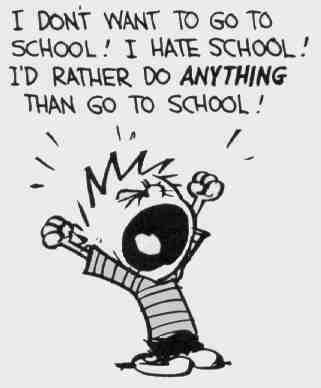
Breaking News: High School Is Not Supposed to be Boring

       Too many parents have this idea that says, "If it was good enough when I was in high school, than it's good enough for my kids."  Of course, they hated it when they were in high school.  But for some reason, they are "OK" with the same boring classes and senseless assignments for their own children.

       I'm talking about high school classes with:

  • students sitting in rows
  • teacher always standing in the front of the room
  • worksheets, worksheets, worksheets
  • very little (or none) students discussing, asking questions, or working together
  • homework on stuff they already know how to do
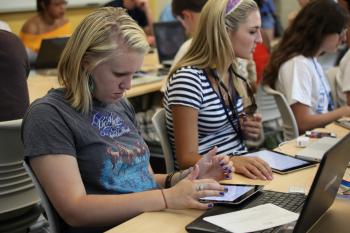
  • no use of educational technology
       I've seen high school classrooms with multiple students who have their heads on their desks and the teacher seems to be "OK" with this.  Too many classes in which the teacher asks the class something like, "Do you understand?" and one student says "Yes" and the teacher assumes that everyone in the class understands.  And the students know that this is going to happen and they don't want to say out loud that they don't get it.  I've actually heard parents say to their children, "School is supposed to be boring.  That's just the way it is."  They believe this and (now) their children believe this.

       I've got breaking news for all of the parents and students who believe that school is supposed to be boring.

It does not have to be this way.


       Think about your favorite teacher in high school.  Or think about your child's favorite teacher in high school.  What makes this teacher so special?  Why does this teacher stand out among all of the high school teachers you've ever had?  Was he or she boring?  Do they appear to not care if you passed or failed?  Of course not.  We've got lots of high school teachers who work hard every day to engage their students in the learning.  They believe that it is their responsibility to ensure that all students are learning; and they understand that students cannot learn solely by sitting and listening.  

       Learning requires doing, talking, listening, questioning, arguing (at times), trying and failing and trying again.  Students need to get out of their seats during class from time to time (or everyday)--especially in high school classes that last 80 or 90 minutes.  High school students should work in small groups without the teacher for part of the class.  They do it in elementary school and middle school; so they can do it in high school too.  We have teachers who understand this very well and they establish a true learning environment in their classrooms.  Students know that these teachers really care about their learning and they make an effort to encourage the learning everyday.


       High school isn't supposed to be boring.  Learning rarely happens in the context of "boring".  Compliance may happen; memorization may happen; even decent grades may happen.  But learning won't happen.  And if learning isn't happening, then what's the point of school?

Tuesday, April 5, 2016

Blended Learning - 21st Century Schools


       For the past two decades we (in education) have been talking about 21st century schools.  I've read books about it; I've attended lectures; I've read articles; I've had numerous conversations.  The crucial need to end our 19th century, factory-model schools and begin to give our students the school experience that will (best) prepare them for the world that they will inherit has been upon us for a long time.

       When I look at the trend toward Blended Learning, I see the 21st century school that I've always imagined.

  • Students are learning at their own pace.
  • Teachers can give better individual feedback.
  • Students have choices of how they learn best.
  • More student-to-student discussion
  • More emphasis on learning and less emphasis on grading
  • More student engagement
  • Less discipline issues because less students being bored in class
  • Better preparation for college and career
    • Research skills
    • Personal responsibility for learning
    • Working in teams and working individually
       Change is always hard.  But change that helps students to be better learners is change that is necessary.  Blended Learning should become the norm in our public schools.  The traditional classroom of sitting in rows and listening to lectures is not the best way to learn anymore.

       Take some time and learn about Blended Learning.  It is the right thing for our students for today and for tomorrow.


Monday, April 4, 2016

Mondays and Other Great Opportunities


       I think Mondays get a bad rap.

       Like New Year's Day and your birthday and the first day of school, Mondays can be important (and frequent) firsts.  They are opportunities to begin something great; to get a fresh start.  Everyone is well rested from their two-day vacation and filled with stories of their adventures over the weekend.  Mondays can be the days to move on from the trails and tribulations of the past week and begin anew.

       How do you begin the school week in your classroom?  What is your goal for the week?  How do you greet your students on Mondays?

       In the same way that (we know) students tend to be more attentive in the beginning of every class, we have a unique opportunity on every Monday to take advantage of the "newness" of the week and to start something exciting.


Thursday, March 31, 2016

We Do Something Important Every Day

       Education is important business.

       Once in a while, a student needs to be somewhere else in the school during the time that she should be in my classroom.  Club meetings, picture day, sporting events, ... lots of activity going on in a typical high school.  So this mature and responsible student comes to me a day or two before and asks, "Are we doing anything important tomorrow?"

       My answer is always the same:  We do something important Every Day.  Bell-to-bell learning; every minute, every day; valuable instructional time....  Call it what you will, the stuff that goes on in the classroom--in every classroom--is valuable and important.

       Sometimes it is hard to see the importance of something we do everyday.  It becomes commonplace; and without an engaging teacher it can become boring.  The best learning occurs when the teacher understands the importance of every minute and communicates this to the students via thoughtful, engaging lessons.

       Education is important; everyday, every minute.

Saturday, December 26, 2015

Students Remember the Fun Stuff

       I remember my Algebra 1 teacher taking off his shoes and socks in class one day.  He did it to demonstrate the need to do certain things in a proper order--otherwise, it just doesn't work.  The Algebra lesson probably had something to do with Order of Operations, but the real lesson was to complete each step in a process in the correct order.

       That lesson happened over 30 years ago and I still remember it because it was a little silly; a little goofy.  It wasn't a lecture; it wasn't a worksheet; it wasn't the normal classroom.  It was strange and odd and that it probably why I remember it.  As an educator (now), I think I also remember this event in class because it showed me that my teacher was willing to be a little silly to make a point.  He didn't have to be the Big Formal Authority in the classroom at every second of the class.  He was allowed to have some fun with his class--and still be a great teacher.

       I often tell teachers that it is not our job to entertain.  But it is part of our responsibility to motivate students to do their best.  Students don't think in educational terms such as "student engagement", "participatory learning", and "stations".  Most students just this fun.  It's not a show; it's not entertainment.  "Fun" to students is when the math class or the English class involves the students in the learning.  Its when students are not forced to stay seated for the whole period; to listen and not talk for the whole period; to take notes and learn on their own for the whole period.


      What students call "fun", teachers call "good teaching".  You don't have to be an entertainer to be a good, engaging teacher.  Chances are most teachers are already excited about the content that they teach.  The job is to convey that excitement to your students.  Involve them in the learning.  Allow for time out of their seats; time to talk and argue with other students; time to think and create and share their thoughts and ideas.

       Students don't just "like" the class better when they are involved, they actually "learn" better.  And isn't that the whole point of school in the first place?

Tuesday, November 17, 2015

It's Time for Our Schools to Leave the 20th Century

       You know the old joke about Rip Van Winkle and schools?  He falls asleep for a hundred years and upon waking up he sees everything he used to know has changed dramatically.  The houses look so different.  The clothes that people wear are very different.  And the cars...wow.  Then he finds a school and walks inside.  He goes into a classroom and he is comforted to see that schools and classrooms haven't changed a bit.

       We educators don't think this is very funny.

       In fact, it is embarrassing for us carry out the important work of education today in the same way that we did this work 50 or 30 or even 20 years ago.  Doing so ignores the research about learning that has been done over the past few decades.  It ignores the research about how the brain reacts to the stimuli that occurs in classrooms.

       For instance, we know that most students can't learn to the best of their ability strictly by sitting in class for a whole class period and listening to the teacher talking (and taking notes).  We know that students are more engaged when they have the opportunity to participate verbally and when they have a chance to get up out of their seat and participate physically in some way.  We have technology that we didn't have (even 20) years ago that can be tapped to help our students to prepare for the information world that they will enter after high school.

        We are not preparing our students by merely teaching them to read, write, and do arithmetic.  These things are important, but they are not enough.  Memorizing facts long enough to get a good test grade will not prepare our children for the world that they will inherit.  Our schools have the responsibility to mirror the society that our students will experience.

       Twentieth Century schooling is not what our students need.  Most of them have never even lived in the 20th century.  I believe that our current education leaders understand this need for our schools to change.  Part of the responsibility of our public schools is to explain this need for change to our parents and to our communities.  Staying the same is easy; change is hard.  Schools often face opposition from communities who tend to say that "The old way was good enough for me and it's good enough for our kids."  We need to make the case against this sort of thinking.

       Someone needs to speak for our students and for their futures.


Tuesday, November 3, 2015

Crack the Code of Learning

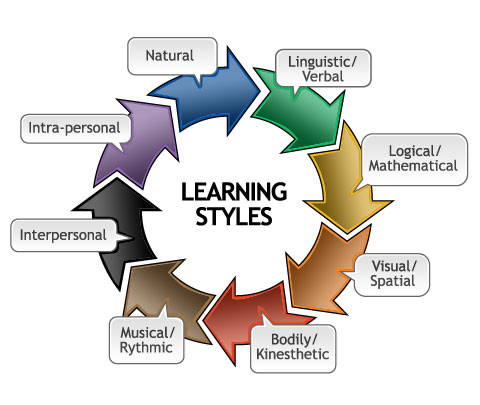
       How does a teacher enable students to learn?  How do students learn?  How do people learn?  Teachers who seek to reach their students struggle with these questions all of the time.  Experience (and research) tell us that students learn differently.  When we teach a lesson to 30 students; some get it right away, some get part of it, some don't get it at all.  How is that possible?  All of the students heard the same lesson; yet not all of the students had the same level of "Learning".

       This can lead to a difficult and awkward situation in which the teacher feels offended that the his or her efforts went to naught; and the student feels embarrassed that he or she wasn't able to learn as well as other students.  Our best teachers understand that all students don't learn in the same way and (so) they try to find different ways to present information.  They present is verbally; they present it visibly on a whiteboard on a screen; they use videos; they have students read some information; they have other students explain their thinking; and so on.  We use these different strategies to keep the class interesting and to increase student engagement.  But we also do this because we know that all students won't learn the same way and we need to find a way to present the content in different ways so that we reach all of our students.

       Einstein has been associated with the quote, "I never teach my pupils, I only provide the conditions in which they can learn."  I don't know if he really said this, but the statement may be correct.  It may be that no teacher can actually MAKE students learn.  It may be that the best we can do is to encourage students to learn.  We do this by getting to know our students very well and using this knowledge to include into our lessons those aspects that our students will find interesting.  If the students are interested than they are more apt to try their best even if the learning is difficult.

       Still, even when we understand about different learning styles and the value of good relationships with students, teachers are still faced with some topics that seem to be difficult for many students.  Once again we struggle to crack this code of learning.  How do teachers help students to understand complex topics?  Indeed, this is the art of teaching.  Some teachers are better at this than other teachers.  In my experience, the teachers who are able to reach the most students are the teachers who learn from their own experiences (including their own failures) and who seek input from other teachers via conversations with colleagues, reading journals and research, and taking courses about learning.

       Learning isn't a complete mystery--but it isn't a completely solved mystery either.  Current research about how the brain works will help to answer some of our questions.  Collaboration with professional teachers helps too.  Teaching is rewarding and (at times) frustrating.  As we learn more about the process of learning we will have more teachers with greater abilities to address the needs of more and more of our students.


Friday, October 2, 2015

Motivated to Learn

       I often say to new teachers that it may not be your job to entertain your students, but it is certainly part of your job to motivate your students.
       We know that actual "teaching" is only a part of a teachers job.  The most major part of the job is ensuring that students are learning.  Our best teachers know that most students don't learn strictly by listening.  Learning requires doing, talking, asking questions, making mistakes, and doing some more.  Teachers plan lessons that keep their students engaged.

       Strategies to keep students motivated include lots of basic things such as:

  1. Calling on students every class (preferably at least three times each class),
  2. Allowing opportunities for students to get out of their seats during every class,
  3. Playing games that require students to understand the objective for the day to do well in the game, 
  4. Asking a lot of "Why" questions that require students to think and to explain their thinking,
  5. Allowing students choices to demonstrate their learning.
       Students can't learn if they are not motivated to learn.  Requiring students to sit still and listen to the teacher for 45 minutes or 50 minutes or 90 minutes is not an effective way to instill true learning.

       What do you do to motivate your students to do their best everyday?


Sunday, September 20, 2015

We Are a Community of Learners

       Teaching students is not like like building a model airplane.  We don't have distinct steps to follow that will lead to a completed project in the end.  Students learn differently; they come to school with different experiences and different abilities.  Good teaching requires an understanding of the learners in each classroom and daily lesson plans that are designed to help those learners.

       Good teachers understand the difficulty of reaching each individual student and they seek out the best strategies from experts in the field of education and from the teacher across the hall.  We (educators) are a community of learners.  We have to be.  We can't learn everything from experience and we can't figure out everything on our know.  We can't be experts in child psychology and special education and mathematics and English Language Learners and student engagement and formative assessment and ....  We need each other to be the best teachers we can be for our students.

       After more than 25 years in education, I am still learning and improving by listening and reading and following other educators just like me who have something great to share.  Here is my short list of excellent sources of information for educators who strive to make a difference with their students and who seek to improve their abilities every year:
  1. Annie Murphy Paul - The Brilliant Blog
    1. Her recent writings on how to using testing as a learning tool (aka - formative assessments) are informative and eye-opening to those who only see testing as an end-of-unit assessment.  She has also recently released an e-course that will show parents, teachers, and school leaders how to implement testing strategies as opportunities for student learning and growth.
  2. Robert Marzano - Marzano Research
    1. Great professional development information for teachers and for whole schools on topics ranging from Student Engagement to Assessment and Grading to Instructional Strategies to Teacher Effectiveness.  Don't let the "research" part scare you; Marzano provides effective tools and ideas that are simple to understand and to implement.
  3. Doug Lemov - Teach Like a Champion
    1. Excellent tips that any teacher can use to improve student learning and student motivation.
  4. Starr Sackstein - Changing the World, One Mind at a Time
    1. Great ideas and thoughts from a National Board Certified Teacher
    2. Lots of great recent blog posts about emphasizing learning and de-emphasizing grading

       And teachers don't have to go online to find excellent educators to collaborate with; look to your administrators, and district and state-level leaders.  Find ways to collaborate with teachers in other school buildings in your school district.  There is great value in learning from other professions.  I would say that it is a necessary element for teachers who strive to improve year after year.

     We are a community of learners.

Wednesday, September 2, 2015

Teachers Who Make Learning Exciting

       There is a secret that every teacher knows...and every teacher hopes that students never find out about this secret.  The secret is...we can't force anyone to learn anything.

       There is no physical way that a teacher (or anyone else) can actually force a student to learn.  It can't be done.  The best we can do is convince students that learning has a practical purpose and that everyone is capable of being able to learn.

       Fortunately, most students "get it" that school is the place where they are taught things, and school is the place where they are assessed to determine the quality of their learning.  So most of the time, teachers don't have to do too much convincing of the purpose of learning.

       Still, there comes a time in every student's life in which they struggle to learn things easily.  When this happens, it is the skill of the teacher to motivate students; to convince students of their (continued) ability to be able to learn; and to engage students in the process of learning that keeps students on the learning path.

       All of us have had teachers like this.  They make learning fun.  You don't even know that you are learning; you don't care about your grade.  You just love going to her class because the teacher treats you like a real person; is glad to see you everyday; and makes a point to have every student feel part of the community of the classroom.

       Our best teachers strive to improve their skills every year.  Increasing these "skills" do not involve strengthening their content skills, but instead involve adding to their skill set the ability to engage their students in the process of learning.  Every students wants all of their teachers to be this sort of teacher and every parent wants this sort of teacher for their child.


       Thank you to all of these teachers who find a way to reach all of your students.  You make learning what it should be...an exciting adventure!


Tuesday, June 23, 2015

Why Do You Teach?

       The school year ended four days ago and I am thinking about welcoming my teachers to the next school year.  (Wow.  That was a short summer vacation.)

       Every year in our school district the teachers return to school one week before the students return.  On one of the days of that first-week-back, all of the secondary teachers in the district meet in their subject areas for a full day of professional development before the school year begins.  This is a time to learn about new resources, to network with other teachers in other schools, and to energize teachers to get excited about the new school year.

       We know that an effective teaching strategy for student understanding is to ask a lot of questions that encourage students to think about what they are learning.  If students can explain what they are doing and why they are doing it, they must understand it pretty well.  It also reinforces the idea that we want students to understand underlining concepts and not just to get-the-right-answer.

       In that vein, I am going to ask our teachers some questions in an effort to encourage them to think about what they do and why they do it.  These question will challenge the teachers to consider different possibilities.  They will be questions that defy simple answers.

       I'm in the beginning stages of preparing this presentation and I am certainly open to suggestions.  Feel free share (in the comment section below) other questions that you feel would be good questions for teachers in the beginning of the school year.

Questions:
(1) Why do you teach?
(2) What are your goals this year?
(3) What will you do differently this year?
(4) How will you make a difference?
(5) What do you want to learn this year?
(6) Why is mathematics difficult for some of your students?
(7) How will you help students who don't ask questions?
(8) How will you engage your students in their learning this year?
(9) How do you help your students to value "learning" over "getting-grades"?
(10) Why do you teach?

       We ask (or should be asking) our students difficult questions every day.  As such, we need to ask ourselves difficult questions.  Teaching students who are willing and able and ready to learn is easy.  But trying to reach the unwilling, the struggling, and the distracted student takes time and effort and expertise.

       Why do you teach?


Thursday, June 11, 2015

Congratulations to All First Year Teachers!

June, 2015

Dear First Year Teacher,

       Congratulations on the completion of your first year of teaching.  You did it!

       After making the decision to be a teacher 
  • and finishing your degree 
  • and navigating the job market 
  • and landing a teaching job
you have reached the point in the school year where you can look back and say, "I did it.  I've completed my first year of teaching."

       You probably learned some things that you didn't expect to learn--and that's a good thing.  (Learning is always a good thing.) For instance, you might have learned that some students didn't retain the learning they had previous years.  This might have caused you to consider different teaching strategies to reach these students and to help them to learn this year's content.  Secondly, you might have learned that you understand your content so much better now that you have taught it--compared to when you just had to learn it as a student yourself.  This might have caused you to consider that your students (too) may learn well be "doing" or by "teaching" (or explaining) what they know with other students.  Lasting, you might have learned that great lessons may take a lot of time to prepare and not-so-great lessons can be prepared quickly--and you have to find a balance between the physical time you have and the your desire to keep your students motivated to do their best.

       Mostly, I hope you've learned that teaching isn't the sort of profession in which people start out knowing it all.  Teaching is the sort of profession in which people get better at it the longer they do it.  I hope you asked your colleagues a lot of questions this year.  That shows that you are interested in growing and improving as a teacher.  (You may have noticed that the teacher across the hall from you--who has been teaching for ten years--also asks a lot of questions because she wants to continue to improve every year.)  Using different resources, using electronic resources, using different teaching strategies...it's a lot to learn in a signal year.  Every year you will hear about new and cool stuff that you can use in your classroom.  So find the thing that's right for you, and do that extra one or two new things next year.  But don't worry about not doing it all; or not doing what that great teacher down the hall is doing.

       Learning about teaching is a big part of teaching.  There is no "one way" to be a great teacher.  (That's why no one has given you the Book of Directions of Teaching.)  This is what makes teaching hard--that non-educators don't realize.  But it is also what makes teaching a true profession in which professionals such as yourself need to get together to make the best decisions for your students.

       Enjoy your time off this summer.  But also spend some time reflecting on this past year.  What was great that you want to repeat next year?  What didn't work that you want to improve upon next year?  What is the cool digital tool that you heard about and never had time to learn about and that you may want to use next year?  Look for webinars to attend; find people and chats on Twitter that will broaden your horizons; read a book about teaching or teaching strategies that may be specific to your area of teaching.

       The best teachers are always learning and always improving.

       Be a better teacher, and the next year, and the next year.  And (again) congratulations on the completion of your first year of teaching.  You did it!  See you next year!


Friday, May 29, 2015

We Should Value Good Thinking More Than We Value Good Memorizing

       Stanford professor, Dr. Jo Boaler, recently published an article titled, "Memorizers are the lowest achievers...".  In it she makes the point that some students are really good at memorizing math facts and memorizing math procedures, but (sometimes) these same students are very poor at understanding the concepts connected to these math procedures.  To those who believe that "mathematics" is nothing more than adding and multiplying, it may seem odd that we (educators) view this issue of memorizing as a bad thing.  It may also seem untrue that these memorizers are low achievers.

       Dr. Boaler goes on say that here in the United States, we (often times) reward students for being good at memorizing math facts, but offer very few compliments and rewards for being good thinkers and reasoners.  She says that, "We need students who can ask good questions, map out pathways, reason about complex solutions, set up models, and communicate in different forms."  These are the skills that help students to be good and successful learners, as well as helping them to understand the abstract, higher-math skills taught in upper Algebra classes and Calculus.

       The same thinking that favors memorization (often) also believes that students who are able to come up with answers quickly must be smarter than those who are slower to answer questions.  This, too, is not true but (sadly) is often the message that is given to students in school.  Former NCTM (National Council of Teachers of Mathematics) President, Cathy Seeley, wrote a great book titled, Faster Is Not Smarter.  In this book, Ms. Seeley stresses the importance of teaching mathematics for understanding and not just for "getting the right answer".

       High school mathematics teachers will tell you that it is a common situation to have students in (say) an Algebra 2 class or a Pre-Calculus class that were consider great "math students" in elementary and (maybe) in middle school, but then suddenly began to struggle in mathematics in high school because they never really "learned" and understood the mathematics; instead, they just did their best to memorize facts and procedures.  This sort of "learning" is not permanent.  The basic skills of (say) operations with fractions and integers (positive and negative numbers) are quickly forgotten because they were never really learned in the first place.

       But this situation can be changed.  For some it is a huge change from the way we were taught and from the trainers we received as teachers.  For others, it is a very welcome change to the way mathematics teaching needs to be.

       It isn't about grades.  It's about learning.  We need to have a good balance between procedural knowledge and conceptual knowledge.  If we intend to truly prepare our students the best we can for their futures, we need to equip them with the tools to success.  It isn't fair to give students (and their parents) the false impression that they are highly-able just because they are good at memorizing or getting the answers fast.


Tuesday, September 30, 2014

Change What You Do (or else improvement will never happen)


     It seems we are constantly hearing and reading statistics that say American students are not achieving very well.  We rank low in reading and mathematics compared to other industrialized countries.  A quarter of our children never graduate from high school and the graduation numbers are even worse in college.  Our poor children and learning disabled children and minority children have lower rates of achievement than our white and economically advantaged children.

     All of this is true.  And we don't like it; and we want it to change.  We want all students to be successful; we want all students to graduate from high school; we want all students to be grow to be capable, responsible adults.  But this is a difficult problem--as is evidenced from the years and years of data with very little improvement on these fronts.

     Something has to change.  We cannot keep teaching the same way we have always taught and expect different results.  Teachers give their best everyday.  It isn't a matter of "not trying" or "not doing our best".  We have to do things differently.

     If I knew the solution(s) to this problem, I would tell you.  The best I can do is offer my ideas:

     (1)  We need to instruct students in a way that they respond to; we need to know what they "get" and what they don't get--so we can help them.
     (2)  We need to use more technology in a more effective way.
     (3)  We need to be more concerned about learning and less concerned about grades.
     (4)  We need to use valuable classtime for addressing student questions and much, much less classtime forcing students to complete worksheets.  (If they already know how to do the work, why force them to show us again and again and again.  If they don't know how to do the work, why force them to do ten problems that they can't do.)
     (5)  We need to increase student engagement every minute of every class.  There should be less teacher-talk and more student-talk.

     What are your five best ideas for changing teaching?  If you could do anything in your classroom to help students to learn better, what would you do?  We have to do something different if we want different (and better) results.

Sunday, May 25, 2014

Great Math Resources online


     I’ve just had my 50th birthday and I am completing my 26th year in the education field.  The differences between today and when I began teaching are certainly many.  One of these is the vast amount of great math resources available to teachers online.  Of course, along with the “great” resources, there are also other resources that may (shall we say) fall into the “ho-hum” category.  I would like to offer a few tips for finding great resources online; and then would like to share some of my favorites.

Tips to Find Great Online Resources
  1. Does the resource promote and/or encourage student thinking?
  2. Is the resource available to students outside of school (web-based)?
  3. Does the resource do more than what can be done with the resources you have in your school?
  4. Is the resource engaging for students?
Online resources that cause students to ask questions and to try different scenarios are great because real learning comes not from “doing-what-the-teacher-tells-you-to-do”, but from discovery on your own.  I love using resources that cause students to ask, “What if…?” questions.  It is also nice to introduce a resource in the classroom and to allow students to explore on their own outside of the classroom.  It can be a required assignment, but it’s better if the students are so immersed in the resource that they want to play and explore with it on their own time.  This is why web-based resources are great; available on any devise and at any time.  Resources that go beyond what students do in the classroom are very interesting and engaging.  Online worksheets may be a time-saver for teachers, but a worksheet is a worksheet is a worksheet for students.

Great Online Resources
So here are a few of my favorites.  This is not an exhaustive list; there are lots more.  But here are a few:
Desmos
Desmos is an online graphing calculator that is (both) a great presentation tool for the classroom and a great discovery tool for students.  You can (for instance) place a variable in the place for the slope and use a slider (say between -10 and +10) to show students how the slope of the line changes when you change the slope from a negative number to a positive number.  When you get on the site, you will see a lot of creative art designed by students on a coordinate plane using equations of lines and curves.  Truly amazing!  Also, students can email their works of art (or their graphs from HW assignments) to their teacher or friends.

Hooda Math
This is a site full of games that require students to think and to plan ahead.  They have games for students of all ages and it is easy to search for an age or grade level and for a category that you are interested in.  I love it when students think they are playing games, but really they are solving problems.  Some of these involve math problems, but all involve critical thinking.

Nrich
Oh my goodness–can I spend the next 20 paragraphs talking about this site?  (Please??)  This is a fantastic math resource for students of all ages.  It contains great math tasks that require a lot of student thinking.  Students can (and–I would say–should) work in groups to share their ideas about solving these tasks.  It is easy to search for what you want.  There are engaging pictures and engaging scenarios in the tasks.  Nrich has a rating system to tell you how difficult the tasks are.  They have STEM connections (STEM is Science, Technology, Engineering, and Mathematics.)  Teachers can print posters with engaging math tasks.  I just love this site.

NCTM Illuminations
This site is from the National Council of Teachers of Mathematics (NCTM) in the United States.  It has lesson plans and lots of activities for students in all grades.  There are games and challenges.  Students can complete with other students online.

Ten Marks
This is a newly found site for me.  Ten Marks provides great, rigorous, high-level math problems to students in grades 1 to Algebra 2.  It is individual for each student.  When students struggle, Ten Marks provides extra help with hints and videos and math problems that address the area of struggle.  During the summer of 2014, Ten Marks is free to anybody.  At other times there is a small cost.  This is great for keeping up to speed during the summer and during the school year.

Learn Zillion
This is a great site for teachers and students.  They have lessons aligned to the Common Core standards.  They hire excellent teachers from around the county (United States) to add to the site every year.  This site keeps getting better all of the time.

So this is my short list of favorite math resources online.  Is your favorite listed here?  What online resources do you use?  Let’s us know about them!

Public Schools and Choice

       Is it true that public school kids and their public school parents don't have choices?  I'm sure that I will expose my igno...

Teach100 blog