Showing posts with label public schools. Show all posts

Thursday, April 6, 2017

Public Schools and Choice

       Is it true that public school kids and their public school parents don't have choices?  I'm sure that I will expose my ignorance of the "far right" and the "far left" and their respective discussion points about school choice; but isn't it the case that we already have a fair amount of choice when it comes to educating our students?

"Better Schools"

       I think I understand the issue of "better schools" in richer areas.  It goes like this:

  1. Richer people (even upper-middle-class and middle class people) are more likely to have college degrees.
  2. Parents with college degrees are more likely to value education.
  3. People who value education are more likely to instill these values into their children.
  4. Children with parents that value education (especially if their parents--themselves--are college graduates) are more likely to do well in school.
  5. Hence, schools in richer areas have students who do well in school.  (I'm defining "do well in school" to mean students get good grades and (hopefully) actually learn and understand the content of the courses that they take.) 

Since teachers (generally) make the same amount of money in these "better" schools as they do in schools with lower student achievement, teachers (generally) prefer to teach in these schools.  Teachers get to spend more time on teaching and less time on disciplining.  Additionally, these schools seek to hire good, highly-able teachers to meet the demands of their students.

"Low-achieving schools"

       I think I understand some of the issues of "low-achieving schools".

  1. Some kids are motivated to do well in school and some are not.  Low-achieving schools have a majority of low-motivated students.
  2. Low motivations comes from a variety of factors including: 
    1. Lack of parental encouragement and/or parental example.
    2. Lack of engaging teachers and interesting lessons.
    3. Lack of a sense of belonging to your school.
    4. Lots of other reasons.
  3. Low-achieving schools tend to have more discipline issues that come up.
  4. This leads to stricter school rules and (sometimes) stricter consequences.
Many teachers find it difficult to have an effect on a student's education in these type of schools.  Many teachers were never trained to handle multiple discipline issues and they themselves were never part of a high school class that didn't care about learning.  Hence, teachers who begin in these schools seek to move to "better" schools.  Hence, low-achieving schools have the additional issue of (on average) having a less experienced staff year after year.


Choice

       Usually when hear conversations about school choice. the issue is, "I don't like my child's public school and I want him/her to go somewhere else."  It may be more typical for parents with kids in the low-achieving school to want other choices, but I'm sure there are parents with kids in the better schools who also want this.  So here is my (perhaps limited) knowledge of the choices that people have:

  • Move.  Parents who are sufficiently unhappy with their child's public school and are quite happy with a nearby (or not so nearby) other public school can move into the district with other school.  I know that moving is a great inconvenience and it would take some mighty strong feelings for family to make this decision--but it is an option.  However, if the better school is in an area that you can't afford to live, then this isn't an option.
  • Charter schools.  This option is gaining in popularity.   Twenty years ago, less than one percent of American schools were charter schools.  Today that number is over 5%.  In 2009, 40 of the 50 states in the U.S. had charter schools.  Charter schools are public schools, so they are free just like public schools.
  • Homeschooling.  This option is also on the rise.  In 1999, 850,000 America students were home-schooled.  By 2011, that number rose to 1,770,000 of our nation's approximately 50 million students.  (source)  Homeschooling can occur at any level from kindergarten to grade 12.
  • Online learning.  I have to say that this an area that I am less familiar with.  I know middle and high school students can take online classes, but I don't know the rules about how they count toward graduation and whether you can completely skip public school and get all of your secondary education online.  Personally, this sounds like a very lonely learning experience.  But perhaps as a supplement it is a good choice for some.
       My feeling on this issue is the same as it is on most issues: Do what you think is best for your child.  If you want to leave public schools because you're angry about one thing in one course, I would suggest looking for options for that one course--but don't leave the whole school because of it.  If you have a broader complaint about your child's public school and want to consider other options, do your research.  But be careful because something else isn't always something better.


Sunday, March 5, 2017

How much Parental Involvement is 'Just Right'?

       Parents are an important part of the educational process.  But some parental involvement is too little and some is too much.  What is the "sweet spot" of parental involvement; What would you consider to be (as Goldilocks would say) "just right" when it comes to parental involvement?

       No one would dispute the value of a strong connection between the home and the school when it comes to better outcomes for education.  We (educators) want parents to be involved.  We want parents to celebrate with us the academic successes of their children, and we want parents to support and to assist us when struggles and obstacles occur along the way.  As teachers, what do you consider to the right amount of parental support?  Is it possible to have too much involvement from the home? What do you consider to be too little support?  As a parent, how do you approach your involvement in your child's education?  Do you leave it all to the schools and the teachers?  Do you check on homework and that's it?  Are you comfortable talking to your child's teacher?

       How much parental involvement falls into the "Just Right" category?  This question may have a different answer for elementary teachers than for high school teachers.  Parents with more education may feel different than parents with less education.  Parents of younger children may answer this question differently than parents of older children.

       As a high school teacher, whenever we had parent-teacher conferences, the parents of students with high grades often came and the parents of students with low grades usually didn't come.  I also saw many parents who (themselves) had a college education and few parents who never went to college.  As a school we would often discuss the issue of finding ways to involve parents and finding ways to invite parents to different school events.  Whenever I reached out to a parent (due to both positive and negative events that occurred with their child in my classroom), I always found a parent who was willing to help and who was appreciative of the contact.

       On the other hand, I've also experienced parents who wanted weekly updates (phone calls or emails); parents who would constantly contact me and other teachers about the smallest issues that occurred in the school relative to their child.  Sometimes these folks were very anti-public-school and they were anxious to share their alternate opinion about what was happening and what (instead) should be the job of the schools.  But most of the time these parents were supportive of the school and certainly supportive of their child--but I worried that the child (in high school) was not given the opportunity to make even the smallest decision on his own about his education.  Still, I felt that more parental involvement was better than no parental involvement and it wasn't my place as a teacher to tell a parent how to help their child.


       What does your school do to encourage more parental involvement?  What can a school do to encourage overly involved parents to allow their children to take more ownership of their education? How much parental involvement is 'just right'?  Is too much involvement a nice problem to have?  

Saturday, March 4, 2017

Three Simple Steps to School Success

       Every parent wants their child to do well in school.  When kids are in elementary school, parental influence and assistance is usually plentiful.  Parents generally understand the content well enough to help their children during homework time.  And elementary children are more likely to do as they're told to do, and to respect the authority of adults in the school.  They generally want to please their parents and their teachers.  When elementary students struggle academically, public schools provide lots of help and assistance in a caring and nurturing way.

       As children move on to middle school and then to high school some of those attributes that helped students to be successful in elementary school tend to lessen.  The school work is more rigorous, children are more concerned with pleasing their friends, and parents who may feel that their children should be more responsible for their school work may take a step back when it comes to reminding them of due dates.  Also, parents may find that they can no longer help their children with homework due to the level of the content.

       Still, all students can do well in school and here are five simple steps that can help:

1.  Do your best


       I know this sounds trite and cliche, but I'm going to define "doing your best" in a way that may sound different from what most would think.  It doesn't mean getting an "A" or even necessarily striving for an "A" all of the time.  In fact, "doing your best" has little to do with the way your child's school assesses students.  Instead, it has everything to do with your child looking into the mirror at the end of the unit or a marking period or the school year and being able to say that he/she did everything they could to be successful.  Sometimes students really, honestly don't have time to everything that are asked to do.  Sometimes they ask for help and stay up late to study and take on the responsibility for their learning and end up with a "C".  That's OK.  But if the child feels that he/she didn't do their best, then this is the time for self-reflection about what can be done differently the next time.  Everyone (including adults) fall short of doing their best sometimes.  Striving to do better is part of what we want students to learn in school.

2.   Adult support outside of school

       Middle and high school students are not too old to need support from a caring adult outside of the school building.  Students today have lots of distractions and when given the choice between school work and social media it can be hard to plan time for both unless someone is there to help.  In 2006 there was a study of high school dropouts.  Many high school dropouts in this study said that they would have tried harder if someone insisted that they try harder.

"Nearly 7 in 10 respondents (69 percent) said they were not motivated or inspired to work hard, 80 percent did one hour or less of homework each day in high school, two-thirds would have worked harder if more was demanded of them (higher academic standards and more studying and homework), ..."

3.  Get involved

       Students that are involved clubs and sports and other school activities discover that "school" is more than a place with teachers and homework.  Involvement in activities helps students to connect with other students who have similar interests and these connections can be positive in and out of the classroom.


       School success should not be all about grades.  We want students to graduate with lots of skills that can be hard to measure with the standard "grade".  These include:  communication skills, computer and technological literary, adaptability, research skills, problem solving skills, strong work ethic, and conflict resolution skills--to name a few.

       Our public schools along with home support help our students to succeed.


Sunday, January 22, 2017

When Learning Doesn't Happen, Who's Fault Is It?

       When something goes wrong, is it your fault or is it someone else's fault?

       You're late to work, you fail a class, you break a shoelace, you gain weight, you run out of milk.  Small things and big things; they happen every day.  Are you the kind of person that says, "It's my fault." most of the time when things go wrong; or are you the kind of person who says (essentially), "It's someone else's fault." most of the time when things go wrong.


       Maybe this isn't a fair question.  Certainly there are times when it is my fault and times when it is someone else's fault.  You can't answer such an abstract question with a definitive answer one way or the other.  Well, OK.  Maybe so.  But surely you know someone who almost never takes responsibility for anything that happens in their life.  When they are late to work; it's because of slow drivers and red traffic lights.  When they gain weight; it's because other people are constantly offering them sweets.  When they lose a game of cards; it's because the cards weren't shuffled well.

       When middle and high school students struggle to learn in school; Who's fault is it?  Who is ultimately responsible for their learning?  Who bears the greatest ownership for whether or not they learn math and English and science?  There is no doubt that this is a controversial question.  This is a question in which any answer would have troublesome consequences.  Another way to ask this question is, "Do we blame the schools, or blame the students?"  Unfair you say?  Maybe.  Probably.  But this is a question that educators get often.  I am going to begin by looking at the extreme answers.

1) It's the student's fault

       This view says that students bear the ultimate responsibility for their own learning.  The teacher's job is to teach.  It is the student's job to learn.  If the student isn't learning, they should seek extra help; they should ask questions; they should try harder.  Middle and high school children aren't babies; they understand how school "works".  They should advocate for themselves.  It's their life.

       The problem with this view, in my opinion, is the question of age-appropriate responsibility that is given to students.  My father used to say that the trouble with kids is that they act their age.  In addition to learning math and English and science, students are also learning how to be an adult.  They are learning about making good decisions.  Teenagers need structure; they need guidelines.  Sometimes a student is struggling in a subject and doesn't know what questions to ask.  Sometimes students are afraid to speak up in class in front of their peers.  Sometimes students don't realize the ramifications of not learning.  While, of course we want our students to be responsible for their own learning, we can't expect an 11 year-old 6th graders nor a 15 year-old 10th grader to act like a fully responsible adult at all times.

2) It's the teacher's fault

       This view says, if students aren't learning, then the teacher isn't doing his/her job.  Teachers are trained to teach and to help students to learn.  The teachers went to college to learn how to teach and they spent two or more years as full-time, untenured teachers to learn "in the field".  If students aren't learning, then it's the teachers fault.

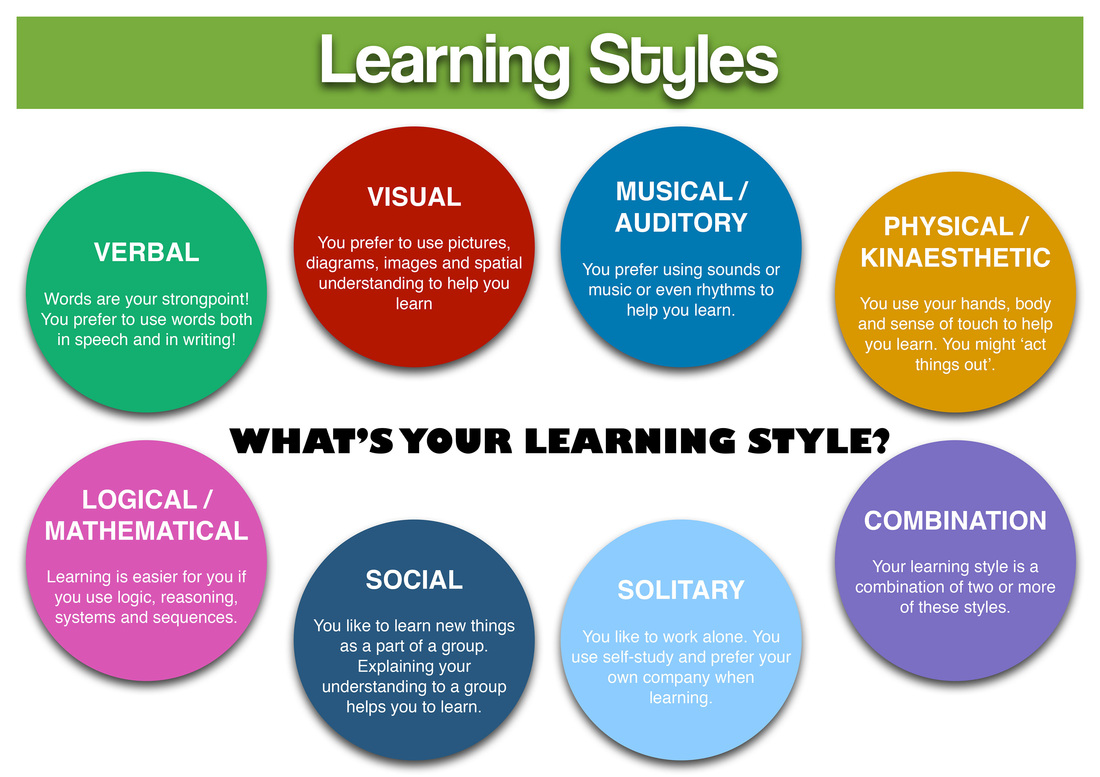
       The problem with this view, (again) in my opinion, is the idea that all students learn in the same way; or that teachers should be experts in all student learning styles after a couple of years of practice.  In fact, students are very, very different in their learning styles.  Some learn from only listening, while others have to listen and practice, while others have to hear it in a different way before they "get it".  Middle and high school students have varied past experiences in their education and teachers are always faced with students of varying abilities.  Some students don't speak up much and teachers have to find a way to understand how well they are catching on to the learning objectives without hearing (verbally) directly from the student.  And some students are burdened with problems at home that have priority over their education in the student's mind.


       So who's fault is it?  If we can't say it's the student's fault and we can't say it's the teachers fault (and we still have learning that isn't happening) then who's fault is it?

       We live in a world that loves to point fingers and loves to have clear, simple "right/wrong" answers.  We want to have a villain that we can point to; someone to blame; someone to yell at.  Everything is a soccer game with winners and losers.  We don't like complicated things, complex things.  These are too hard to understand and too hard to fight.

       Who's fault is it?  I think it depends on the person that you are.  If you are the type to take responsibility for your actions, then you probably lean toward the side that says students should be responsible for their own learning.  If you are the type to blame others and nothing is ever your fault, then you probably lean toward the side that says the teachers and the schools are to blame.  As for me--and as an educator--I take a middle-of-the-road view.  Sure we want students to be responsible, but teachers should do everything that they can to help students to learn.  It's not enough to just "teach".  If students aren't learning, teachers and schools should ask why.  They should take a hard look at these students and provide whatever help they can.

       I believe that our public schools are constantly concerned about students who struggle to learn.  Most of time, these students get the help that they need.  But sometimes they don't.  In the end, as with so many things in life, I believe that we have to work together to help our most vulnerable students to get the help that they need.  Learning requires a little struggling for everyone.  For those who can't meet this struggle, we should all be there to help them.


Saturday, January 14, 2017

Data, Data, Data Leading to High Achievement

     Education and learning is the result of hours of planning and hard work on the part of teachers and students.  Behind the scenes in every public school that cares about student learning, there are individual and teams of teachers that use data to make good instructional decisions.


       In years past, we only had data from chapter tests.  But since the chapter was completed and the instruction has already moved on to the next topic, this data was already "old news".  It couldn't be used to help us to make good instruction decision for right now.  Today teachers understand the power of using data to guide their decisions.  When the public hears about school data, they often think about tests results--probably because that is the most common form of data that is published in the news.  But teachers use all sorts of data that doesn't include test data.

Data-Driven Decision Making

       Public school teachers measure student progress in many ways in today's classrooms.  Teachers use rubrics to assess projects or some assignments.  Teachers use games.  Teachers use exit tickets.  Questions, discourse, group work, individual work, electronic responses, etc.  Teachers have multiple sources of student data.  This data is used to help teachers to decide:
  1. Who gets it.
  2. Who sort of gets it.
  3. Who doesn't get it.
These determinations are used to help teachers to prepare for the next lesson.  Chapter tests and large, state-wide standardized tests are a "final" product of the educational process.  They don't help us in our day-to-day planning.  It is the daily collection of data from formative assessments that inform instructional decision.  It is also this data (or the information from this data) that help students to gain a sense of how well they are understanding the content.

       Indeed, learning is a process.  It takes time and practice and effort.  It requires students and teachers to ask a lot of questions and often to make mistakes along the way.  It requires thinking and reasoning based on what we've done so far and what we still need to do.  The data that comes from these efforts help all of us to measure progress toward the goal of learning.  Most of this data analyzing is invisible to the public.  It is the technical work of teaching that is too "un-interesting" to print in the newspapers and yet vital to the practice of teaching.

       Data drives decisions for students and schools.  Data is the fuel that keeps our classrooms running in the right direction.


Tuesday, December 27, 2016

College Not For All

       I'm going to start by saying that I went to college, my wife went to college, my siblings went to college, I want my children to go to college, and everyone I work with went to college.  I'm a big fan of "going to college".  College provides specialized knowledge in a specific field of study; often by people who are experts in that field.  There is a benefit to going to college, but since this post is about "not going to college", I'll just say that the benefits of college are well documented.


       So why am I (a lifelong educator) writing about not going to college?  Because public school desire to teach ALL students.  All students are welcome in our public schools.  We take all students.  We don't have some sort of litmus test that permits some students to enter our public schools and denies others t enter; we take everyone.  And in doing so, we have an obligation to teach all students.  This means that we teach the students who are college-bound as well as those that are not.  This leads to the dilemma of all public schools: Are we preparing students for college?  Are we preparing them for the world of work?  Or, Are we doing both?  (And if the answer is the latter, then How do we do that?)

       We know that all students won't go to college.  (source)  We also know that some will go to college and won't finish college. (sourceHere is a slideshow of 25 jobs that don't require a college degree--although nearly all (or actually all) of these jobs require some sort of education and/or training beyond high school.  So the question remains, How do prepare the college-bound students and the non-college-bound students at the same time?

       The simple answer is that this is a complex problem.  It is a problem that (in my opinion) requires multiple options and pathways for high school students.  It is a problem that does not lend itself to one-size-fits-all solutions.

       It is fair to say that all public schools recognize this need to prepare students for their lives beyond high school--whatever they may be.  But it is also fair to say that some requirements are aimed (more) at the college-bound students than at the non-college-bound students.

       My solution views these two subgroups of students as much more alike then different in terms of the skills and knowledge that they need for both college and work.  Clearly, reading and basic mathematics understanding is needed.  By "reading", I include understanding the context of what is being read; and I include reading and understanding non-fiction and technical manuals.  Our civilized world requires reading.  Medical reports, insurance papers, legal documents such as wills and mortgages all require a level of reading in which people can read and understand.  By "basic mathematics", I include understanding and calculating things such as sales tax and interest income.  People should be able to gain information from a chart, graph, or table of numbers.  People need to know what a percent means and what fractions mean.  Calculators can do the calculations, but people need to do the "understanding".  Beyond reading and mathematics, I believe that a good understanding of other typical high school subjects is needed to help people gain an understanding of the world and the people around them.  These include science, history, art, some computer skills, health, and knowing a foreign language--which is extremely common outside of the United States.

       Beyond these academics, I believe that the rules and regulations that take place in a high school and in the classroom should instill in our students a sense of right and wrong as well as a sense of how to exist as an adult in society.  When my daughter was in kindergarten, her teacher told us that everything they do has a purpose.  What may look like "fun" or "downtime" to the non-kindergarten-teacher observer, has a purpose.  Similarly, everything in high school should have a purpose.  Whether you are going to college or work, you need to be on time, you need to be polite, you need to listen.  You need to learn from others and you need to be able to work with others.  You need to know that sometimes you'll get some help to do things and sometimes you have to do things on your own.  You need to be responsible and you need to take on responsibilities.

       It seems to me that when employers complain about young people in the workplace, it isn't so much that they lack reading and mathematics skills--although I hear this as well.  It is more that they lack the ability to accept responsibilities, to understand written and verbal directions, and to follow through on important tasks.  These skills are needed for the college students also.

       College isn't for everyone.  But public schools and their graduation requirements and daily rules and regulations are for everyone.  Learning is a lifelong skill.  It doesn't stop on graduation day.  We want all students to succeed regardless of the path they take after college.


Friday, December 16, 2016

Do Our Brightest Students Get What They Need?

       Public schools are good at educating the average student.  We are good in the education of above average students.  We spend a lot of time, money, and energy on the education of below average students; and while this is a difficult population in terms of bringing them up to grade-level standards, we've made numerous improvements over the years to help these students.

       This leaves the most limited students and the very brightest students.  For the purposes of this post, I'm defining the very limited as the academically weakest two to three percent of our student population and the very brightest as our top 1% in terms of academic ability.  We have laws and programs and policies to help the most limited of our students.  They may not receive a high school diploma, but we help them to learn as much as possible during their school years so that they can have a full, happy, and satisfying life.  We help them to go as far as they can in terms of skills and abilities.  But when it comes to our very brightest students, I'm not sure that we can say the same.


        Once again, I'm not talking about the typical advanced students in our public schools.  We have programs and/or courses for them that are different from the typical "on-grade-level" programs.  And we do a good job with these typical above-average students.  I'm talking about our most advanced students.  These are the students who don't just stand out in their class, they stand out in their school.  They represent the 1 out of 100 (or more) that excel far beyond the typical advanced students.

       I am a mathematics supervisor.  Mathematics is the one subject that often gets the most attention when the topic of our very brightest students arises.  Parents and policy-makers alike strive to identify these students and endeavor to find a way that best meets their needs.  However all too often our attempts to do this lead to an inadequate solution known as "Acceleration".  Acceleration (in this arena) usually means that these very bright students get the same mathematics content and the same mathematics instruction as everyone else; they just get it at an earlier age and/or they just go through this same content at a faster pace than other students.

       The problem with this solution is that it does not recognize the true abilities of these students, and it does not encourage these students to think harder or reason more.  It doesn't challenge these students to grow and to further develop their strong academic skills.  Instead, this solution only pushes these students to go faster.  Sadly, this solution is often praised by parents and policymakers because our society views "faster" as "better".  We see everything as a competition and those that go faster and jump higher and earn more credits and produce higher grade-point-averages are viewed as the "winners".

       The real danger of inappropriate acceleration for our brightest students is that we place this "speed" over our prime objective of education; which is to actually learn.  Students lose the chance to develop a deep understanding of the content that they master.  They lose the chance to do what they are most able to do which is to question conclusions, discover new solutions, and to create and develop new ideas.  Strategic acceleration could accomplish these goals if the instruction is appropriately geared toward the needs of our brightest students.


       In practice, our public schools struggle with the top 1% because there are so few of them.   We don't have enough of them to make a "class"; sometimes there may not even be one in every grade.  They are spread out throughout a school district.  So we have to figure out a way to provide instruction that meets their needs while still attending to all of our other students.  This is a challenge--and (perhaps) is part of the reason that mere acceleration is so often employed as the "solution".  We also struggle to understand the best way to help teachers to provide this ideal instruction for these students.  So much of public education is geared toward helping our average and weak students; and less attention is geared toward our brightest students.

       The National Association of Gifted Children is a respected organization that addresses the needs of our brightest students and provides resources to help school districts to tackle this problem of providing for these students.  We need to do more and we need to do it in a smarter and more responsible way.


Monday, October 3, 2016

Three Years; 200 postings; 50,000 views

       Three years ago today I began this blog with the modest words below.  It has been a learning and a reflective experience to write about education in America.   I've considered some controversial topics and I've praised the many excellent people that work within the walls of our schools everyday. And I've receive great feedback from my readers; their stories and ideas.

       Thank you follow joining me in this journey.  There is always so much to do; so much to say.  And together we can do it all.


First Post from October 3, 2013

It's 6:30am; "No time like the present." (Right?)  So here is my first post; really my introduction to this blog.  This blog that I have said to myself for years (and to others) that I should write.  So here is the beginning.

The blog is called, What's So Good About about Education?.  The purpose (the vision) is to highlight the good things that occur in American education every single day.  There are lots of sources out there that talk about the bad things in education.  This would make the average person think that there is nothing good about education in America.  Well that's just not true.

In truth, I may talk about the good and the bad, but I want to stress that there is lots and lots of "Good" going on.  We need to acknowledge the hard work of teachers and the many, many successes of our students. 

I hope to  be able to do that.

Have a great school day America.  I know you will.

Saturday, October 1, 2016

Good Enough Isn't Good Enough

       Schools, educators, teachers...they are never satisfied.  We are the ultimate Olympic athletes when it comes to our desire to constantly improve.  In education, "Good Enough" is never good enough.

       While it is often true--though not in all schools--that most students do fine; most students learn to read pretty well, most students move on to the next grade, most students graduate.  There are always some students that don't or that struggle to reach these accomplishments.  And even for those that do succeed, What is our standard for success?  Is it a passing grade?  Is it to barely exceed the minimum?  Is it to be merely good enough?

       The best teachers are constantly striving to find ways to reach all of their students.  The students that do what they are told and are able to "succeed" in school without much effort should be pushed to do more.  The students who always excel academically should be pushed to do more.  And the students that struggle to meet the minimum requirements should be given the help they need to do better.  All students can do better; all teachers can improve; all schools can strive for better results.

       The goal of school is learning.  But students approach this goal from many different viewpoints.  Some strive to be "Number 1"; some do their best everyday and accept that they may be stronger in some areas than in other areas; some students struggle in math but are good at reading; some students seem to struggle in all academic subjects but are talented in the arts.  And some students have been beaten down so often by their schooling experience that they have given up on trying.  All of these people come together in the typical public school and it is the job of the educators to more all of them forward.

       It is hard to have one policy or one standard that applies to everyone when "everyone" is so different.  Maybe the goal shouldn't be to reach a standard as much as it should be to improve based on whatever your starting point is.  If you come to 7th grade able to run a mile in 9 minutes and 36 seconds, maybe you should strive to end 7th grade with a time of 9 minutes flat or 8:30.  Similarly, if you begin 7th grade with a reading ability that is considered "average", may you should strive to end the school year above average in reading.  And if you are a teacher who always struggled to help those students who always want to sit in the back of the classroom and never participate, maybe you want to have the goal to encourage them to answer questions and to offer their ideas at least twice in every class.

       The goal isn't to be Number 1; the goal isn't to "win".  School is not a competition.  The goal is always to improve regardless of your starting point.  Nobody should accept "Good Enough" as good enough.

Thursday, July 14, 2016

Learning About Learning

       The goal of school is learning.  The challenge for our schools is to help all students to learn when students are so different.  Some prefer to work by themselves.  Others need to bounce ideas off of their peers.  Some need only to hear the information while others need to actively "do" something to help them to learn.

       The mystery of how students learn has baffled educators for a long time.  The puzzle of "some-kids-get-it" and "some-kids-don't-get-it" has been difficult to understand.  I think that--for a long time--teachers referred to their own ability to learn (and perhaps that of their peers) and felt that all students probably learned the same way they did.  In fact, I wonder sometimes if some present day teachers use the same technique.  And while there are still many unknowns in the field of learning, it is fair to say that we know more today about how students learn than at any time in our history.

       For starters, brain research has provided a wealth of information about how we learn.  Here's a short list of things to know about how the brain learns:

  1. We receive information better when it's visual.
  2. We remember the big picture better than the details.
  3. Sleep affects learning and memory.
  4. Less sleep reduces your ability to learn new information.
  5. We learn best by teaching others.
       Next, we have a lot of help in the field of learning from experts and practitioners.  After a while, we begin to see common themes in the area of helping students to learn:
  • Engagement - Students who actively participate in their learning find it enjoyable and are better able to retain the information.
  • Movement - Learning can certainly take place while sitting, but less so if you're forced to stay seated for a long time.  (see The Power of Movement in Teaching and Learning)
  • Challenge - We learn best when we are forced to think and try and fail and try again.  Also, when we are forced to recall past learning and use that information to understand the current learning.
  • Growth Mindset - If we believe that effort yields results then we are more likely to do our best to preserve in the face of any struggles that may occur as we learn new material.

       Still, teaching is certainly a combination of Art and Science.  Teaching requires building positive relationships so that we can understand our students and construct our lessons in a way that meets their learning needs.  Teaching requires the ability to motivate students and to spark their interest in learning.  Teachers need to challenge students enough to keep it interesting, but not too much so that it becomes too overwhelming.

       The challenge of teaching is the challenge of learning how students learn.  We're getting better at this, but we still have a lot to learn [!].


Saturday, June 18, 2016

Preparing Our Students for College and/or Careers


       "College and Career" has become the new buzzword in American high schools.  We want to prepare students to be ready for the social and academic demands of college; and--for students who go to college and don't go to college--we want to prepare our students for the demands of being in a working environment.  This has become a rallying cry for our P-12 school system because of so many surveysstudies (also see this study) and articles that have touted how unsuccessful our schools have been at accomplishing this goal.

       Certainly many recent high school graduates (and their parents) can speak from personal experience.  They completed high school and received their diploma, but they couldn't do the same in college.  Among students that began college in 2007, less than 40% completed their Bachelor's degree by 2011.  Even if you give them another two years the college graduation rate is still very low--59.4% (source).  Employment rates for high school graduates may (certainly) be affected by general conditions of employment in society, however employers often have serious concerns about the readiness that recent high school (and college) graduates have for the workplace.  So what should be done to better prepare students for college and careers?

       First let's define the problem that is faced by our public schools.  In a (very) broad sense, we need to be everything for everyone.  We need to prepare the rich kids and the poor kids, the learning disabled and the academic superstars, the sports kids and the theatre kids and the band kids.  And we need to prepare them for community college, for 4-year colleges, for selective and ivy-league colleges, as well as for certification in cosmetology and welding and mechanics.  Additionally, we want them to be able to express themselves in writing, verbally, and online.  We want them to know that it is important to be on-time, to be polite, to be a learner (for jobs and for college), to be wise with money and credit, to make good decisions.

       Hence, our public schools are tasks to develop rules and policies and requirements for everyone even though everyone isn't following the same path after high school.  So we have to find a balance between what's necessary for most or all students with what's probably really, really helpful for some of the students.  For instance, mathematics is important, but should we require all students to take and pass (and know) Algebra 2?  Financial Literacy is important, but do middle school students need to learn about home mortgages?  Finding the right balance can be tough.


       The other issue is that too many students (and parents) view high school as just a list of requirements to complete.  The idea of "learning" is too far removed from the idea of "getting-a-grade".  How do we help students to see the value of what they are learning in the midst of a system that constantly "rates" students with grades?  Too many people feel that school is merely another one of life's competitions in which there are few winners.  How does this prepare students for their life after high school.  Therefore, our P-12 schools are also tasked with helping students to appreciate the learning and to increase their understanding of their abilities to learn.

       Some of this can be done with requirements from school districts and from state education agencies.  But, it seems to me, that some of this requires a societal view of school as preparing students for after school.  We need parents to support this view; we need television to support this view; we need law-makers to support this view.  College and career readiness is a big job and it requires a big response from all of us.

Wednesday, May 11, 2016

Helping Students with Learning Disabilities is Common Practice

       In my lifetime, the transformation in public schools towards helping students with learning disabilities has been incredible.  We've gone from self-contained classrooms--in which these students rarely or never interacted with their peers, to full inclusion--in which, today, it is rare for almost any classroom to not have a student with a learning disability.  We used to call it "Mainstreaming"; but now we just call it normal.  Teachers from the 1970's and 1980's would have never imagined a world in which this was possible.  They never had the training that our teachers have today.


       Teachers know that the sort of strategies that help our Special Education students are just good teaching strategies that help all students.  We are better (now) at teaching students who might be weak in reading or mathematics (and don't have a learning disability) than we were in the past because of our training for Special Education students.  Every school has a Special Education department chair or specialist that works with a team of teachers that assist students with learning disabilities AND help to train teachers on best practices.  These students have special learning plans that we call Individual Education Plans (or IEP for short) that give them goals to reach.

       Every year we look at data that measures the learning of our students with IEPs and we consider ways to increase their achievement.  Gone are the days when these students were made to feel that couldn't learn and they spent their days doing basic reading and math skills.  Companies outside of our public school system have developed software and resources and programs designed to help these students to reach their potential.

       The story of our special Special Education students is (indeed) a success story of our public schools.  It was a huge problem and we figured out a way to make it a much smaller problem.  There are lots of young adults in our society today that proudly hold their high school graduation certificate thanks to our public school's efforts to identify their learning disability and to find a way to help them to learn.

       This success story gives me hope that our public schools will solve today's issues:  increasing the achievement of our poor students, better education for our English Language Learners, raising the high school graduation rate without compromising our high standards, and eliminating the achievement gaps that exist between certain student groups.  These are huge problems and every one of them has a solution.  I believe that we have already begun to address these issues.  And I believe that when my students are my age they will look back on the early years of the 21st century be proud of the accomplishments of our public schools.


Friday, April 8, 2016

Encouraging a Growth Mindset for your Students

       Growth Mindset is an understanding that you can learn and achieve anything if you are willing to work and practice and study and try.  A student's ability to learn is not predetermined from birth.


       This is an important concept for teachers who seem to always have some students who believe that they are not born with the skills necessary to learn.  A common saying among some students is, "I don't have a math brain.", meaning, "I don't have the ability to learn math regardless of the extent of my efforts."  We know now that this is not true.  But teachers are often faced with the prospects of needing to convince some of their students that this is not true.
       This chart is filled with suggestions for helping students to view their perceived obstacles in a different way.  Part of a teacher's job is to motivate their students to do their best everyday.  The more that we can convince students and then demonstrated to students that effort leads to (at least some level of) success, the more we are able to create a learning atmosphere in which students believe that they can learn.

       Growth Mindset is for weak and strong students alike.  We also have students who have been successful in the traditional school setting who don't have a growth mindset.  These students may have been praised for their "smarts" and they may be afraid to try something new for fear of not succeeding.  This limits their ability to grow.  Hence, encouraging a growth mindset is for all students and not just for a few.  Our best teachers have always been encouraging a growth mindset.  We have all had teachers who were able to convince us to try and to work hard in the belief that we would eventually succeed.  We need to see this occurring much more often in our classrooms.


Tuesday, April 5, 2016

Blended Learning - 21st Century Schools


       For the past two decades we (in education) have been talking about 21st century schools.  I've read books about it; I've attended lectures; I've read articles; I've had numerous conversations.  The crucial need to end our 19th century, factory-model schools and begin to give our students the school experience that will (best) prepare them for the world that they will inherit has been upon us for a long time.

       When I look at the trend toward Blended Learning, I see the 21st century school that I've always imagined.

  • Students are learning at their own pace.
  • Teachers can give better individual feedback.
  • Students have choices of how they learn best.
  • More student-to-student discussion
  • More emphasis on learning and less emphasis on grading
  • More student engagement
  • Less discipline issues because less students being bored in class
  • Better preparation for college and career
    • Research skills
    • Personal responsibility for learning
    • Working in teams and working individually
       Change is always hard.  But change that helps students to be better learners is change that is necessary.  Blended Learning should become the norm in our public schools.  The traditional classroom of sitting in rows and listening to lectures is not the best way to learn anymore.

       Take some time and learn about Blended Learning.  It is the right thing for our students for today and for tomorrow.


Monday, December 28, 2015

Top Five Posts of 2015

       As I finish my second full year of blogging, I'd like to take a look back at 2015 and the five posts that got the biggest response from my readers.  But first I'd like to thank some of the many fellow bloggers that I've read and (sometimes) responded to over this year.  These professionals have caused me to pause and think about the various issues in public education that (perhaps) need to be changed; or that need to at least be debated.  I've also read many, many inspiring stories about teachers who work very hard--with little recognition--to help their students to succeed.

       Thank you to Alice Keeler, Starr Sackstein, Justin Tarte, Annie Murphy Paul, and Daisy Dyer Duerr.  I used to think that these were Super-Hero People who had some special gift or ability in the area of education.  But I've come to understand that they are just regular people like you and me who are eager to share their thoughts and ideas with the rest of us.  I, for one, am extremely grateful to include them among my professional learning community.  (And so are tens of thousands of other educators who follow these folks!)  I am continually inspired by your words; you keep me going and keep me writing.  Thank you.

------------------------------------------------------------------------------------

       Here are my top five posts from 2015:

#5) Open Letter to Teachers

       This was the second (and most popular) of a three-part series of Open Letters to the three most important stakeholders in our educational system: Students, Teachers, and Parents.  I wrote this "letter" to teachers on the eve of the 2015 - 2016 school year.  It was published on August 19th.  In it, I talked about how excited teachers are when a new school year begins--something, I bet, a lot of students don't realize.  I wrote about the tough job of teaching and I applauded the men and women who accept this responsibility.    Sometimes being a teacher involves difficult conversations with students about the need to continually struggle to learn something that isn't easy at first. Teachers shape the minds that shape the future of our country.  Teachers' influence over student achievement is well documented.  We always need great teachers.

#4) Learning vs. The Appearance of Learning

       Published on March 28th, this is an issue in which I feel very deeply.  The issue of the best way to measure learning and the problem (at times) of students appearing to be learning well (i.e. - getting good grades) but its only an appearance and it isn't real learning.
       I feel that P-12 education is the time when we have to be honest with students and their parents.  We don't want students to believe that they are achieving at a high level only to learn later in life (perhaps while sitting in a college class) that the grades they earned in high school did not represent their true ability.  The job of schools is to help students to learn.  We need to use multiple measures to get a true picture of their level of learning.  "Getting-a-good-grade" is not the job of schools.

#3) We Should Value Good Thinking More Than We Value Good Memorizing

       This post, from May 29th, quotes from Dr. Jo Boaler and Cathy Seeley.  In it, I talk about how our students'  thinking should be rewarded more than their ability to memorize math facts.  Sometimes elementary children who are very good at memorizing their multiplication facts (and recited them quickly) are viewed as being more able than students who cannot do this.  But we really don't students who can merely memorize facts.  What we really want is students who can think and reason and build on known facts to gain further knowledge.  Sometimes students memorize facts without knowing why the facts are true.  Later in their P-12 education they struggle because of this lack of understanding.  The goal isn't speed; the goal is learning.


#2)  No More Worksheets

       I began this post (from April 3rd) with a simple question:

Does you your child's mathematics teacher assign a lot of worksheets for homework and classwork?

If the answer is YES - Not a very effective teacher.
If the answer is NO - Likely to be a more effective teachers.


       Of course, this is an exaggeration, but the point is that this staple of P-12 education (the worksheet) should be a thing of the past.  They are boring; they are very un-engaging; and they de-emphasize thinking over mere "following steps".  They represent the opposite of what we want to see in our classrooms today.  Students should be spending class time reasoning and thinking and debating; they should be sharing ideas and thoughts.  They should hear from other students.  By the response I got from my readers, I'm thinking that this idea is not as radical as it may sound to some.

#1)  Growth Mindset Teachers

       This post had the most views of any post I've written since I started blogging more than two years ago (142 posts).  I talked about the idea of Growth Mindsets as created by Carol Dweck.  Specifically I talked about teachers who have the mindset that says anyone can learn.  These teachers help their students to understand that learning is always possible; productive struggle is a good thing; and their past negative learning experiences does not predict their future learning.


       Thank you to everyone who have shared this journey of learning and thinking with me in 2015.  The best of us are always trying to improve and to learn more.  Continue on and find your way to be the best educator you can be.

       All the best!

Peter Cincotta


Friday, December 4, 2015

Soft Skills Education

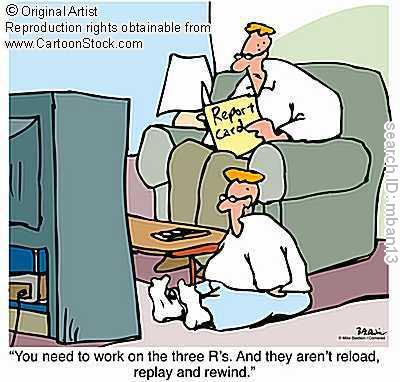
       Our public schools' biggest offering is opportunity.  Students learn from qualified professionals and from a long list of course offerings--probably the longest at the high school level.  But we are not just teaching our students the R's, we are preparing them for the adult world.  This means that we are also tasked with teaching our students the so-called "soft skills".  Here is a short list of some of these skills:

  • Listening 
  • Presentation Skills 
  • Giving Feedback 
  • Decision Making 
  • Inspiring 
  • Persuasion 
  •  Interpersonal Relationships 
  • Dealing with Difficult People 
  • Conflict Resolution 
  • Self Confidence 
  • Resilience 
  • Assertiveness 
  • Friendliness 
  • Empathy 
  • Problem Solving 
  • Critical Thinking 
  • Organization 
  • Planning 
  • Scheduling 
  • Time Management
       Employers tell us that high school and college graduates who have these soft skills are much more likely to be successful employees than those who don't.  Students aren't "graded" on these skills in school, however many of these skills are incorporated into classrooms as rules of behavior (friendliness, conflict resolution, planning), suggested steps in completing assignments (decision making, resilience, organization), and learning strategies (problem solving, critical thinking, giving feedback).

       Students who are successful and confident usually possess these skills at a high level.  Students who are only concerned with the "book work" of school may possess the knowledge needed for their future, but they may also struggle with relationships with their co-workers.  This "soft-skills" education is an important part of our school system.  The ability of our students to get along with other students and to organize their thoughts, ideas, and lives is all a part of growing up and being responsible.  


       And everyone gets to receive this education for free in our public schools.  


Tuesday, November 17, 2015

It's Time for Our Schools to Leave the 20th Century

       You know the old joke about Rip Van Winkle and schools?  He falls asleep for a hundred years and upon waking up he sees everything he used to know has changed dramatically.  The houses look so different.  The clothes that people wear are very different.  And the cars...wow.  Then he finds a school and walks inside.  He goes into a classroom and he is comforted to see that schools and classrooms haven't changed a bit.

       We educators don't think this is very funny.

       In fact, it is embarrassing for us carry out the important work of education today in the same way that we did this work 50 or 30 or even 20 years ago.  Doing so ignores the research about learning that has been done over the past few decades.  It ignores the research about how the brain reacts to the stimuli that occurs in classrooms.

       For instance, we know that most students can't learn to the best of their ability strictly by sitting in class for a whole class period and listening to the teacher talking (and taking notes).  We know that students are more engaged when they have the opportunity to participate verbally and when they have a chance to get up out of their seat and participate physically in some way.  We have technology that we didn't have (even 20) years ago that can be tapped to help our students to prepare for the information world that they will enter after high school.

        We are not preparing our students by merely teaching them to read, write, and do arithmetic.  These things are important, but they are not enough.  Memorizing facts long enough to get a good test grade will not prepare our children for the world that they will inherit.  Our schools have the responsibility to mirror the society that our students will experience.

       Twentieth Century schooling is not what our students need.  Most of them have never even lived in the 20th century.  I believe that our current education leaders understand this need for our schools to change.  Part of the responsibility of our public schools is to explain this need for change to our parents and to our communities.  Staying the same is easy; change is hard.  Schools often face opposition from communities who tend to say that "The old way was good enough for me and it's good enough for our kids."  We need to make the case against this sort of thinking.

       Someone needs to speak for our students and for their futures.


Wednesday, October 28, 2015

PARCC Results are all about Learning

       2010 - Common Core Standards go public
       2010 to 2014 - School systems throughout the country align courses to these updated standards
       2014 - PARCC Field Test takes place in all "PARCC" states
       2015 - First full administration of the PARCC assessments
       Fall 2015 - We get to see the results of the PARCC assessments


       I feel like I'm the only person who is happy to see the results from these new tests.  Once again, the press is constantly talking about bad results, bad tests, bad schools.  To me, these results are all about learning.  They tell us how well our students are learning based on the world-class standards that are being taught in our classrooms.  Isn't this what we really want???

       It doesn't help to compare our students to each other in their school or to the students in the school on the other side of town.  The comparison that matters is the comparison to the standards.  This comparison will help us to know if our children are ready for the academic demands of college level work and for the societal demands of a career.

       School is supposed to be about learning.  The PARCC results give us a measure of this learning.  This is a good thing.  Up until today, we've had far too many students graduating from high school and believing that they were ready for college only to face a harsh reality that their high school did not prepare them as well as they thought.  Too many students begin college and don't finish college.

       Today, thanks to PARCC results (and other data points), our students and their parents will get a true measure of their ability--as early as in third grade.  And there will be time while our children are still in P-12 school for them to get help and for them to raise their abilities.

       PARCC results are a good thing.  Learning is a good thing.

       Don't you want to know if your child's true level of learning?


Friday, October 9, 2015

Five Steps to Effective Schools


       I should have titled this post, Five Humongous Mountains to Traverse that Lead to Effective Schools.  But anyone who has ever worked within our public school system already knows that the best results only ever come from hard work and massive efforts.

       As I think about what is necessary for any school or school system to be truly effective, I keep coming down to these five propositions:

  1. The purpose of school is learning.
  2. Teachers facilitate learning.
  3. #2 (above) requires a great understanding of how students learn.
  4. Teachers plan lessons that include strategies that are effective in helping students to learn based on the students' learning styles.  (That is, based on #3 above.)
  5. Students learn.

The Purpose of School is Learning

       Some people might have trouble accepting this first proposition.  The time and effort we put into sports and activities (and worrying about grades) may certainly lead some to believe that schools have other purposes or (at least) competing purposes.  

       These other purposes are wonderful and they help to make "school" a welcoming place.  They give our students a sense of being part of the community and they teach our students that the world is full of opportunities.  Still, I believe that the true purpose of school is learning.  It's not grades, it's not sports, it's not standing-in-lines and doing-what-you're-told and putting-your-name-in-the-upper-right-hand-corner-of-the-page.  The purpose of school is learning.

Teachers Facilitate Learning

       Some teachers feel that their job is to teach and their students' jobs are to learn.  I believe that teachers' main job is to facilitate learning.  If students aren't learning, then what's the point--what are we doing day in and day out?  Teaching is (of course) a big part of the job, but if we believe that the purpose of school is learning (see #1 above), then we must believe that student learning is a crucial part of every teacher's responsibility.

       The difficulty in traversing this mountain is nestled in the fact that we can't force anybody to do anything.  If we have a student (or many students) who  refuse to accept the opportunity for learning we (as teachers) are limited in our ability to make this happen.  Yet, I would ask, What does a good parent do when her child refuses to go to sleep at bedtime?  Does she give up?  Does she allow the child to do that which she knows is not in his best interests?  No.  She reads on to my next proposition [!] .

Understanding How Students Learn

       Let's face it...the first two mountains were molehills relative to mountain #3.  In fact, I would guess that 90% of teachers are in full agreement with the first two propositions.  It is this third proposition in which our journey across toward effective schools really begins to get difficult.  Indeed, we have some great teachers who have been teaching for over ten and 20 years who still struggle with this question: How Do Students Learn?

       From my point of view, I believe that a full understanding of how students learn requires formal training (or professional development) and experience.  No new teacher is fully prepared for the job of teaching, because a new teacher cannot fully understand how students learn without having the experience of interacting with students and making instructional decisions based on those interactions.

       Resources on the science of learning are plentiful.  An excellent list of fairly recent breakthroughs in our understanding of learning can be found here.  Edutopia compiled an excellent list of brain-based learning resources recently.  Here is an excellent blog on the Science of Learning.  If you want to dive deep into this subject, the National Academies Press put out a full volume on How People Learn.  Teachers can take courses about how students learn and learning theory, and teachers can seek out information from these and other sources to build their knowledge about how students learn.  

       If teachers are to succeed in facilitating learning, they must have a working knowledge of how students learn.  Hence, my third proposition is likely to be the biggest barrier to effective schools.  It is hard for individual teachers to gain the volume of knowledge needed to be very successful on this front; and it takes to time and experience for teachers to use and to fine tune this knowledge.  I believe that most of our good teachers are perpetually improving their skills at understanding how students learn.  Teacher that do not view this skill as necessary will forever be only marginally effective and will prevent our public schools from achieving their primary objective: Learning.

Use Knowledge of How Students Learn to Plan Effective Lessons with Effective Strategies

       This step goes hand-in-hand with #3 (above).  In practice, teachers gain an understanding of their students, search for strategies and activities that they feel would be engaging for their students, and then plan their lessons to incorporate their strategies and activities.  After teaching the lesson, the teacher evaluates its effectiveness and (perhaps) makes some adjustments for the next time that this lesson is taught.

       Matching effective strategies to the learning abilities of the students is difficult, complex work.  Indeed, this is the hard part of teaching and a major stumbling block in our efforts to be as effective as we can be.  This is where the "science" of teaching appears to become much more of an "art".  It is where individual teachers interact with individual students.  This complex work (in my opinion) requires teachers to work in groups and in Professional Learning Communities (PLCs) to gain the knowledge and experiences from many professionals in order to build on each teacher's knowledge and experience.

Students Learn

       The end result successfully completing steps 1 through 4 is student learning.  For some schools, this finish line far from view and much work is needed to begin to see this end result.  For others, this goal is well within view and is getting closer each school year.

       The first step to any problem is identifying the problem and then to identify a path to solving the problem.  These five steps will definitely lead to effective schools.  Achieving these five steps requires significant effort.  We have to be a team of teachers and administrators and researchers and parents and community.  All of our schools can be effective schools.

       Our students deserve nothing less than our collective best.


Public Schools and Choice

       Is it true that public school kids and their public school parents don't have choices?  I'm sure that I will expose my igno...

Teach100 blog