Showing posts with label effort. Show all posts

Saturday, September 24, 2016

I Don't Have a Reading Brain

       I don't have a reading brain.  


       I'm 52 years old and I've never been good at reading.  In fact, I'm constantly telling my children that I was never a good reader so that they don't feel so bad about being bad at reading themselves.  They are always saying, "Why do we have to learn to read anyway?" and even though I basically agree with them, I try to think of times when reading is important such as when they get a text from their friends.

       I really don't feel too bad about being a bad reader because just about everyone I know is bad at reading.  In fact, we are always joking about being bad at reading.  My sister-in-law is a middle school English teacher and every time we go to a restaurant we always make her read the menu to us.  We just tell the waitress to hand the menus over to her and most of the time the waitress sort of laughs in agreement and says something like, "I get it.  I'm a terrible reader too."  And we all have a big laugh.

       People who can read must be really smart.  Everyone knows this.  In school, we always knew who the smartest kids were because they were able to read.  When teachers told me to read, I just tried to memorize the facts that I needed to know to answer the questions at the end of the chapter.  That's what I tell my own children to do because I really can't help them with their reading and they know that I can't really read very well anyway.

       High school reading was the worst.  Seriously, how are normal people supposed to memorize all of those words AND their meanings.  It really isn't humanly possible, except for people that have reading brains--I guess.  

----------------------------------------------------------------

       Does this sound familiar to you?  Are you constantly telling your kids and your friends that you're terrible at reading?  Do you get tense when have to read something?  Do you have reading anxiety?



Who would brag about not being able to read?  Who would ever suggest to their very own children that reading isn't important?  It's absurd.  No adult or parent would openly laugh about not being able to read.

       But, sadly, adults and parents often say these things about mathematics.  Some people actually believe that there is such a thing as a "math brain".  Many people view people who are good at math as being "smart".  And I have often been in a restaurant when my friends and relatives have passed the check to me to figure out the tip--all the while laughing and being very open about their inability to do math.

       What sort of message are we sending to our children when so many adults joke about not being able to do math?  Too many children feel that they are given a "pass" from the adults in their lives to be poor at math.  This leads to a lack of effort in the classroom which leads to a lack of understanding.  Every math teacher has (at some point in their career) said to a parent, "Your child could do so much better in mathematics if he/she put in the effort."

       This is something that we can fix.  This is something that every parent can do to help their child to do better in math.  Stop saying that you were never good at math.  Make sure that your children understand that they can do anything and they can learn anything; but they have to try.  Learning isn't always easy.  No one expects you to "get it" the first time.  It takes effort and mistakes and try, try again.

       Learning reading and mathematics isn't all that different.  The difference is our attitudes toward them.

Saturday, April 23, 2016

When You're Learning And You Know It

When you're learning and you know it shout "Hooray".
When you're learning and you know it, then your face will really show it.
When you're learning and you know it shout "Hooray".

       It's a good feeling to learn something.  A good teacher will help students to recognize when they learn something and will praise them for their efforts in the learning process.  But a good teacher won't artificially praise students for little, minor steps or for mindless efforts to complete an assignment.  This sort of artificial recognition, though intended to benefit and encourage children, is not as good as when a teacher helps a child to know that effort and hard work--no matter the outcome--is praiseworthy.

       Sometimes students have a fixed mindset and they don't believe that they are able to learn.  These students need teachers to help them to realize that they are able to learn anything and that their effort will lead to achievement.  Even student with high achievement could have a fixed mindset and these students are less likely to take risks and try new things for fear of losing the title of "smart".  And when they stop trying, they stop learning and they stop growing intellectually.


       So when your students learn something, tell them to shout "Hooray".  Their brains are growing and their future is bright.


Tuesday, November 3, 2015

Crack the Code of Learning

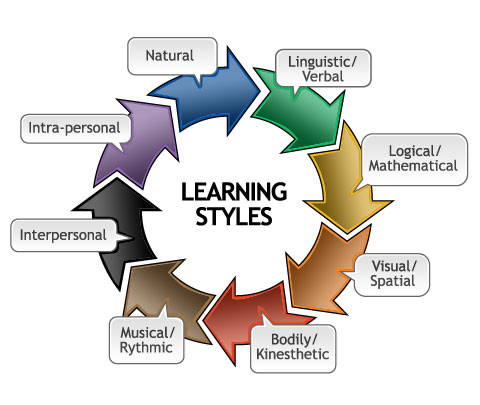
       How does a teacher enable students to learn?  How do students learn?  How do people learn?  Teachers who seek to reach their students struggle with these questions all of the time.  Experience (and research) tell us that students learn differently.  When we teach a lesson to 30 students; some get it right away, some get part of it, some don't get it at all.  How is that possible?  All of the students heard the same lesson; yet not all of the students had the same level of "Learning".

       This can lead to a difficult and awkward situation in which the teacher feels offended that the his or her efforts went to naught; and the student feels embarrassed that he or she wasn't able to learn as well as other students.  Our best teachers understand that all students don't learn in the same way and (so) they try to find different ways to present information.  They present is verbally; they present it visibly on a whiteboard on a screen; they use videos; they have students read some information; they have other students explain their thinking; and so on.  We use these different strategies to keep the class interesting and to increase student engagement.  But we also do this because we know that all students won't learn the same way and we need to find a way to present the content in different ways so that we reach all of our students.

       Einstein has been associated with the quote, "I never teach my pupils, I only provide the conditions in which they can learn."  I don't know if he really said this, but the statement may be correct.  It may be that no teacher can actually MAKE students learn.  It may be that the best we can do is to encourage students to learn.  We do this by getting to know our students very well and using this knowledge to include into our lessons those aspects that our students will find interesting.  If the students are interested than they are more apt to try their best even if the learning is difficult.

       Still, even when we understand about different learning styles and the value of good relationships with students, teachers are still faced with some topics that seem to be difficult for many students.  Once again we struggle to crack this code of learning.  How do teachers help students to understand complex topics?  Indeed, this is the art of teaching.  Some teachers are better at this than other teachers.  In my experience, the teachers who are able to reach the most students are the teachers who learn from their own experiences (including their own failures) and who seek input from other teachers via conversations with colleagues, reading journals and research, and taking courses about learning.

       Learning isn't a complete mystery--but it isn't a completely solved mystery either.  Current research about how the brain works will help to answer some of our questions.  Collaboration with professional teachers helps too.  Teaching is rewarding and (at times) frustrating.  As we learn more about the process of learning we will have more teachers with greater abilities to address the needs of more and more of our students.


Sunday, October 25, 2015

Teachers that Promote a Growth Mindset

       Every teacher has had "the phone call" with parents in which the teacher says,  Your child has the ability, she just needs to apply herself.  And then the teacher and parent (typically) talk about school rules involving turing work in on time and not talking in class.  Essentially, we are saying to the child, We're the adults.  These are the rules.  If you don't follow the rules, then you will get a bad grade.  (Of course, if the student was concerned about her grade, we wouldn't have this discussion in the first place.)

       There are a lot of "old school" problems with that phone conversation.

  1. The conversation emphasizes following rules and getting grades, and there is very little talk about actual learning.
  2. The first part of the famous teacher line is, Your child has the ability....  If the child already has the ability to do the work, then the solution to the problem should concentrate on why the child isn't doing what she is already capable of doing.
       We know that (as adults) there are lots of things that we have the ability to do and yet we don't do them--or we delay doing them for as long as possible.  Mowing the grass, doing the dishes, admitting we're wrong about something.  We have the ability to do all of these things, but we need some sort of motivation to actually take the time to do them.  Students are the same way.  The old adult (or teacher) response of "I'm the adult and I say so." may force children to do something, but it certainly doesn't motivate them to do their best.

       Growth Mindset theory tells us that when students believe that effort will lead to result, they are more likely to try new things and are less worried about making mistakes because they believe that these setbacks are just part of the process of learning new things.  I've recently been introduced to the website Mindset Kit.  This site is dedicated to helping teachers, parents, and students to understand what Growth Mindset is and how to help students to develop good, healthy Growth Mindsets.

       One simple strategy that every teacher can do is called Praise the Process.  When a student is doing some classwork, or offers an answer or an idea in class, the teacher response by praising the thinking that went into the student's effort rather responding to the correctness or the incorrectness of the student's work or response.  This simple strategy helps the student to know that their effort is important towards that eventual goal of learning the skill or concept.
  
       Mindset Kit has excellent resources for parents.  Teachers can refer parents to this site for parents who ask, "How can I help my child to do her best?"  There is a brief quiz on different statements of praise that parents can say to their children that will promote a Growth Mindset.  And there are other typical daily activities in which a parent's reaction will help their children to understand (for instance) that making mistakes is great for helping your brain to learn.

       Our best teachers already know how to encourage their students to do their best everyday--even when they don't want to.  It's the same as when a parent tries to distract their child away from something that is bothering him and towards something that he would like.  Growth Mindset strategies help teachers to do this while also helping their students to see the value in effort.

       Here's another quote I hear from parents all of the time, "I can't believe my child is doing so well in (insert course subject here) class in school.  He has never done well in that class before."  You can bet that this child has a teacher that knows how to motivate students.  Her class is interesting and students are engaged in the adventure of learning.  

       After all, they already have the ability.


Friday, October 9, 2015

Five Steps to Effective Schools


       I should have titled this post, Five Humongous Mountains to Traverse that Lead to Effective Schools.  But anyone who has ever worked within our public school system already knows that the best results only ever come from hard work and massive efforts.

       As I think about what is necessary for any school or school system to be truly effective, I keep coming down to these five propositions:

  1. The purpose of school is learning.
  2. Teachers facilitate learning.
  3. #2 (above) requires a great understanding of how students learn.
  4. Teachers plan lessons that include strategies that are effective in helping students to learn based on the students' learning styles.  (That is, based on #3 above.)
  5. Students learn.

The Purpose of School is Learning

       Some people might have trouble accepting this first proposition.  The time and effort we put into sports and activities (and worrying about grades) may certainly lead some to believe that schools have other purposes or (at least) competing purposes.  

       These other purposes are wonderful and they help to make "school" a welcoming place.  They give our students a sense of being part of the community and they teach our students that the world is full of opportunities.  Still, I believe that the true purpose of school is learning.  It's not grades, it's not sports, it's not standing-in-lines and doing-what-you're-told and putting-your-name-in-the-upper-right-hand-corner-of-the-page.  The purpose of school is learning.

Teachers Facilitate Learning

       Some teachers feel that their job is to teach and their students' jobs are to learn.  I believe that teachers' main job is to facilitate learning.  If students aren't learning, then what's the point--what are we doing day in and day out?  Teaching is (of course) a big part of the job, but if we believe that the purpose of school is learning (see #1 above), then we must believe that student learning is a crucial part of every teacher's responsibility.

       The difficulty in traversing this mountain is nestled in the fact that we can't force anybody to do anything.  If we have a student (or many students) who  refuse to accept the opportunity for learning we (as teachers) are limited in our ability to make this happen.  Yet, I would ask, What does a good parent do when her child refuses to go to sleep at bedtime?  Does she give up?  Does she allow the child to do that which she knows is not in his best interests?  No.  She reads on to my next proposition [!] .

Understanding How Students Learn

       Let's face it...the first two mountains were molehills relative to mountain #3.  In fact, I would guess that 90% of teachers are in full agreement with the first two propositions.  It is this third proposition in which our journey across toward effective schools really begins to get difficult.  Indeed, we have some great teachers who have been teaching for over ten and 20 years who still struggle with this question: How Do Students Learn?

       From my point of view, I believe that a full understanding of how students learn requires formal training (or professional development) and experience.  No new teacher is fully prepared for the job of teaching, because a new teacher cannot fully understand how students learn without having the experience of interacting with students and making instructional decisions based on those interactions.

       Resources on the science of learning are plentiful.  An excellent list of fairly recent breakthroughs in our understanding of learning can be found here.  Edutopia compiled an excellent list of brain-based learning resources recently.  Here is an excellent blog on the Science of Learning.  If you want to dive deep into this subject, the National Academies Press put out a full volume on How People Learn.  Teachers can take courses about how students learn and learning theory, and teachers can seek out information from these and other sources to build their knowledge about how students learn.  

       If teachers are to succeed in facilitating learning, they must have a working knowledge of how students learn.  Hence, my third proposition is likely to be the biggest barrier to effective schools.  It is hard for individual teachers to gain the volume of knowledge needed to be very successful on this front; and it takes to time and experience for teachers to use and to fine tune this knowledge.  I believe that most of our good teachers are perpetually improving their skills at understanding how students learn.  Teacher that do not view this skill as necessary will forever be only marginally effective and will prevent our public schools from achieving their primary objective: Learning.

Use Knowledge of How Students Learn to Plan Effective Lessons with Effective Strategies

       This step goes hand-in-hand with #3 (above).  In practice, teachers gain an understanding of their students, search for strategies and activities that they feel would be engaging for their students, and then plan their lessons to incorporate their strategies and activities.  After teaching the lesson, the teacher evaluates its effectiveness and (perhaps) makes some adjustments for the next time that this lesson is taught.

       Matching effective strategies to the learning abilities of the students is difficult, complex work.  Indeed, this is the hard part of teaching and a major stumbling block in our efforts to be as effective as we can be.  This is where the "science" of teaching appears to become much more of an "art".  It is where individual teachers interact with individual students.  This complex work (in my opinion) requires teachers to work in groups and in Professional Learning Communities (PLCs) to gain the knowledge and experiences from many professionals in order to build on each teacher's knowledge and experience.

Students Learn

       The end result successfully completing steps 1 through 4 is student learning.  For some schools, this finish line far from view and much work is needed to begin to see this end result.  For others, this goal is well within view and is getting closer each school year.

       The first step to any problem is identifying the problem and then to identify a path to solving the problem.  These five steps will definitely lead to effective schools.  Achieving these five steps requires significant effort.  We have to be a team of teachers and administrators and researchers and parents and community.  All of our schools can be effective schools.

       Our students deserve nothing less than our collective best.


Sunday, September 13, 2015

Growth Mindset Parents

       I'm not sure if the idea of mindsets has broken out of the field of education and into the general public.  I hope it has.  Imagine if the parents of all of your students had a Growth Mindset and imagine if they helped their children (your students) to have a growth mindset.  That would be truly excellent scenario for any teacher!

       If you are not currently living this this ideal world, what can a teacher do to help her students' parents to understand the value of Growth Mindsets?

       Parents often ask teachers what they can do at home to help their children.  In the middle and high school years, sometimes the parents feel that they are not capable of helping their children because the content is beyond their ability.  This is an opportunity to talk about Growth Mindset with parents.  Here are some Growth Mindset suggestions that any parent can do:


  1. Help your child to understand that effort yields results.  Read, study, practice, quiz yourself.  
  2. Tell your child that true learning takes time.  You might not "get it" the first time.
  3. Make sure your child understands that it is OK to make mistakes.  We all learn from our mistakes.
  4. Praise your child for effort; don't praise your child for "being smart".  This seems counterproductive, but kids who are rewarded for "being smart" tend to take less chances for fear of losing the "smart" label.
  5. Never, never, never, never tell your child that you were bad at math or science or anything else.  This gives children an excuse for not doing well, and it makes them believe that they have some sort of genetic deformity that predestines them to be bad at these subjects.
       So much of these suggestions go against the idea of "playing school"--looking smart, pretending to learn, memorizing stuff for the test, only caring about grades, and not caring about learning.  We want students to understand the value of hard work.  Learning faster isn't learning better.  It's OK to make mistakes.  When students hear this from their teachers and then hear it again at home, they will believe it.

       Learning isn't a competition.  Students with a fixed mindset toward any particular subject can change to a growth mindset if they have supportive teachers and parents that encourage a growth mindset.

       Learning real does take a village--a Growth Mindset village would be a pretty good place to live!


Public Schools and Choice

       Is it true that public school kids and their public school parents don't have choices?  I'm sure that I will expose my igno...

Teach100 blog