Showing posts with label collaboration. Show all posts

Saturday, November 7, 2015

Group work is a Necessity for Students

       Our school district recently had an essay contest in which students were asked to describe their Ideal Math Class.  Submissions came in from students in grades 4 to 12.  Nearly every student said that they wanted to work in groups for at least a portion of the class time.  Students want to have the opportunity to ask each other questions and to share their ideas with a small group of peers.


       In fact, the benefits of group work in the classroom are well known.  The Center for Innovation in the Research and Teaching has compiled the following list of benefits of group work:


  • Students able to take ownership of the subject matter.
  • Students develop communication and teamwork skills.
  • Content is reinforced as students work together and "teach" each other.  This improves understanding through additional discussion and explanation.
  • Content may be broken down into parts.  This allows students to tackle larger and more complex problems and assignments than they would be able to do individually.
  • Students can work together to pool their expertise, knowledge and skills.
  • Students hold one another responsible and accountable.
  • Teaches students to plan more effectively and manage their time.
  • Instructors benefit by seeing students approach problems in novel and unique ways. This can improve the instructor's perspective and make their future teaching more effective.

  • Instructors are able to have the content reinforced by giving the students ways to apply what they have learned in a collaborative setting.


       As teachers, we want students to have different learning experiences.  We know that all students do not learn best by merely listening to the teacher and taking notes.  We want students to learn how to learn and one way to do that is to give them these opportunities in the controlled atmosphere of the classroom.

       "Group work" is a general term that can be implemented in many ways in the classroom.  The Cornell University Center for Teaching Excellence has suggested many ways for teachers to incorporate group work into their lessons.  Marzano lists cooperative learning as one of his Nine High Yield Instructional Strategies.  

       Group work breaks the mold of the traditional teaching model that keeps the teacher in the front of the room all the time and the students in neat rows of desks and (usually) not talking very much.  Group work requires planning and preparation on the teacher's part.  It also requires teachers to allow some productive, learning noise to be part of their typical class on a regular basis.

       As we prepare our students for the world of work, we need to give them opportunities to work and to learn with their peers as this will (very likely) be a part of their own professional experiences as adults.


Tuesday, November 3, 2015

Crack the Code of Learning

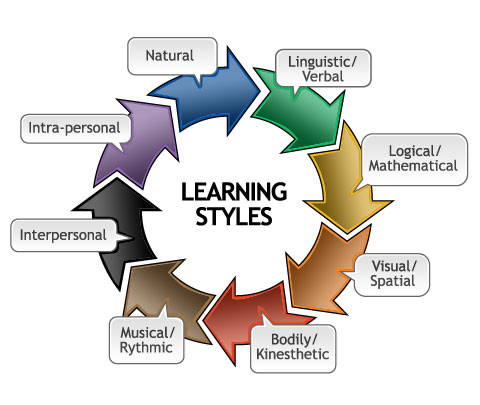
       How does a teacher enable students to learn?  How do students learn?  How do people learn?  Teachers who seek to reach their students struggle with these questions all of the time.  Experience (and research) tell us that students learn differently.  When we teach a lesson to 30 students; some get it right away, some get part of it, some don't get it at all.  How is that possible?  All of the students heard the same lesson; yet not all of the students had the same level of "Learning".

       This can lead to a difficult and awkward situation in which the teacher feels offended that the his or her efforts went to naught; and the student feels embarrassed that he or she wasn't able to learn as well as other students.  Our best teachers understand that all students don't learn in the same way and (so) they try to find different ways to present information.  They present is verbally; they present it visibly on a whiteboard on a screen; they use videos; they have students read some information; they have other students explain their thinking; and so on.  We use these different strategies to keep the class interesting and to increase student engagement.  But we also do this because we know that all students won't learn the same way and we need to find a way to present the content in different ways so that we reach all of our students.

       Einstein has been associated with the quote, "I never teach my pupils, I only provide the conditions in which they can learn."  I don't know if he really said this, but the statement may be correct.  It may be that no teacher can actually MAKE students learn.  It may be that the best we can do is to encourage students to learn.  We do this by getting to know our students very well and using this knowledge to include into our lessons those aspects that our students will find interesting.  If the students are interested than they are more apt to try their best even if the learning is difficult.

       Still, even when we understand about different learning styles and the value of good relationships with students, teachers are still faced with some topics that seem to be difficult for many students.  Once again we struggle to crack this code of learning.  How do teachers help students to understand complex topics?  Indeed, this is the art of teaching.  Some teachers are better at this than other teachers.  In my experience, the teachers who are able to reach the most students are the teachers who learn from their own experiences (including their own failures) and who seek input from other teachers via conversations with colleagues, reading journals and research, and taking courses about learning.

       Learning isn't a complete mystery--but it isn't a completely solved mystery either.  Current research about how the brain works will help to answer some of our questions.  Collaboration with professional teachers helps too.  Teaching is rewarding and (at times) frustrating.  As we learn more about the process of learning we will have more teachers with greater abilities to address the needs of more and more of our students.


Friday, November 21, 2014

This is our finest hour

    Do you remember the scene in the movie Apollo 13 when guy said "It would be the worst disaster NASA's ever experienced." and the Ed Harris character said, "With all due respect sir, I believe this is going to be our finest hour."?

       After all of the problems that had taken place over the past few days, he believed in his team at NASA and he believed that the astronauts would return safely to earth.  He knew that it would be the hearts and minds of the dedicated professionals at NASA that would ensure this outcome.

       Have you ever looked at your school or school district and said "This is our time to shine.", "We could be the best school district in the country.", "This is our finest hour."?

       Dedicated professional educators working together can do amazing things in the most difficult of situations.  We live in a world with answers to the most difficult educational questions.  Where we don't have clear answers, we have years of experience and mountains of desire to help all of our students to succeed within our staffs.  The daily decisions and the year-long goals of every teacher have the potential to achieve world-class results with every student body in every school in our country.

       Teachers live in a world that sometimes makes it easy to see the obstacles and hard to triumphs.  In the same way that students who are motivated to do well can overcome limitations in ability; so too can schools and school systems achieve great things when they believe that great things can happen.

       Of course it takes hard work and lots of collaboration.  Nothing in life worth doing comes easy.  But it can certainly happen.  Do you believe it?

       Is this your finest hour?


Wednesday, November 19, 2014

We Must Do Better - Part 3

       This post is part three of a three-part series titled We Must Do Better.

       I love public schools; and there is a lot to cheer about when it comes to the ability of public schools to prepare students for their futures.  But there are three major areas in which public schools must improve if we want to see ourselves as providing a world-class education to our nation's children.

       1) We must raise the achievement of poor children.

       2) We must increase graduation rates.

       3) We must provide continuous, high-quality professional development to our teachers.

       It isn't that there aren't other areas that can and should improve in our public schools.  But improvement in these three areas are absolutely critical if we truly want our school system to be exceptional and of the highest quality for all of our students.

----------------------------------------------------------------------------------------------------------------

We Must Do Better

Part 3 - Continuous, high-quality professional development for teachers

       The subjects of the first two parts of this series--the achievement of poor children and the need to increase high school graduation rates--dealt with issues of which many people are aware.  They are discussed in journals and newspapers often.  The subject of this part is considerably less well discussed in the mainstream press and much less well known among the general public.

       When discussing elements of the education that influence student achievement, researchers agree that the ability of the teacher is among the most important factors.  The Center for Public Education has stated:
A growing body of research shows that student achievement is more heavily influenced by teacher quality than by students’ race, class, prior academic record, or school a student attends. This effect is particularly strong among students from low-income families and African American students.
Of course, just about any person who has ever had the experience of being a student can tell you that good teachers have helped them to learn much better than poor teachers that they have had.  Hence, there is very little debate that high-quality teachers in the classroom will lead to higher student achievement.  And so the next logical question is, How do we ensure that every teacher will be highly-able and highly-effective in every classroom?


       A good place to start is the National Board of Professional Teaching Standards.  In January of 2013, the NBPTS celebrated its 100,000th National Board Certified Teacher.  After 25 years of looking at the teaching profession and looking at research on developing high-ability teachers, the NBPTS has established five core propositions that represent what "all accomplished teachers share in their expertise and dedication to advance student achievement."

       We know that the best teachers are constantly learning and constantly improving.  They build on past successes and even learn from past mistakes.  They constantly search for better ways to reach every student.

       Teachers need regular opportunities to meet with other teachers to talk about what they do with other teachers.  This professional learning community helps to build teacher ability--which, in turn, leads to higher student achievement.  Its hard work to constantly improve.  You can't merely give a teacher a book or article to read.  They have to think about students; think about classroom strategies; think about questions to ask students; anticipate answers and areas where students will struggle.  They have to try new things and make mistakes and try again and make new mistakes...and try again.

       As a nation, we need to help to provide all teachers with high-quality professional development.  And it needs to occur on a regular and ongoing basis.  It can't be one or two days a year.  It must be ongoing if we really intend to see improvement over time.  Its hard.  It costs money.  It can look different for different teachers or for schools that teach to different student communities.  As with so many things in life, professional development is understood to be necessary, but delivering it in a meaningful way is a challenge.


Thursday, November 6, 2014

Great Learners make Great Teachers


       In education, collaboration is powerful.  Teachers who seek out advice and ideas from multiple sources--within their school, within their school district, on twitter, via journal articles, etc.--probably have the most engaging classrooms.  Teaching is not a profession that expects perfection in the first year.  Indeed, it takes three to five years to develop the skills necessary to become a truly effective teacher.

       Hence, schools that allow for and encourage time for teachers to meet, are really encouraging teachers to constantly improve.  Our best teachers are always looking to improve and always searching for better ways to reach their students.  That's why teachers who love learning become great teachers.  They study how students develop ideas and they help students to build on what they know.

       The TEACH100 website has recently developed the Teach100Mentors.  They have honored me by allowing me to be part of this special group.  I am always glad to impart whatever wisdom I may have collected over the past 20+ years that I have been in education.  But I truly appreciate hearing and learning from others that are part of this group.  My learning will never end--there's so much to know.

     Similarly, our best teachers know that they have so much to gain by hearing from others.  As a younger person, I used to think that only people older and more experienced than me could help me to improve.  But today (at 50), I know that professionals of all ages help me to learn and to grow.

       Thank you to all of our teachers.  And thank you for continuing to teach each other.  It's more than important; it's necessary as we build a community of professionals who will lead the next generation of students who will (in turn) live and work in our futures.


Public Schools and Choice

       Is it true that public school kids and their public school parents don't have choices?  I'm sure that I will expose my igno...

Teach100 blog