Showing posts with label learn. Show all posts

Tuesday, May 17, 2016

High School Graduation and Beyond

       May and June is the time in the school year when we think and hear a lot of graduation.  High school and college students are graduating; completing one important life event and moving on to the next.  It's exciting, it's a happy time, it's a time to celebrate!

       As a nation, we have a lot to celebrate because we have seen a rise in the high school graduation rates over the past few years and that's a very good thing for our nation.  In the 2013 - 2014 school year, the high school graduation rate was 82.3%--an increase of over three percentage points from the 2010 - 2011 school year.

       Our society demands a workforce that is willing and able to continually learn and to use the knowledge of past learnings.  Students who succeed beyond high school are the people who understand that their ability to do a job is not dependent on the grades they earned in high school as much as it is on their desire to continually learn and to do their best.  We need thinkers and doers and believers.  While high school graduation is a big step (and an important step), it is still only one step.  Those students who were only successful in "playing school" and earning grades without any concern for learning will find it difficult to succeed in college or the workforce in places where thinking and problem solving is necessary.

       Sometimes it seems like we put too much on our schools.  We teach courses, but we also teach how to work together, how to get along with others, how to learn, how to struggle, how to accept responsibility.  No one gets a grade for these things; no one is denied a diploma for not attaining these traits.  But those that lack the ability to do these things often struggle to live in a society that doesn't always give you second chances; a place where breaking the rules have real consequences and no one is there to remind you what to do and when to do it.

       We all get one chance to make the most of our 13 years of K-12 education.  After that, the number of opportunities rise with the number of decisions.  It's not enough to do what you're told; just ask those that barely graduated high school.


Saturday, April 9, 2016

We Don't Want Teachers - We Want Effective Teachers


       The United States has over three million teachers.

       Public, private, elementary, secondary...approximate 1% of the population of the United States are teachers.  With fifty million students, we need a lot of teachers.

       And considering the importance of education, we (particularly) need good, effective teachers.  We need teachers who do their best to understand how their students think and how they learn.  We need teachers who understand the content that they teach, but mostly we need teachers who want to work with children; we need teachers who like to work with children.

       Over my career, I've noticed a subtle difference between wanting to be a teacher and wanting to be an effective teacher.  Our best teachers are also good learners.  They study their craft; they learn from other teachers; they seek information about adolescents and how the brain works.  No one is born with this knowledge; it takes time and effort to gain this level of expertise.  And most people never know the hard work that went into making these teachers so effective.

       In the book Linking Teacher Evaluation and Student Learning, authors Pamela Tucker and James Stronge give the following list of attributes of effective teachers:

  • Have formal teacher preparation training.
  • Hold certification of some kind (standard, alternative, or provisional) and are certified within their fields.
  • Have taught for at least three years.
  • Are caring, fair, and respectful.
  • Hold high expectations for themselves and their students.
  • Dedicate extra time to instructional preparation and reflection.
  • Maximize instructional time via effective classroom management and organization.
  • Enhance instruction by varying instructional strategies, activities, and assignments.
  • Present content to students in a meaningful way that fosters understanding.
  • Monitor students' learning by utilizing pre- and postassessments, providing timely and informative feedback, and reteaching material to students who did not achieve mastery.
  • Demonstrate effectiveness with the full range of student abilities in their classrooms, regardless of the academic diversity of the students.
  •        Everyone wants their children to have effective, caring teachers.  Class time is valuable learning time and effective teachers make the best use of this time.

           Is your child's teacher effective?


    Tuesday, November 3, 2015

    Crack the Code of Learning

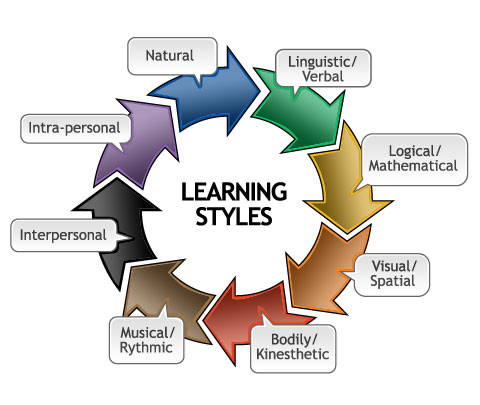
           How does a teacher enable students to learn?  How do students learn?  How do people learn?  Teachers who seek to reach their students struggle with these questions all of the time.  Experience (and research) tell us that students learn differently.  When we teach a lesson to 30 students; some get it right away, some get part of it, some don't get it at all.  How is that possible?  All of the students heard the same lesson; yet not all of the students had the same level of "Learning".

           This can lead to a difficult and awkward situation in which the teacher feels offended that the his or her efforts went to naught; and the student feels embarrassed that he or she wasn't able to learn as well as other students.  Our best teachers understand that all students don't learn in the same way and (so) they try to find different ways to present information.  They present is verbally; they present it visibly on a whiteboard on a screen; they use videos; they have students read some information; they have other students explain their thinking; and so on.  We use these different strategies to keep the class interesting and to increase student engagement.  But we also do this because we know that all students won't learn the same way and we need to find a way to present the content in different ways so that we reach all of our students.

           Einstein has been associated with the quote, "I never teach my pupils, I only provide the conditions in which they can learn."  I don't know if he really said this, but the statement may be correct.  It may be that no teacher can actually MAKE students learn.  It may be that the best we can do is to encourage students to learn.  We do this by getting to know our students very well and using this knowledge to include into our lessons those aspects that our students will find interesting.  If the students are interested than they are more apt to try their best even if the learning is difficult.

           Still, even when we understand about different learning styles and the value of good relationships with students, teachers are still faced with some topics that seem to be difficult for many students.  Once again we struggle to crack this code of learning.  How do teachers help students to understand complex topics?  Indeed, this is the art of teaching.  Some teachers are better at this than other teachers.  In my experience, the teachers who are able to reach the most students are the teachers who learn from their own experiences (including their own failures) and who seek input from other teachers via conversations with colleagues, reading journals and research, and taking courses about learning.

           Learning isn't a complete mystery--but it isn't a completely solved mystery either.  Current research about how the brain works will help to answer some of our questions.  Collaboration with professional teachers helps too.  Teaching is rewarding and (at times) frustrating.  As we learn more about the process of learning we will have more teachers with greater abilities to address the needs of more and more of our students.


    Public Schools and Choice

           Is it true that public school kids and their public school parents don't have choices?  I'm sure that I will expose my igno...

    Teach100 blog