Showing posts with label understanding. Show all posts

Sunday, January 29, 2017

Flaws in the Letter Grade System

       What does it mean when you get an A in a class?  I'm not asking, "What is it supposed to mean?"  I'm asking, "What does it actually mean?"  Does the "A" in Chemistry mean the same as the "A" in History?  Does the "A" in Physical Education mean the same as the "A" in English?  What does a "B" mean; what does a "D" mean?  Did you ever get an "A" in a class--middle school, high school, or college--and then brag to your friends that you didn't learn a thing?  Did you ever get an "A" or a "B" in a class and fail the final exam?  Did you know someone who consistently earned "A's" and "B's" in math classes and couldn't score over 500 on the math portion of the SATs?

       Howard Pitler list four major problems with our current system of using letter grades:
  1. There is no consistency from teacher to teacher or from school to school.  Schools and school districts may have different policies about grading; and these policies aren't necessarily the same from school to school or from school district to school district.
  2. Teachers decide the factors that go into a course grade and they decide the weighting for each of these factors.  So called "hard teachers" and "easy teachers" is actually a real thing when it comes to grading in the letter grading system.  Some teachers are more demanding than others; some teachers award "points" for non-academic behaviors such as showing up to class on time or not using all of your allotted bathroom passes. Merely completing homework can be part of the grade regardless of the quality or the "learning" that may have occurred while completing the homework.
  3. Grades discourage students from learning.  Pitler quotes Alfie Kohn who says, 

 “Kids who are graded—and have been encouraged to try to improve their grades—tend to lose interest in the learning itself, avoid challenging tasks whenever possible (in order to maximize the chance of getting an A), and think less deeply than kids who aren’t graded.” The target becomes the grade rather than the learning. Students take less challenging classes because they want to “protect” their GPAs.

 4.  Lastly, true learning often requires multiple attempts in which ultimate success doesn't happen until the end of the process.  When students are more concerned about "getting grades", they tend to try less, they are less willing to go through the necessary struggle needed to achieve the ultimate level of true learning.

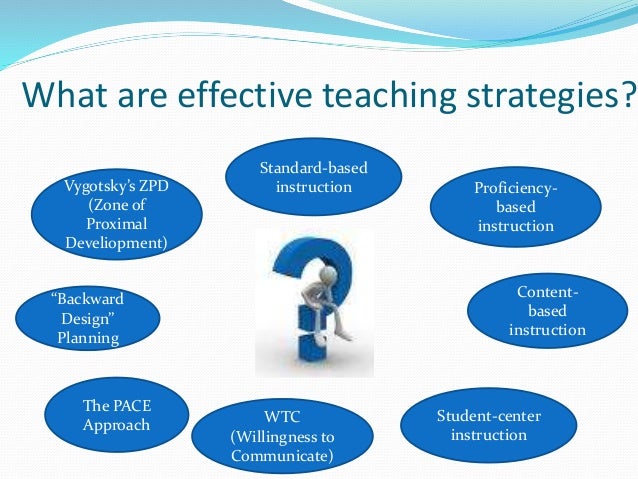
       There is another way to measure student learning and that is to compare their learning against standards (or proficiencies or competencies) that everyone can agree on.  Proficiency-based Learning is not new.  In fact it is growing in popularity among educators who want students and parents to have a better understanding of the actual learning that is taking place in our schools.  One of the hallmarks of proficiency-based learning is the idea that students need time to re-visit topics and ideas in their journey toward true learning and true understanding.  Hence, assessments are used to help students and parents to "see" the learning that occurred and to recognize the learning that still needs to happen.  When students are re-assessed, grades aren't averaged.  Instead, higher grades at a later time in the learning process are recognized as the actual level of learning that occurred.  Therefore, students are encouraged to try harder.

       Proficiency-based Learning should also allow students to work at their own pace.  Ideally, they should not move on to something new until they have a good understanding of the current lesson or idea or standard.  Also, students may have opportunities to demonstrate their understanding in multiple ways; not always via a summative test--however these tests can be still be used.

       Schools are for learning, not for "getting grades".  And we need to have a better system for identifying the learning that takes place.  Too many students are graduating from high school without the skills to hold a job or complete college or make good decisions for themselves.  We need to do better for our students so that they will have better options for their futures.


Sunday, January 22, 2017

When Learning Doesn't Happen, Who's Fault Is It?

       When something goes wrong, is it your fault or is it someone else's fault?

       You're late to work, you fail a class, you break a shoelace, you gain weight, you run out of milk.  Small things and big things; they happen every day.  Are you the kind of person that says, "It's my fault." most of the time when things go wrong; or are you the kind of person who says (essentially), "It's someone else's fault." most of the time when things go wrong.


       Maybe this isn't a fair question.  Certainly there are times when it is my fault and times when it is someone else's fault.  You can't answer such an abstract question with a definitive answer one way or the other.  Well, OK.  Maybe so.  But surely you know someone who almost never takes responsibility for anything that happens in their life.  When they are late to work; it's because of slow drivers and red traffic lights.  When they gain weight; it's because other people are constantly offering them sweets.  When they lose a game of cards; it's because the cards weren't shuffled well.

       When middle and high school students struggle to learn in school; Who's fault is it?  Who is ultimately responsible for their learning?  Who bears the greatest ownership for whether or not they learn math and English and science?  There is no doubt that this is a controversial question.  This is a question in which any answer would have troublesome consequences.  Another way to ask this question is, "Do we blame the schools, or blame the students?"  Unfair you say?  Maybe.  Probably.  But this is a question that educators get often.  I am going to begin by looking at the extreme answers.

1) It's the student's fault

       This view says that students bear the ultimate responsibility for their own learning.  The teacher's job is to teach.  It is the student's job to learn.  If the student isn't learning, they should seek extra help; they should ask questions; they should try harder.  Middle and high school children aren't babies; they understand how school "works".  They should advocate for themselves.  It's their life.

       The problem with this view, in my opinion, is the question of age-appropriate responsibility that is given to students.  My father used to say that the trouble with kids is that they act their age.  In addition to learning math and English and science, students are also learning how to be an adult.  They are learning about making good decisions.  Teenagers need structure; they need guidelines.  Sometimes a student is struggling in a subject and doesn't know what questions to ask.  Sometimes students are afraid to speak up in class in front of their peers.  Sometimes students don't realize the ramifications of not learning.  While, of course we want our students to be responsible for their own learning, we can't expect an 11 year-old 6th graders nor a 15 year-old 10th grader to act like a fully responsible adult at all times.

2) It's the teacher's fault

       This view says, if students aren't learning, then the teacher isn't doing his/her job.  Teachers are trained to teach and to help students to learn.  The teachers went to college to learn how to teach and they spent two or more years as full-time, untenured teachers to learn "in the field".  If students aren't learning, then it's the teachers fault.

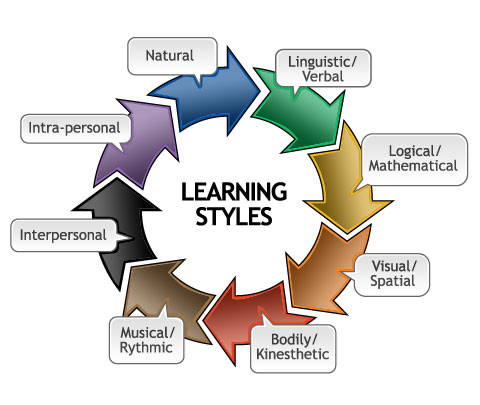
       The problem with this view, (again) in my opinion, is the idea that all students learn in the same way; or that teachers should be experts in all student learning styles after a couple of years of practice.  In fact, students are very, very different in their learning styles.  Some learn from only listening, while others have to listen and practice, while others have to hear it in a different way before they "get it".  Middle and high school students have varied past experiences in their education and teachers are always faced with students of varying abilities.  Some students don't speak up much and teachers have to find a way to understand how well they are catching on to the learning objectives without hearing (verbally) directly from the student.  And some students are burdened with problems at home that have priority over their education in the student's mind.


       So who's fault is it?  If we can't say it's the student's fault and we can't say it's the teachers fault (and we still have learning that isn't happening) then who's fault is it?

       We live in a world that loves to point fingers and loves to have clear, simple "right/wrong" answers.  We want to have a villain that we can point to; someone to blame; someone to yell at.  Everything is a soccer game with winners and losers.  We don't like complicated things, complex things.  These are too hard to understand and too hard to fight.

       Who's fault is it?  I think it depends on the person that you are.  If you are the type to take responsibility for your actions, then you probably lean toward the side that says students should be responsible for their own learning.  If you are the type to blame others and nothing is ever your fault, then you probably lean toward the side that says the teachers and the schools are to blame.  As for me--and as an educator--I take a middle-of-the-road view.  Sure we want students to be responsible, but teachers should do everything that they can to help students to learn.  It's not enough to just "teach".  If students aren't learning, teachers and schools should ask why.  They should take a hard look at these students and provide whatever help they can.

       I believe that our public schools are constantly concerned about students who struggle to learn.  Most of time, these students get the help that they need.  But sometimes they don't.  In the end, as with so many things in life, I believe that we have to work together to help our most vulnerable students to get the help that they need.  Learning requires a little struggling for everyone.  For those who can't meet this struggle, we should all be there to help them.


Friday, December 2, 2016

Changing Math Attitudes

       I'm borrowing the title of a Facebook group to use as the title for this post.  The group called Changing Math Attitudes is composed of math teachers and other educators and (I suppose) other folks that seek to share experiences and expertise in the effort of helping students (and adults) to see mathematics as something beautiful, sensible, and doable by everyone.

       The first step in improving abilities in anything is to believe that you can do it.  We want students to understand that mathematics is not a secret code to which only a privileged few have access.  There is no "math brain".  Everyone can understand mathematics and it will take a group effort by many people in many circumstances to effectively change the view of mathematics that so many people hold.  This is the view that says "I'm not good at math."  (And so many people freely say this out loud when they would never say that they can't read or that they are bad at Science or History.

       I especially enjoy reading the posts from this group because they are generally politically agnostic.  It isn't a group that is pushing a political agenda one way or the other.  And this makes sense too because the "I'm bad at math." attitude is not coming from one group of people who members of any single political persuasion.  All sorts of people hold this view and so we are talking to all people when we say that we want to change attitudes about mathematics.

       Any math teacher will tell you that most of the students in their classes that struggle to understand the math would do so much better if they held the view that effort would lead to success; if they believed that getting the wrong answer doesn't mean that you are "dumb" but instead means that you've had a learning experience that can lead to better understanding.  If students can escape the Fixed Mindset that says "No amount of effort will lead to success.", then we know that we can help them to get to a point of better understanding.

       Attitude is everything.  Attitude determines the effort that students will put forth.  Attitude allows for a second try and a third try and a fourth try; or attitude gives permission to not try at all.  Attitude is the force that is stronger than caring adults.  Attitude shapes our views and ultimately shapes our destiny.  When our attitude tells us to give it a try, we are on our way to a world of opportunities.


Tuesday, November 1, 2016

Math Problems with Lots of Paths from A to B: Open Middle

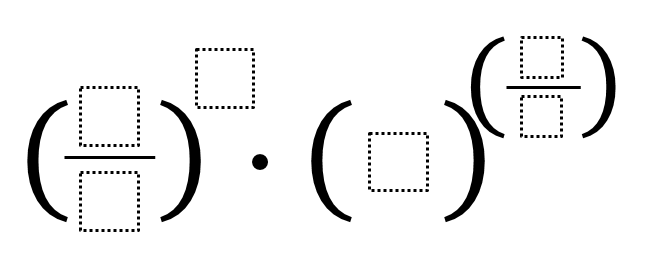
Directions:  Fill in the boxes using the whole numbers 1 through 6 to make the largest (or smallest) possible number. Use each digit at most once.

       Who ever said that there is only one way to get the answer in a math problem?  

       OK...(unfortunately) lots of people say this.  But, guess what, the best math questions don't have just one way to be solved.  Because the best math problems don't have the simplistic goal of merely following the steps you are told to follow and getting an answer.  The best math problems have much broader goals: Thinking, Reasoning, Problem Solving, Perseverance

       I've recently been introduced to a great source of these math problems called Open Middle.  Open Middle math problems start the same and end the same (with one particular correct answer), but they have an "open middle"; there are many ways to approach and to ultimately solve the problem.  The above problem is a sample of an Open Middle problem.  

       Open Middle has math problems for grades Kindergarten to high school mathematics.  They are great for getting students to use recently learned math in novel ways.  And when students have a chance to talk about the way they went about solving the problem, they gain an ever stronger grasp of the mathematics by hearing from their peers--a strategy known as Number Talks.  

       Students learn that it is OK to think about solutions differently.  One student may have a very complicated solution that makes sense to her.  Another may have a clever solution that no one ever thought of--not even the teacher!  Learning from each other is a great way to experience math and to understand that math is vibrant and alive with many possibilities.

       Students may think of Open Middle problems as puzzles, but listen to the math vocabulary that they use when the work on their solutions.  Students who are bored with the typical math class are excited to spend lots of time working on Open Middle problems because they are relatively easy to start.  Every attempt at an Open Middle problem helps students to learn what to do and (perhaps) what not to do.  They don't view wrong answers as failures but instead as a closer step toward the final answer.

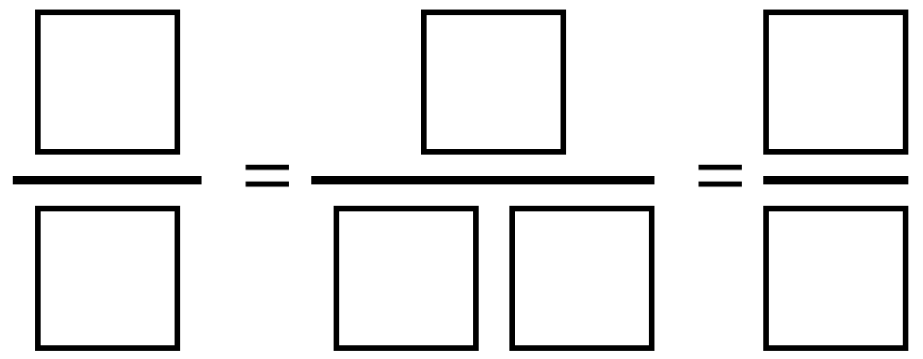
Directions: Using the whole numbers 1 through 9 no more than once, create 3 equivalent fractions.


Saturday, September 24, 2016

I Don't Have a Reading Brain

       I don't have a reading brain.  


       I'm 52 years old and I've never been good at reading.  In fact, I'm constantly telling my children that I was never a good reader so that they don't feel so bad about being bad at reading themselves.  They are always saying, "Why do we have to learn to read anyway?" and even though I basically agree with them, I try to think of times when reading is important such as when they get a text from their friends.

       I really don't feel too bad about being a bad reader because just about everyone I know is bad at reading.  In fact, we are always joking about being bad at reading.  My sister-in-law is a middle school English teacher and every time we go to a restaurant we always make her read the menu to us.  We just tell the waitress to hand the menus over to her and most of the time the waitress sort of laughs in agreement and says something like, "I get it.  I'm a terrible reader too."  And we all have a big laugh.

       People who can read must be really smart.  Everyone knows this.  In school, we always knew who the smartest kids were because they were able to read.  When teachers told me to read, I just tried to memorize the facts that I needed to know to answer the questions at the end of the chapter.  That's what I tell my own children to do because I really can't help them with their reading and they know that I can't really read very well anyway.

       High school reading was the worst.  Seriously, how are normal people supposed to memorize all of those words AND their meanings.  It really isn't humanly possible, except for people that have reading brains--I guess.  

----------------------------------------------------------------

       Does this sound familiar to you?  Are you constantly telling your kids and your friends that you're terrible at reading?  Do you get tense when have to read something?  Do you have reading anxiety?


Who would brag about not being able to read?  Who would ever suggest to their very own children that reading isn't important?  It's absurd.  No adult or parent would openly laugh about not being able to read.

       But, sadly, adults and parents often say these things about mathematics.  Some people actually believe that there is such a thing as a "math brain".  Many people view people who are good at math as being "smart".  And I have often been in a restaurant when my friends and relatives have passed the check to me to figure out the tip--all the while laughing and being very open about their inability to do math.

       What sort of message are we sending to our children when so many adults joke about not being able to do math?  Too many children feel that they are given a "pass" from the adults in their lives to be poor at math.  This leads to a lack of effort in the classroom which leads to a lack of understanding.  Every math teacher has (at some point in their career) said to a parent, "Your child could do so much better in mathematics if he/she put in the effort."

       This is something that we can fix.  This is something that every parent can do to help their child to do better in math.  Stop saying that you were never good at math.  Make sure that your children understand that they can do anything and they can learn anything; but they have to try.  Learning isn't always easy.  No one expects you to "get it" the first time.  It takes effort and mistakes and try, try again.

       Learning reading and mathematics isn't all that different.  The difference is our attitudes toward them.

Tuesday, May 17, 2016

High School Graduation and Beyond

       May and June is the time in the school year when we think and hear a lot of graduation.  High school and college students are graduating; completing one important life event and moving on to the next.  It's exciting, it's a happy time, it's a time to celebrate!

       As a nation, we have a lot to celebrate because we have seen a rise in the high school graduation rates over the past few years and that's a very good thing for our nation.  In the 2013 - 2014 school year, the high school graduation rate was 82.3%--an increase of over three percentage points from the 2010 - 2011 school year.

       Our society demands a workforce that is willing and able to continually learn and to use the knowledge of past learnings.  Students who succeed beyond high school are the people who understand that their ability to do a job is not dependent on the grades they earned in high school as much as it is on their desire to continually learn and to do their best.  We need thinkers and doers and believers.  While high school graduation is a big step (and an important step), it is still only one step.  Those students who were only successful in "playing school" and earning grades without any concern for learning will find it difficult to succeed in college or the workforce in places where thinking and problem solving is necessary.

       Sometimes it seems like we put too much on our schools.  We teach courses, but we also teach how to work together, how to get along with others, how to learn, how to struggle, how to accept responsibility.  No one gets a grade for these things; no one is denied a diploma for not attaining these traits.  But those that lack the ability to do these things often struggle to live in a society that doesn't always give you second chances; a place where breaking the rules have real consequences and no one is there to remind you what to do and when to do it.

       We all get one chance to make the most of our 13 years of K-12 education.  After that, the number of opportunities rise with the number of decisions.  It's not enough to do what you're told; just ask those that barely graduated high school.


Friday, November 27, 2015

Tinkering Around the Edges Isn't Sufficient for Significant Improvement in Our Schools

       There's a joke among some educators that says if a child doesn't understand the lesson, then we will just say it again slower and louder.

       It's not a funny joke.  In fact its really sort of a put down to teachers who struggle to help students to learn.  If the teacher presented the lesson in the best way she knows how, then she may not know of another way to present the lesson and (so) when a students doesn't get it, she just repeats the same thing (sometimes slower and louder).  This usually doesn't help the student to learn any better than the first time, but it does lead to frustration for both the student and the teacher.

       These situations are far too common in our nation's classrooms today.  Improving these situations is haphazard at best.  Sometimes some students try harder; sometimes some teachers try different strategies.  But most of the time, instructional change is small (or absent) and academic results remain the same.

       Still, this doesn't happen from a lack of trying.  Plenty of teachers (most teachers) try very hard to learn more and to improve every year.  They read books; they attend conferences; they take classes; they join Professional Learning Communities (PLCs) within their school or school system or online.

       Change is hard, and improving academic results for student groups that have historically struggled in the traditional school system is a complex problem.  It isn't the sort of problem that can be solved by tinkering around the edges; and by not causing some level of discomfort for people who insist that everything is fine the way it is now.

       I believe that we have the knowledge and the research to know what must be done to improve education outcomes for the students that we aren't reaching today.  These strategies and policies are available for everyone to see.  A short list of books from a variety of sources provides the answers we seek.  Here are some of them:

  1.  The Results Fieldbook: Practical Strategies from Dramatically Improved Schools, by Mike Schmoker
  2.  Whatever It Takes: How Professional Learning Communities Respond When Kids Don't Learn, by Richard DuFour
  3.  School Leadership that Works: From Research to Results, by Robert Marzano
  4.  Teacher Leadership that Strengthens Professional Practice, by Charlotte Danielson
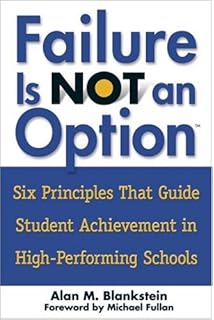
  5.  Failure is Not an Option: Six Principles that Guide Student Achievement in High-Performing Schools, by Alan Blankstein

       However, I also believe that the change we need involves the hard work of constant improvement.  It requires schools to dig deep into the standards and objectives that are taught everyday and to ask questions such as, 
  • What is the best way to teach this objective to students?
  • What strategies should we use?
  • What activities are best?
  • How do we reach a classful of students with different learning styles?
  • How do we assess student understanding?
  • How do we assess the success of the decisions we made for this lesson?
       This is complex work and it requires effective collaboration among teachers--no one should have to do this on their own.  If we are successful, it will take a generation to complete this transformation of our schools.  During that time, we will have to contend with a lot of resistance from educators and non-educators alike.  However, this is an effort that is worth the years of hard work.  This is an effort that today's teachers can look back on and be proud to say, "I was there when the hard work was done."

       Tinkering around the edges isn't enough anymore.  It's time to do what we tell our students to do--Work hard and you will see the rewards in your future.

Tuesday, November 17, 2015

It's Time for Our Schools to Leave the 20th Century

       You know the old joke about Rip Van Winkle and schools?  He falls asleep for a hundred years and upon waking up he sees everything he used to know has changed dramatically.  The houses look so different.  The clothes that people wear are very different.  And the cars...wow.  Then he finds a school and walks inside.  He goes into a classroom and he is comforted to see that schools and classrooms haven't changed a bit.

       We educators don't think this is very funny.

       In fact, it is embarrassing for us carry out the important work of education today in the same way that we did this work 50 or 30 or even 20 years ago.  Doing so ignores the research about learning that has been done over the past few decades.  It ignores the research about how the brain reacts to the stimuli that occurs in classrooms.

       For instance, we know that most students can't learn to the best of their ability strictly by sitting in class for a whole class period and listening to the teacher talking (and taking notes).  We know that students are more engaged when they have the opportunity to participate verbally and when they have a chance to get up out of their seat and participate physically in some way.  We have technology that we didn't have (even 20) years ago that can be tapped to help our students to prepare for the information world that they will enter after high school.

        We are not preparing our students by merely teaching them to read, write, and do arithmetic.  These things are important, but they are not enough.  Memorizing facts long enough to get a good test grade will not prepare our children for the world that they will inherit.  Our schools have the responsibility to mirror the society that our students will experience.

       Twentieth Century schooling is not what our students need.  Most of them have never even lived in the 20th century.  I believe that our current education leaders understand this need for our schools to change.  Part of the responsibility of our public schools is to explain this need for change to our parents and to our communities.  Staying the same is easy; change is hard.  Schools often face opposition from communities who tend to say that "The old way was good enough for me and it's good enough for our kids."  We need to make the case against this sort of thinking.

       Someone needs to speak for our students and for their futures.


Tuesday, November 3, 2015

Crack the Code of Learning

       How does a teacher enable students to learn?  How do students learn?  How do people learn?  Teachers who seek to reach their students struggle with these questions all of the time.  Experience (and research) tell us that students learn differently.  When we teach a lesson to 30 students; some get it right away, some get part of it, some don't get it at all.  How is that possible?  All of the students heard the same lesson; yet not all of the students had the same level of "Learning".

       This can lead to a difficult and awkward situation in which the teacher feels offended that the his or her efforts went to naught; and the student feels embarrassed that he or she wasn't able to learn as well as other students.  Our best teachers understand that all students don't learn in the same way and (so) they try to find different ways to present information.  They present is verbally; they present it visibly on a whiteboard on a screen; they use videos; they have students read some information; they have other students explain their thinking; and so on.  We use these different strategies to keep the class interesting and to increase student engagement.  But we also do this because we know that all students won't learn the same way and we need to find a way to present the content in different ways so that we reach all of our students.

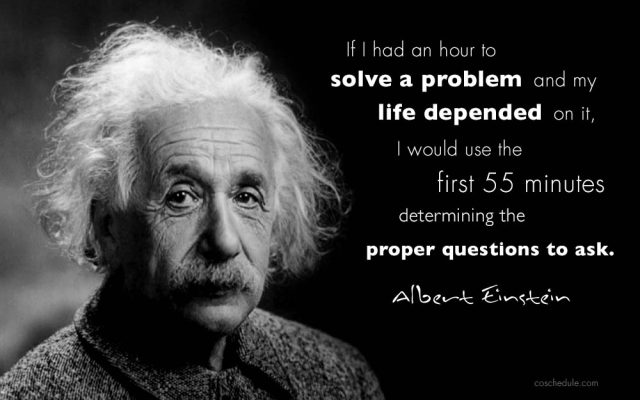
       Einstein has been associated with the quote, "I never teach my pupils, I only provide the conditions in which they can learn."  I don't know if he really said this, but the statement may be correct.  It may be that no teacher can actually MAKE students learn.  It may be that the best we can do is to encourage students to learn.  We do this by getting to know our students very well and using this knowledge to include into our lessons those aspects that our students will find interesting.  If the students are interested than they are more apt to try their best even if the learning is difficult.

       Still, even when we understand about different learning styles and the value of good relationships with students, teachers are still faced with some topics that seem to be difficult for many students.  Once again we struggle to crack this code of learning.  How do teachers help students to understand complex topics?  Indeed, this is the art of teaching.  Some teachers are better at this than other teachers.  In my experience, the teachers who are able to reach the most students are the teachers who learn from their own experiences (including their own failures) and who seek input from other teachers via conversations with colleagues, reading journals and research, and taking courses about learning.

       Learning isn't a complete mystery--but it isn't a completely solved mystery either.  Current research about how the brain works will help to answer some of our questions.  Collaboration with professional teachers helps too.  Teaching is rewarding and (at times) frustrating.  As we learn more about the process of learning we will have more teachers with greater abilities to address the needs of more and more of our students.


Saturday, October 17, 2015

Learning is a Social Activity

       Learning is a social activity.

       A quick search of respected sources such as General Psychology, Psychology Today (article by Dr. Matthew J. Edlund, and one of my favorite education writers Annie Murphy Paul will help all of us to understand that the best learning requires active participation by the learner.  (View an excellent talk by Dr. Paul here.) The old days of "sit and get", don't-talk-in-class, teacher-in-the-front-of-the-room-doing-all-of-the-talking have been shown to be effective for an incredibly small percentage of our students.


     The problem is that most of our current teachers grew up in a school setting in which less student talk was the norm.  The teacher was the sole source of knowledge in the classroom and the students were discouraged from sharing their thoughts and ideas with each other.  Hence, many current classrooms engage in this same classroom structure that existed 20 and 40 and 60 years ago.  "It was good enough for me, and so it will be good enough for my students" as the thinking goes.

       This is a problem because the old model of presenting information to students and basically asking them to memorize it isn't enough for the workforce of today--and it isn't completely necessary in the age of the internet.  We are able to obtain facts very easily now.  The challenge to our teachers is to help our students to use that information to make connections to other information; to build things; to create things; and to solve problems.

       This requires our teachers to have a knowledge of how students learn and to use that knowledge to create lessons that incorporate the strategies that are most effective in helping our students to learn.
       This also requires teachers to be comfortable with students talking to each other in class; students getting out of their seats to share information and ideas with other students; and students making mistakes (and learning from these mistakes) during class time.  Some teachers struggle with this "active learning" approach because of the fear that such a classroom atmosphere would be difficult to manage.  Such an environment in the classroom requires planning and structure and good communication between the teacher and the students.  Students need to understand the objectives of the activities and they need to be accountable for doing their part.  Yet, this is the classroom that most students will tell you that they want.  And they want it because they struggle with learning through a strict sit-and-listen-and-take-notes sort of classroom.

       Learning is a social activity no matter where the learning takes place.  Adults who learn via asking questions and reading information and watching others and making mistakes and asking more questions, etc.; should not expect students to learn any differently.

       And if students aren't learning, then what's the point of school?


Friday, October 9, 2015

Five Steps to Effective Schools


       I should have titled this post, Five Humongous Mountains to Traverse that Lead to Effective Schools.  But anyone who has ever worked within our public school system already knows that the best results only ever come from hard work and massive efforts.

       As I think about what is necessary for any school or school system to be truly effective, I keep coming down to these five propositions:

  1. The purpose of school is learning.
  2. Teachers facilitate learning.
  3. #2 (above) requires a great understanding of how students learn.
  4. Teachers plan lessons that include strategies that are effective in helping students to learn based on the students' learning styles.  (That is, based on #3 above.)
  5. Students learn.

The Purpose of School is Learning

       Some people might have trouble accepting this first proposition.  The time and effort we put into sports and activities (and worrying about grades) may certainly lead some to believe that schools have other purposes or (at least) competing purposes.  

       These other purposes are wonderful and they help to make "school" a welcoming place.  They give our students a sense of being part of the community and they teach our students that the world is full of opportunities.  Still, I believe that the true purpose of school is learning.  It's not grades, it's not sports, it's not standing-in-lines and doing-what-you're-told and putting-your-name-in-the-upper-right-hand-corner-of-the-page.  The purpose of school is learning.

Teachers Facilitate Learning

       Some teachers feel that their job is to teach and their students' jobs are to learn.  I believe that teachers' main job is to facilitate learning.  If students aren't learning, then what's the point--what are we doing day in and day out?  Teaching is (of course) a big part of the job, but if we believe that the purpose of school is learning (see #1 above), then we must believe that student learning is a crucial part of every teacher's responsibility.

       The difficulty in traversing this mountain is nestled in the fact that we can't force anybody to do anything.  If we have a student (or many students) who  refuse to accept the opportunity for learning we (as teachers) are limited in our ability to make this happen.  Yet, I would ask, What does a good parent do when her child refuses to go to sleep at bedtime?  Does she give up?  Does she allow the child to do that which she knows is not in his best interests?  No.  She reads on to my next proposition [!] .

Understanding How Students Learn

       Let's face it...the first two mountains were molehills relative to mountain #3.  In fact, I would guess that 90% of teachers are in full agreement with the first two propositions.  It is this third proposition in which our journey across toward effective schools really begins to get difficult.  Indeed, we have some great teachers who have been teaching for over ten and 20 years who still struggle with this question: How Do Students Learn?

       From my point of view, I believe that a full understanding of how students learn requires formal training (or professional development) and experience.  No new teacher is fully prepared for the job of teaching, because a new teacher cannot fully understand how students learn without having the experience of interacting with students and making instructional decisions based on those interactions.

       Resources on the science of learning are plentiful.  An excellent list of fairly recent breakthroughs in our understanding of learning can be found here.  Edutopia compiled an excellent list of brain-based learning resources recently.  Here is an excellent blog on the Science of Learning.  If you want to dive deep into this subject, the National Academies Press put out a full volume on How People Learn.  Teachers can take courses about how students learn and learning theory, and teachers can seek out information from these and other sources to build their knowledge about how students learn.  

       If teachers are to succeed in facilitating learning, they must have a working knowledge of how students learn.  Hence, my third proposition is likely to be the biggest barrier to effective schools.  It is hard for individual teachers to gain the volume of knowledge needed to be very successful on this front; and it takes to time and experience for teachers to use and to fine tune this knowledge.  I believe that most of our good teachers are perpetually improving their skills at understanding how students learn.  Teacher that do not view this skill as necessary will forever be only marginally effective and will prevent our public schools from achieving their primary objective: Learning.

Use Knowledge of How Students Learn to Plan Effective Lessons with Effective Strategies

       This step goes hand-in-hand with #3 (above).  In practice, teachers gain an understanding of their students, search for strategies and activities that they feel would be engaging for their students, and then plan their lessons to incorporate their strategies and activities.  After teaching the lesson, the teacher evaluates its effectiveness and (perhaps) makes some adjustments for the next time that this lesson is taught.

       Matching effective strategies to the learning abilities of the students is difficult, complex work.  Indeed, this is the hard part of teaching and a major stumbling block in our efforts to be as effective as we can be.  This is where the "science" of teaching appears to become much more of an "art".  It is where individual teachers interact with individual students.  This complex work (in my opinion) requires teachers to work in groups and in Professional Learning Communities (PLCs) to gain the knowledge and experiences from many professionals in order to build on each teacher's knowledge and experience.

Students Learn

       The end result successfully completing steps 1 through 4 is student learning.  For some schools, this finish line far from view and much work is needed to begin to see this end result.  For others, this goal is well within view and is getting closer each school year.

       The first step to any problem is identifying the problem and then to identify a path to solving the problem.  These five steps will definitely lead to effective schools.  Achieving these five steps requires significant effort.  We have to be a team of teachers and administrators and researchers and parents and community.  All of our schools can be effective schools.

       Our students deserve nothing less than our collective best.


Tuesday, October 6, 2015

Teaching Mathematics For Understanding

       There has been a lot of debate in the U.S. about our student's ability in mathematics for the past decades--certainly for my entire career (which started in the 1980's). How do we compare with students in other countries? (see PISA results - 36th out of 70 for mathematics in 2012)  How do we compare with each other state-by-state?  (see NAEP results from 2013)

       What are the causes for these discrepancies?  What do other countries do differently compared to what we do in the U.S.?

       Ask a hundred people and (it seems) you would get a hundred answers.  Everything from "nothing's wrong" to "the system is broken".  Everyone has their point of view; there are experts on both sides of the every argument.

       Recently, I've read two sources on this issue that make a lot of sense to me.  The first is from Phil Daro.  He makes the point that many mathematics teachers in America have the goal of teaching students how to get the right answer.  In other countries the mathematics teachers have the goal of teaching students how to understand particular mathematical concepts.

       This makes sense to me because I've been that mathematics teacher and I've seen that mathematics teacher among my colleagues.  While I believe that our teachers want their students to understand and to gain a conceptual understanding, they are often fighting a battle against an accountability system that seems to reward "correct answers" more than awarding "correct understanding".  (Although the new PARCC and Smarter Balance assessments may have found a balance between these two competing forces.)  We are also fighting a culture of students who avoid the struggles needed understand these concepts and (instead) seek shortcuts for getting the right answer.

       The second source is an article by the education writer Amanda Ripley.  She took the PISA math test in an effort to understand the sort of thinking that it requires of students.  She also interviewed exchange students who spent time in schools in other countries.  From these interviews, she repeatedly heard these students remark about the following three differences between schools in the United States and schools in higher achieving countries.  These are:

  1. School is harder. There's less homework but the material is more rigorous. People take education more seriously, from selecting the content to selecting the teachers.
  2. Sports are just a hobby. In the U.S., sports are a huge distraction from the business of school, but that's not the case in other countries.
  3. Kids believe there's something in it for them. The students in other countries deeply believe that what they are doing in school affects how interesting their lives were going to be. Even if they don't like a class, they see their education as a stepping stone to their future.

       I believe that we have to take a honest look at ourselves here in the U.S. and be open to these differences if we are ever to see a significant rise in the achievement of our students.  Our current climate of new standards and new assessments provide to us an opportunity to make this huge adjustment in our teaching and in our understanding of the true purpose of our mathematics class rooms.

       We can do this.  We must do this.  We must do better.


Saturday, September 5, 2015

The Pros and Cons of Standardized Testing

Warning:  If you are 100% against standardized testing or 100% in favor of standardized testing, you shouldn't read this blog post.  I'm going to some things that you will agree with, but you will be so blinded in anger over the things I say that you disagree with that you will never see the agreement parts.  Besides, you have already determined your thinking on this matter so there is no point for you to hear the opinions of others.

------------------------------------------------------------------------------------------------------------------

       Alright, maybe that warning was a little harsh.  I apologize.  In truth, I'd like to believe that the people who are on the extreme sides of this issue are a very small minority.  Most people have their views regarding standardized testing, and I would guess that most people fall somewhere in the middle of the issue.  I'm one of those people.

       In an ideal world, the students will come to school and do their best everyday to learn--and testing wouldn't be necessary.  The reason it wouldn't be necessary (in this ideal world) is because teachers would constantly gain an understanding of each student's level of learning through formative assessment practices; and students would ask questions about the things they didn't understand and keep working on these things until they got it.  The motivation would be the attainment of knowledge.

       To be fair, some students and teachers and whole schools work hard to (at least) approach this ideal world of education; but for the rest of us, we are still somewhere on our journey toward this world.  We are striving to emphasize learning over "getting-a-grade"; but we still need effective ways to measure learning--and testing is part of this process; and standardized testing is part of this process.

Some Pros of Standardized Testing

       In my view the "standardized" part of standardized testing is a pro.  Every student takes the same test regardless of the factors that influenced their learning (such as their teacher, the curriculum, the standards, the state they live in, etc.).  Think about the SAT test: colleges know that every student is taking the same test, so SAT scores can be compared to each other regardless of where in the country the test was taken.

       Also, the next generation of standardized tests (think PARCC and Smarter Balanced tests) are written to determine a measure of learning based on understanding content more than based on memorizing formulas and procedures.   This means that it will be harder for students to guess the right answers on these tests.  It also means that results will be based on true learning and understanding rather than on a student's ability to take a test.

Some Cons of Standardized Testing

       It may be a challenge to teach all of the content that is covered in a standardized test prior to the administration of the test.  Standardized tests typically have specific testing windows or a specific testing date on which to give the test.  Since different school districts start and end on different dates during the year and have different days off due to holidays and other reasons, it might be hard to structure a course outline that completely covers all of the material that will be assessed on a standardized test.  This occurs (sometimes) for Advanced Placement tests.  These AP tests usually have a particular May date for their administration and many school districts finish their school years in June.

       Some might argue that a "con" to standardized testing is that it might assess something that we don't teach or don't want to teach in the course.    I believe that there is general agreement of what needs to be taught in each grade and that this is less of an issue than some would have you believe.

       To me the biggest down side to standardize testing is that it gives the message to students (and parents) that the goal of school is getting a good grade on a (standardized) test rather than having the goal of learning.  Sometimes standardized test results are treated with great importance with newspaper articles and school-wide celebrations.  And sometimes these results are given too much importance when making course selection decisions for the next couple of school years.  As I said before, schools should emphasize learning and should de-emphasize "getting a grade".  A standardized test score should be just one piece of data that is used in conjunction with many other data points to make big decisions about a student's ability.


Thursday, July 16, 2015

Make Math Meaningful: Math Tasks

       The days of the boring worksheets in math class and the word problems about the train leaving New York are over.

       Well...actually, they're not over.  But they should be over.

       We already know that most students (and adults) do not learn new things very well just by listening to someone explaining it; after which the teacher often says something like, "Does anyone have any questions?"  This is when the students want to say, "How can we have any questions about this?  You just taught it to us one minute ago.  (And then they get a worksheet.)

       This is passive learning.  This learning promotes adherence to procedures and getting-the-right-answer over true learning and understanding.  Some students do fine and some students do not; and it is simply not acceptable to engage in teaching strategies that don't help all of our students.

       Math classes should be places where students are actively engaged in their learning.  Students are presented with a problem or a task and they work in groups to brainstorm ideas based on the objectives that they have been recently learning.  The final answer can be reached via multiple solution methods and (most importantly) the students are using and learning mathematics simultaneously.  Finally, students are able to explain what they are doing (teaching others) which is a way for students to demonstrate their understanding.

       Math Tasks are written to be activities that students can do in small groups in their math classrooms under the direction and supervision of their math teacher.  Math Tasks are meant to take the place of the old 20-problem-worksheets during class time.  Instead of students working quietly and independently, they are working together with other students: learning from each other and sharing their ideas.

       There are many online resources that have wonderful math tasks.  Some of my favorites are:

  • Illustrative Mathematics
    • Go to Content Standards, then chose a Grade, then chose a Domain, then chose a cluster, then chose a standard and you'll see a list of Math Tasks.
  • Mathematics Assessment Project (MAP)
    • Click on Tasks and see a list of middle school and high school Math Tasks.
  • Inside Mathematics
    • Click on Performance Assessment Tasks and chose a grade or course to see a list of Math Tasks
      Math Tasks model the way math is done in the real world.  That's where you are presented with a problem and you have to decide which resources to use to find a path to the answer.  There is more than one way to get the answer and sometimes there is more than one possible answer.  Math Tasks help our students to understand mathematics.


Tuesday, June 23, 2015

Why Do You Teach?

       The school year ended four days ago and I am thinking about welcoming my teachers to the next school year.  (Wow.  That was a short summer vacation.)

       Every year in our school district the teachers return to school one week before the students return.  On one of the days of that first-week-back, all of the secondary teachers in the district meet in their subject areas for a full day of professional development before the school year begins.  This is a time to learn about new resources, to network with other teachers in other schools, and to energize teachers to get excited about the new school year.

       We know that an effective teaching strategy for student understanding is to ask a lot of questions that encourage students to think about what they are learning.  If students can explain what they are doing and why they are doing it, they must understand it pretty well.  It also reinforces the idea that we want students to understand underlining concepts and not just to get-the-right-answer.

       In that vein, I am going to ask our teachers some questions in an effort to encourage them to think about what they do and why they do it.  These question will challenge the teachers to consider different possibilities.  They will be questions that defy simple answers.

       I'm in the beginning stages of preparing this presentation and I am certainly open to suggestions.  Feel free share (in the comment section below) other questions that you feel would be good questions for teachers in the beginning of the school year.

Questions:
(1) Why do you teach?
(2) What are your goals this year?
(3) What will you do differently this year?
(4) How will you make a difference?
(5) What do you want to learn this year?
(6) Why is mathematics difficult for some of your students?
(7) How will you help students who don't ask questions?
(8) How will you engage your students in their learning this year?
(9) How do you help your students to value "learning" over "getting-grades"?
(10) Why do you teach?

       We ask (or should be asking) our students difficult questions every day.  As such, we need to ask ourselves difficult questions.  Teaching students who are willing and able and ready to learn is easy.  But trying to reach the unwilling, the struggling, and the distracted student takes time and effort and expertise.

       Why do you teach?


Monday, May 11, 2015

How Much Assessment is Too Much Assessment?


       So, here is how education is supposed to work...


  1. The teacher teaches something.
  2. The student learns it.
  3. The teacher verifies that it has been learned.

Step #3 (above) is a very important step.  In the art of teaching, the actual "teaching" part is (indeed) only a part of what we do.  The far more important part is ensuring that learning is taking place.  If students aren't learning anything, then (one might say) we are not really teaching.  (Maybe we are just "presenting".)

       Sometimes we think that learning has taken place when it hasn't taken place.  Students nod their heads and smile and don't seem to have any questions; and it "looks like" they are understanding.  But unless our teachers are also psychics and are able to actually know what their students are thinking; some form of assessment is necessary for teachers and students (and parents) to verify that the "learning" really happened.  (After all, the goal of education isn't to get grades; the goal is to learn.)

       Outside of education, when people think about "assessment", they usually think about tests such as "Chapter Tests" and "Final Exams".  But educators know that there are many, many different ways to assess student understanding.  In fact, our best teachers incorporate some form of assessment into every lesson that they plan everyday.  This makes sense because how can a teacher know how or when to move on to the next topic unless they know how well their students understood the last topic?

       Assessment should be a part of every lesson.  It can take many varied forms.  Here is a list of ways to assess student understanding in the classroom from David Wees:
  • 3 Things
    • List 3 things that a fellow student might misunderstand about the topic
  • Venn Diagram
    • Have students compare and contrast a topic using a Venn diagram
  • Write it down
    • Have students write down an explanation of what they understand.
  • My Favorite No
    • Students complete a math problem and write their solution on an index card.  The teacher selects his/her favorite wrong answer and analyzes it with the class.


  • Doodle It
    • Have students draw what they understand rather then writing it.
  • Chalkboard Splash
    • Numerous students respond to a prompt/question on the chalkboard or whiteboard at the same time
  • and 50 more to found here

       These many and varied forms of assessment could be graded or not graded.  But all of these assessments have the purpose of providing the teacher (and student) information about how well the students are learning.  Instead of assessment "of" learning, these include assessment "for" learning.

       So, How much assessment is too much assessment?  Assessment should take place frequently.  Some sort of assessment should occur with every lesson taught.  And we do this, the traditional, formal, summative assessments (like chapter tests) won't be such a big deal.


Tuesday, February 24, 2015

Good Teachers are Great Learners

       I think everyone has had the experience of teaching something to someone.

       Parents teach their children to walk or to ride a bike or to drive.  Friends teach their friends about cool stuff they find online or cool stuff they read about.  Colleagues teach their co-workers trade skills on the job.

       Sometimes, as a teacher, we are very attentive to the way our learner is "catching on" to what we are trying to show them.  Sometimes, as a teacher, we just go through the steps and explanations with no regard whatsoever as to whether or not the learner is following us.  And sometimes, as the teacher, we get very upset when the learner does "learn" what we just taught them.

       "I just said that."  "Weren't you listening?"  How is possible for them to not understand when I did such a good job of explaining it?

       Teacher know that "teaching" is only half of their job--maybe even less than half.  Their main job is to ensure that students are learning.  Lots of people are very knowledgeable about something; but that doesn't mean that they are good teachers.

       Teachers excel at understanding their students and (to the best of their ability) at understanding how their students are thinking and what it is that is keeping their students from fully understanding the objectives of the lesson.  Good teachers are great learners.  They discover common errors that their students make and use that understanding to help their students to understand.

       Good teachers learn about their students through questioning, discussions in class, notes on classwork, email messages or other electronic resources, meetings with parents, and sometimes facial expressions.  Teachers who care about student learning do whatever they need to do to help their students to learn.

       This is one reason why experienced teachers tend to have more success with student achievement than less experienced teachers.  This sort of learning and understanding of students comes almost exclusively from experience.  It is hard to gain this professional ability strictly from a teacher preparatory program.  Teachers that continually strive to get to know their students and to learn how they think build an ability to anticipate problems in learning and to act on these anticipated problems as part of their lesson planning.

       Teaching is a difficult job.  Students are different and student backgrounds are different; and student abilities are different.  Good teachers strive to understand these differences and to find ways to overcome these differences to help all of their students to learn.

Wednesday, July 16, 2014

The Best Teachers are Lifelong Learners

   
     Every teacher has this experience.

     It usually occurs during the first year of teaching.  I hear them saying it all the time.  "I never knew this (content) so well until I had to teach it."  "I understand this content so much better now--as a teacher--than I ever did as a student."

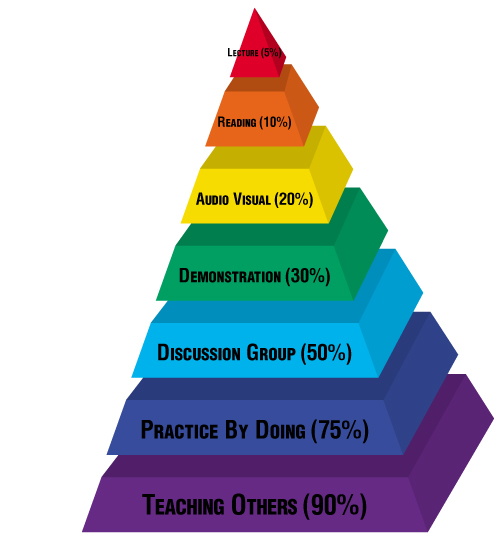
   There is actually a lot of research behind this idea that "doing" and "teaching" helps students (and adults) to learn, understand, and retain information.  And it makes sense too.  

     As much as (some) teachers would prefer that their students learn merely by listening, the data suggests that very few students (and adults) learn solely by listen.  The best learning occurs when students can combine what they've heard with what they see and what they are asked to do.  Learning comes from struggling with concepts, asking questions, discovering answers, discussing ideas with other learners.  The best learning comes from "doing".

     If this is true for adults, then it is true for students too.  An active classroom is a learning classroom.  Teachers that are able to create an atmosphere in which students are willing to ask questions and pose ideas tend to have better student outcomes that those that can't (or won't).

     From a teacher's perspective, the best teachers are constantly learning new things about their subjects.  This is the deep understanding that comes from building on previous understandings.  Teachers aren't finished learning when they complete their college degree requirements.  Teachers continue to learn and to improve.  

     Teachers are lifelong learners!

Public Schools and Choice

       Is it true that public school kids and their public school parents don't have choices?  I'm sure that I will expose my igno...

Teach100 blog