Showing posts with label children. Show all posts

Sunday, March 5, 2017

How much Parental Involvement is 'Just Right'?

       Parents are an important part of the educational process.  But some parental involvement is too little and some is too much.  What is the "sweet spot" of parental involvement; What would you consider to be (as Goldilocks would say) "just right" when it comes to parental involvement?

       No one would dispute the value of a strong connection between the home and the school when it comes to better outcomes for education.  We (educators) want parents to be involved.  We want parents to celebrate with us the academic successes of their children, and we want parents to support and to assist us when struggles and obstacles occur along the way.  As teachers, what do you consider to the right amount of parental support?  Is it possible to have too much involvement from the home? What do you consider to be too little support?  As a parent, how do you approach your involvement in your child's education?  Do you leave it all to the schools and the teachers?  Do you check on homework and that's it?  Are you comfortable talking to your child's teacher?

       How much parental involvement falls into the "Just Right" category?  This question may have a different answer for elementary teachers than for high school teachers.  Parents with more education may feel different than parents with less education.  Parents of younger children may answer this question differently than parents of older children.

       As a high school teacher, whenever we had parent-teacher conferences, the parents of students with high grades often came and the parents of students with low grades usually didn't come.  I also saw many parents who (themselves) had a college education and few parents who never went to college.  As a school we would often discuss the issue of finding ways to involve parents and finding ways to invite parents to different school events.  Whenever I reached out to a parent (due to both positive and negative events that occurred with their child in my classroom), I always found a parent who was willing to help and who was appreciative of the contact.

       On the other hand, I've also experienced parents who wanted weekly updates (phone calls or emails); parents who would constantly contact me and other teachers about the smallest issues that occurred in the school relative to their child.  Sometimes these folks were very anti-public-school and they were anxious to share their alternate opinion about what was happening and what (instead) should be the job of the schools.  But most of the time these parents were supportive of the school and certainly supportive of their child--but I worried that the child (in high school) was not given the opportunity to make even the smallest decision on his own about his education.  Still, I felt that more parental involvement was better than no parental involvement and it wasn't my place as a teacher to tell a parent how to help their child.
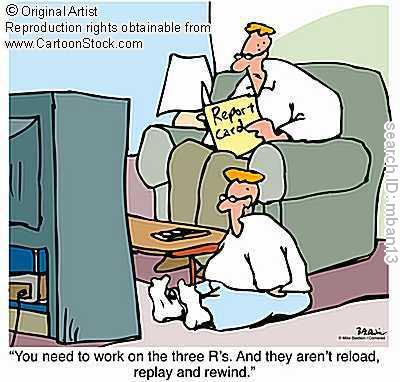

       What does your school do to encourage more parental involvement?  What can a school do to encourage overly involved parents to allow their children to take more ownership of their education? How much parental involvement is 'just right'?  Is too much involvement a nice problem to have?  

Saturday, April 9, 2016

We Don't Want Teachers - We Want Effective Teachers


       The United States has over three million teachers.

       Public, private, elementary, secondary...approximate 1% of the population of the United States are teachers.  With fifty million students, we need a lot of teachers.

       And considering the importance of education, we (particularly) need good, effective teachers.  We need teachers who do their best to understand how their students think and how they learn.  We need teachers who understand the content that they teach, but mostly we need teachers who want to work with children; we need teachers who like to work with children.

       Over my career, I've noticed a subtle difference between wanting to be a teacher and wanting to be an effective teacher.  Our best teachers are also good learners.  They study their craft; they learn from other teachers; they seek information about adolescents and how the brain works.  No one is born with this knowledge; it takes time and effort to gain this level of expertise.  And most people never know the hard work that went into making these teachers so effective.

       In the book Linking Teacher Evaluation and Student Learning, authors Pamela Tucker and James Stronge give the following list of attributes of effective teachers:

  • Have formal teacher preparation training.
  • Hold certification of some kind (standard, alternative, or provisional) and are certified within their fields.
  • Have taught for at least three years.
  • Are caring, fair, and respectful.
  • Hold high expectations for themselves and their students.
  • Dedicate extra time to instructional preparation and reflection.
  • Maximize instructional time via effective classroom management and organization.
  • Enhance instruction by varying instructional strategies, activities, and assignments.
  • Present content to students in a meaningful way that fosters understanding.
  • Monitor students' learning by utilizing pre- and postassessments, providing timely and informative feedback, and reteaching material to students who did not achieve mastery.
  • Demonstrate effectiveness with the full range of student abilities in their classrooms, regardless of the academic diversity of the students.
  •        Everyone wants their children to have effective, caring teachers.  Class time is valuable learning time and effective teachers make the best use of this time.

           Is your child's teacher effective?


    Tuesday, November 17, 2015

    It's Time for Our Schools to Leave the 20th Century

           You know the old joke about Rip Van Winkle and schools?  He falls asleep for a hundred years and upon waking up he sees everything he used to know has changed dramatically.  The houses look so different.  The clothes that people wear are very different.  And the cars...wow.  Then he finds a school and walks inside.  He goes into a classroom and he is comforted to see that schools and classrooms haven't changed a bit.

           We educators don't think this is very funny.

           In fact, it is embarrassing for us carry out the important work of education today in the same way that we did this work 50 or 30 or even 20 years ago.  Doing so ignores the research about learning that has been done over the past few decades.  It ignores the research about how the brain reacts to the stimuli that occurs in classrooms.

           For instance, we know that most students can't learn to the best of their ability strictly by sitting in class for a whole class period and listening to the teacher talking (and taking notes).  We know that students are more engaged when they have the opportunity to participate verbally and when they have a chance to get up out of their seat and participate physically in some way.  We have technology that we didn't have (even 20) years ago that can be tapped to help our students to prepare for the information world that they will enter after high school.

            We are not preparing our students by merely teaching them to read, write, and do arithmetic.  These things are important, but they are not enough.  Memorizing facts long enough to get a good test grade will not prepare our children for the world that they will inherit.  Our schools have the responsibility to mirror the society that our students will experience.

           Twentieth Century schooling is not what our students need.  Most of them have never even lived in the 20th century.  I believe that our current education leaders understand this need for our schools to change.  Part of the responsibility of our public schools is to explain this need for change to our parents and to our communities.  Staying the same is easy; change is hard.  Schools often face opposition from communities who tend to say that "The old way was good enough for me and it's good enough for our kids."  We need to make the case against this sort of thinking.

           Someone needs to speak for our students and for their futures.


    Sunday, October 25, 2015

    Teachers that Promote a Growth Mindset

           Every teacher has had "the phone call" with parents in which the teacher says,  Your child has the ability, she just needs to apply herself.  And then the teacher and parent (typically) talk about school rules involving turing work in on time and not talking in class.  Essentially, we are saying to the child, We're the adults.  These are the rules.  If you don't follow the rules, then you will get a bad grade.  (Of course, if the student was concerned about her grade, we wouldn't have this discussion in the first place.)

           There are a lot of "old school" problems with that phone conversation.

    1. The conversation emphasizes following rules and getting grades, and there is very little talk about actual learning.
    2. The first part of the famous teacher line is, Your child has the ability....  If the child already has the ability to do the work, then the solution to the problem should concentrate on why the child isn't doing what she is already capable of doing.
           We know that (as adults) there are lots of things that we have the ability to do and yet we don't do them--or we delay doing them for as long as possible.  Mowing the grass, doing the dishes, admitting we're wrong about something.  We have the ability to do all of these things, but we need some sort of motivation to actually take the time to do them.  Students are the same way.  The old adult (or teacher) response of "I'm the adult and I say so." may force children to do something, but it certainly doesn't motivate them to do their best.

           Growth Mindset theory tells us that when students believe that effort will lead to result, they are more likely to try new things and are less worried about making mistakes because they believe that these setbacks are just part of the process of learning new things.  I've recently been introduced to the website Mindset Kit.  This site is dedicated to helping teachers, parents, and students to understand what Growth Mindset is and how to help students to develop good, healthy Growth Mindsets.

           One simple strategy that every teacher can do is called Praise the Process.  When a student is doing some classwork, or offers an answer or an idea in class, the teacher response by praising the thinking that went into the student's effort rather responding to the correctness or the incorrectness of the student's work or response.  This simple strategy helps the student to know that their effort is important towards that eventual goal of learning the skill or concept.
      
           Mindset Kit has excellent resources for parents.  Teachers can refer parents to this site for parents who ask, "How can I help my child to do her best?"  There is a brief quiz on different statements of praise that parents can say to their children that will promote a Growth Mindset.  And there are other typical daily activities in which a parent's reaction will help their children to understand (for instance) that making mistakes is great for helping your brain to learn.

           Our best teachers already know how to encourage their students to do their best everyday--even when they don't want to.  It's the same as when a parent tries to distract their child away from something that is bothering him and towards something that he would like.  Growth Mindset strategies help teachers to do this while also helping their students to see the value in effort.

           Here's another quote I hear from parents all of the time, "I can't believe my child is doing so well in (insert course subject here) class in school.  He has never done well in that class before."  You can bet that this child has a teacher that knows how to motivate students.  Her class is interesting and students are engaged in the adventure of learning.  

           After all, they already have the ability.


    Wednesday, September 23, 2015

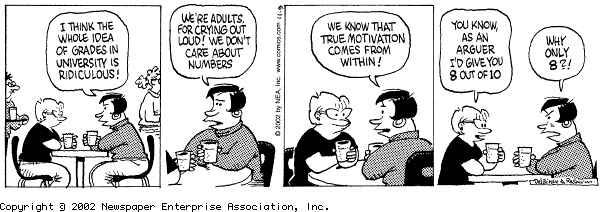
    Are Your Students Obsessed with Grades?

           Here's a quick checklist to see if your students are obsessed with grades:


    1. They are constantly asking, "Is this going to be graded?"
    2. They refuse to do anything if it is not being graded.
    3. They ask for "extra credit" or make-up work at the end of the marking term to raise their grade to the next letter grade.
    4. They only see the grade at the top of their returned work and ignore the helpful comments that the teacher has written.
    5. They try to memorize the information they need to know for tests.
    6. They follow procedures in mathematics for unknown reasons just to get the right answer.
           In short, students who are obsessed with grades are just "going through the motions" at school; they do what they're told, but they learn very little.  And when they take a test that can't be beat by memorizing (like a final exam) they show their true ability or lack thereof.  The challenge for these students is to do as little as possible to earn the grade they want.

    THIS IS NOT THE WAY SCHOOL IS SUPPOSED TO WORK.

           School is supposed to be all about learning.  If students aren't learning, than we are wasting their time.  And if we are (somehow) justifying how these grades-obsessed students are getting A's and B's, then we are giving them (and their parents) a false sense of accomplishment.  Eventually someone will tell these students the truth about their academic abilities, and it would be a shame if they are in college (and paying for college) when they are hit with this truth-bomb.

           Teachers can help their students to de-emphasize grades by praising them for their thinking and reasoning.  They can emphasize learning by asking students to explain how they got the right answer instead of just accepting the right answer and moving on.  Formative assessments that require thinking and reasoning and justifying instead of just repeating information tell students that memorizing isn't good enough.

           We have to help students to be less obsessed about grades.


    Saturday, September 5, 2015

    The Pros and Cons of Standardized Testing

    Warning:  If you are 100% against standardized testing or 100% in favor of standardized testing, you shouldn't read this blog post.  I'm going to some things that you will agree with, but you will be so blinded in anger over the things I say that you disagree with that you will never see the agreement parts.  Besides, you have already determined your thinking on this matter so there is no point for you to hear the opinions of others.

    ------------------------------------------------------------------------------------------------------------------

           Alright, maybe that warning was a little harsh.  I apologize.  In truth, I'd like to believe that the people who are on the extreme sides of this issue are a very small minority.  Most people have their views regarding standardized testing, and I would guess that most people fall somewhere in the middle of the issue.  I'm one of those people.

           In an ideal world, the students will come to school and do their best everyday to learn--and testing wouldn't be necessary.  The reason it wouldn't be necessary (in this ideal world) is because teachers would constantly gain an understanding of each student's level of learning through formative assessment practices; and students would ask questions about the things they didn't understand and keep working on these things until they got it.  The motivation would be the attainment of knowledge.

           To be fair, some students and teachers and whole schools work hard to (at least) approach this ideal world of education; but for the rest of us, we are still somewhere on our journey toward this world.  We are striving to emphasize learning over "getting-a-grade"; but we still need effective ways to measure learning--and testing is part of this process; and standardized testing is part of this process.

    Some Pros of Standardized Testing

           In my view the "standardized" part of standardized testing is a pro.  Every student takes the same test regardless of the factors that influenced their learning (such as their teacher, the curriculum, the standards, the state they live in, etc.).  Think about the SAT test: colleges know that every student is taking the same test, so SAT scores can be compared to each other regardless of where in the country the test was taken.

           Also, the next generation of standardized tests (think PARCC and Smarter Balanced tests) are written to determine a measure of learning based on understanding content more than based on memorizing formulas and procedures.   This means that it will be harder for students to guess the right answers on these tests.  It also means that results will be based on true learning and understanding rather than on a student's ability to take a test.

    Some Cons of Standardized Testing

           It may be a challenge to teach all of the content that is covered in a standardized test prior to the administration of the test.  Standardized tests typically have specific testing windows or a specific testing date on which to give the test.  Since different school districts start and end on different dates during the year and have different days off due to holidays and other reasons, it might be hard to structure a course outline that completely covers all of the material that will be assessed on a standardized test.  This occurs (sometimes) for Advanced Placement tests.  These AP tests usually have a particular May date for their administration and many school districts finish their school years in June.

           Some might argue that a "con" to standardized testing is that it might assess something that we don't teach or don't want to teach in the course.    I believe that there is general agreement of what needs to be taught in each grade and that this is less of an issue than some would have you believe.

           To me the biggest down side to standardize testing is that it gives the message to students (and parents) that the goal of school is getting a good grade on a (standardized) test rather than having the goal of learning.  Sometimes standardized test results are treated with great importance with newspaper articles and school-wide celebrations.  And sometimes these results are given too much importance when making course selection decisions for the next couple of school years.  As I said before, schools should emphasize learning and should de-emphasize "getting a grade".  A standardized test score should be just one piece of data that is used in conjunction with many other data points to make big decisions about a student's ability.


    Friday, June 19, 2015

    Summertime Learning


          Summertime may offer a break from formal schooling, but learning can take place in all sorts of formal and informal ways throughout the summer.  Many school districts offer summer programs that are part academic and part recreational.  Boy Scout and Girl Scout summer camps offer lots of learning opportunities that involve working with groups of people as well as individual projects.  Of course many libraries offer summer reading programs for children of all ages.


           Family trips during the summer offer children the opportunity to learn about different places and different people and (perhaps) different foods and different climates.  There are also many online programs that help students to sharpen their math skills such as TenMarks and Discovery Education.

           Learning takes place in all sorts of settings and in all times of the year.  Summertime can provide time for families and for children to explore interests and build on abilities.

           What will you learn this summer?

    Thursday, April 9, 2015

    Learning is not Pass/Fail


            Years ago I worked with a colleague in the research office of a major school system.  He always tried to find a way to make research and statistics understandable to the average person.  He once talked about the infamous College Acceptance Letter.  I'm not sure if this is still true today, but years ago you would apply to multiple colleges and then you would wait and wait and wait for a letter from these colleges that would tell you whether or not you have been accepted.  When the letter arrived, you would open it and there would be one or two paragraphs of "welcome" and "thank you" messages.  And, finally, somewhere halfway down the page you would get to the part that you really wanted to know:  Accepted or Not Accepted.

           My colleague suggested that the most important information in such a letter should come in the very beginning and the other stuff can be written farther down in the letter.  Better yet, he suggested, they should just send a letter with a smiley face or a frowny face!  That would be the simplest way to communicate the message and everyone would understand what it meant.

           I wonder if people outside of education often view learning in the same way?  "You get it."  or  "You don't get it."  We sometimes use the phrase "Filling your brain with knowledge."  I wonder if some people imagine learning to be this (sort of) empty skull or glass that is filled by the teacher.  When it is full, then you have learned it and you got it and you will always have it.

           In reality, learning is much more of a process with a somewhat hazy finish line.  While there are certainly facts that students can memorize (5 + 5 = 10; July 4, 1776 is the date of the signing of the Declaration of Independence; Paris is the capital of France), actually learning is much more of a process that develops over time and requires thinking and discussing and trying and failing and trying again--and learning from the mistakes.  Learning is much more like a baby learning to walk than it is like a switch that is off or on.

           We should think of learning as being more of a continuum and less of a Yes/No, Pass/Fail dichotomy.  After all, it isn't so much that we want our children to "pass" in school; what we really want is for our children to "learn" in school.  Employers don't care what grade you got on a test in high school.  They care about what you learned and are able to do.


    Friday, March 27, 2015

    Good Teachers Demand High Quality Performance from Their Students

           When you think about your favorite teacher, was he/she also your easiest teacher?  Was it the teacher that let you do whatever you wanted to do?  Was it the teacher that handed out grades like candy, but didn't care much about how much or how well you learned the course content?

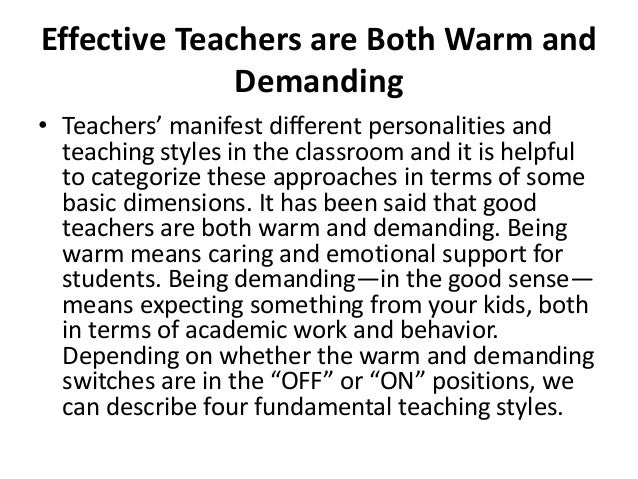
           The pedagogical term "a warm demander" has existed within the teaching profession for quite a few years at this point (see Ed. Leadership article from 2008).  The term was coined by J. Kleinfeld in 1975.  It refers to a teaching personality that makes an emotional connection with students, but also expects high academic and behavioral results from students.  This teaching technique has been praised as being particularly effective for poor and minority students; students who have historically achieved at much lower rates than their middle-class, white peers.  (see Becoming Warm DemandersCaring Teachers, and Warm Demander Pedagogy)

           A famous example of the warm-demander teacher is Jaime Escalante.  He taught Calculus in Los Angeles.  Many of his students were poor and struggled with mathematics.  His caring yet demanding personality helped his students to achieve great results.

           Some teachers would argue that their job is only to teach and not to develop caring relationships with their students.  But I would counter-argue that only a part of a teacher's job is to teach.  The more important part is to ensure that students are learning.  This, indeed, is the hard part of teaching.  There is no single teaching strategy that is effective for all students when it comes to ensuring that learning is taking place.  Instead, we have to look to our colleagues and look to research and look to best practices to find these most effective teaching strategies.

           We know that students respond better to those teachers that show a genuine interest in them.  Students want to make their teachers proud of them--especially the teachers that really care.  Teachers that that understand their content and do not understand the need to connect with their students, often see lower academic results from their students.  And teachers that are very caring and friendly with their students but demand only low-level skills (similarly) see low academic results.

           It takes both: Warm and Demanding.

    Friday, March 6, 2015

    Are the new PARCC and Smarter Balanced Tests Too Difficult?

           Public schools across the country are now using the new PARCC and Smarter Balanced assessments in Mathematics and English/Language Arts in grades 3 to high school.  Aside from the political commentary about these tests, some teachers have concerns that they are too difficult for their students.  Along with this concern comes concerns about hurting students' self-esteem, battling parents' perceptions of their children's abilities, and aligning earned course grades with earned PARCC and Smarter Balanced scores.

           I have heard and read comments that say that these tests are good for students who are very strong academically, but that they are inappropriate for students who are average or below average.  Sometimes parents have commented on sample problems and have stated that they are too hard for the students.

           The standards that these tests are written to are aligned to world-class education standards.  I realize that "world-class" is a buzz word, but I agree that these standards (and associated tests) represent an uptick with regard to rigor compared to those that they are replacing.  We know that too many of our students get good grades in elementary and middle school and then struggle with subjects in high school.  Or, they do fine (in terms of course grades) even through high school, but then they do poorly on the SAT or ACT.  We also know that many students graduate from high school, go to college, and do not graduate from college. (see college graduation rates)

           Hence, public schools are faced with this problem of students who appear to be learning and doing well in school, but then struggle with learning later.  We addressed this problem by incorporating tougher standards and putting in place assessments to see if the students are attaining these tougher standards.  In my opinion, this needs to happen; this must happen.  Nobody wants to see their own child struggling.    But we have to realize that this is already happening:


    • poor SAT/ACT scores
    • low AP scores
    • high percentages of students taking remedial math and english courses in college
    • students dropping out of college before earning a degree
           Until now, we have always been able to say "my kid gets good grades in school, so none of these other things matter to me".  But we have been fooling ourselves.  

           If we want students to be successful, we have to raise the standards (as we've done) and we have to insist on continually high standards throughout P-12 education.  This must happen.  Better education leads to better lives for our future adults--which leads to a better society for all of us.

           The tests are not too difficult.  We must, must, must insist on high standards, and we must do everything we can to help our students to achieve these higher standards.  I believe that our public schools will do exactly this in the years to come.  We will meet this challenge and we will raise student achievement and we will help to produce a society of educated people who are not afraid to face challenges, find solution, and succeed.


    Tuesday, February 24, 2015

    Good Teachers are Great Learners

           I think everyone has had the experience of teaching something to someone.

           Parents teach their children to walk or to ride a bike or to drive.  Friends teach their friends about cool stuff they find online or cool stuff they read about.  Colleagues teach their co-workers trade skills on the job.

           Sometimes, as a teacher, we are very attentive to the way our learner is "catching on" to what we are trying to show them.  Sometimes, as a teacher, we just go through the steps and explanations with no regard whatsoever as to whether or not the learner is following us.  And sometimes, as the teacher, we get very upset when the learner does "learn" what we just taught them.

           "I just said that."  "Weren't you listening?"  How is possible for them to not understand when I did such a good job of explaining it?

           Teacher know that "teaching" is only half of their job--maybe even less than half.  Their main job is to ensure that students are learning.  Lots of people are very knowledgeable about something; but that doesn't mean that they are good teachers.

           Teachers excel at understanding their students and (to the best of their ability) at understanding how their students are thinking and what it is that is keeping their students from fully understanding the objectives of the lesson.  Good teachers are great learners.  They discover common errors that their students make and use that understanding to help their students to understand.

           Good teachers learn about their students through questioning, discussions in class, notes on classwork, email messages or other electronic resources, meetings with parents, and sometimes facial expressions.  Teachers who care about student learning do whatever they need to do to help their students to learn.

           This is one reason why experienced teachers tend to have more success with student achievement than less experienced teachers.  This sort of learning and understanding of students comes almost exclusively from experience.  It is hard to gain this professional ability strictly from a teacher preparatory program.  Teachers that continually strive to get to know their students and to learn how they think build an ability to anticipate problems in learning and to act on these anticipated problems as part of their lesson planning.

           Teaching is a difficult job.  Students are different and student backgrounds are different; and student abilities are different.  Good teachers strive to understand these differences and to find ways to overcome these differences to help all of their students to learn.

    Saturday, February 21, 2015

    What is the Best Way to Measure Academic Ability?

           One student is smart.  Another gets good grades.  Another is in the 90th percentile.  A fourth student gets a good SAT score.  Yet another graduated in the top 25% of her class.  And a different student scored a 4 on her AP test.

           What does all of this mean?  What is the best way to measure how well students are actually learning?  How do we know which are the students that are really learning and understanding and able to use the knowledge in different situations; and which students are dutifully doing what they are told to do and completing assignments and earning good grades not learning a thing?

           I think our educational system struggles with this question very often.  We want to learn--it is the main focus of schools to teach students and to help them to learn.  When I say "learn", I mean "real, actual learning".  Not memorizing and forgetting.  Not memorizing long enough to pass the test.  I mean learning; understanding; able to teach it to others; able to use the knowledge at a later time; able to build on the knowledge learned to learn more, higher-level material.  How do we measure a student's ability to actually learn?  How do we know who is really getting it and who only appears to be really getting it?

           Parents see their children's grades.  And (I think) parents make a determination of their children's abilities based on the grades that they get in school.  That is certainly understandable.  We don't expect all parents to be experts in education and we certainly don't expect all parents to be experts in measuring academic ability.  And if the grades (the test grades and homework grades and classwork grades and course grades) accurately reflect their children's abilities, then it is OK to use these grades to gain a sense of academic ability.


           But what do you do when your child gets great grades in class and lousy grades on the final exam, or the SAT, or the PARCC or Smarter Balanced test, or the college entrance exam?  What does it mean when we have students who do great in middle and high school and then cannot handle the academics in college?  Once again, What is the best way to measure academic ability?  Everyone likes to brag about their smart children; and everyone wants their children "to do well" in school.  But at some point we need to have a way to tell if their apparent ability (academically speaking) is actual ability.

           Large-scale testing is one way to measure actual academic ability.  State-level tests, SAT and ACT, PARCC, Smarter Balanced, and NAEP (National Assessment of Educational Progress) tests are all large-scale tests that attempt to do this.  The SAT is a good predictor of a students' ability to do well in their first year of college.  The new PARCC and Smarter Balanced tests are supposed to measure student abilities compared to standards that are taught over the previous school year.  NAEP is a national test given to a sampling of students in every state and in many subject areas to get a sense of our nation's students academic abilities.

           I believe that we want to use multiple data points to determine students' academic abilities.  If a students have good school grades and terrible large-scale testing grades, I believe that we should question why this is the case.  We shouldn't dismiss the low grades and not important; we should question why there is a lack of consistency in the grades.  Similarly, when students get high homework and classwork grades and low quiz and test grades, we should question this.  Sure, it may be that they are nervous when taking a quiz or test; but it also may be that they don't know the content and that is why their quiz and test grades are low.


           I think that it is difficult to use a single measure to determine a student's academic ability.  If you have a mechanic who has been fixing cars for (say) ten years and you asked her to take a test on fixing cars and then to go through a field test in which she actually fixed cars and then to write an essay on fixing cars, you would expect that she would earn similar scores.  This would be provide multiple pieces of evidence that she knows what she needs to know to do her job.  I think the same is true for students and academic subjects.  If a student is sufficiently knowledgeable in (say) Geometry, I would expect her to demonstrate this knowledge via verbal explanations, written exams, performance tasks, and large-scale testing.  And I would expect all of these measures to show a similar level of understanding.

           Our nation's schools have a responsibility to teach so that our students are truly learning.  We cannot accept the mere appearance of learning; we have to do the hard work of ensuring actual, true learning.  And we need to continue to develop and revised the best and most effective ways to measure that this "true learning" is actually taking place.


    Friday, December 12, 2014

    We're Never Satisfied

           I was going to title this post, "We're Never Happy", but I didn't think that that would be a good title for a post about a blog that is supposed to talk about the good things about education.  (I guess I haven't caught on to the idea of catching-the-reader's-interest-with-a-provocative-title.  Slow learner [!].)

                    ----------------------------------------------

           A few years ago public schools had a rating system called Adequate Yearly Progress.  The idea was that we would measure the progress of schools by the percentage of students who were learning at or above grade level.  Each year the target (called the Annual Measurable Objective) for what was to be considered "Good" or "Making good progress" was raised a little bit.  The idea was that after 12 years, everyone would have a target of 100%--that is, 100% of the students in your school would be learning at or above grade level.

           People would say, "100% is unrealistic"; and the response would be, "OK. Let's make it 95% or 90%.  Just, tell me which students in your school will be the ones whom we will say 'It's OK with us if you don't learn at or above grade level.' "  Do you want to be the person who says this to a student?  Do you want to be the person who says this to their parents?

      Hence, we (as educators) are never satisfied.  We are the football coach that is always pushing his players to work harder.  We are the sales manager that is always pushing her salesman to sell more.  We are the artist that is always pushing ourselves to paint better.  We are the President of the United States who wakes up everyday unsatisfied because someone in the country is unemployed and wants a job.

           We have lots of successes around us all of the time.  But we never have 100% success.  And we care about everyone of our students; and we want all of them to succeed.  It's not that we aren't happy or aren't proud of our students who have succeeded.  We just want all of them to succeed.

           And that is What's So Good About Public Education in America...We are never satisfied until we figure out a way to help all of our students to succeed.  I believe we are doing better than ever before.  Through professional learning communities and strong leadership at all levels, we are seeing successes that we didn't see many years ago.  Through research about learning and research about how the brain works, we are working smarter than ever before.

           But we're never satisfied until we truly reach all students.


    Friday, December 5, 2014

    Students with Learning Disabilities Learn


           There was a time when students with learning disabilities were labeled dumb or weak or unmotivated or any one of a multitude of other names from people who didn't understand anything about learning disabilities.  Over my lifetime (I'm 51 years old), that has dramatically changed.


           I'm not a Special Educator, but today every educator knows something about students with disabilities.  This is because every single teacher in our public schools receives some training in working with students who have learning disabilities.  Over the past decade, schools have made an extra special effort to improve the achievement of students with learning disabilities because (under the Elementary and Secondary Education Act of 2001) schools were partially "graded" on their ability to educate students with learning disabilities.

           Today most schools have teachers who are specially trained to work with students who have learning disabilities.  These students are given Individual Education Plans that are backed up by federal law.  We now know how to diagnose specific learning disabilities and we are constantly getting better at addressing the educational needs of these special students.

           When we say, "All students can learn.", we mean "all students".  It is still a struggle for these students and a struggle for schools to find the best way to help them; but the successes of today are tremendous compared to the extremely few successes public schools saw decades ago.

           As a mathematics supervisor, I often say that it sometimes seems that we spend 90% of our time on 10% of our students.  And that "10%" is largely made up of students with learning disabilities.  Schools and school systems are always talking about strategies to help these students.  And when smart people get together and think together and share experiences, we usually end up with ideas that benefit students.

           The U.S. Department of Education has an office dedicated to helping students with learning disabilities.  In 1975, the Individuals with Disabilities Education Act (IDEA) was passed by congress.  This law told our schools that students with learning disabilities are our students and it is our responsibility to teach them and to help them as much as we can.


           What's so good about public education in America?  Students with learning disabilities learn.  Everyday.


    Thursday, November 13, 2014

    We Must Do Better - Part 2

           This post is part two of a three-part series titled We Must Do Better.

           I love public schools; and there is a lot to cheer about when it comes to the ability of public schools to prepare students for their futures.  But there are three major areas in which public schools must improve if we want to see ourselves as providing a world-class education to our nation's children.

           1) We must raise the achievement of poor children.

           2) We must increase graduation rates.

           3) We must provide continuous, high-quality professional development to our teachers.

           It isn't that there aren't other areas that can and should improve in our public schools.  But improvement in these three areas are absolutely critical if we truly want our school system to be exceptional and of the highest quality for all of our students.

    ----------------------------------------------------------------------------------------------------------------

    We Must Do Better

    Part 2 - Increasing Graduation Rates

           Part 1 of this series was about the need to increase achievement among poor students.  I am going to begin this part by looking at the differences in high school graduation rates between poor students and non-poor students.  Take a look at this graphic from the organization America's Promise Alliance:


           This graphic shows that (in 2012) low-income students had a graduation rate below 80 percent in 41 states while non-low income students had a graduation rate below 80 percent in only 7 states.  As a nation, our graduation rate in 2012 was 81 percent.  (source: National Center for Education Statistics - The Condition of Education)  

           Our national graduation rate has been rising since the 1995 - 1996 school year when it was 71%. We are moving in the right direction as a nation, but we still have a long way to go.  Allowing 1 of every 5 students to leave school without a diploma has real and serious consequences.  These include:
    • Higher unemployment rates
    • Lower pay compared to people with high school diplomas
    • Greater need for public assistance
    • Greater chance of incarceration
    • Less effective parenting skills
    (sources: here and here and here)

           Public schools clearly have many responsibilities.  We must do everything we possibly can to get more students to graduate from high school--especially poor students.  In decades past, completing high school was arguably less important than it is today.  However, in today's world and in the world that our students will inherit, people without a high school diploma have a greatly enhanced risk of lifelong struggles to avoid poverty and to experience a middle-class lifestyle.

         As a graduate student, I questioned the difference between students who dropout of high school and students who graduate in the bottom 10% of their class.  I hypothesized that such students who barely graduate were no better off than students who didn't graduate.  Using data from the National Center for Education Statistics, I discovered that weak high school graduates were still better off than high school dropouts.  That's right; even students who struggle to pass all of their courses in high school and eventually graduate are better off than people who never earn a high school diploma.  Why?  I think it is because there is something within these weak students that says, "This (schoolwork) is hard, and everyday I come to school I know that I am going to struggle.  But I am going to continue to come and to work and to finish high school."  I believe that students who (perhaps) hate school and always struggle academically AND still graduate have had a life experience that they carry with them in their futures struggles.

           This message of the importance of graduating from high school is logical and sensible to everyone working in education and probably to just about everyone outside of education.  But despite our best efforts, this message is not getting through to 19% of our youth.  And it is hitting particular groups of students worse than others.  Once again, according to the National Center for Education Statistics (see top of page 13):

    Group                  Graduation Rate (2012)
    Amer. Indian/
    Alaskan Native                68%

    Hispanic                           76%

    Black                                68%

    Poor students              well below the national average (see America's Promise)

         These focus areas will help to improve graduation rates among our most vulnerable groups of students:

    1. Adress chronic absenteeism
    2. Improve middle schools
    3. Re-engage youth who have left school
    4. Provide more and better adult and peer supports
           We must do better at raising the high school graduation rates of our students.  It is important to our nation; it is important to every young man and woman in our high schools.


    Thursday, May 15, 2014

    The Middle School Principal Everyone Wants to Have

      The following was written by my daughter's middle school principal in the school's newsletter:

           I’m not sure when it happened exactly, but recently I realized I’ve reached a point in
    my life when I find myself looking backward as often as I find myself looking ahead. When
    you’re young, life is all about making plans and dreaming of the future, but the past is starting
    to comprise a bigger and bigger chunk of the years I’ve been allotted. One of the benefits of
    getting older, is the years tend to give one perspective. Recently, I found a tidbit attributed to
    an “Author Unknown” that makes the point:

           Someone asked me the other day, if I had my life to live over, would I change anything?
    “No,” I answered, but then I began to think . . .

           If I had my life to live over, I would have talked less and listened more. I would have taken the time to listen to my grandfather ramble about his youth. I would have never insisted that the car windows be rolled up on a summer’s day because I didn’t want to mess up my hair. I would have sat on the lawn with my children and not worried about
    grass stains.

           I would have gone to bed when sick instead of pretending the earth would go into a holding pattern if I weren’t there for a day. Instead of wishing away my nine months of pregnancy, I’d have cherished every moment and realized that the wonderment growing
    inside me was my only chance in life to assist God in a miracle. When my child kissed me impetuously, I would never had said, “Later – now go get washed up for dinner.” There would have been more “I love you”. . . more “I’m sorry”. . . but mostly, given another shot at life, I would seize every minute. . . to look at life and really see it. . . to live it. . . and never give it back.

           Look, I’m not a philosopher, and believe me, there’s a lot I don’t know, but the older I get, the
    more I realize just how important our children are – both yours and mine. Most of the parents of East Middle’s students are now quite a bit younger than me, and my advice to you is to cherish your children while they’re young. Plan for the future, but take time to live in the now.

           And as far as their education goes, we’re in this together. We all have a responsibility to ensure every child gets what he or she needs to be successful in life, and that’s a responsibility I and everyone else here at East Middle School takes very seriously. Sometimes it’s hard to find the right balance between being supportive and being enabling. There’s a fine line between the two, and the truth is, that line needs to be drawn at different places for every
    student - sometimes in different places on different days for the same student. Knowing how best to help a student is a complicated thing. Each has his or her own personality and unique life story. Home lives are different; learning styles vary; sometimes kids have great support structures; sometime they have none. On any given day, there are students going through a life crisis – some very real; some perceived – and on the best of days, middle school is a confusing time for students, who often are simply trying to figure out who they are and what they’re all about.

           Sometimes the right thing to do is to push them harder and to hold them strictly accountable for their poor choices. Other times, the right thing to do is to push them a little less and to cut them a break.

           As educators, we don’t always have all the right answers, but I can tell you, we are far more likely to make the correct decisions when we have the support of a child’s parents, and I am constantly amazed at the level of support we receive from our parents. I hope you all know how much you kids mean to us. We may not
    always make the right decisions, but it’s not because we don’t care, and the debates we sometimes have are simply a matter of trying to figure out what the right thing to do is given the current set of circumstances. These are never easy decisions, and all we can do is our very best for each child. That’s true for educators as well as parents. 
     
           So, I guess to bring this letter full circle, as my life progresses and I look more and more back over the years, it becomes increasingly important to me that I make a difference in the lives of all my students, and I try awfully hard to enjoy every minute I spend with them. I want to “seize every minute. . . to look at life and really see it. . .to live it. . . and never give it back.” 
     
           Thanks for sharing your children with us! 
     
           Here’s to a fabulous finish to another school year!! 

    Public Schools and Choice

           Is it true that public school kids and their public school parents don't have choices?  I'm sure that I will expose my igno...

    Teach100 blog