Showing posts with label productive struggle. Show all posts

Tuesday, September 6, 2016

A Tale of Two Classrooms -- Solve Problems

This is the seventh in a ten-part series based on the poster: A Tale of Two Classrooms.


---------------------------------------------------------------

Solve Problems

       School used to be:

  • Read the book
  • Memorize the facts
  • Recite what you've memorized
over and over and over again.  

       What are the capitals of the states in the United States?
       What year did World War 1 begin?
       What is the formula for finding the area of a triangle?

       Today's learners need so much more than mere memorization skills.  They need to know how to use these facts to make predictions, to see connections, and to find solutions.  The classrooms we need today require students to think and reason and discuss and hypothesize.  We need students who can be presented with a problem and know the tools they need to address the issues involved in the problem; and to find a way to solve the problem.

       Problem solving prepares students for the real world they will encounter beyond high school; be it college or career or relationships or buying a car or choosing a route to a destination.  We need problem solvers.  And the classroom is the ideal place to practice problem solving skills.  It isn't enough to have students who are only good at memorizing procedures or memorizes mere facts.  Anyone can find facts with the click of a mouse today.  Schools have to push students to do more.

       As with any other skill, problem solving takes practice.  Students need to hear from other students in addition to hearing from a teacher.  They need to be presented with problems that are (perhaps) a little bit beyond their reach, yet close enough to their abilities so that they can have ideas on where to begin.  Classroom need to have an atmosphere that respects effort and ideas so that students are free to offer their suggestions.  And we need to understand that problem solving is a slow process.  The quickest answer isn't always the correct answer.  Taking time to think is important.

       We need more and better problem solvers.


Saturday, September 3, 2016

A Tale of Two Classrooms -- The Goal is Learning

This is the sixth in a ten-part series based on the poster: A Tale of Two Classrooms.


---------------------------------------------------------------

Goal is Learning

       Don't get me started.

       The idea that the goal of schools is "Learning" is a major theme of mine.  Last year I wrote a piece called Are Your Students Obsessed with Grades.  In this post I included a list of things that students do that suggest they are more concerned about grades than then are about learning.  Some of these include:
  • They are constantly asking, "Is this going to be graded?"
  • They refuse to do anything if it is not being graded.
  • They ask for "extra credit" or make-up work at the end of the marking term to raise their grade to the next letter grade.
These sort of behaviors from students suggest that we have created what I have called The Grading Monster in our schools.  Grades and grading and Grade Point Averages (GPAs) have grown to oversized importance in the minds of students (and sometimes in the minds of parents) to the point that many have forgotten that the goal of school is learning.

       Of course, we need a way to measure the degree or the level at which students are learning.  But that method of measuring is not the goal of schooling.  It is the result of schooling.  I wrote a piece called Learning vs. The Appearance of Learning last year.  In this post I talked about the problem of seeking grades over seeking learning.  You might think that they are the same:  If I get a good grade, than I must be learning.  But this isn't always the case.  Grades can sometimes be manipulated to be artificially high--which would give the student (and the parent) the appearance of learning.  And I'm not talking about grade inflation--which is the purposeful and unearned raising of grade.  I'm talking about students who (perhaps) always do their homework and always participate in class and (perhaps) don't do very well on tests and quizzes; but the way the final grade is calculated causes them to end up with a decent grade even though they didn't actually learn very much.

       For many people, the idea of viewing schools as having the goal of learning will require a major shift in their thinking.  However, for individual classrooms and individual teachers this can be accomplished through relatively minor steps.

  • Encourage student discourse - Allow students to ask questions and offer ideas and solutions without judging the "correctness" of these ideas right away.  Allow other students to question these ideas and suggestions.
  • Formative assessments - Exit passes, classwork assignments, activities that provide feedback to students that is not a grade.  Instead the feedback could be teacher (or student) comments relative to the thinking that they have expressed in the assignment and (perhaps) suggestions for going further with that thinking.
  • Allow a little productive struggle and recognize students who tried and didn't get it the first time and tried again.  Help students to see that effort is important in the learning process.  Everything isn't "a grade".  No one expects students to "get it" the first time they are learning something new.
       There is a movement to abolish grades altogether in the effort to help students (and parents) to see the importance of learning.  I don't think that this will come to pass in my career, but if we truly want schools to be viewed as a place of learning, we will see the importance of grades and grading diminish.  This is important in the classrooms that we want to have in the 21st century.

       Learning is key.  Learning is everything.  If we aren't in school for learning, than why are we there?

Sunday, August 14, 2016

Parent's Role in Improving Student Achievement

       If you have a child in elementary, middle, or high school, then your main concern is helping your child to do well in school.  You have a person or persons in your household that is a member of the most important cliental in the educational community--the students.  And as a parent, you have influence over your children.  Your attitudes and actions toward school matter.

       We need your help!

       So here is my short list of the three top things that parents can do to help their children to do well in school.


  1. Healthy relationships all around.  
Help your child to make friends with classmates and to get to know the teacher or teachers.  You (the parent) should try to get to know your child's teacher(s) too.  Communication is the key to all healthy relationships.  So try to discover the best way to contact the teacher.  Make sure that your child knows that you have a relationship with the teacher and a way to make contact on an as-needed basis.  This shows that you care about your child's education.  

   2.  Emphasize "learning" over "getting-a-good-grade".

The point of school is learning, not getting a good grade.  There are lots of ways to get good grades without learning much.  We want students to learn how to learn; to read; to study; to try and fail and try again; and ask for help.  Your child's grade should reflect his or her ability; but sometimes it just reflects his or her ability to do what they're told.  Remember that the goal of school is learning.  It's the "Do you best." philosophy (that your parents probably said to you).

    3. Don't help your children too much.

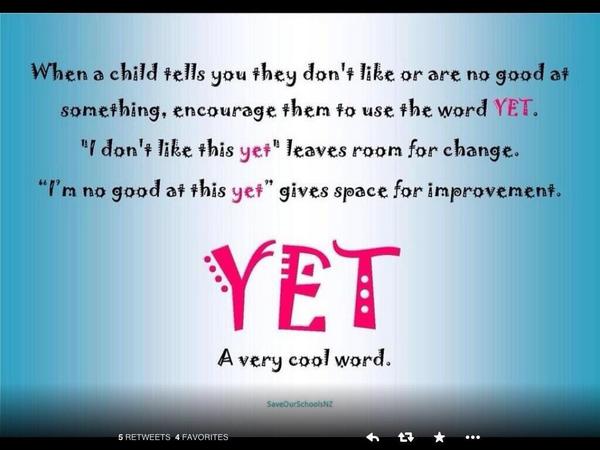
Let's face it...nobody likes to see their children struggling.  But if everything is easy and can be obtained without effort then you have to ask, "Is my child really learning anything?"  Real learning comes from a little struggle from time to time.  Just because your child doesn't "get it" the first time doesn't mean they will never get it.  They just haven't gotten it yet.  If you tell them the answer or do the work for them, they will get the right answer, but they haven't learned anything.  Remember, the goal of school is learning.  Instead of telling them the answer, ask questions.  "What do you know?"  "What don't you know?"  "What do you need to know?"  "What questions should you ask the teacher?"  We want students to learn how to deal with struggle; we want them to problem solve when the problem is difficult.

       School means a lot of things to a lot of people.  Clubs, sports, friends, activities, requirements, homework, pens, paper, teachers,....  It can be hard to remember that it is all about learning.  As the parent, you can help your child to focus on the important parts of school.

       Have a great school year!

Wednesday, June 15, 2016

Is Your Child Advanced in Mathematics?

       It seems that, more than in other subjects, the placement of students in advanced mathematics is often a contentious issue. Elementary schools have different policies about placing students in classes that teach math at grade levels that are above the student's current grade.  Middle schools often offer high school mathematics classes, but some stop at Algebra 1 and some go beyond Algebra 1.

       The ability of a school or school system to determine a student's math ability (or "advanced" math ability) can be hard to do with great accuracy--especially when we are trying to make this determination with eight and nine year old children.  It's not enough that they are getting good grades in their math work; math is more than mere calculation.  And higher-level math is all about reasoning and thinking and understanding.  The kid that is good at memorizing, isn't always good at (say) the abstraction that comes with manipulating variables and graphing a line.


      Yet, I think that (too often) we get a false impression of a student's math abilities from merely looking at their elementary grades on the report card.  Sometime students are placed in advanced classes and at some point in middle school they start to struggle because they were pushed to learn higher and higher levels of math too fast.  On the other hand, there are certainly students who are highly able in mathematics and they should be encouraged to take more challenging classes that are commensurate with their abilities. So goes the dilemma of trying to identify the truly highly-able students from those that only appear to be highly-able.

       One method that helps is using multiple data points.  When students breeze through their multiplication tables and get "A's" on their report cards, but do poorly on standardize tests or on unit tests, this should be a cause for concern.  Maybe this student is good at memorizing facts and procedures and not good at understanding concepts.  This student is successful at procedural assignments (such as long division with whole numbers), but may struggle with more abstract assignments (such as a math task with multiple answers).

       Of course, we know that it is OK for students to struggle as they learn new concepts (see previous blog post), but many students view this struggle as a sign that they aren't good at math; or a sign that the teacher is doing something wrong.  We don't want students to struggle because they have been inappropriately placed.  Truly able students (and Growth Mindset students) don't mind the struggle because they enjoy the journey toward learning.  Also they understand that it is OK if they don't get it the first time.  Continual effort will eventually pay off.  Students who never tried hard to do well in math and then are placed in an advanced math class and then are upset when they don't get it the first time...these may be the students that we are pushing too quickly.

       Is your child advanced in mathematics?  How do you know?

Tuesday, May 17, 2016

High School Graduation and Beyond

       May and June is the time in the school year when we think and hear a lot of graduation.  High school and college students are graduating; completing one important life event and moving on to the next.  It's exciting, it's a happy time, it's a time to celebrate!

       As a nation, we have a lot to celebrate because we have seen a rise in the high school graduation rates over the past few years and that's a very good thing for our nation.  In the 2013 - 2014 school year, the high school graduation rate was 82.3%--an increase of over three percentage points from the 2010 - 2011 school year.

       Our society demands a workforce that is willing and able to continually learn and to use the knowledge of past learnings.  Students who succeed beyond high school are the people who understand that their ability to do a job is not dependent on the grades they earned in high school as much as it is on their desire to continually learn and to do their best.  We need thinkers and doers and believers.  While high school graduation is a big step (and an important step), it is still only one step.  Those students who were only successful in "playing school" and earning grades without any concern for learning will find it difficult to succeed in college or the workforce in places where thinking and problem solving is necessary.

       Sometimes it seems like we put too much on our schools.  We teach courses, but we also teach how to work together, how to get along with others, how to learn, how to struggle, how to accept responsibility.  No one gets a grade for these things; no one is denied a diploma for not attaining these traits.  But those that lack the ability to do these things often struggle to live in a society that doesn't always give you second chances; a place where breaking the rules have real consequences and no one is there to remind you what to do and when to do it.

       We all get one chance to make the most of our 13 years of K-12 education.  After that, the number of opportunities rise with the number of decisions.  It's not enough to do what you're told; just ask those that barely graduated high school.


Monday, May 2, 2016

It's OK To Struggle When You're Learning Something New

       Years ago I knew of a little boy whom I never heard speak a word until he was nearly ten years old.  It wasn't that he couldn't talk; his disability was more serious than that...he was born with two older siblings and a mother who wanted the world to view her son as "Always Correct".  To ensure this perception, whenever anyone asked him a question, she would answer the question.  The older siblings did the same thing--but not for the same reason.  They just thought of him as a child that didn't talk much.  Clearly my nephew got the message (at a very early age) that other people would do things for him--even speak for him.  There was no reason to speak or even to think very much.  Of course, his mother loved him and she wanted the best for her son.  She didn't like to see him struggle to learn how to do things and didn't like to see him cry, so she did just about everything for him.

       Sometimes teachers are like this mother.  We want the best for our students and we want them to succeed.  So, sometimes we give them hints to nudge them toward the right answer; we compliment them for minor things (like repeating what we say); and we never want to suggest that they might be wrong about something.  Teachers are caring people and it makes sense that we want the best for our students.  But allowing students to have a false sense of achievement is not a caring thing to do.  And if this sort of (false) encouragement continues for a whole school year, and then the next year, and then the next year, we end up teaching students that learning is just memorizing stuff and repeating what the teacher says, and following directions.  That's not learning.

       Learning anything that is worth learning requires a certain amount of struggle.  No one expects you to learn something complex the first time you hear it.  You have to think about it, and practice with it, and make some mistakes, and learn from the mistakes, and make more mistakes, and then (maybe) you can claim success at learning.  It's OK to struggle and it's OK to allow your children to struggle.  We want students to know that learning is full of challenges and effort is required to overcome these challenges.  We want students to believe that they can do anything if they have the will to work at it until it is done.

       This is a difficult message for most parents to hear.  A lot of people have a fixed mindset about their children's abilities.  This means that they believe that their children are capable of doing some things and incapable of doing other things--and no amount of effort will change that.  This mindset leads to statements such as, "It's OK if you're not good at math because I was never good at math and some people just can't do math."  (Feel free to substitute other words in place of the word "math".)  This is a terrible message for students.  Instead, the message should be that hard work pays off and struggle leads to learning.


Sunday, October 25, 2015

Teachers that Promote a Growth Mindset

       Every teacher has had "the phone call" with parents in which the teacher says,  Your child has the ability, she just needs to apply herself.  And then the teacher and parent (typically) talk about school rules involving turing work in on time and not talking in class.  Essentially, we are saying to the child, We're the adults.  These are the rules.  If you don't follow the rules, then you will get a bad grade.  (Of course, if the student was concerned about her grade, we wouldn't have this discussion in the first place.)

       There are a lot of "old school" problems with that phone conversation.

  1. The conversation emphasizes following rules and getting grades, and there is very little talk about actual learning.
  2. The first part of the famous teacher line is, Your child has the ability....  If the child already has the ability to do the work, then the solution to the problem should concentrate on why the child isn't doing what she is already capable of doing.
       We know that (as adults) there are lots of things that we have the ability to do and yet we don't do them--or we delay doing them for as long as possible.  Mowing the grass, doing the dishes, admitting we're wrong about something.  We have the ability to do all of these things, but we need some sort of motivation to actually take the time to do them.  Students are the same way.  The old adult (or teacher) response of "I'm the adult and I say so." may force children to do something, but it certainly doesn't motivate them to do their best.

       Growth Mindset theory tells us that when students believe that effort will lead to result, they are more likely to try new things and are less worried about making mistakes because they believe that these setbacks are just part of the process of learning new things.  I've recently been introduced to the website Mindset Kit.  This site is dedicated to helping teachers, parents, and students to understand what Growth Mindset is and how to help students to develop good, healthy Growth Mindsets.

       One simple strategy that every teacher can do is called Praise the Process.  When a student is doing some classwork, or offers an answer or an idea in class, the teacher response by praising the thinking that went into the student's effort rather responding to the correctness or the incorrectness of the student's work or response.  This simple strategy helps the student to know that their effort is important towards that eventual goal of learning the skill or concept.
  
       Mindset Kit has excellent resources for parents.  Teachers can refer parents to this site for parents who ask, "How can I help my child to do her best?"  There is a brief quiz on different statements of praise that parents can say to their children that will promote a Growth Mindset.  And there are other typical daily activities in which a parent's reaction will help their children to understand (for instance) that making mistakes is great for helping your brain to learn.

       Our best teachers already know how to encourage their students to do their best everyday--even when they don't want to.  It's the same as when a parent tries to distract their child away from something that is bothering him and towards something that he would like.  Growth Mindset strategies help teachers to do this while also helping their students to see the value in effort.

       Here's another quote I hear from parents all of the time, "I can't believe my child is doing so well in (insert course subject here) class in school.  He has never done well in that class before."  You can bet that this child has a teacher that knows how to motivate students.  Her class is interesting and students are engaged in the adventure of learning.  

       After all, they already have the ability.


Thursday, August 20, 2015

Open Letter to Parents

 This is the third of a three-part series of open letters to the three most important stakeholders in our educational system: students, teachers, and parents.  All three of these groups play a vital role in the education of our children.


Dear Parents,


       The school year is about to begin.  This is an exciting time for your children; but I know that it is an exciting time for you too.  And well it should.  As parents, you are an important part of the educational process of your children.  You encourage your children to do their best and you help them as much as you can.  Your children need you as they navigate their way through the P-12 system.  Thank you for supporting your children.

       I'd like to offer a few suggestions on this topic that you might not have ever heard before.  I say this because these suggestions tend to go against popular thought on the best way for parents to help their children.  Here goes:

1) It's OK to let your children struggle a little bit while they are learning new things.  It's OK if they don't "get it" the first time.  It doesn't mean that they are slow or below average or any other negative buzz word you might want to call a person who doesn't learn new things quickly.  True learning takes time; it takes a little trial and error.  Be sure to let your children know this. 

2) Education is not a competition.  I know that this sounds like a funny thing to say--especially to people who believe that everything in life is a competition.  But education should not be a race for your children to win.  Who cares if your child is a better speller than other kids in the class?  Who cares if your child gets a better grade than other kids on the geography test.  

       Teach your children to do the best they can all of the time.  If they feel that they have to surpass everyone all of the time in everything that they do, then the first time this doesn't happen (and it will; often) they will feel like a failure.

3) Instead of saying "Get good grades!", you should say "Learn well today!"  School is about learning; it's not about getting good grades.  Especially in elementary and middle school; grades should absolutely be secondary to learning.  Students who strive for high grades tend to learn how to "play school".  They do what their told and they turn things in on time.  But they only do things because of "the grade".  They don't care about learning; they only care about following the rules to get a good grade.  Don't be impressed by your children's good grade.  Stress the importance of learning.  What is the point of getting through school with good grades if you haven't learned anything more than following rules and doing what your told?

4) Lastly, make sure your children understand that hard work and studying and practice lead to success in everything that they do.  Making mistakes is OK; in fact, making mistakes and learning from mistakes helps children to learn.  Let your children know that it always OK to make mistakes.  


       Learning is a pursuit for perfection, it is a lifelong journey of wonder.


Wednesday, August 19, 2015

Open Letter to Teachers

 This is the second of a three-part series of open letters to the three most important stakeholders in our educational system: students, teachers, and parents.  All three of these groups play a vital role in the education of our children.


Dear Teachers,


       If students only knew how excited and anxious and thrilled and nervous and ... all teachers are as the first day of school approaches.  The first impression, the first lesson, the first assignment, the first words that a teacher utters on the first day of school--every second is precious.

       A teacher's role in the education of our nation's children is the most vital and influential component of our educational system. As a teacher, your abilities have more of an impact on student achievement than any other factor.  All of this importance (I know) puts a lot of pressure on you to do the best job possible everyday.


       And to add to these pressures--as you already know--teaching is a very difficult job.  Different students with different learning styles; some having good days and some having bad days ON THE SAME DAY; building positive relationships and teaching to the highest standards.  The demands on you are many.

       I want you to know how much I appreciate the work that you do.  The best of you strive to improve all of the time.  Teaching is the sort of profession that's hard to master.  There is always something more that you can do; more students that you can reach; better strategies that are more effective for more students.

       You also, at times, have to be the one who tells a student that he isn't reaching his potential--and I thank you for that too. We have to be honest with our students and we don't want them to have a false sense of accomplishment only to discover (perhaps in college) that they real do not have the abilities that they were told they had.

       I hope you will be a warm demander as a teacher this year.  That is, be the teacher with high standards who insists that students do their best everyday, and at the same time your students know that you care for them and will do everything you can to help them to achieve.  Students appreciate teachers who believe that they can be successful with difficult material.  Students don't want teachers who make everything easy and demand very little from them. This only tells the students that they aren't worth the effort to teach.  Help your students to engage in productive struggle in the classroom.


       To all of our great teachers, I hope you have the best school year ever!  We often say that our students are our future.  If this is true, than it is true that our teachers are the ones who shape our future.


Tuesday, August 18, 2015

Open Letter to Students

       This is the first of a three-part series of open letters to the three most important stakeholders in our educational system: students, teachers, and parents.  All three of these groups play a vital role in the education of our children.


Dear Students,

       As a brand new school year begins, I want to share some of my thoughts about school and education in the hopes that they will help you to have a successful year of learning.

       Note that I've used the wording "learning" and I didn't say a successful year of getting good grades.  Grades may be one indication of your learning, but grades are not the purpose of school.  Indeed the reason we adults have these rules about going to school is because we want to do our part in preparing you to be as prepared as you can be for the majority of your life as an adult.  Hence, school shouldn't be a competition for grades, but instead it should be a journey of learning.

       Some of you will learn best by sitting still and quiet in your chair and listening to your teacher and (maybe) writing some notes.  But we now know that most students don't do their best learning in this way.  Learning requires you to ask questions and to be curious about what you are taught.  You need time practice; you need time to make mistakes and fix those mistakes and make more mistakes...and so on and so on.

       Have you ever read a book that you really liked and felt that you were a fast reader?  But at other times you read a book that you weren't interested in and it seemed to take a long time to get through it.  Learning is like that.  So try to find something interesting in everything that you learn in school and you will find that learning itself can be interesting.

       I think the important thing to know about learning is that learning can be a struggle at times and that's OK.  If you learned everything the first time a teacher taught it to you, than you probably are ready to move on to a tougher class (or a tougher teacher).  Faster is Smarter.  Learning shouldn't be a competition to be the first person to finish an assignment.  Learning takes time.  So don't worry if you don't get it the first time.  True learning rarely comes fast.

       Your teacher is there to help you when you don't get it the first time.  If your teacher doesn't help you then you need to tell someone; tell your mother or father or a guidance counselor.  No teacher should make you feel bad about not learning.  No one is an expert in everything--including your teacher.  Most teachers are glad to help you--that's why they are teachers.

       So work hard at your learning this year.  Take responsibility for your learning.  Don't look for shortcuts or for "the easy way".  People who know how to learn can learn anything.  You can learn anything.  Ask for help and don't give up.  

       School is an opportunity for every student.  It, unfortunately, is not an opportunity that every child in world is given.  Appreciate this opportunity and do your best everyday.

       Have a great school year!


Thursday, July 16, 2015

Make Math Meaningful: Math Tasks

       The days of the boring worksheets in math class and the word problems about the train leaving New York are over.

       Well...actually, they're not over.  But they should be over.

       We already know that most students (and adults) do not learn new things very well just by listening to someone explaining it; after which the teacher often says something like, "Does anyone have any questions?"  This is when the students want to say, "How can we have any questions about this?  You just taught it to us one minute ago.  (And then they get a worksheet.)

       This is passive learning.  This learning promotes adherence to procedures and getting-the-right-answer over true learning and understanding.  Some students do fine and some students do not; and it is simply not acceptable to engage in teaching strategies that don't help all of our students.

       Math classes should be places where students are actively engaged in their learning.  Students are presented with a problem or a task and they work in groups to brainstorm ideas based on the objectives that they have been recently learning.  The final answer can be reached via multiple solution methods and (most importantly) the students are using and learning mathematics simultaneously.  Finally, students are able to explain what they are doing (teaching others) which is a way for students to demonstrate their understanding.

       Math Tasks are written to be activities that students can do in small groups in their math classrooms under the direction and supervision of their math teacher.  Math Tasks are meant to take the place of the old 20-problem-worksheets during class time.  Instead of students working quietly and independently, they are working together with other students: learning from each other and sharing their ideas.

       There are many online resources that have wonderful math tasks.  Some of my favorites are:

  • Illustrative Mathematics
    • Go to Content Standards, then chose a Grade, then chose a Domain, then chose a cluster, then chose a standard and you'll see a list of Math Tasks.
  • Mathematics Assessment Project (MAP)
    • Click on Tasks and see a list of middle school and high school Math Tasks.
  • Inside Mathematics
    • Click on Performance Assessment Tasks and chose a grade or course to see a list of Math Tasks
      Math Tasks model the way math is done in the real world.  That's where you are presented with a problem and you have to decide which resources to use to find a path to the answer.  There is more than one way to get the answer and sometimes there is more than one possible answer.  Math Tasks help our students to understand mathematics.


Monday, June 8, 2015

How Much Help is the Right Amount of Help for High School Students?

       Parents and teachers want school-age children to be responsible--at least, "responsible" given their age.  But what is the right amount of responsibility for a high school student--or for a new college student?  How much "help" do 16 year olds (or 18 year olds, or 20 year olds) need to navigate the rigors of high school courses, college courses, and college life?

       Some high school students seem to breeze through high school with very little guidance from adults while others struggle--same for college.  These students make some teachers say, "See!  They can do it, so anyone of you can do it."  But is this just a "sink or swim" mentality?  Does this viewpoint help students learn responsibility, or does it prevent them from succeeding.

       On the other end of the spectrum, some say that we help student too much in high school and (so) they aren't prepared for the independence of college courses.  (Is it true that college teachers don't help their students?  I hope not.)  High schools help students to remember deadlines and they offer after-school help.  Is that "too much" help?  What is the proper balance of teaching responsibility and helping students to successfully navigate courses and school programs?

       I believe that their is value in allowing students to make mistakes and to learn from those mistakes.  I also believe that we should not be so extreme in our "caring" at the high school level that we (as teachers) do too much for students to the point that they only doing-what-they-are-told and are not learning anything.  But should we allow them to fail a course if they know the content but struggle to meet deadlines?

       Should we really expect 14 year old 9th graders to hear a long, long, long list of directions and rules on the first day of school and then penalize them for not following rule # 56 on the 23rd day of school?  Should we have to remind 11th graders of the term paper deadline everyday for three weeks?  How much help is the right amount of help?

       I think my main concern is for students who capable of learning what they need to learn at a satisfactory level (or higher), but they struggle with skills such as organization, planning ahead, learning school procedures (such as college course sequences), and meeting deadlines.  I know that these skills are important and (certainly) we want these future employees to have these skills.  But is high school and college the right place for penalizing teenagers and young adults who are still developing these skills?  I am particularly concerned about students who drop out of high school or college due to a lack of organization and not due to a lack of academic ability.

       As public schools, we should do everything we can to help our students to succeed.  But how much "help" is too much help, and how much "help" is too little help?


Monday, May 4, 2015

Attitude Trumps Ability

       Remember when you left for school as a child and your mother said, "Do your best"?  It turns out, that was pretty good advice.


       Most students who don't succeed in their school subjects have plenty of ability but instead lack the desire to do their best.  Maybe they believe that they don't have the natural, genetic, brainpower to succeed (read Mindsets by Carol Dweck).  Maybe they have problems at home that make their schoolwork seem very unimportant.  Maybe they have a fear of failure.  I contend that most of the time, it isn't ability that is holding them back.

     Here is the most common teacher phone call to parents:

Teacher: Hello Ms. Thompson.
Parent: Hello Ms. Salero.  Is there a problem with my son, Donald, in your class?
Teacher: Donald has lots of ability; he just needs to put in the effort.

       Every teacher knows that their job is two-fold:

       (1) Teach
       (2) Encourage students to learn  


If learning isn't taking place, the best teachers with the best lesson plans won't make any difference in the lives of their students.  Hence, teachers spend a lot of time thinking and experimenting with the best ways to motivate students to do their best.

       When parents ask, "What can I do at home to help my child?", the best answer is to encourage your child to do their best everyday.

       Students need to understand that learning takes time and learning is hard and learning requires struggle.  But a lack of understanding after the first try does not mean that you are unable to learn.  In fact, it's the struggle that helps your brain to make more connections and to retain what you are learning.  Stanford educator, Jo Boaler, talks about this all of the time (see video).  Students need to understand the value in making mistakes--it isn't an excuse to give up.  In fact, mistakes are excellent learning opportunities.


       Some students are anxious to learn and don't mind making mistakes.  But others are so focused on "getting-the-right-answer" and "winning" that they are quick to give up when they don't understand something the first time.  We need students to understand the value of productive struggle.

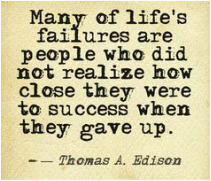
       Keep trying; keep struggling; keep making mistakes; and keep learning.


Tuesday, April 21, 2015

The Challenge of Educating Poor Students - Part 3

       American Public Schools face many and varied challenges.  Funding, equity, and public support to name a few.  On the top of this list of challenges, I would include: The Achievement of Poor Students.

       It is easy to understand the underpinnings of this problem, and yet it is extremely complex to succeed in overcoming this problem.  The problem stems from two indisputable facts:

  1. Poor students consistently demonstrate lower achievement than their non-poor peers.
  2. The proportion of poor students in our nation's public schools is over 50% and is growing.


       I will examine this challenge from three perspectives:

  1. Poor students who have succeeded in our schools
  2. Understanding the special and different needs of poor students 
  3. Expert advice on successfully educating poor students
--------------------------------------------------------------------------------------------------

The Challenge of Educating Poor Students - Part 2

Expert Advise on Successfully Educating Poor Students

       Despite the great difficulties that our public schools have had in turning the tide of student achievement among our poor students, we actually have a lot of knowledge about best practices and effective strategies for achieving this goal.  People like Paul Gorski, Eric Jensen, and others have done extensive research on this subject.

       However, a mere listing of effective strategies severely undermines the great difficulty that is faced by teachers to engage in these strategies on a daily basis.  As with any long-term problem, we need a long-term solution--and that requires effective and ongoing training.  We mustn't assume that this is somehow "common knowledge" for all teachers.  It isn't.

       The first step is recognizing that we have this problem.  Our accountability measures over the past 15 years (in the United States) has helped in this respect.  Where, in the past, the low achievement of our poor students was often "hidden" in the aggregate data of the "whole school"; since about 2003, our public schools have been required to report the achievement of poor students separately.  This practice has shone a light on the serious under-achievement of our poor students.  While I am not convinced that the general public is aware of this problem, it is fair to say that more people know about it today than was the case in the recent past.

       So until we develop a national strategy for increasing the achievement of poor students in America, here are strategies that every teacher can do:

  1. Good Relationships:  As with any students, when teachers and students get to know each other and enjoy a positive relationship with each other, achievement generally is pretty good.  For poor students it is important that they feel welcome in school and in each classroom.  Even if the student may have a negative attitude toward the subject of the class, he/she does not have to have a negative attitude toward the teacher of the class.  Get to know your students; ask them about their day; talk about things other than the subject matter before and after class time.  Students want to make their teachers proud.  Students will try harder to do their best if they know that their teachers cares about them as a person.

2.  Basic Materials: Paper, pencils, pens, rulers, textbooks, etc. should be available to all students all the time.  While we want students to be responsible to have these items with them at all times, it is not necessary to stop the flow of the classroom just to give a lecture about bringing a pencil to school everyday.  Most teachers have a system of allowing students to borrow pencils.  It's not a big deal.  But when a student is scolded for such minor things, it adds to their negative attitude toward school.

3.  High Expectations: We want all of our students to succeed and we want all of our students to do their best.  However, sometimes in our (well-meaning) efforts to achieve these goals, we set tiny, minor expectations for our students and then we guide them every step of the way and then we (unnecessarily) praise them for basically doing what they were told to do.  I think teachers do this because they either do not think that their students can achieve at high levels, or they don't know how to help them to get to those high levels.  This, indeed, is the hard part of teaching and (indeed) is the very root of our difficulty in raising the achievement of poor students.  Teachers need to identify those best practices--within their subject area or grade level--that is the most effective with poor students.  We have to raise expectations and allow students to struggle sometimes in their journey toward learning.  Merely doing the minimum is not going to help our poor students.


       The education of our nation's poor students can no longer be pushed aside as a difficult problem that effects a few.  It is now a major problem that effects a majority of our students.  And it has long-term ramifications for them and our society as a whole.  We must do better.

       We must do better.


Friday, April 3, 2015

No More Worksheets!

       Here is a very simple test to determine the effectiveness of your child's mathematics teacher...

Question 1: Does you your child's mathematics teacher assign a lot of worksheets for homework and classwork?

If the answer is YES - Not a very effective teacher.
If the answer is NO - Likely to be a more effective teachers.


       This idea is a major shift in thinking for a lot of people--both for teachers and for non-teacher-parents alike.  Some would say, "How can you say worksheets are bad?"  Or, "I used worksheets when I was in school and I turned out fine."  And the internet is certainly full of sites with pre-made worksheets that are frequently downloaded and used by teachers.  So (I guess) the next argument is, "If so many teachers are still using worksheets, then why are they so bad?"  Here's why:

#1: We want students to understand the mathematics that they are learning.  Worksheets tend to encourage students to blindly follow procedures without knowing why they are doing what they are doing.  Students might get the answers correct, but if the problems were changed slightly they wouldn't know what to do because they never learned the "Why" of the procedures that they were using.

#2: If students know how to do something, then why do they have to do it 20 times?  It seems to me that if they can do it two or three times, that would be a sufficient amount of proof that they have learned the skill.  If a students does not know how to do something, then why are we forcing them to do something 20 times that they cannot do?  Have you ever completed a worksheet only to find that you made the same mistake on all 20 problems--and got everything wrong?

#3:  Worksheets are not engaging.  In Robert Marzano's book The Highly Engaged Classroom, we learn that students are more able to learn new concepts when they are engaged in the lesson.  He offers many strategies for increasing student engagement.  Worksheets tend to be boring and repetitive and very discouraging in terms of engaging students.

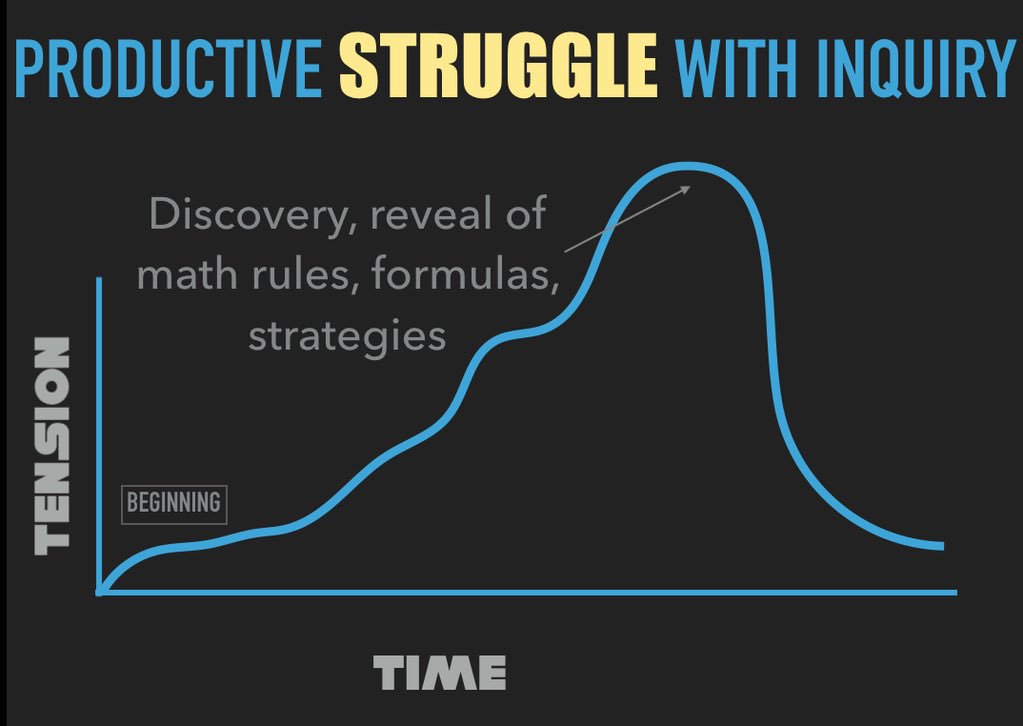
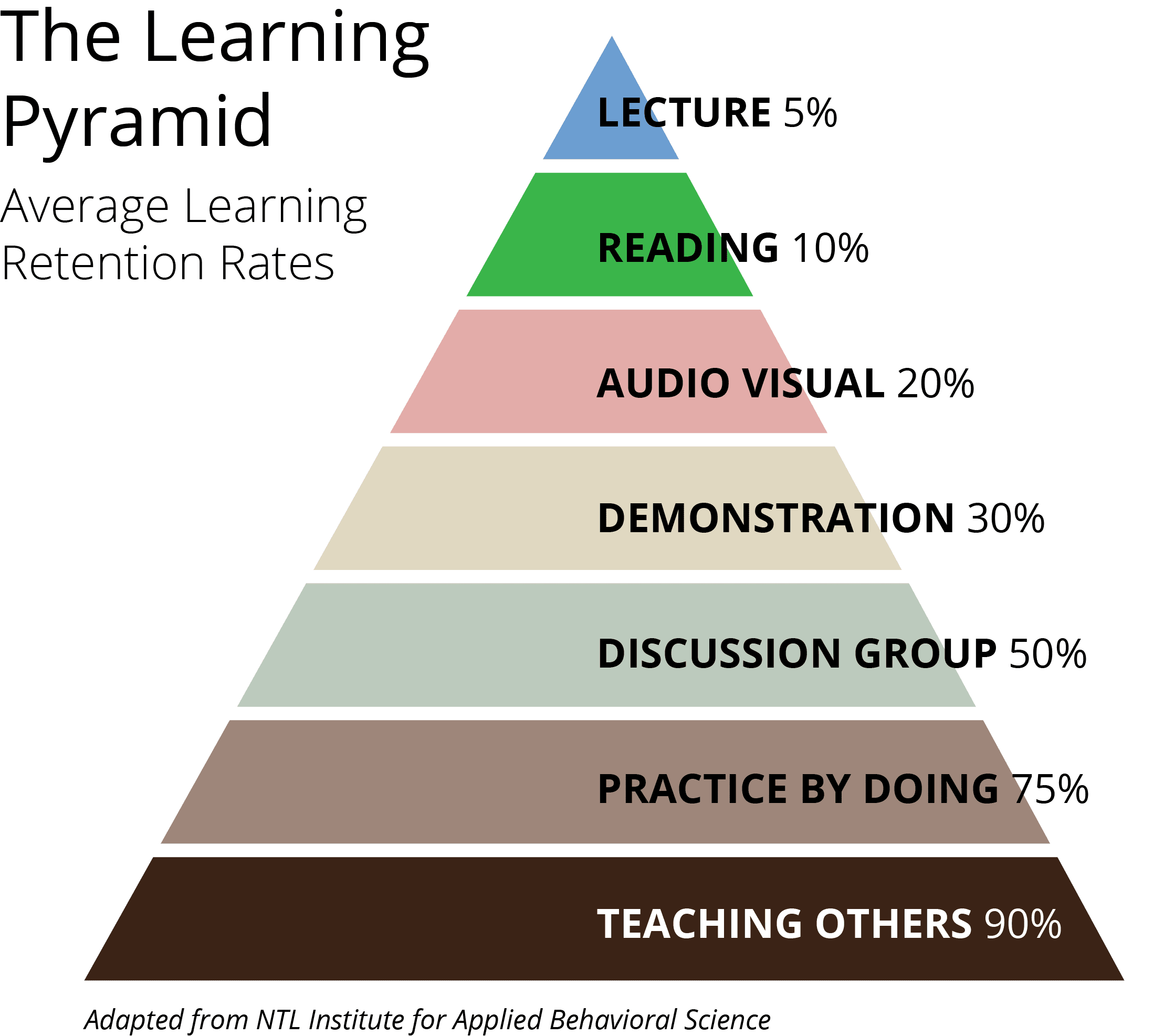
#4: We want students to communicate and collaborate with their peers during the learning process.  As students struggle with a new topic, it is valuable for them to know to ask questions and to try different approaches to solving a problem.  We call this Productive Struggle (also see here and here and here).  When students do worksheets, they are often working in isolation.  They are discouraged from talking at all with other students.  This creates a classroom in which students are expected to listen to the teacher lecturing and only to the teacher and then to learn the new content based on what they heard.  We know that this is not an effective method for learning (see The Learning Pyramid graphic).

       One reason that teachers like worksheets is that they are used to help control student discipline in the classroom.  Some teachers are not comfortable with students talking to each other and asking each other questions because they are concerned about losing control of their classes.  But we know that when students are engaged in an activity, they are focused on the activity and not distracted by anything else.  There is a benefit to allowing students to talk with each other.  And there are many strategies that can be used to do this in a productive and organized manner in the classroom.

     
       One of these strategies is the use of Math Tasks.  Math Tasks encourage critical thinking, student discussion, and questioning from students that lead to better understanding of mathematics concepts.  Many sources offer great Math Tasks for teachers to use.  Here are just a couple of them: Inside Mathematics and Mathematics Assessment Project.

       The goal of our public schools is learning.  We must use the best thinking we have to encourage thinking and learning among our students.  We don't want students to merely "complete" courses, we want them to learn, to understand, to retain knowledge, and to build upon their learned knowledge.


Public Schools and Choice

       Is it true that public school kids and their public school parents don't have choices?  I'm sure that I will expose my igno...

Teach100 blog