Showing posts with label math. Show all posts

Saturday, January 7, 2017

Teachers Seeking Innovative Learning Strategies

       If students aren't learning, then the teacher isn't succeeding.

       This is a harsh statement.  Clearly there are lots of reasons that prevent students from learning.  Some of these reasons can be due to teacher actions in the classroom and some are outside the control of the teacher.  But the main goal of school is learning.  If the student isn't learning, than we haven't met this main goal.

       Of course, not all students learn in the same way.  When a teachers presents a lesson--be it via lecture, or a game, or discovery learning, or through the use of a task, or some combination of these methods--some students will "get it" and some will not.  And so our best teachers are constantly looking for different ways (different teaching strategies) to help students to learn.  This (indeed) is the part of teaching that very, very complex.  Trying to understand the best way to help students to learn--every student in every class--is the struggle of every teacher.

       Alas, the world of education is full of ideas to help us.  Some of these ideas fall into the category good suggestions that any teacher should use, such as:

  • Scaffolding - breaking up the learning into smaller chucks and allowing students the time to learn one-piece-at-a-time in the effort to get them to learn the whole idea or standard.
  • Graphic Organizers - providing students with different ways to organize information so that "many ideas or facts" are easier to see and to understand.
  • Multisensory - presenting new information in multiple ways that help the students brain to store the information in multiple ways.  For instance, verbally explaining something while also writing the information on a whiteboard or computer screen, while also (perhaps) providing a manipulative or foldable for the student to hold and work with tactilely.  
Other ideas are more specific as to the sort of instructional style that may take place in a classroom.  A typical example of this would Direct Instruction or Lecture.  This is very typical in classrooms in the United States; particularly in our high schools.  Adults in their 70's and 80's probably received instruction in this manner when they were in high school and their grandchildren and great-grandchildren likely receive their high school instruction in this same mode.  Some people refer to this sort of instruction as Traditional classroom instruction--and it clearly is not effective for all students.

       More teachers are using a Discovery Learning approach to classroom instruction at least some of the time in their classes.  This approach allows students to build on past learnings by completing tasks and problems that require them to do so.  Students may work individually or in small groups of three or four while the teacher responds to students' questions and encourages students to think about other solutions.  This approach is common in some countries but is much less used in the United States.   

       I am part of a couple of math groups on Facebook and I posed the question, "Is Direct Instruction Necessary?"  I went on to ask if Discovery Learning could be the sole or major teaching strategy in a high school math class.  Of course the responses that I received were various and wide ranging, but I did learn a lot more about individuals and groups of teachers who use this approach with some success.  

       When teachers are continuously searching for more and better ways to reach their students, everyone wins: students, teachers, schools, society.



Friday, December 2, 2016

Changing Math Attitudes

       I'm borrowing the title of a Facebook group to use as the title for this post.  The group called Changing Math Attitudes is composed of math teachers and other educators and (I suppose) other folks that seek to share experiences and expertise in the effort of helping students (and adults) to see mathematics as something beautiful, sensible, and doable by everyone.

       The first step in improving abilities in anything is to believe that you can do it.  We want students to understand that mathematics is not a secret code to which only a privileged few have access.  There is no "math brain".  Everyone can understand mathematics and it will take a group effort by many people in many circumstances to effectively change the view of mathematics that so many people hold.  This is the view that says "I'm not good at math."  (And so many people freely say this out loud when they would never say that they can't read or that they are bad at Science or History.

       I especially enjoy reading the posts from this group because they are generally politically agnostic.  It isn't a group that is pushing a political agenda one way or the other.  And this makes sense too because the "I'm bad at math." attitude is not coming from one group of people who members of any single political persuasion.  All sorts of people hold this view and so we are talking to all people when we say that we want to change attitudes about mathematics.

       Any math teacher will tell you that most of the students in their classes that struggle to understand the math would do so much better if they held the view that effort would lead to success; if they believed that getting the wrong answer doesn't mean that you are "dumb" but instead means that you've had a learning experience that can lead to better understanding.  If students can escape the Fixed Mindset that says "No amount of effort will lead to success.", then we know that we can help them to get to a point of better understanding.

       Attitude is everything.  Attitude determines the effort that students will put forth.  Attitude allows for a second try and a third try and a fourth try; or attitude gives permission to not try at all.  Attitude is the force that is stronger than caring adults.  Attitude shapes our views and ultimately shapes our destiny.  When our attitude tells us to give it a try, we are on our way to a world of opportunities.


Tuesday, November 1, 2016

Math Problems with Lots of Paths from A to B: Open Middle

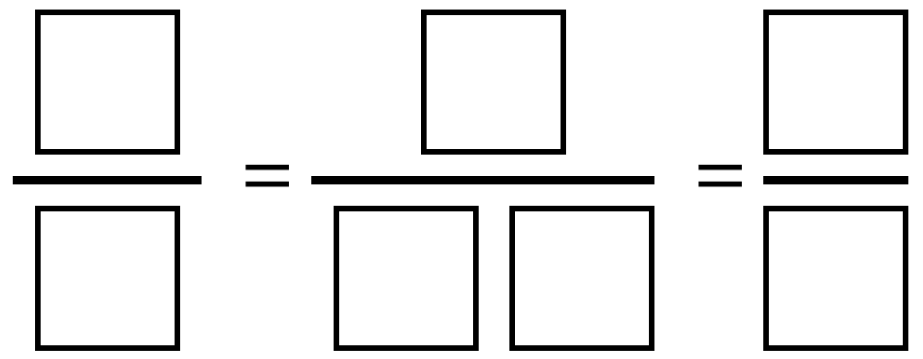
Directions:  Fill in the boxes using the whole numbers 1 through 6 to make the largest (or smallest) possible number. Use each digit at most once.

       Who ever said that there is only one way to get the answer in a math problem?  

       OK...(unfortunately) lots of people say this.  But, guess what, the best math questions don't have just one way to be solved.  Because the best math problems don't have the simplistic goal of merely following the steps you are told to follow and getting an answer.  The best math problems have much broader goals: Thinking, Reasoning, Problem Solving, Perseverance

       I've recently been introduced to a great source of these math problems called Open Middle.  Open Middle math problems start the same and end the same (with one particular correct answer), but they have an "open middle"; there are many ways to approach and to ultimately solve the problem.  The above problem is a sample of an Open Middle problem.  

       Open Middle has math problems for grades Kindergarten to high school mathematics.  They are great for getting students to use recently learned math in novel ways.  And when students have a chance to talk about the way they went about solving the problem, they gain an ever stronger grasp of the mathematics by hearing from their peers--a strategy known as Number Talks.  

       Students learn that it is OK to think about solutions differently.  One student may have a very complicated solution that makes sense to her.  Another may have a clever solution that no one ever thought of--not even the teacher!  Learning from each other is a great way to experience math and to understand that math is vibrant and alive with many possibilities.

       Students may think of Open Middle problems as puzzles, but listen to the math vocabulary that they use when the work on their solutions.  Students who are bored with the typical math class are excited to spend lots of time working on Open Middle problems because they are relatively easy to start.  Every attempt at an Open Middle problem helps students to learn what to do and (perhaps) what not to do.  They don't view wrong answers as failures but instead as a closer step toward the final answer.

Directions: Using the whole numbers 1 through 9 no more than once, create 3 equivalent fractions.


Monday, October 24, 2016

The Time Has Come to Question Everything We Do in Education

Why is the school day six-and-a-half hours?

Why is the school year from September to June?

Why do have to use Carnegie Units in high school?

Why are grades so important?

Why does every class have to have a textbook?

Why do I have to use a pencil in math class?

Why does high school start so early in the day?

Why do schools compare themselves to each other?

Why do I have to memorize things that are easily found online?

Why does the teacher do most of the talking in class?

Why do we rank students in high school?

Why do we brag about high grades and not about high learning?

Why do have student desks and chairs?

Why do all of the chairs face in the same direction?

Why is there 14 years of schooling from Pre-K to high school graduation?

Why?


       Cars change; buildings change; clothes change; planes change: people change; the world changes.  Why don't schools change?  

       Why?

Saturday, September 24, 2016

I Don't Have a Reading Brain

       I don't have a reading brain.  


       I'm 52 years old and I've never been good at reading.  In fact, I'm constantly telling my children that I was never a good reader so that they don't feel so bad about being bad at reading themselves.  They are always saying, "Why do we have to learn to read anyway?" and even though I basically agree with them, I try to think of times when reading is important such as when they get a text from their friends.

       I really don't feel too bad about being a bad reader because just about everyone I know is bad at reading.  In fact, we are always joking about being bad at reading.  My sister-in-law is a middle school English teacher and every time we go to a restaurant we always make her read the menu to us.  We just tell the waitress to hand the menus over to her and most of the time the waitress sort of laughs in agreement and says something like, "I get it.  I'm a terrible reader too."  And we all have a big laugh.

       People who can read must be really smart.  Everyone knows this.  In school, we always knew who the smartest kids were because they were able to read.  When teachers told me to read, I just tried to memorize the facts that I needed to know to answer the questions at the end of the chapter.  That's what I tell my own children to do because I really can't help them with their reading and they know that I can't really read very well anyway.

       High school reading was the worst.  Seriously, how are normal people supposed to memorize all of those words AND their meanings.  It really isn't humanly possible, except for people that have reading brains--I guess.  

----------------------------------------------------------------

       Does this sound familiar to you?  Are you constantly telling your kids and your friends that you're terrible at reading?  Do you get tense when have to read something?  Do you have reading anxiety?


Who would brag about not being able to read?  Who would ever suggest to their very own children that reading isn't important?  It's absurd.  No adult or parent would openly laugh about not being able to read.

       But, sadly, adults and parents often say these things about mathematics.  Some people actually believe that there is such a thing as a "math brain".  Many people view people who are good at math as being "smart".  And I have often been in a restaurant when my friends and relatives have passed the check to me to figure out the tip--all the while laughing and being very open about their inability to do math.

       What sort of message are we sending to our children when so many adults joke about not being able to do math?  Too many children feel that they are given a "pass" from the adults in their lives to be poor at math.  This leads to a lack of effort in the classroom which leads to a lack of understanding.  Every math teacher has (at some point in their career) said to a parent, "Your child could do so much better in mathematics if he/she put in the effort."

       This is something that we can fix.  This is something that every parent can do to help their child to do better in math.  Stop saying that you were never good at math.  Make sure that your children understand that they can do anything and they can learn anything; but they have to try.  Learning isn't always easy.  No one expects you to "get it" the first time.  It takes effort and mistakes and try, try again.

       Learning reading and mathematics isn't all that different.  The difference is our attitudes toward them.

Thursday, July 21, 2016

Everyone Can "Do" Math


       I've got great news...Everyone can do math!

       The bad news is that everyone doesn't believe this.  In fact, lots of people don't believe this.  How many times have you or someone you know said, "I'm not good at math." or "I'm not a 'math person'." or "I don't have a math brain."?  You never hear people say this about Science or Social Studies; it's only about math.  And the reason people say this is (probably) because of the way they learned math in school.

       Math has always been taught as a bunch of rules to follow, a lot to senseless things to memorize, and a whole lot of procedures to do.  Nobody ever taught you why these procedures make sense or why these rules are in place.  They just said something like "You have to know it."  (This is akin to the parent who says to his or her child, "Because I say so.")  Not a very good reason and certainly not a compelling reason for learning and understanding.

       And to make matters worse, we now have generations of people (parents and grandparents) who believe that this is the way math is supposed to be taught.  We have parents saying to their children, "I know it's hard and I know it doesn't make sense, but this is just the way it is and you have to do it."  This is a terrible message for students to receive.  It says to students that even their parents think that math is weird and confusing and doesn't make sense.  It reinforces the message that says "You will probably not understand this."  So a lot of students accept this message and basically say, "Fine.  I'm never going to 'get it', so I'm not going to try anymore."

       It doesn't have to be this way.  Our mathematics classrooms can be filled with positive messages that tell students that math is about creativity and making connections.  Messages that tell students that it is OK to make mistakes in math class because that is how you learn.  And messages that explain that you don't have to be first to get the correct answer.  In fact the best math students are slow in thinking and reasoning and understanding.

       Everything in this post comes from Dr. Jo Boaler and from the website that she created called YouCubed.  She has spent her professional career trying to understand how students learn and how teachers teach.  Her ideas and suggestions can lead to a new world of mathematics teaching and mathematics learning.  All of this is based on research and not from one person's point of view or experience.


       Understanding math is important and we need public school teachers to teach for understanding; we need parents to encourage understanding in math class; and we need students to believe that they can learn mathematics as easily as any other subject.


Wednesday, June 15, 2016

Is Your Child Advanced in Mathematics?

       It seems that, more than in other subjects, the placement of students in advanced mathematics is often a contentious issue. Elementary schools have different policies about placing students in classes that teach math at grade levels that are above the student's current grade.  Middle schools often offer high school mathematics classes, but some stop at Algebra 1 and some go beyond Algebra 1.

       The ability of a school or school system to determine a student's math ability (or "advanced" math ability) can be hard to do with great accuracy--especially when we are trying to make this determination with eight and nine year old children.  It's not enough that they are getting good grades in their math work; math is more than mere calculation.  And higher-level math is all about reasoning and thinking and understanding.  The kid that is good at memorizing, isn't always good at (say) the abstraction that comes with manipulating variables and graphing a line.


      Yet, I think that (too often) we get a false impression of a student's math abilities from merely looking at their elementary grades on the report card.  Sometime students are placed in advanced classes and at some point in middle school they start to struggle because they were pushed to learn higher and higher levels of math too fast.  On the other hand, there are certainly students who are highly able in mathematics and they should be encouraged to take more challenging classes that are commensurate with their abilities. So goes the dilemma of trying to identify the truly highly-able students from those that only appear to be highly-able.

       One method that helps is using multiple data points.  When students breeze through their multiplication tables and get "A's" on their report cards, but do poorly on standardize tests or on unit tests, this should be a cause for concern.  Maybe this student is good at memorizing facts and procedures and not good at understanding concepts.  This student is successful at procedural assignments (such as long division with whole numbers), but may struggle with more abstract assignments (such as a math task with multiple answers).

       Of course, we know that it is OK for students to struggle as they learn new concepts (see previous blog post), but many students view this struggle as a sign that they aren't good at math; or a sign that the teacher is doing something wrong.  We don't want students to struggle because they have been inappropriately placed.  Truly able students (and Growth Mindset students) don't mind the struggle because they enjoy the journey toward learning.  Also they understand that it is OK if they don't get it the first time.  Continual effort will eventually pay off.  Students who never tried hard to do well in math and then are placed in an advanced math class and then are upset when they don't get it the first time...these may be the students that we are pushing too quickly.

       Is your child advanced in mathematics?  How do you know?

Monday, April 11, 2016

"I Can Barely Read"

       "I can barely read."  

       You never hear anyone ever say this with pride.

--------------------------------------------------------------------------------------------------------

       Last week I attended a Professional Learning session about Blended Learning.  Three English teachers were presenting.  One of them said, "...and we're all English teachers, so when we put grades into the grade book, we are all bad at math so we look for shortcuts."

       I am a mathematics supervisor and everyone in the room knows who I am.  When the teacher made this statement about being bad at math, another teacher looked at me and sort of made a face that said, "I think you just insulted the math supervisor who is sitting over there."  The speaker saw this face and looked at me; and then other people in the room began to realize what was going on.  Slowly people started to laugh at the slightly embarrassing situation that this teacher put herself in.


       I didn't want this presenter to feel bad so--with everyone looking at me and wondering how I was going to react--I said, "It's OK."  And then I said (with great pride), "I can barely read."  And the whole room broke out in a loud laugh.

       Why is it perfectly acceptable in our society for grown, educated people to say (out loud and in front of other grown, educated people), "I can't do math."?  But it is completely unacceptable and cause for embarrassment to say (in front of other people; and with great pride), "I can't read."  Why aren't people embarrassed that they can't do math in the same way they would be embarrassed to not being able to read?

       Teachers, parents, coaches, and all leaders need to speak up when they hear children (and adults) proudly saying that they can't do math.  It reinforces to students that it is OK to be bad at math.  This leads to students who refuse to put in the effort to learn mathematics.  Students begin to believe that they really can't do math AND they believe that this is perfectly OK and it's not OK.

       Math is important.  Math is reasoning.  Math is thinking.  Math is problem solving.  Math is perseverance in the presence of difficult situations.  And everyone can do math.

       What you say is important.  People are listening.  If you would never say, "I can't read.", then don't ever say, "I can't do math."


Wednesday, April 6, 2016

Teachers Learning from Colleagues


       The National Council of Supervisors of Mathematics have just released a new feature on their website called It Worked!.  Stories and videos of Math Coaches talk about situations that have occurred in our public schools in which professionals learn from other professionals and (together) they gain more experiences and expand their abilities to help students to learn.

       The opportunity to hear from colleagues is a valuable professional learning opportunity.  Teachers and Teacher Specialists grow in their profession in many ways:  coursework, membership in professional communities, reading journals and articles.  But to hear from a colleague is particularly nice because we can see ourselves in their stories and in their situations.  We can think about similar situations that we have encountered and how we might handle those situations.

       The It Worked! feature is filled with Elementary and Secondary examples of how mathematics coaches faced challenges and found productive ways to address them.  NCSM is to be commended for building this community of professionals that has the capacity to assist other professionals in a profound way.  It is important for our leaders--at all levels--to share their knowledge and their experiences.  You never know who will hear your story and will use it for their own professional growth.


Saturday, November 7, 2015

Group work is a Necessity for Students

       Our school district recently had an essay contest in which students were asked to describe their Ideal Math Class.  Submissions came in from students in grades 4 to 12.  Nearly every student said that they wanted to work in groups for at least a portion of the class time.  Students want to have the opportunity to ask each other questions and to share their ideas with a small group of peers.


       In fact, the benefits of group work in the classroom are well known.  The Center for Innovation in the Research and Teaching has compiled the following list of benefits of group work:


  • Students able to take ownership of the subject matter.
  • Students develop communication and teamwork skills.
  • Content is reinforced as students work together and "teach" each other.  This improves understanding through additional discussion and explanation.
  • Content may be broken down into parts.  This allows students to tackle larger and more complex problems and assignments than they would be able to do individually.
  • Students can work together to pool their expertise, knowledge and skills.
  • Students hold one another responsible and accountable.
  • Teaches students to plan more effectively and manage their time.
  • Instructors benefit by seeing students approach problems in novel and unique ways. This can improve the instructor's perspective and make their future teaching more effective.

  • Instructors are able to have the content reinforced by giving the students ways to apply what they have learned in a collaborative setting.


       As teachers, we want students to have different learning experiences.  We know that all students do not learn best by merely listening to the teacher and taking notes.  We want students to learn how to learn and one way to do that is to give them these opportunities in the controlled atmosphere of the classroom.

       "Group work" is a general term that can be implemented in many ways in the classroom.  The Cornell University Center for Teaching Excellence has suggested many ways for teachers to incorporate group work into their lessons.  Marzano lists cooperative learning as one of his Nine High Yield Instructional Strategies.  

       Group work breaks the mold of the traditional teaching model that keeps the teacher in the front of the room all the time and the students in neat rows of desks and (usually) not talking very much.  Group work requires planning and preparation on the teacher's part.  It also requires teachers to allow some productive, learning noise to be part of their typical class on a regular basis.

       As we prepare our students for the world of work, we need to give them opportunities to work and to learn with their peers as this will (very likely) be a part of their own professional experiences as adults.


Wednesday, September 23, 2015

Are Your Students Obsessed with Grades?

       Here's a quick checklist to see if your students are obsessed with grades:


  1. They are constantly asking, "Is this going to be graded?"
  2. They refuse to do anything if it is not being graded.
  3. They ask for "extra credit" or make-up work at the end of the marking term to raise their grade to the next letter grade.
  4. They only see the grade at the top of their returned work and ignore the helpful comments that the teacher has written.
  5. They try to memorize the information they need to know for tests.
  6. They follow procedures in mathematics for unknown reasons just to get the right answer.
       In short, students who are obsessed with grades are just "going through the motions" at school; they do what they're told, but they learn very little.  And when they take a test that can't be beat by memorizing (like a final exam) they show their true ability or lack thereof.  The challenge for these students is to do as little as possible to earn the grade they want.

THIS IS NOT THE WAY SCHOOL IS SUPPOSED TO WORK.

       School is supposed to be all about learning.  If students aren't learning, than we are wasting their time.  And if we are (somehow) justifying how these grades-obsessed students are getting A's and B's, then we are giving them (and their parents) a false sense of accomplishment.  Eventually someone will tell these students the truth about their academic abilities, and it would be a shame if they are in college (and paying for college) when they are hit with this truth-bomb.

       Teachers can help their students to de-emphasize grades by praising them for their thinking and reasoning.  They can emphasize learning by asking students to explain how they got the right answer instead of just accepting the right answer and moving on.  Formative assessments that require thinking and reasoning and justifying instead of just repeating information tell students that memorizing isn't good enough.

       We have to help students to be less obsessed about grades.


Thursday, July 16, 2015

Make Math Meaningful: Math Tasks

       The days of the boring worksheets in math class and the word problems about the train leaving New York are over.

       Well...actually, they're not over.  But they should be over.

       We already know that most students (and adults) do not learn new things very well just by listening to someone explaining it; after which the teacher often says something like, "Does anyone have any questions?"  This is when the students want to say, "How can we have any questions about this?  You just taught it to us one minute ago.  (And then they get a worksheet.)

       This is passive learning.  This learning promotes adherence to procedures and getting-the-right-answer over true learning and understanding.  Some students do fine and some students do not; and it is simply not acceptable to engage in teaching strategies that don't help all of our students.

       Math classes should be places where students are actively engaged in their learning.  Students are presented with a problem or a task and they work in groups to brainstorm ideas based on the objectives that they have been recently learning.  The final answer can be reached via multiple solution methods and (most importantly) the students are using and learning mathematics simultaneously.  Finally, students are able to explain what they are doing (teaching others) which is a way for students to demonstrate their understanding.

       Math Tasks are written to be activities that students can do in small groups in their math classrooms under the direction and supervision of their math teacher.  Math Tasks are meant to take the place of the old 20-problem-worksheets during class time.  Instead of students working quietly and independently, they are working together with other students: learning from each other and sharing their ideas.

       There are many online resources that have wonderful math tasks.  Some of my favorites are:

  • Illustrative Mathematics
    • Go to Content Standards, then chose a Grade, then chose a Domain, then chose a cluster, then chose a standard and you'll see a list of Math Tasks.
  • Mathematics Assessment Project (MAP)
    • Click on Tasks and see a list of middle school and high school Math Tasks.
  • Inside Mathematics
    • Click on Performance Assessment Tasks and chose a grade or course to see a list of Math Tasks
      Math Tasks model the way math is done in the real world.  That's where you are presented with a problem and you have to decide which resources to use to find a path to the answer.  There is more than one way to get the answer and sometimes there is more than one possible answer.  Math Tasks help our students to understand mathematics.


Tuesday, June 23, 2015

Why Do You Teach?

       The school year ended four days ago and I am thinking about welcoming my teachers to the next school year.  (Wow.  That was a short summer vacation.)

       Every year in our school district the teachers return to school one week before the students return.  On one of the days of that first-week-back, all of the secondary teachers in the district meet in their subject areas for a full day of professional development before the school year begins.  This is a time to learn about new resources, to network with other teachers in other schools, and to energize teachers to get excited about the new school year.

       We know that an effective teaching strategy for student understanding is to ask a lot of questions that encourage students to think about what they are learning.  If students can explain what they are doing and why they are doing it, they must understand it pretty well.  It also reinforces the idea that we want students to understand underlining concepts and not just to get-the-right-answer.

       In that vein, I am going to ask our teachers some questions in an effort to encourage them to think about what they do and why they do it.  These question will challenge the teachers to consider different possibilities.  They will be questions that defy simple answers.

       I'm in the beginning stages of preparing this presentation and I am certainly open to suggestions.  Feel free share (in the comment section below) other questions that you feel would be good questions for teachers in the beginning of the school year.

Questions:
(1) Why do you teach?
(2) What are your goals this year?
(3) What will you do differently this year?
(4) How will you make a difference?
(5) What do you want to learn this year?
(6) Why is mathematics difficult for some of your students?
(7) How will you help students who don't ask questions?
(8) How will you engage your students in their learning this year?
(9) How do you help your students to value "learning" over "getting-grades"?
(10) Why do you teach?

       We ask (or should be asking) our students difficult questions every day.  As such, we need to ask ourselves difficult questions.  Teaching students who are willing and able and ready to learn is easy.  But trying to reach the unwilling, the struggling, and the distracted student takes time and effort and expertise.

       Why do you teach?


Friday, June 19, 2015

Summertime Learning


      Summertime may offer a break from formal schooling, but learning can take place in all sorts of formal and informal ways throughout the summer.  Many school districts offer summer programs that are part academic and part recreational.  Boy Scout and Girl Scout summer camps offer lots of learning opportunities that involve working with groups of people as well as individual projects.  Of course many libraries offer summer reading programs for children of all ages.


       Family trips during the summer offer children the opportunity to learn about different places and different people and (perhaps) different foods and different climates.  There are also many online programs that help students to sharpen their math skills such as TenMarks and Discovery Education.

       Learning takes place in all sorts of settings and in all times of the year.  Summertime can provide time for families and for children to explore interests and build on abilities.

       What will you learn this summer?

Friday, April 3, 2015

No More Worksheets!

       Here is a very simple test to determine the effectiveness of your child's mathematics teacher...

Question 1: Does you your child's mathematics teacher assign a lot of worksheets for homework and classwork?

If the answer is YES - Not a very effective teacher.
If the answer is NO - Likely to be a more effective teachers.


       This idea is a major shift in thinking for a lot of people--both for teachers and for non-teacher-parents alike.  Some would say, "How can you say worksheets are bad?"  Or, "I used worksheets when I was in school and I turned out fine."  And the internet is certainly full of sites with pre-made worksheets that are frequently downloaded and used by teachers.  So (I guess) the next argument is, "If so many teachers are still using worksheets, then why are they so bad?"  Here's why:

#1: We want students to understand the mathematics that they are learning.  Worksheets tend to encourage students to blindly follow procedures without knowing why they are doing what they are doing.  Students might get the answers correct, but if the problems were changed slightly they wouldn't know what to do because they never learned the "Why" of the procedures that they were using.

#2: If students know how to do something, then why do they have to do it 20 times?  It seems to me that if they can do it two or three times, that would be a sufficient amount of proof that they have learned the skill.  If a students does not know how to do something, then why are we forcing them to do something 20 times that they cannot do?  Have you ever completed a worksheet only to find that you made the same mistake on all 20 problems--and got everything wrong?

#3:  Worksheets are not engaging.  In Robert Marzano's book The Highly Engaged Classroom, we learn that students are more able to learn new concepts when they are engaged in the lesson.  He offers many strategies for increasing student engagement.  Worksheets tend to be boring and repetitive and very discouraging in terms of engaging students.

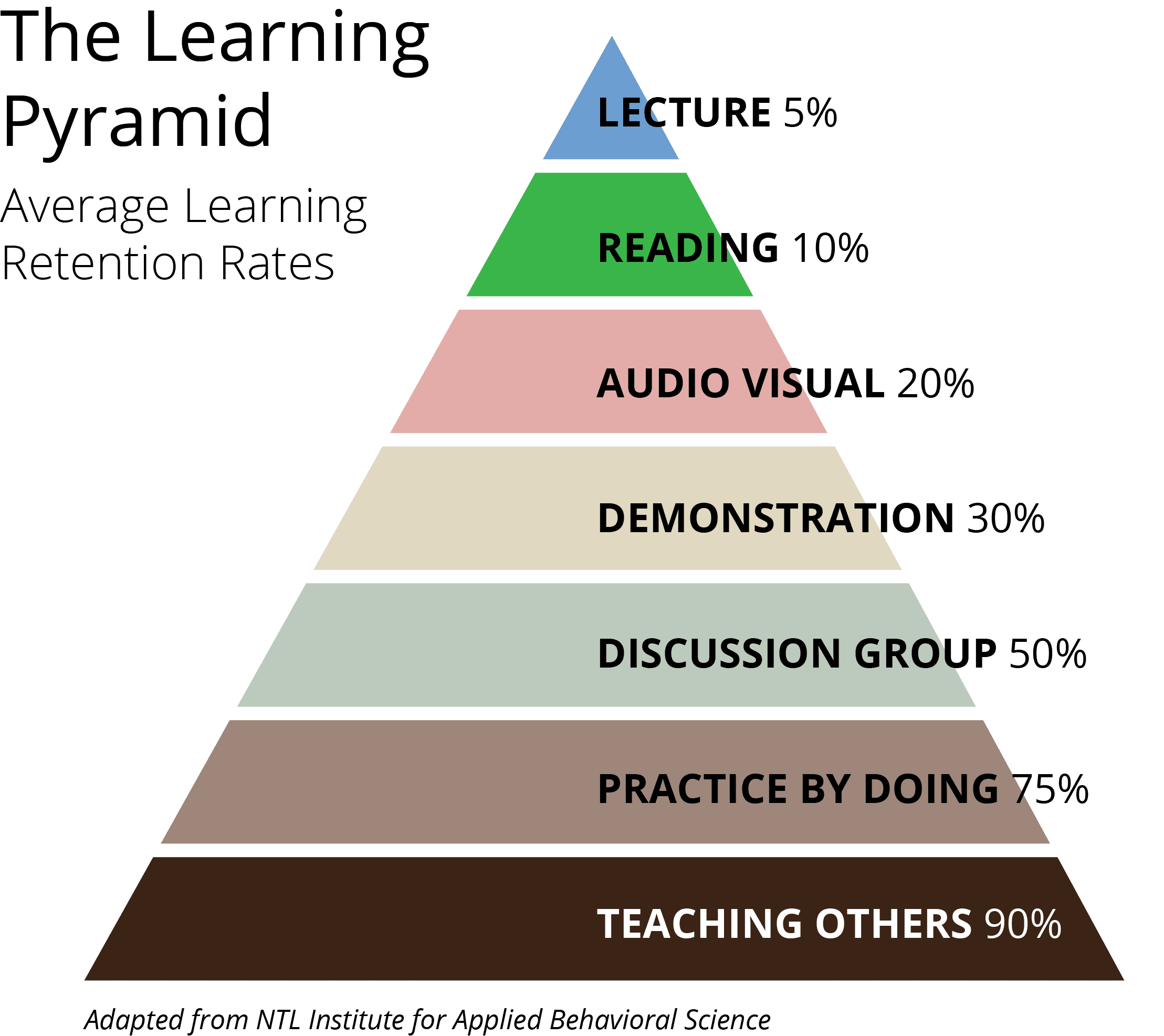
#4: We want students to communicate and collaborate with their peers during the learning process.  As students struggle with a new topic, it is valuable for them to know to ask questions and to try different approaches to solving a problem.  We call this Productive Struggle (also see here and here and here).  When students do worksheets, they are often working in isolation.  They are discouraged from talking at all with other students.  This creates a classroom in which students are expected to listen to the teacher lecturing and only to the teacher and then to learn the new content based on what they heard.  We know that this is not an effective method for learning (see The Learning Pyramid graphic).

       One reason that teachers like worksheets is that they are used to help control student discipline in the classroom.  Some teachers are not comfortable with students talking to each other and asking each other questions because they are concerned about losing control of their classes.  But we know that when students are engaged in an activity, they are focused on the activity and not distracted by anything else.  There is a benefit to allowing students to talk with each other.  And there are many strategies that can be used to do this in a productive and organized manner in the classroom.

     
       One of these strategies is the use of Math Tasks.  Math Tasks encourage critical thinking, student discussion, and questioning from students that lead to better understanding of mathematics concepts.  Many sources offer great Math Tasks for teachers to use.  Here are just a couple of them: Inside Mathematics and Mathematics Assessment Project.

       The goal of our public schools is learning.  We must use the best thinking we have to encourage thinking and learning among our students.  We don't want students to merely "complete" courses, we want them to learn, to understand, to retain knowledge, and to build upon their learned knowledge.


Friday, March 13, 2015

The Most Epic Pi Day Ever!


Not since March 14, 1915 has Pi Day been this epic!


       Oh yeah.  You know it.  Pi Day this year is going to be a big one.  3.14.15  The stars are aligned; the digits are aligned.  It is going to be bigger the Super Bowl of Mathematics--a national holiday for mathematics teachers everywhere!

       In my school district, we are celebrating with a major celebration.  We are running the Pi-K race with 400 participants.

       There will be a pie eating contest.  We are looking forward to the Einstein look-alike contest (Albert Einstein was born on March 14th.)  And we will have activities for children of all ages.


       So let's hear it for the one, the only, the irrational, the never ending, the number Pi

       3.1415926535897932384626433832795028841971693993751058209749445923078164062862089986280348253421170679821480865132823066470938446095505822317253594081284811174502841027019385211055596446229489549303819644288109756659334461284756482337867831652712019091456485669234603486104543266482133936072602491412737245870066063155881748815209209628292540917153643678925903600113305305488204665213841469519415116094330572703657595919530921861173819326117931051185480744623799627495673518857527248912279381830119491298336733624406566430860213949463952247371907021798609437027705392171762931767523846748184676694051320005681271452635608277857713427577896091736371787214684409012249534301465495853710507922796892589235420199561121290219608640344181598136297747713099605187072113499999983729780499510597317328160963185950244594553469083026425223082533446850352619311881710100031378387528865875332083814206171776691473035982534904287554687311595628638823537875937519577818577805321712268066130019278766111959092164201989380952572010654858632788659361533818279682303019520353018529689957736225994138912497217752834791315155748572424541506959508295331168617278558890750983817546374649393192550604009277016711390098488240128583616035637076601047101819429555961989467678374494482553797747268471040475346462080466842590694912933136770289891521047521620569660240580381501935112533824300355876402474964732639141992726042699227967823547816360093417216412199245863150302861829745557067498385054945885869269956909272107975093029553211653449872027559602364806654991198818347977535663698074265425278625518184175746728909777727938000816470600161452491921732172147723501414419735685481613611573525521334757418494684385233239073941433345477624168625189835694855620992192221842725502542568876717904946016534668049886272327917860857843838279679766814541009538837863609506800642251252051173929848960841284886269456042419652850222106611863067442786220391949450471237137869609563643719172874677646575739624138908658326459958133904780275900994657640789512694683983525957098258226205224894077267194782684826014769909026401363944374553050682034962524517493996514314298091906592509372216964615157098583874105978859597729754989301617539284681382686838689427741559918559252459539594310499725246...

Friday, March 6, 2015

Are the new PARCC and Smarter Balanced Tests Too Difficult?

       Public schools across the country are now using the new PARCC and Smarter Balanced assessments in Mathematics and English/Language Arts in grades 3 to high school.  Aside from the political commentary about these tests, some teachers have concerns that they are too difficult for their students.  Along with this concern comes concerns about hurting students' self-esteem, battling parents' perceptions of their children's abilities, and aligning earned course grades with earned PARCC and Smarter Balanced scores.

       I have heard and read comments that say that these tests are good for students who are very strong academically, but that they are inappropriate for students who are average or below average.  Sometimes parents have commented on sample problems and have stated that they are too hard for the students.

       The standards that these tests are written to are aligned to world-class education standards.  I realize that "world-class" is a buzz word, but I agree that these standards (and associated tests) represent an uptick with regard to rigor compared to those that they are replacing.  We know that too many of our students get good grades in elementary and middle school and then struggle with subjects in high school.  Or, they do fine (in terms of course grades) even through high school, but then they do poorly on the SAT or ACT.  We also know that many students graduate from high school, go to college, and do not graduate from college. (see college graduation rates)

       Hence, public schools are faced with this problem of students who appear to be learning and doing well in school, but then struggle with learning later.  We addressed this problem by incorporating tougher standards and putting in place assessments to see if the students are attaining these tougher standards.  In my opinion, this needs to happen; this must happen.  Nobody wants to see their own child struggling.    But we have to realize that this is already happening:


  • poor SAT/ACT scores
  • low AP scores
  • high percentages of students taking remedial math and english courses in college
  • students dropping out of college before earning a degree
       Until now, we have always been able to say "my kid gets good grades in school, so none of these other things matter to me".  But we have been fooling ourselves.  

       If we want students to be successful, we have to raise the standards (as we've done) and we have to insist on continually high standards throughout P-12 education.  This must happen.  Better education leads to better lives for our future adults--which leads to a better society for all of us.

       The tests are not too difficult.  We must, must, must insist on high standards, and we must do everything we can to help our students to achieve these higher standards.  I believe that our public schools will do exactly this in the years to come.  We will meet this challenge and we will raise student achievement and we will help to produce a society of educated people who are not afraid to face challenges, find solution, and succeed.


Sunday, October 12, 2014

Improved and Improving Students Abilities in Mathematics

     Over the past generation (or two), the mathematics abilities of students in the United States has improved.

     Take a minute and let that opening sentence sink in a little bit.  We are constantly hearing about how poor our nation's students do in mathematics compared to other nations; sometimes we hear the same comments compared to previous generations in the United States.  But the truth is, we are improving when in comes to mathematics abilities of our students.


        The graph (above) depicts the average NAEP mathematics scores for 4th and 8th grade students since 1990.  NAEP stands for the National Assessment of Educational Progress.  It is sometimes referred to as the Nations Report Card.  Among many other subject areas, NAEP periodically tests the math abilities of 4th, 8th, and 12th grade students throughout the United States.  This test is given to a representative sample of students in every state.  It is a "low-stakes" test and only aggregate results are determined.  (That is, there are no individual student results reported for NAEP tests.)

     We can see the overall increases over this time period on this graph.  While this is good news, it is also fair to say that students in the United States need to do much better than they are currently doing in mathematics achievement if we ever hope to rival our counterparts in other some other nations.  The ability of American students to reason and problem solve in mathematics is lacking.  Even students who appear to do well in math classes--as indicated by their grades--sometimes struggle in higher level math classes that require reasoning and understanding.

     So while we are improving in overall math ability over the past couple of generations, we need to continue to improve (and quicken the pace of improvement) if we want our students to be successful in world that they will inherit.

     This requires a change in the way mathematics is taught in United States.  We need to de-emphasize "grading" and re-emphasize "learning".  Students (and parents) who are only concerned about grades sometimes overlook the main purpose of schooling--which is learning.

     So let's keep the positive trend in rising math ability going.  We must.

Tuesday, September 30, 2014

Change What You Do (or else improvement will never happen)


     It seems we are constantly hearing and reading statistics that say American students are not achieving very well.  We rank low in reading and mathematics compared to other industrialized countries.  A quarter of our children never graduate from high school and the graduation numbers are even worse in college.  Our poor children and learning disabled children and minority children have lower rates of achievement than our white and economically advantaged children.

     All of this is true.  And we don't like it; and we want it to change.  We want all students to be successful; we want all students to graduate from high school; we want all students to be grow to be capable, responsible adults.  But this is a difficult problem--as is evidenced from the years and years of data with very little improvement on these fronts.

     Something has to change.  We cannot keep teaching the same way we have always taught and expect different results.  Teachers give their best everyday.  It isn't a matter of "not trying" or "not doing our best".  We have to do things differently.

     If I knew the solution(s) to this problem, I would tell you.  The best I can do is offer my ideas:

     (1)  We need to instruct students in a way that they respond to; we need to know what they "get" and what they don't get--so we can help them.
     (2)  We need to use more technology in a more effective way.
     (3)  We need to be more concerned about learning and less concerned about grades.
     (4)  We need to use valuable classtime for addressing student questions and much, much less classtime forcing students to complete worksheets.  (If they already know how to do the work, why force them to show us again and again and again.  If they don't know how to do the work, why force them to do ten problems that they can't do.)
     (5)  We need to increase student engagement every minute of every class.  There should be less teacher-talk and more student-talk.

     What are your five best ideas for changing teaching?  If you could do anything in your classroom to help students to learn better, what would you do?  We have to do something different if we want different (and better) results.

Monday, June 16, 2014

Concerns about Summer Learning Loss

     It is summertime and students have a ten-week vacation from school.  Should I be worried?
     Well, I think the answer is "Yes" and "No".

     On the "Yes"-side, there does appear to be evidence that students lose some level of knowledge during the summer article.  But, on the "No" side, it looks like this loss may be exaggerated another article.  Also, the "loss" appears to occur more often among poor kids than among middle-class kids (see graphic below).


    Also on the "No" side, there are 50 million students in P-12 education in the United States and a good majority of them seem to do OK year to year.  So, if there is a summer loss, Is this something that we should worry about?  I think that we all want the best for our children and we all want our children to do their best at all times.  We want them to remember what they have learned; we want them to grow physically and academically.  We don't want them to struggle.  If your child is required to do a lot of reading during the school year and then he/she does no reading during the summer, it makes sense that some loss of ability is going to occur.

     No parent would ever allow their child to go without vegetables for ten weeks during the summer.  So don't allow your child to go without exercising and reading and doing math and thinking and creating and discovering and learning during the summer either.  It's not that we are afraid that they will get a bad grade in September.  It is that we want our children to grow all of the time.  That includes academic growth.

     During the summer, the parents are the teachers and the home is the school.  Keep learning!

     For ideas to keep up your skills in mathematics during the summer, check out our Summer Math site.

Public Schools and Choice

       Is it true that public school kids and their public school parents don't have choices?  I'm sure that I will expose my igno...

Teach100 blog