Showing posts with label struggle. Show all posts

Friday, December 16, 2016

Do Our Brightest Students Get What They Need?

       Public schools are good at educating the average student.  We are good in the education of above average students.  We spend a lot of time, money, and energy on the education of below average students; and while this is a difficult population in terms of bringing them up to grade-level standards, we've made numerous improvements over the years to help these students.

       This leaves the most limited students and the very brightest students.  For the purposes of this post, I'm defining the very limited as the academically weakest two to three percent of our student population and the very brightest as our top 1% in terms of academic ability.  We have laws and programs and policies to help the most limited of our students.  They may not receive a high school diploma, but we help them to learn as much as possible during their school years so that they can have a full, happy, and satisfying life.  We help them to go as far as they can in terms of skills and abilities.  But when it comes to our very brightest students, I'm not sure that we can say the same.


        Once again, I'm not talking about the typical advanced students in our public schools.  We have programs and/or courses for them that are different from the typical "on-grade-level" programs.  And we do a good job with these typical above-average students.  I'm talking about our most advanced students.  These are the students who don't just stand out in their class, they stand out in their school.  They represent the 1 out of 100 (or more) that excel far beyond the typical advanced students.

       I am a mathematics supervisor.  Mathematics is the one subject that often gets the most attention when the topic of our very brightest students arises.  Parents and policy-makers alike strive to identify these students and endeavor to find a way that best meets their needs.  However all too often our attempts to do this lead to an inadequate solution known as "Acceleration".  Acceleration (in this arena) usually means that these very bright students get the same mathematics content and the same mathematics instruction as everyone else; they just get it at an earlier age and/or they just go through this same content at a faster pace than other students.

       The problem with this solution is that it does not recognize the true abilities of these students, and it does not encourage these students to think harder or reason more.  It doesn't challenge these students to grow and to further develop their strong academic skills.  Instead, this solution only pushes these students to go faster.  Sadly, this solution is often praised by parents and policymakers because our society views "faster" as "better".  We see everything as a competition and those that go faster and jump higher and earn more credits and produce higher grade-point-averages are viewed as the "winners".

       The real danger of inappropriate acceleration for our brightest students is that we place this "speed" over our prime objective of education; which is to actually learn.  Students lose the chance to develop a deep understanding of the content that they master.  They lose the chance to do what they are most able to do which is to question conclusions, discover new solutions, and to create and develop new ideas.  Strategic acceleration could accomplish these goals if the instruction is appropriately geared toward the needs of our brightest students.


       In practice, our public schools struggle with the top 1% because there are so few of them.   We don't have enough of them to make a "class"; sometimes there may not even be one in every grade.  They are spread out throughout a school district.  So we have to figure out a way to provide instruction that meets their needs while still attending to all of our other students.  This is a challenge--and (perhaps) is part of the reason that mere acceleration is so often employed as the "solution".  We also struggle to understand the best way to help teachers to provide this ideal instruction for these students.  So much of public education is geared toward helping our average and weak students; and less attention is geared toward our brightest students.

       The National Association of Gifted Children is a respected organization that addresses the needs of our brightest students and provides resources to help school districts to tackle this problem of providing for these students.  We need to do more and we need to do it in a smarter and more responsible way.


Sunday, December 11, 2016

Is It Possible to Help Students Too Much?

       How much is too much?


       Can you care too much?  Can you love too much?  Can you help too much?  When it comes to students and learning, sometimes teachers and parents help too much.

       Their hearts in the right place, but goals are short sighted.  Teachers and parents help too much when they tell students the answers in an effort for them to complete the classwork or the homework.  They seek the short-term goal of compliance with an assignment.  But they don't see the longer-term goal of helping students to learn how to learn.

       Educators have an expression for the results of too much help.  We call it, "Learned Helplessness".  It's when students learn to purposefully not try too hard because they know that a parent or a teacher or someone will eventually give them the answer or do the work for them.

       Since most students (and some adults) don't see or understand the benefits of learning, they believe that school is only a series of assignments that they have to complete because they are told to do so; or because they get a grade for completing it.  Therefore, they don't see the need to try hard and fail sometimes and learn from these failings and try again.  "Learning" isn't their goal; compliance is their goal.  Therefore they only seek to complete the worksheet, or answer the questions, or write the paper; because they only seek to get the grade.  And if the student can find someone else to do this--and the students basically gets the same reward (the same grade) either way--then the easy route is to let someone else do it.


       Of course teachers and parents want their students (and children) to succeed, so sometimes they provide this help in an effort to help them to get success.  But there is a terrible downside to too much help.  When the parent isn't there and the too-much-helping teacher isn't there, the child (maybe now a young adult) isn't able to solve problems on their own.  Since there was always someone there to do the hard stuff, the young adult is now either helpless or forced to learn how to learn new things at point in life when mistakes are more costly.  One area where this is often seen is the first year of college.  Students who haven't learned how to struggle to learn something new and expect someone else to do all of the hard stuff for them, fail and drop out of college.

       School is about learning; and it's about learning how to learn.  We aren't helping our kids by doing the work for them.  As teachers and as parents, we have to try to worry less about "the grade" and much, much more about the learning.  There is no benefit to children who graduate from high school but aren't able to think for themselves and make decisions by themselves and solve their own problems.

       Yes, you can help too much.


Friday, October 21, 2016

The Struggle for Change in Our Schools


       This sign hung at the Gillette Stadium in Foxborough, Massachusetts this week during the annual MassCUE conference.  "MassCUE" stands for the Massachusetts Computer Using Educators.  The conference was also sponsored by the M.A.S.S. (that is, the Massachusetts Association of School Superintendents).  The sign begs the question, Why is it that schools (education) is not changing if everything around the schools are changing?  I think I know the answer...

       The sign reminds us that the world is changing.  Indeed it is.  The changes that have occurred in the world have been driven by market forces such as efficiencies in manufacturing.  They have been driven by technology such as computers and cell phones and the capacity of these technologies (and others) to accomplish tasks much faster and easier.  The sign says the workforce is changing.  One big factor is the lower demand for low-skill jobs.  Less workers are needed to do a job that took more workers a few decades ago.  This (again) is largely due to the creation of machines and equipment that have been built to do jobs faster and better than human workers ever could.


       The sign says that technology is changing.  Few would need any strong justification to argue this point.  Computer chips are constantly being made to be smaller and faster.  (Although this scenario may come to an end soon.)  Computers are smaller and more powerful.  And the applications of this great processing speed appear to be endless.  Finally, the sign suggests that students are changing.  Different clothes, different music, and (once again) technology available at every turn.  Of course, these "different" students are also living in this "different" world; so of course since they are living a different experience than their parents, it makes sense that students of today are different from students of 20 or 40 years ago.

       So why are we surrounded by change and yet we are stuck with relatively little change in our schools?  By "little change", I mean high school classes of about 30 students with one teacher doing most of the talking.  Course requirements nearly the same for all students, even though we have students with different needs and different abilities.  The school day has basically the same start and stop time as 50 years ago.  The school year is basically the same as 50 years ago.  (And not because of farming needs 100 years ago.)  I would argue that the changes to the world, the workforce, technology, and students occurred as a sort of evolution.  No one person or group of people orchestrated these changes.  They happened as a natural phenomenon of humans living on earth and trying to better their situation.  As a species, we are always looking for ways to improve our life and our surroundings.  So we develop better tables and better chairs and better cars and better watches and so on.  Each generation is a little better than the one before it for all of these things.  But a change in schools requires that we conscientiously do something.

       School change requires a community that wants the schools to change.  Someone has to propose the change (or changes).  Someone has to agree.  Then someone has to convince the school board.  And so on and so on.  In the end, while educators may see the need for change in our schools (and not all educators see this change), non-educators often don't see the need for this change.  The common expression is, "This is the way school was when I was a kid.  It was good enough for me, so it will be good enough for you."  The general public is weary of major changes.  Change is disruptive and unsettling.  It is uncomfortable.  People (as a group) don't generally want things to change.  They may accept changes that are forced upon them (such as a new cable company because the old one merged with the new one), but when given the choice it seems that most would vote against change.  This is why (in my opinion) schools are so slow to change.


       As an educator, it is frustrating because I sometimes wonder if we are preparing our students for anything more than higher-level coursework.  Are they learning the skills they need to succeed in the workforce of the 21st century?  Are they able to cope with the world that they will inherit?  Is a high GPA enough?  How do we help the public to embrace the sort of change that will benefit their children?

       Can we allow our schools to change?


Tuesday, August 16, 2016

Do You Want to "Go" to College, or to "Graduate" from College?

     Lots of people "go" to college.  But not a lot of people "graduate" from college.


       According to the National Center for Educational Statistics, 36% of 25 - 29 year old people in the United States had a bachelor's degree in 2015.  This number represents approximately half of the people in this age group who began college at some point after their high school graduation.  Why are so many people able to graduate from high school and not able to graduate from college?

       A report from Complete College America provides some answers.  Part-time students rarely graduate.  While full-time students graduate at a (dismal) rate of 60.6% completing their 4-year program within 8 years; the equivalent statistic for part-time students is only 24.3%.  Another problem is students taking more credits that they need due to poor advice or odd policies that steer them to unnecessary and extra (unneeded) credits.  A bachelor degree should require just 120 credits, but the average student earning a bachelor degree completes 136.5 credits and the average time to earn all of those credits is more than four years.

     So here is my list of ideas to help students to graduate from college.  (Spoiler Alert:  These are pretty basic ideas.  But like everything else in life, students have to learn them at some point.  If no one every teaches these things to our college students and they don't develop these skills on their own, then we can't expect them to have these skills.)


  1. You are responsible for your college success.
       It's not the professor's fault; it's not your parent's fault; it's not "the colleges" fault.  You, the student, have to take on the responsibility for your college success.  You have to get the correct information about courses you need to graduate.  You have to know the deadlines for signing up for courses, for completing course work and projects.  You have to ask for help if you need help in a course.  You can blame others if you want to, but in the end it is you that does or does not get the diploma.

     2.  Make a plan.

       Number of credits needed per semester.  Courses needed; pre-requisites needed.  Materials needed.  How much time do I need to study?  What is a good, quiet place for me to study?  Do I have time for sleeping and eating and hanging out with friends.  You can't always to everything you want to do when you're working on your bachelor's degree.  But be sure to allow some down time along with your school work time.  But Make A Plan.  It won't magically fall into place; you need to plan accordingly.

     3. Don't give up when it gets difficult.

       It's OK to struggle a little bit when you are learning new things.  And it is certainly OK to get a "B" or a "C" once in a while.  But don't convince yourself that you can't do something just because you don't get it the first time.  You are a student; you're learning.  It's OK to work hard toward your goal of graduating from college--everyone does.

       I don't mean to suggest that college students are lazy and that's why they don't graduate.  There are lots of reasons why college students don't graduate.  I just think that a lot of students aren't prepared for the varied responsibilities of college and it hurts them in the long run.  I also believe that most high school graduates can complete college with the necessary supports along the way.


Sunday, August 14, 2016

Parent's Role in Improving Student Achievement

       If you have a child in elementary, middle, or high school, then your main concern is helping your child to do well in school.  You have a person or persons in your household that is a member of the most important cliental in the educational community--the students.  And as a parent, you have influence over your children.  Your attitudes and actions toward school matter.

       We need your help!

       So here is my short list of the three top things that parents can do to help their children to do well in school.


  1. Healthy relationships all around.  
Help your child to make friends with classmates and to get to know the teacher or teachers.  You (the parent) should try to get to know your child's teacher(s) too.  Communication is the key to all healthy relationships.  So try to discover the best way to contact the teacher.  Make sure that your child knows that you have a relationship with the teacher and a way to make contact on an as-needed basis.  This shows that you care about your child's education.  

   2.  Emphasize "learning" over "getting-a-good-grade".

The point of school is learning, not getting a good grade.  There are lots of ways to get good grades without learning much.  We want students to learn how to learn; to read; to study; to try and fail and try again; and ask for help.  Your child's grade should reflect his or her ability; but sometimes it just reflects his or her ability to do what they're told.  Remember that the goal of school is learning.  It's the "Do you best." philosophy (that your parents probably said to you).

    3. Don't help your children too much.

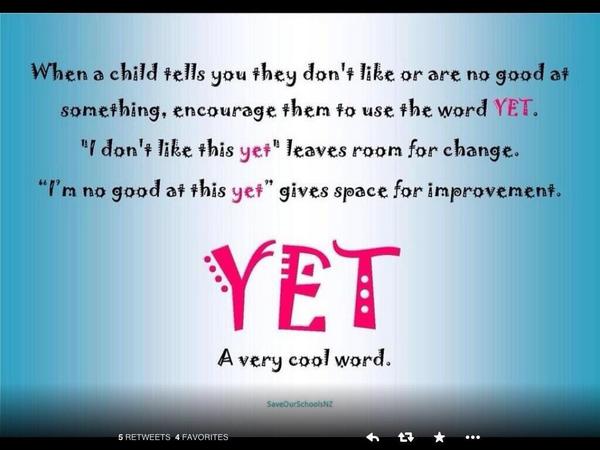
Let's face it...nobody likes to see their children struggling.  But if everything is easy and can be obtained without effort then you have to ask, "Is my child really learning anything?"  Real learning comes from a little struggle from time to time.  Just because your child doesn't "get it" the first time doesn't mean they will never get it.  They just haven't gotten it yet.  If you tell them the answer or do the work for them, they will get the right answer, but they haven't learned anything.  Remember, the goal of school is learning.  Instead of telling them the answer, ask questions.  "What do you know?"  "What don't you know?"  "What do you need to know?"  "What questions should you ask the teacher?"  We want students to learn how to deal with struggle; we want them to problem solve when the problem is difficult.

       School means a lot of things to a lot of people.  Clubs, sports, friends, activities, requirements, homework, pens, paper, teachers,....  It can be hard to remember that it is all about learning.  As the parent, you can help your child to focus on the important parts of school.

       Have a great school year!

Tuesday, November 3, 2015

Crack the Code of Learning

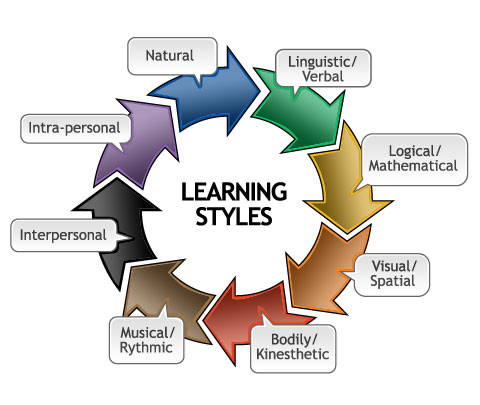
       How does a teacher enable students to learn?  How do students learn?  How do people learn?  Teachers who seek to reach their students struggle with these questions all of the time.  Experience (and research) tell us that students learn differently.  When we teach a lesson to 30 students; some get it right away, some get part of it, some don't get it at all.  How is that possible?  All of the students heard the same lesson; yet not all of the students had the same level of "Learning".

       This can lead to a difficult and awkward situation in which the teacher feels offended that the his or her efforts went to naught; and the student feels embarrassed that he or she wasn't able to learn as well as other students.  Our best teachers understand that all students don't learn in the same way and (so) they try to find different ways to present information.  They present is verbally; they present it visibly on a whiteboard on a screen; they use videos; they have students read some information; they have other students explain their thinking; and so on.  We use these different strategies to keep the class interesting and to increase student engagement.  But we also do this because we know that all students won't learn the same way and we need to find a way to present the content in different ways so that we reach all of our students.

       Einstein has been associated with the quote, "I never teach my pupils, I only provide the conditions in which they can learn."  I don't know if he really said this, but the statement may be correct.  It may be that no teacher can actually MAKE students learn.  It may be that the best we can do is to encourage students to learn.  We do this by getting to know our students very well and using this knowledge to include into our lessons those aspects that our students will find interesting.  If the students are interested than they are more apt to try their best even if the learning is difficult.

       Still, even when we understand about different learning styles and the value of good relationships with students, teachers are still faced with some topics that seem to be difficult for many students.  Once again we struggle to crack this code of learning.  How do teachers help students to understand complex topics?  Indeed, this is the art of teaching.  Some teachers are better at this than other teachers.  In my experience, the teachers who are able to reach the most students are the teachers who learn from their own experiences (including their own failures) and who seek input from other teachers via conversations with colleagues, reading journals and research, and taking courses about learning.

       Learning isn't a complete mystery--but it isn't a completely solved mystery either.  Current research about how the brain works will help to answer some of our questions.  Collaboration with professional teachers helps too.  Teaching is rewarding and (at times) frustrating.  As we learn more about the process of learning we will have more teachers with greater abilities to address the needs of more and more of our students.


Saturday, October 17, 2015

Learning is a Social Activity

       Learning is a social activity.

       A quick search of respected sources such as General Psychology, Psychology Today (article by Dr. Matthew J. Edlund, and one of my favorite education writers Annie Murphy Paul will help all of us to understand that the best learning requires active participation by the learner.  (View an excellent talk by Dr. Paul here.) The old days of "sit and get", don't-talk-in-class, teacher-in-the-front-of-the-room-doing-all-of-the-talking have been shown to be effective for an incredibly small percentage of our students.


     The problem is that most of our current teachers grew up in a school setting in which less student talk was the norm.  The teacher was the sole source of knowledge in the classroom and the students were discouraged from sharing their thoughts and ideas with each other.  Hence, many current classrooms engage in this same classroom structure that existed 20 and 40 and 60 years ago.  "It was good enough for me, and so it will be good enough for my students" as the thinking goes.

       This is a problem because the old model of presenting information to students and basically asking them to memorize it isn't enough for the workforce of today--and it isn't completely necessary in the age of the internet.  We are able to obtain facts very easily now.  The challenge to our teachers is to help our students to use that information to make connections to other information; to build things; to create things; and to solve problems.

       This requires our teachers to have a knowledge of how students learn and to use that knowledge to create lessons that incorporate the strategies that are most effective in helping our students to learn.
       This also requires teachers to be comfortable with students talking to each other in class; students getting out of their seats to share information and ideas with other students; and students making mistakes (and learning from these mistakes) during class time.  Some teachers struggle with this "active learning" approach because of the fear that such a classroom atmosphere would be difficult to manage.  Such an environment in the classroom requires planning and structure and good communication between the teacher and the students.  Students need to understand the objectives of the activities and they need to be accountable for doing their part.  Yet, this is the classroom that most students will tell you that they want.  And they want it because they struggle with learning through a strict sit-and-listen-and-take-notes sort of classroom.

       Learning is a social activity no matter where the learning takes place.  Adults who learn via asking questions and reading information and watching others and making mistakes and asking more questions, etc.; should not expect students to learn any differently.

       And if students aren't learning, then what's the point of school?


Thursday, September 17, 2015

World-Class Education

       I'm not a competitive person.

       I'm one of those people who sees the value in the journey and believes that there is something to be learned from every situation.   And, "Who Cares" if I did better or worse than the next guy.

       As our public schools are taking their first steps to endeavor to teach our students at the same academic level with the highest performing countries in the world, we stand to learn much from our colleagues.  True learning is a complex process and enabling true learning via classroom instruction is an evolving process.  No single teacher can do it alone; we need the expertise that we can only gain from working together.

       This isn't going to happen if we are constantly concerned with gaining some sort of higher ranking than our neighboring school.  This can only be accomplished through hard work and constant dialogue with the teacher across the hall in-between classes; and during department and team meetings; and in the evenings via twitter chats and reading blogs and paging through journals and taking classes and...

       We are at a major turning point in public education in the United States.  We are making an honest attempt to raise standards and examine our teaching strategies.  We know that change is hard.  In fact I believe that the difficulty involved in this process of change is the piece that has prevented us from moving forward in the past and what may halt the process this time as well.

       The struggle to raise standards requires everyone to take an honest look their current abilities: teachers and students.  We can't be overly concerned about grades and we certainly can't be concerned about beating the next guy (or the next school) in some sort of artificial competition.  We will have a few years of teachers and students with the same abilities that are judged on different standards.  We are truly "raising the bar" and we have to expect some period of time before we are all able to clear that bar.

       It will happen, but it will take time and cooperation and hard work.  It isn't enough (anymore) for students to merely "do what they are told" in school.  They have to actually learn and use what they learn during the learning of future topics.  Teachers need to not only teach but also determine how well their students are learning--everyday.  Parents need to accept the results of standardized testing and encourage their children to ask questions and to spend more time reading and practicing and understanding.

       No one every became an olympic athlete without years of training.  That's what we are trying to do.  We want our students to compare with the best students in the world.  We want them to leave high school with multiple opportunities because they have the abilities to truly do whatever they want to do.  It's a marathon, not a sprint.


       So start stretching--we are in "training" mode.  And we need time to improve.


Public Schools and Choice

       Is it true that public school kids and their public school parents don't have choices?  I'm sure that I will expose my igno...

Teach100 blog