Wednesday, August 17, 2016

The First Day of School


       The first day of school is filled with excitement for students and teachers.  New clothes (maybe), sharp pencils, backpack, re-connecting with friends, searching for the new classroom, new teacher, making new friends, first day in the new grade.  Clean slate, new school year, ice-breaker/get-to-know-you activities, setting goals.  Of course, there's also the tentative side of the first day of school.  "Will I make friends?"  "Will the teacher be nice?"  "Can I do the work?"

       The first day of school is a whole lot of "new" all at once.  It's exciting, but it can be scary too.  In fact, the first day of school is like many "firsts" that students experience.  The first day in a new Social Studies chapter after a test.  The first day of the new marking period.  The first day after Christmas vacation.  The first day of the soccer season.  Students experience a lot of firsts and (just like many life events) the more you practice, the better you get.  So it's OK if your child is experiencing a little excitement mixed with a little nervousness.  This is good practice for all of the firsts that will come later.

       All the best for a great first day of school!  It will a wonderful, emotional day--but mostly wonderful.


Tuesday, August 16, 2016

Do You Want to "Go" to College, or to "Graduate" from College?

     Lots of people "go" to college.  But not a lot of people "graduate" from college.


       According to the National Center for Educational Statistics, 36% of 25 - 29 year old people in the United States had a bachelor's degree in 2015.  This number represents approximately half of the people in this age group who began college at some point after their high school graduation.  Why are so many people able to graduate from high school and not able to graduate from college?

       A report from Complete College America provides some answers.  Part-time students rarely graduate.  While full-time students graduate at a (dismal) rate of 60.6% completing their 4-year program within 8 years; the equivalent statistic for part-time students is only 24.3%.  Another problem is students taking more credits that they need due to poor advice or odd policies that steer them to unnecessary and extra (unneeded) credits.  A bachelor degree should require just 120 credits, but the average student earning a bachelor degree completes 136.5 credits and the average time to earn all of those credits is more than four years.

     So here is my list of ideas to help students to graduate from college.  (Spoiler Alert:  These are pretty basic ideas.  But like everything else in life, students have to learn them at some point.  If no one every teaches these things to our college students and they don't develop these skills on their own, then we can't expect them to have these skills.)


  1. You are responsible for your college success.
       It's not the professor's fault; it's not your parent's fault; it's not "the colleges" fault.  You, the student, have to take on the responsibility for your college success.  You have to get the correct information about courses you need to graduate.  You have to know the deadlines for signing up for courses, for completing course work and projects.  You have to ask for help if you need help in a course.  You can blame others if you want to, but in the end it is you that does or does not get the diploma.

     2.  Make a plan.

       Number of credits needed per semester.  Courses needed; pre-requisites needed.  Materials needed.  How much time do I need to study?  What is a good, quiet place for me to study?  Do I have time for sleeping and eating and hanging out with friends.  You can't always to everything you want to do when you're working on your bachelor's degree.  But be sure to allow some down time along with your school work time.  But Make A Plan.  It won't magically fall into place; you need to plan accordingly.

     3. Don't give up when it gets difficult.

       It's OK to struggle a little bit when you are learning new things.  And it is certainly OK to get a "B" or a "C" once in a while.  But don't convince yourself that you can't do something just because you don't get it the first time.  You are a student; you're learning.  It's OK to work hard toward your goal of graduating from college--everyone does.

       I don't mean to suggest that college students are lazy and that's why they don't graduate.  There are lots of reasons why college students don't graduate.  I just think that a lot of students aren't prepared for the varied responsibilities of college and it hurts them in the long run.  I also believe that most high school graduates can complete college with the necessary supports along the way.


Sunday, August 14, 2016

Parent's Role in Improving Student Achievement

       If you have a child in elementary, middle, or high school, then your main concern is helping your child to do well in school.  You have a person or persons in your household that is a member of the most important cliental in the educational community--the students.  And as a parent, you have influence over your children.  Your attitudes and actions toward school matter.

       We need your help!

       So here is my short list of the three top things that parents can do to help their children to do well in school.


  1. Healthy relationships all around.  
Help your child to make friends with classmates and to get to know the teacher or teachers.  You (the parent) should try to get to know your child's teacher(s) too.  Communication is the key to all healthy relationships.  So try to discover the best way to contact the teacher.  Make sure that your child knows that you have a relationship with the teacher and a way to make contact on an as-needed basis.  This shows that you care about your child's education.  

   2.  Emphasize "learning" over "getting-a-good-grade".

The point of school is learning, not getting a good grade.  There are lots of ways to get good grades without learning much.  We want students to learn how to learn; to read; to study; to try and fail and try again; and ask for help.  Your child's grade should reflect his or her ability; but sometimes it just reflects his or her ability to do what they're told.  Remember that the goal of school is learning.  It's the "Do you best." philosophy (that your parents probably said to you).

    3. Don't help your children too much.

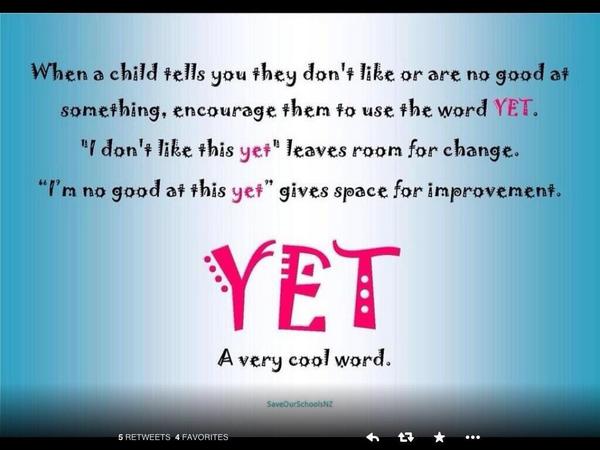
Let's face it...nobody likes to see their children struggling.  But if everything is easy and can be obtained without effort then you have to ask, "Is my child really learning anything?"  Real learning comes from a little struggle from time to time.  Just because your child doesn't "get it" the first time doesn't mean they will never get it.  They just haven't gotten it yet.  If you tell them the answer or do the work for them, they will get the right answer, but they haven't learned anything.  Remember, the goal of school is learning.  Instead of telling them the answer, ask questions.  "What do you know?"  "What don't you know?"  "What do you need to know?"  "What questions should you ask the teacher?"  We want students to learn how to deal with struggle; we want them to problem solve when the problem is difficult.

       School means a lot of things to a lot of people.  Clubs, sports, friends, activities, requirements, homework, pens, paper, teachers,....  It can be hard to remember that it is all about learning.  As the parent, you can help your child to focus on the important parts of school.

       Have a great school year!

Thursday, August 11, 2016

What Is Your Hope?

       I saw a great 3-minute video today from +Parkway Schools called What Is Your Hope.

       They place a chalkboard outside as the students walked into school on the first day of school.  The chalkboard had the question, "What is your hope?" written on it.  And the students wrote whatever came to their mind.  Here is the Facebook link:

https://www.facebook.com/parkwayschooldistrict/videos/10154530600468578/

       Their answers were simple and sweet and might make you cry.  They were human answers:

- that people will like me
- that I will make new friends
- that my teachers are nice
- that school will feel like home
- to be included
- to do well


       It's all about relationships.  Students want to feel valued and important.  They want their teachers to care about them as people.  They want to connect with other's in their classes.


       What do you hope?

Tuesday, July 26, 2016

Motivation and Student Engagement

       We always say that there is no "silver bullet" to getting kids to learn and be successful in school.  There's no secret or magic that helps all students.  Teaching is an art and some people have a way of reaching students better than other people.

       But the truth is that there really is a secret.  Every student can learn and good teachers can get to every student: the quiet student, the reluctant student, the distracted student, the poor student, the sad student, and even the emotionally-challenged student.  There is a way to help all students to learn how to learn.  This secret isn't always taught in teacher preparation classes.  Some teachers know about the secret but refuse to employ it; or struggle to use it every day.  Other teachers seem to use this secret with relative ease; masking the hours of effort and preparation they have put into it prior to class time.  The secret is motivation and student engagement.

       For most students who struggle in school, it isn't that they lack the ability to learn.  More often it is that they lack the desire to learn.  They haven't been given a good reason to learn.  They receive very uninspirational messages such as:  "You have to go to school."  "It's your job to go to school."  "I know it's hard, but you have to do it."  "Math is dull and boring, but that's just the way it is."  "It's the law that you have to go to school."  "Just do it and get it over with."  (And so on.)  These messages might be OK for very little children who are more accustomed to doing what they are told to do from their parents and other adults, but by the time kids get to middle school and certainly by the time they get to high school, children need a much better reason to do things other than "Because I say so.".

       Have you noticed that when students like their teachers, they tend to do better in those classes?  Have you ever been surprised that your child is doing great in Social Studies or Foreign Language when they never liked these subjects in the past?  Most of the time it isn't the subject, it's the teacher that made the difference.  And when you ask the child why they are doing so much better, they say that the teachers makes the subject interesting and fun.  An important part of teaching is motivating students to do their best.  Some teachers understand this very well and work hard to find ways to motivate their students.

       This "secret" really isn't a secret to our best educators; but it seems to continue to be a secret to some of our teachers.  Fortunately there are a lot of books and groups and people that can help teachers to learn about student engagement and motivation.  A great place to start is the book Teach Like a Champion by Doug Lemov.  This book is filled with simple ideas that motivate students.  Another excelled source of information is Robert Marzano's book The Highly Engaged Classroom.  This book explains why it is important to employ student engagement strategies into every classroom and how it helps students to do better in school.  Another popular book on this subject is Teach Like a Pirate by Dave Burgess.  There is also a very popular Twitter chat under the hashtag #TLAP in which teachers talk about their experiences and ideas about student motivation.  Finally, I have to include the book Growth Mindset by Carol Dweck--which is becoming (practically) required reading among teachers that seek to help their students to reach their true potential.

       Of course, teachers who are best at motivating their students have put in many, many hours of reading and classes and training to be good at this.  Every student is different and every school year presents different challenges.  Some teachers are so overwhelmed by the demands of teaching, it can be difficult for them to take the time to learn about student motivation.  However, some teachers believe that the old messages of "you just have to do this" should be good enough motivation for students and they are unwilling to learn about new methods for helping their students to do their best everyday.

       Every student can learn and every teacher can reach every student.  The "secret" is learning about student motivation and student engagement.  It works every time!  If we want to encourage our students to be the best that they can be and help them to reach their potential, we can do this.  Indeed, we must do this.


Thursday, July 21, 2016

Everyone Can "Do" Math


       I've got great news...Everyone can do math!

       The bad news is that everyone doesn't believe this.  In fact, lots of people don't believe this.  How many times have you or someone you know said, "I'm not good at math." or "I'm not a 'math person'." or "I don't have a math brain."?  You never hear people say this about Science or Social Studies; it's only about math.  And the reason people say this is (probably) because of the way they learned math in school.

       Math has always been taught as a bunch of rules to follow, a lot to senseless things to memorize, and a whole lot of procedures to do.  Nobody ever taught you why these procedures make sense or why these rules are in place.  They just said something like "You have to know it."  (This is akin to the parent who says to his or her child, "Because I say so.")  Not a very good reason and certainly not a compelling reason for learning and understanding.

       And to make matters worse, we now have generations of people (parents and grandparents) who believe that this is the way math is supposed to be taught.  We have parents saying to their children, "I know it's hard and I know it doesn't make sense, but this is just the way it is and you have to do it."  This is a terrible message for students to receive.  It says to students that even their parents think that math is weird and confusing and doesn't make sense.  It reinforces the message that says "You will probably not understand this."  So a lot of students accept this message and basically say, "Fine.  I'm never going to 'get it', so I'm not going to try anymore."

       It doesn't have to be this way.  Our mathematics classrooms can be filled with positive messages that tell students that math is about creativity and making connections.  Messages that tell students that it is OK to make mistakes in math class because that is how you learn.  And messages that explain that you don't have to be first to get the correct answer.  In fact the best math students are slow in thinking and reasoning and understanding.

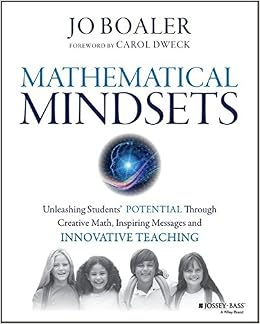
       Everything in this post comes from Dr. Jo Boaler and from the website that she created called YouCubed.  She has spent her professional career trying to understand how students learn and how teachers teach.  Her ideas and suggestions can lead to a new world of mathematics teaching and mathematics learning.  All of this is based on research and not from one person's point of view or experience.


       Understanding math is important and we need public school teachers to teach for understanding; we need parents to encourage understanding in math class; and we need students to believe that they can learn mathematics as easily as any other subject.


Thursday, July 14, 2016

Learning About Learning

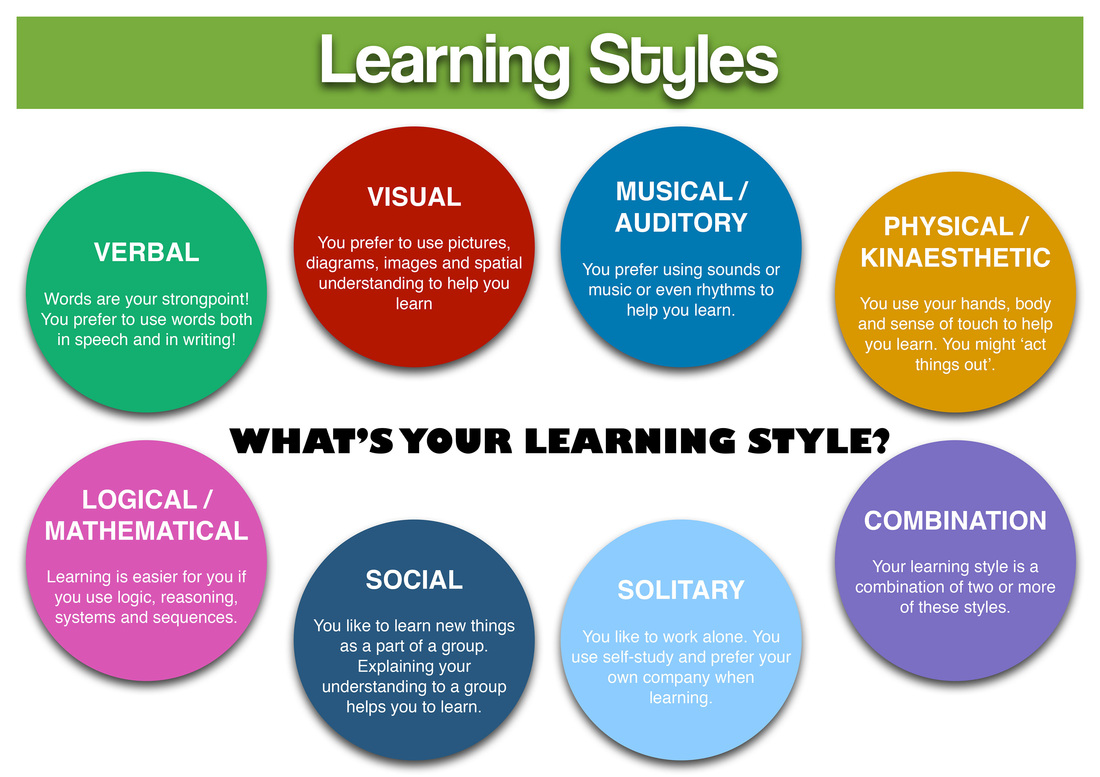
       The goal of school is learning.  The challenge for our schools is to help all students to learn when students are so different.  Some prefer to work by themselves.  Others need to bounce ideas off of their peers.  Some need only to hear the information while others need to actively "do" something to help them to learn.

       The mystery of how students learn has baffled educators for a long time.  The puzzle of "some-kids-get-it" and "some-kids-don't-get-it" has been difficult to understand.  I think that--for a long time--teachers referred to their own ability to learn (and perhaps that of their peers) and felt that all students probably learned the same way they did.  In fact, I wonder sometimes if some present day teachers use the same technique.  And while there are still many unknowns in the field of learning, it is fair to say that we know more today about how students learn than at any time in our history.

       For starters, brain research has provided a wealth of information about how we learn.  Here's a short list of things to know about how the brain learns:

  1. We receive information better when it's visual.
  2. We remember the big picture better than the details.
  3. Sleep affects learning and memory.
  4. Less sleep reduces your ability to learn new information.
  5. We learn best by teaching others.
       Next, we have a lot of help in the field of learning from experts and practitioners.  After a while, we begin to see common themes in the area of helping students to learn:
  • Engagement - Students who actively participate in their learning find it enjoyable and are better able to retain the information.
  • Movement - Learning can certainly take place while sitting, but less so if you're forced to stay seated for a long time.  (see The Power of Movement in Teaching and Learning)
  • Challenge - We learn best when we are forced to think and try and fail and try again.  Also, when we are forced to recall past learning and use that information to understand the current learning.
  • Growth Mindset - If we believe that effort yields results then we are more likely to do our best to preserve in the face of any struggles that may occur as we learn new material.

       Still, teaching is certainly a combination of Art and Science.  Teaching requires building positive relationships so that we can understand our students and construct our lessons in a way that meets their learning needs.  Teaching requires the ability to motivate students and to spark their interest in learning.  Teachers need to challenge students enough to keep it interesting, but not too much so that it becomes too overwhelming.

       The challenge of teaching is the challenge of learning how students learn.  We're getting better at this, but we still have a lot to learn [!].


Public Schools and Choice

       Is it true that public school kids and their public school parents don't have choices?  I'm sure that I will expose my igno...

Teach100 blog