Wednesday, April 6, 2016

Teachers Learning from Colleagues


       The National Council of Supervisors of Mathematics have just released a new feature on their website called It Worked!.  Stories and videos of Math Coaches talk about situations that have occurred in our public schools in which professionals learn from other professionals and (together) they gain more experiences and expand their abilities to help students to learn.

       The opportunity to hear from colleagues is a valuable professional learning opportunity.  Teachers and Teacher Specialists grow in their profession in many ways:  coursework, membership in professional communities, reading journals and articles.  But to hear from a colleague is particularly nice because we can see ourselves in their stories and in their situations.  We can think about similar situations that we have encountered and how we might handle those situations.

       The It Worked! feature is filled with Elementary and Secondary examples of how mathematics coaches faced challenges and found productive ways to address them.  NCSM is to be commended for building this community of professionals that has the capacity to assist other professionals in a profound way.  It is important for our leaders--at all levels--to share their knowledge and their experiences.  You never know who will hear your story and will use it for their own professional growth.


Tuesday, April 5, 2016

Blended Learning - 21st Century Schools


       For the past two decades we (in education) have been talking about 21st century schools.  I've read books about it; I've attended lectures; I've read articles; I've had numerous conversations.  The crucial need to end our 19th century, factory-model schools and begin to give our students the school experience that will (best) prepare them for the world that they will inherit has been upon us for a long time.

       When I look at the trend toward Blended Learning, I see the 21st century school that I've always imagined.

  • Students are learning at their own pace.
  • Teachers can give better individual feedback.
  • Students have choices of how they learn best.
  • More student-to-student discussion
  • More emphasis on learning and less emphasis on grading
  • More student engagement
  • Less discipline issues because less students being bored in class
  • Better preparation for college and career
    • Research skills
    • Personal responsibility for learning
    • Working in teams and working individually
       Change is always hard.  But change that helps students to be better learners is change that is necessary.  Blended Learning should become the norm in our public schools.  The traditional classroom of sitting in rows and listening to lectures is not the best way to learn anymore.

       Take some time and learn about Blended Learning.  It is the right thing for our students for today and for tomorrow.


Monday, April 4, 2016

Mondays and Other Great Opportunities


       I think Mondays get a bad rap.

       Like New Year's Day and your birthday and the first day of school, Mondays can be important (and frequent) firsts.  They are opportunities to begin something great; to get a fresh start.  Everyone is well rested from their two-day vacation and filled with stories of their adventures over the weekend.  Mondays can be the days to move on from the trails and tribulations of the past week and begin anew.

       How do you begin the school week in your classroom?  What is your goal for the week?  How do you greet your students on Mondays?

       In the same way that (we know) students tend to be more attentive in the beginning of every class, we have a unique opportunity on every Monday to take advantage of the "newness" of the week and to start something exciting.


Thursday, March 31, 2016

We Do Something Important Every Day

       Education is important business.

       Once in a while, a student needs to be somewhere else in the school during the time that she should be in my classroom.  Club meetings, picture day, sporting events, ... lots of activity going on in a typical high school.  So this mature and responsible student comes to me a day or two before and asks, "Are we doing anything important tomorrow?"

       My answer is always the same:  We do something important Every Day.  Bell-to-bell learning; every minute, every day; valuable instructional time....  Call it what you will, the stuff that goes on in the classroom--in every classroom--is valuable and important.

       Sometimes it is hard to see the importance of something we do everyday.  It becomes commonplace; and without an engaging teacher it can become boring.  The best learning occurs when the teacher understands the importance of every minute and communicates this to the students via thoughtful, engaging lessons.

       Education is important; everyday, every minute.

Friday, February 5, 2016

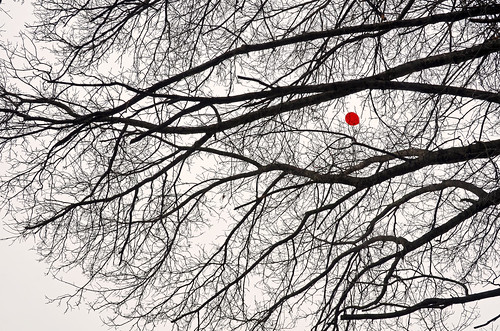
The Red Balloon


       Its potential is always there.

       In with hundreds of others, the red balloon waited its turn.  Its neighbors were selected, maybe three or four every minute.  The noise of the world outside was exciting, mysterious, and thrilling.  The opportunity to see what it could hear was more than it could bear.  "Pick me; pick me" it pleaded--if it could talk.  It wanted to explore; it wanted adventure; it wanted everything.

       Little by little its world got less and less crowded.  Others continued to be taken.  There goes a blue one.  There goes two yellow ones.  Its turn must be coming soon.  "Pick me; pick me."  Another blue, then a pink, then another pink.  Waiting, waiting...always waiting.

       Suddenly it was out of the bag.  Everything happening very fast.  Hot.  Light.  Breeze.  Noise, lots of noise.  Something dark and smooth and ...Hey!  What's happening?  It got bigger and bigger and bigger.  In seconds it grew to a hundred times it original size.  Dark thing goes away and it doesn't grow any more.  But something better is happening..."I can fly!"

       With little control--really no control--it flies straight up, but only a few feet.  It wants to go higher but something is keeping it from flying higher.  It feels a tug from below and then another tug.  Now it is moving again, but not up.  Its moving sideways.  Every once in a while it is tugged down hard and then it flies sideways again.  This continues for about an hour.

       The balloon sees trees and people and flowers.  It sees the sun and feels its warmth.  It sees the blue sky with few fluffy white clouds.  It imagines how far the sky expands.  Sometimes the red balloon is relatively still except for slight swaying caused by the breeze.  The balloon continues to view the immensity of the sky.  Its imagination builds on the wonders and adventures that await beyond the bonds of the tugging force below.  It pulls and pulls, trying to break free, trying to go up, trying to explore.

       The red balloon hears a scream and then some crying.  This noise becomes more and more faint as seconds go by.  It notices all sounds becoming less forceful and less distinct.  The tugging has stopped completely.  In fact, to the red balloon's great surprise, it is once again flying up.  Though at the mercy of the wind, the balloon is definitely flying up.  It imagines the great experiences about to be entered into.  Oh, the places it will go!  The journey is just beginning.  The path is unknown.  The balloon is filled with the excitement of every future second.

       And then, the upward journey suddenly slows.  The noise is still minimal, the wind is still pushing; but the tugging has begun once again.  The balloon is now bumping against something.  It moves up a small amount, bumps something, moves to the side a little, bumps something else, more tugging, harder tugging.  The balloon yearns to break free and continue its journey up, but the tugging is more forceful than its ability to go up.  Eventually the balloon is no longing bumping anything.  It is once again swaying in the breeze and (once again) relatively still--certainly not going up.  Why?


       This stillness is different from the last time.  Minutes past.  No sideways movement.  No up.  More minutes; an hour.  Stillness.  Another hour; this is different.  Once again the balloon views the sky and imagines and dreams.  Its getting cooler now.  Its getting darker too.  What happened to the sun?  Where's the light?  More stillness.  Maybe endless stillness?  But now the sky looks different.

       The sky is dark with tiny points of light very far away.  The balloon's desire to explore the sky remains.  What's out there?  I've got to go; I've got to break free.  I've got to start moving up again.  I want to see what there is to see.  The stillness removes all distractions and allows the balloon, once again, to dream of the unknown possibilities; the excitement that awaits the balloon once its journey continues.


       But its journey didn't continue.  Night turned to day and the balloon barely moved all day.  The wind seemed to only tighten the balloon's string to the tree branch.  Day turned to night again and back to day; again and again and again. The balloon's dreams continued, but as time went on it started to wonder if it might be better to be secure to the tree that was firmly planted so close to where its journey began.  A part of the balloon still wanted to explore the vastness of everything while another part appreciated the safeness of staying and not moving.

       More time passed and the strength of the balloon to pull away diminished along with its ability to actually make the decision to stay or to go (if it were ever to be given the chance to make that choice.)  There's still a chance.  It could, possibly, break free.  It might have a chance.  But now it wasn't so sure of its decision.


       Suddenly the balloon feels a lack of tugging.  It's long-awaited opportunity may be near.  It is permitted to make its own choice.  The balloon considers the options that has filled its thoughts since its beginning--and it decides to...

-----------

       Each of us has the red balloon's decision to make:  

  • take the risk of venturing into the unknown and open yourself to incredible excitement or amazing failure
  • play it safe; stay close to home--close to the "known".  Avoid the scary unknown and risk missing out on attaining your true potential.


Tuesday, January 26, 2016

Every Day is Important

       Occasionally I would have a student who needed to miss my class because of some other event taking place during the school day; a guest speaker, a pep rally, an AP test, extra help in another class, ... all sorts of reasons.  Being the good student that she is, she would come to me a day or two before the event to find out what she is missing and to be aware of lesson and/or assignment for that day.  This never bothered me.  I never considered my class to be the center of universe; and I knew that school offered my students a range of experiences and I wanted them to have these experiences.

       What DID bother me is when the student would ask, "Are we doing anything important on that day?"

       Of course I always responded, "We always do something important."  But this question (also) always made me think of my students' perceptions of my class.  Unfortunately, I think they viewed a "test day" as an important day.  Students would sometimes try to reschedule their other event if they were going to miss a test (sometimes not).  But, I think, that students also perceived the basic lesson day as a less important day; perhaps as just a typical day.  These days are viewed as the days that can be missed without any penalty--you can make up the work; you won't fall behind in any way.

       It is this perception of less-important days that leads some students to skip school for a day.  It leads parents and families to take their children out of school for a day or more for a family vacation or for baseball tryouts or for a scouting trip.

       How do we convince students that every school day is important?  As teachers, we know that the time we have with students in class is valuable time.  Often, we struggle to complete everything that needs to be completed in a school year (or in a course).  But how do we help students to understand that what goes on in class cannot be easily replicated or made-up outside of class?

       It is for this reason that I would always begin teaching on the very first day of school.  I didn't want my students to go home on the first day of school and say, "We didn't do anything in school today.  All we did in every class was introduce ourselves (six times)."  It is for this reason that every time we had an early-closing day or a late-openning day, I would always make the best use of the time I had with my students.  Why come to school if every teacher were to say, "We only have short periods today due to ________ so we are just going to do nothing in class."?


       Every day of school is an important day.  Every class, every minute in class.  Teachers should not ever give their students any reason to believe that any class is a waste of time or is unnecessary.  School is important.  Learning is important.  Every day counts.  We have to show our students that this is true by our actions in class.  We want students who want to go to school every day, because every day of school is important.


Wednesday, January 20, 2016

Higher Rates of Women in Engineering


       Are we doing enough to encourage girls to pursue careers in Engineering?

       It isn't enough (anymore) to say that there are more women in Engineering today then there were 10 and 20 and 30 years ago.  The numbers of women in Engineering in these past years was so low that (one would hope) those numbers have gone up.  But recently, the percentage of females earning bachelor degrees in engineering has stubbornly remained only steady.

       Lots of data suggest that the number of female engineers should be increasing.  More high school women are taking Statistics, Calculus, and Physics.  More women than men have been enrolled in college since 1978.  Women have been earning more college degrees than men since 1981.  And the prospects for jobs in engineering is growing.  
       Opportunities abound; so if you're a middle or high school teacher or principal, or you're a parent of girl, be sure they get the message that they can do anything.  Don't feed the stereotype that says men are engineers.  Help them to be proud of their abilities and to pursue their dreams.  

       We need more women to be engineers.


Public Schools and Choice

       Is it true that public school kids and their public school parents don't have choices?  I'm sure that I will expose my igno...

Teach100 blog