Let's face it, for some people, public schools are Big Business. Sixteen thousand school districts; 100,000 schools; 3 million teachers; and 50 million students. The U.S. is a big country and we have a lot of public schools and public school students. When you throw in parents and relatives and neighbors and siblings you get a large percentage of the U.S. population that has a connection to our public schools.
This leads to great competition among makers of educational products; which (in turn) leads to great learning products for our students. I work in the field of middle and high school math and practically every day I get an email or a tweet or some communication about some new educational product.
Just as a quick example of such a product, I really like Desmos which is a free graphing calculator that is great for class presentations to students. It was created with middle and high schools in mind. It is a great tool for teachers and students. Another product is Moving With Math which is targeted toward students who are below grade level in mathematics. Again, this product is purposely made for middle and high school students.
Public school students get the benefit of lots of great education products and tools that are created just for them. One more thing that makes our public schools great!
Saturday, March 15, 2014

Friday, March 14, 2014
Learning about People with Disabilities
When my daughter was in kindergarten, she had a classmate named Jack. Jack was (and is) developmentally delayed. Jack has an adult personal assistant with him all of the time when he is in school. Jack doesn't talk.
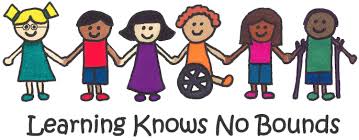
My daughter's welcomed Jack to class in kindergarten in the same way that she welcomed all of her students. Jack participated in all activities--as much as he could--just like everyone else. My daughter and her classmates viewed Jack in the same way they viewed everyone else. "He is a student just like me." "We have the same teacher." "We all do the same things."
My daughter is in eighth grade now, and Jack has been in her grade all along the way. My daughter and her peers view Jack in the same way they did in kindergarten. "He is a student just like me." "We have the same teachers." "We all do the same things." Of course, as my daughter grew, she also grew to understand that Jack has learning difficulties that other students do not. But since she knew him since kindergarten, she didn't view his "differences" as a negative thing.
Public education exposes our children to different people and it shows our children that differences are OK. Students see how the school and the school system helps students with varying abilities. I think that this helps our children to grow with a good understanding of the world that they will enter.
We all have disabilities of some sort. Our students' experiences with peers that are learning disabled helps them to see the differences and to see how these differences can be addressed by caring adults.
Jack is part of our public education family and we are all so lucky to know him.
My daughter's welcomed Jack to class in kindergarten in the same way that she welcomed all of her students. Jack participated in all activities--as much as he could--just like everyone else. My daughter and her classmates viewed Jack in the same way they viewed everyone else. "He is a student just like me." "We have the same teacher." "We all do the same things."
My daughter is in eighth grade now, and Jack has been in her grade all along the way. My daughter and her peers view Jack in the same way they did in kindergarten. "He is a student just like me." "We have the same teachers." "We all do the same things." Of course, as my daughter grew, she also grew to understand that Jack has learning difficulties that other students do not. But since she knew him since kindergarten, she didn't view his "differences" as a negative thing.
Public education exposes our children to different people and it shows our children that differences are OK. Students see how the school and the school system helps students with varying abilities. I think that this helps our children to grow with a good understanding of the world that they will enter.
We all have disabilities of some sort. Our students' experiences with peers that are learning disabled helps them to see the differences and to see how these differences can be addressed by caring adults.
Jack is part of our public education family and we are all so lucky to know him.
Thursday, March 6, 2014
Dedicated Teachers Love What They Do

What's so good about public education? Answer: Dedicated Teachers
Dedicated, caring teachers make school special for students everyday. Students want to make their teachers proud--especially when they know that their teachers really care. Dedicated teachers make school fun and they make students believe that they can do things that they didn't think they could do.
Dedicated teachers make parents very, very happy. Who doesn't want their children to have great teachers?? Parents always worry that their children might get a teacher who is uncaring or mean or unwilling to help their child. When our kids get a great teacher, we are relived and very grateful.

Anyone who doesn't work in education is always amazed when their friends or neighbors who are teachers spend so much time talking about their students and working on ways to make their lessons engaging. So many people come home from work and never think about work until the next day. Dedicated teachers think about teaching all of the time--or so it seems.
Teaching is such a challenge--teachers are always striving to improve. Dedicated teachers work hard to improve all of the time. Dedicated teachers make our public schools great!
Sunday, March 2, 2014
Learning From Experts - Wherever They May Live
 In a couple of weeks, the middle school mathematics leaders in my district will meet with their counterparts in a neighboring district to talk about and think about and make plans for the day when every student will enter school with their own device for learning. We are calling it a 1-to-1 Learning Environment.
Part of the day will include a panel discussion with four educators from around the country who will join us via Google Hangout. A principal, a teacher, a technology specialist, and an education technology coach from four different states in the U.S. will make up the panel and will share their experiences with our group.
I believe that this is what we mean by 21st century education. We want to learn from the experiences of others who have "been there". This discussion--in real time--will help us to think about the things we haven't thought about yet. It will help us to plan for the rollout of 1-to-1. And we will make connections with other educators from far away who don't have to be so "far away" given the tools we have today.

Also, the people participating in this panel discussion are all people I have "met" on Twitter--I've never met them in person and I probably never will. Yet I was able to contact them and tell them what we are planning to do and they were able (and very much willing) to be a part of it.
I can't wait; it's going to be great! We even have a Twitter hashtag for the day: #M3SG for Mid-Maryland Math Specialist Group. I hope this event will encourage others to do the same--and more. If I can do (with a lot of help [!]), anybody can do it.
Friday, February 7, 2014
e-books, e-learning, e-education
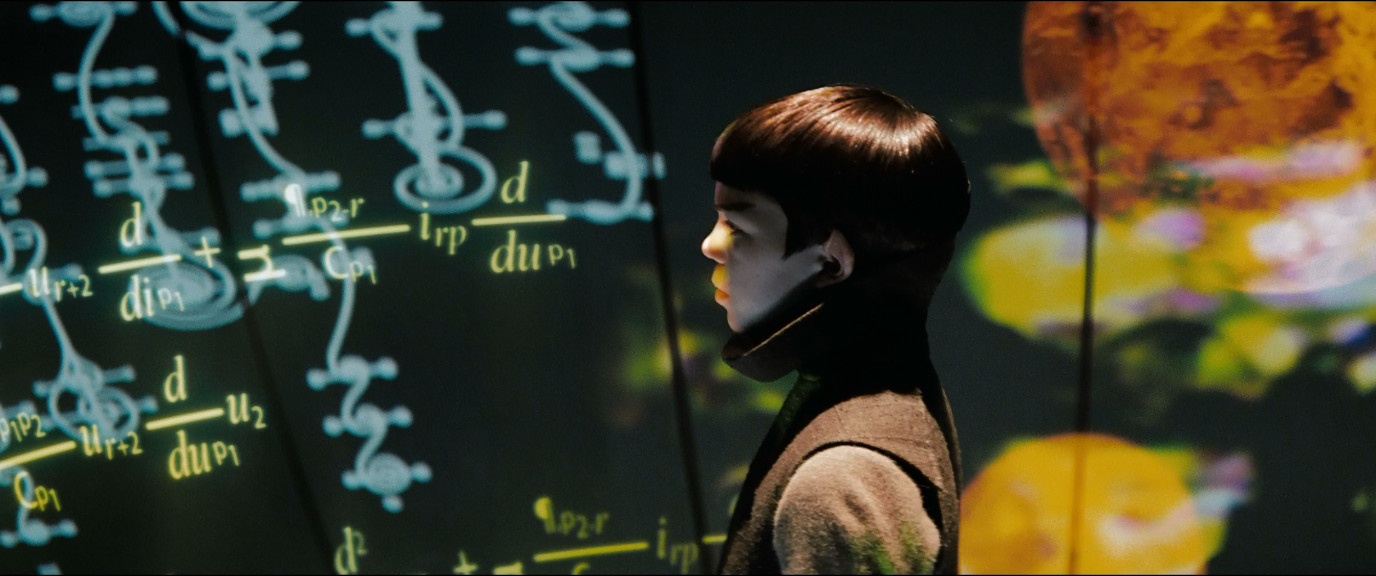
- Rows of desks
- Teacher in the front
- Teacher talks
- Students listen
- Take out your books and read and answer the questions.
But I envision a transformation in our nations public schools. It is a transformation that will take place over a period of (perhaps) three to six years; a transformation that has already begun in some places. I am talking about seeing less paper textbooks and much, much more electronic devices--both in the classroom and at home.

Education will be so much more than memorizing facts. It will be exploring and learning and questioning and failing and trying again. Students will learn by doings as well as by questioning. We are past mere "e-books", we are talking about e-learning. It is a transformation that will improve with every passing year. As older teachers retire and newer teachers (digital natives) take their place, e-education will grow and mature.
This is an exciting time to be in education! This is a change that we want for our students; to prepare our students for their future.

Thursday, January 30, 2014
Relationships Matter in Education
 Our best teachers love what they do and they love working with students. The relationships that teachers have with their students help to foster better student achievement. And it is no surprise that this is the case. Students want to make their teachers proud of the work that they can do in the same way that students want to make their parents proud. When teachers show the students that they really care about them and their progress, students respond with better progress.
The same is true with teacher relationships with parents and schools relationships with parents--and the community. Relationships matter. Researchers agree that teachers have the largest influence on student achievement. Good teachers tend to produce good students.
People who love to work with children are primed to be good teachers. Learning can be difficult at times, but it is always less difficult when you have a caring, dedicated teacher ready to help you.
Friday, January 24, 2014
Everyone Has Value
At a recent school system event, one of our wonderful middle school students, Emily, gave a great, solo speech (written by herself) titled, Everyone Has Value. She told a story of offering a $100. bill to a group of students and everyone wanting it because it has value. And then she suggested crumpling that $100. bill and throwing it on the floor; and (still) the people would want to have it because it has value.
 She went on to explain that everyone has value and everyone should see the value in themselves as well as in others. She shared results from a survey in which people said that they didn't like the way they looked; and they wished they were better looking.
This young teenager was talking to her peers, but her message resonated with the adults in the audience every bit as much.
Recently a commercial was released about a deaf football player named Derrick Coleman. Again, the message is Everyone Has Value. The deficiencies, or perceived deficiencies, in all of us are not what define us as a person. Your mother was right when she said, "You can do anything you want to do."
We will all have successes and failures in our lifetime. But everyone is important; everyone is special; everyone can contribute in their own way to the fabric of society.
Public schools (at their heart) teach this message to all of us. Everyone has value.
She went on to explain that everyone has value and everyone should see the value in themselves as well as in others. She shared results from a survey in which people said that they didn't like the way they looked; and they wished they were better looking.This young teenager was talking to her peers, but her message resonated with the adults in the audience every bit as much.
We will all have successes and failures in our lifetime. But everyone is important; everyone is special; everyone can contribute in their own way to the fabric of society.
Public schools (at their heart) teach this message to all of us. Everyone has value.
Subscribe to:
Posts (Atom)
Public Schools and Choice
Is it true that public school kids and their public school parents don't have choices? I'm sure that I will expose my igno...
Teach100 blog

-
The Case Against Worksheets The "worksheet" has been a staple of the P-12 educational experience for students for the pa...
-
The data is overwhelming: 10.7 million school-aged children living in poverty ( source ) Over 50% of school-aged children are eli...
-
I'm going to start by saying that I went to college, my wife went to college, my siblings went to college, I want my children to ...


